Can You Cook Pasta Without It Sticking Together?
Pasta clumping into a single sticky mass is one of those kitchen frustrations that feels unavoidable — until you understand exactly why it happens. Oil is often the first fix people reach for, but it mostly slides off the pasta and pools at the bottom of the pot. The real solutions are simpler and more reliable.
Why Does Pasta Stick in the First Place?
Pasta releases surface starch as it cooks. When strands or pieces sit against each other in water that is not moving, that starch acts like glue. The stickiness gets worse if the pasta finishes cooking and then sits undisturbed in the pot, or if it drains and cools before a sauce is added. Understanding this makes the fixes obvious: manage the starch and keep things moving.
The Four Things That Actually Prevent Sticking
If you want to go beyond avoiding clumps and nail the perfect bite every time, check out How to Cook Pasta Al Dente: The Exact Method.
Use a large pot with plenty of water
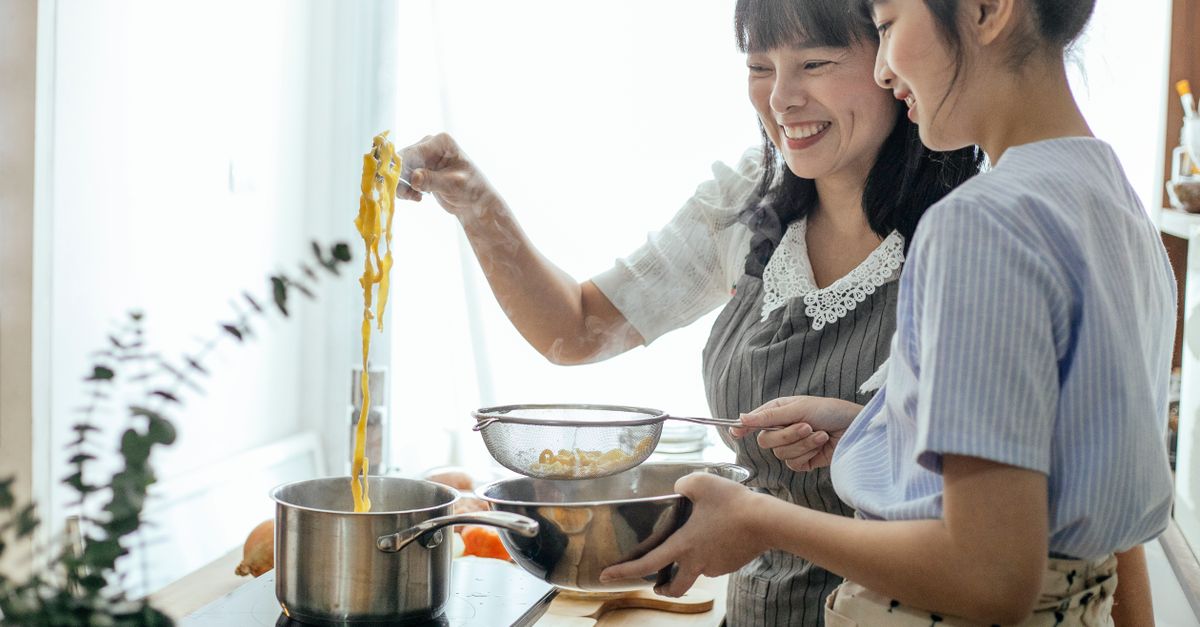
This is the single most effective step. A large volume of water dilutes the released starch, so it never concentrates enough to turn sticky. A generous rule from experienced cooks is roughly one litre of water per 100 g of pasta, though the exact ratio is less important than the principle: more water, less starch concentration, less clumping. A cramped, shallow pot is the most common cause of sticky pasta.
Keep the water at a rolling boil
A vigorous boil keeps pasta moving constantly. That turbulence stops individual pieces from settling against each other long enough to bond. If the boil drops to a gentle simmer after you add the pasta, give the heat a moment to recover before you put the lid back on. A lid can help water return to the boil faster but should come off (or be tilted) once boiling resumes, because a hard boil can overflow quickly.
Salt the water generously
Salt does not prevent sticking directly, but it does firm up the pasta’s outer surface slightly as it cooks, which makes strands less prone to merging. Beyond that, it is the only real chance you have to season pasta from the inside out. The water should taste pleasantly salty, a bit like a mild broth. This is not about health — use what suits your diet — but under-salted water produces pasta that tastes flat no matter how good the sauce is.
Stir in the first two minutes, then periodically
The first two minutes after the pasta goes in are critical. The outer starch layer is still softening, and pieces stick most readily at this stage. Stir every 30 seconds or so during that window. After that, a stir every minute or two is enough to keep things separate. A long-handled wooden spoon or pasta fork works better than a ladle, because you can reach the bottom of the pot and separate any pieces that have settled.
What to Do Right After Draining
Draining is where most sticky pasta disasters actually happen. The moment pasta hits the colander, the cooling starch on the surface becomes tacky. Two approaches stop this:
Sauce it immediately. The fastest and most reliable fix is to have your sauce ready and waiting. Tip the drained pasta straight into the sauce (or tip the sauce over the pasta) and toss while both are still hot. The sauce coats every surface and prevents sticking almost completely. This is how most restaurant pasta is finished — the pasta rarely sits in a dry colander for more than a few seconds.
Reserve some pasta water. Before you drain, scoop out a mug of the cooking water. This starchy liquid is liquid gold for sauce-making: a splash loosens a sauce that has thickened, helps it cling to the pasta, and brings everything together without diluting the flavour. Add it a tablespoon or two at a time while tossing.
If sauce is not ready, toss the drained pasta with a small amount of sauce base (even just a ladle of the plain cooking water) to keep surfaces wet and separate. A splash of cooking water costs nothing and works far better than oil, which forms a slick barrier that later stops sauce from adhering.
Once your noodles are clump-free, the next step is making sure the sauce actually holds on, which is exactly what How to Cook Pasta So the Sauce Actually Clings explains.
Different Pasta Shapes, Different Risks
Not all pasta sticks equally. Knowing which shapes are most vulnerable helps you adjust.
| Shape | Sticking risk | Why | Key tip |
|---|---|---|---|
| Spaghetti / linguine | High | Long strands tangle and clump fast | Stir aggressively in first 2 min |
| Penne / rigatoni | Moderate | Tubes can nest or clump at ends | Large pot; toss immediately |
| Farfalle / rotini | Moderate | Ridges and folds trap starch | Keep at full boil; stir regularly |
| Orzo / pastina | High | Tiny pieces settle and fuse | Very large water volume; constant stirring |
| Fresh pasta | Very high | Extra surface starch and moisture | Sauce within seconds of draining |
| Lasagne sheets | Very high | Flat sheets lie flush against each other | Layer with sauce immediately; use plenty |
Fresh pasta and lasagne sheets deserve special attention. Fresh pasta cooks in two to four minutes (sometimes less), so everything needs to be ready before it hits the water. Lasagne sheets that are pre-boiled before assembly should go straight from the pot into a layer of sauce — stacking them on a plate dry is a guaranteed fused block.
Making Pasta Ahead Without Clumping
Cooking pasta ahead for meal prep is genuinely tricky without oil, but manageable. The approach that works best:
- Cook the pasta until just under al dente (it will soften further when reheated).
- Drain and immediately toss with the sauce if you are storing it with sauce. Stored this way, it keeps well in the refrigerator and reheats evenly.
- If storing plain (without sauce), toss the drained pasta with a ladle of its own cooking water and spread it loosely on a tray or wide container to cool quickly. The larger the surface area, the less it clumps. Once cooled, store loosely in an airtight container.
- Reheat in boiling water for 30 to 60 seconds, or add directly to a simmering sauce. Reheating in water is especially effective because it rinses away the surface starch that accumulated during storage.
This method is less seamless than cooking to order, but it works well for short-term meal prep (up to two days in the refrigerator).
Frequently Asked Questions
Does adding oil to pasta water actually help?
Not much, and it can make things worse. Oil floats on water and coats the pasta surface as it drains. That slick coating stops sauce from sticking to the pasta later, which is the opposite of what you want. The boiling water and stirring combination is far more effective at preventing clumping during cooking.
Should you rinse pasta after cooking?
Only in specific cases. Rinsing washes away the surface starch that helps sauce cling, so for most dishes you should skip it. The exceptions are pasta salads (where you want it cool and separated and sauce adhesion matters less) and certain Asian noodle preparations. For a hot pasta dish, rinsing is a mistake.
Does pasta water need to taste like the sea?
That phrase gets repeated a lot, and it overshoots for most people. Seawater has a salt content of around 3.5%, which would be intensely salty. Aim for water that tastes pleasantly savoury, closer to a well-seasoned broth. Exactly how much salt that takes depends on your pot size, your salt type, and your palate — taste the water and adjust.
Can you cook pasta in less water to save time or energy?
Yes, with trade-offs. Some cooks start pasta in cold water or use a small amount of water, which speeds things up and produces a thicker, starchier cooking water. The pasta can turn out slightly stickier and the texture is sometimes less consistent, though results vary by shape and brand. If you try this, stir constantly and plan to sauce it immediately.
Why does reheated pasta always seem stickier than fresh?
When pasta cools, its starch molecules re-crystallise (a process called retrogradation), which makes the surface drier and more prone to fusing. Reheating in a small amount of boiling water for 30 to 60 seconds reverses this effectively. Adding it directly to a hot, liquid sauce works too, because the moisture and heat loosen the starch again.