Dumpling Wrappers from Scratch: Texture, Technique, Tips
Why Homemade Wrappers Are Worth the Effort
Store-bought dumpling wrappers are convenient, but they have a fundamental flaw: they dry out fast, crack at the edges, and turn papery when steamed. A wrapper you roll yourself is a different thing entirely — pliable, slightly chewy, and sturdy enough to hold a generous filling without splitting at the fold. Once you understand the two basic dough types (hot-water and cold-water), you can tune the texture to match whatever style of dumpling you’re making.
This guide covers both doughs, rolling technique, thickness targets for different cooking methods, and how to troubleshoot the problems that trip up first-time makers.
The Two Foundational Doughs
Hot-Water Dough (烫面 / Tāng Miàn)
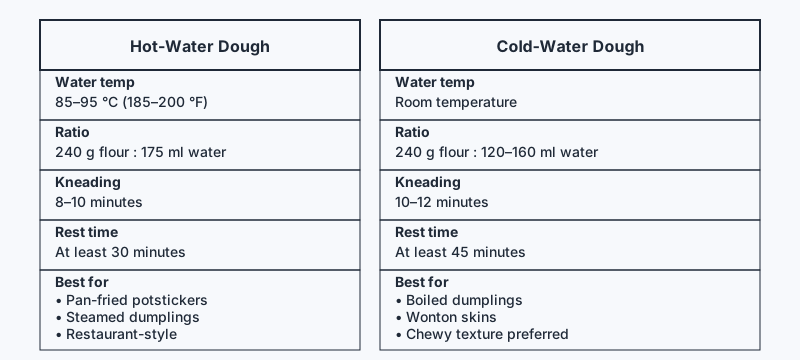
Hot-water dough is the one you want for pan-fried potstickers (guotie), steamed dumplings (zhēngjiǎo), and most Chinese restaurant-style dumplings. Boiling or near-boiling water (around 85–95 °C / 185–200 °F) partially gelatinizes the starch, which gives the finished wrapper a supple, almost translucent quality and a pleasantly soft bite.
Basic ratio: 2 cups (240 g) all-purpose flour to about ¾ cup (175 ml) just-boiled water, plus a pinch of salt.
- Pour the hot water into the flour gradually while stirring with chopsticks or a fork. The dough will look shaggy at first.
- Once cool enough to handle (about 2 minutes), knead on a lightly floured surface for 8–10 minutes until smooth and elastic.
- Cover tightly with plastic wrap or a damp cloth and rest for at least 30 minutes at room temperature. Do not skip this — resting lets the gluten relax so the dough rolls thin without snapping back.
The dough should feel slightly tacky but not sticky. If it tears when you pull it, it needs more kneading. If it’s sticking to everything, dust lightly with flour — but go easy, because too much flour makes wrappers tough.
Cold-Water Dough
Cold-water dough uses room-temperature water, which keeps more gluten intact and produces a firmer, chewier wrapper. This is the classic choice for boiled dumplings (shuǐjiǎo) and Cantonese wonton skins, where you want the wrapper to hold its structure in the cooking water without going mushy.
Basic ratio: 2 cups (240 g) all-purpose flour to about ½–⅔ cup (120–160 ml) cold water, plus a pinch of salt.
Mix and knead the same way as above, but expect to knead for a full 10–12 minutes — cold-water dough is stiffer and takes longer to become smooth. Rest for at least 45 minutes.
Flour Choice Matters More Than Most Recipes Say
All-purpose flour (about 10–12% protein) works well for both doughs. Bread flour (12–14% protein) makes wrappers noticeably chewier — good if you prefer a thick boiled dumpling. Cake or low-protein flour produces a softer, more fragile wrapper that tears easily; avoid it unless you’re intentionally making a delicate dim-sum skin. Some Chinese-grocery brands labeled “dumpling flour” are slightly higher in protein than standard all-purpose and produce excellent results if you can find them.
If you enjoy geeking out over flour types and hydration, How to Bake Sourdough Bread from Scratch: One Living Starter, No Yeast explores a similarly finicky dough-and-flour relationship on the bread side of things.
Rolling and Shaping the Wrappers
Portioning the Dough
Divide the rested dough in half (work with one half while the other stays covered). Roll each half into a log about 1.5 cm (⅝ inch) in diameter, then cut into pieces roughly 10–12 g each — that’s about the size of a large grape. You’ll get approximately 30–35 wrappers from a 240 g batch.
Two Rolling Methods
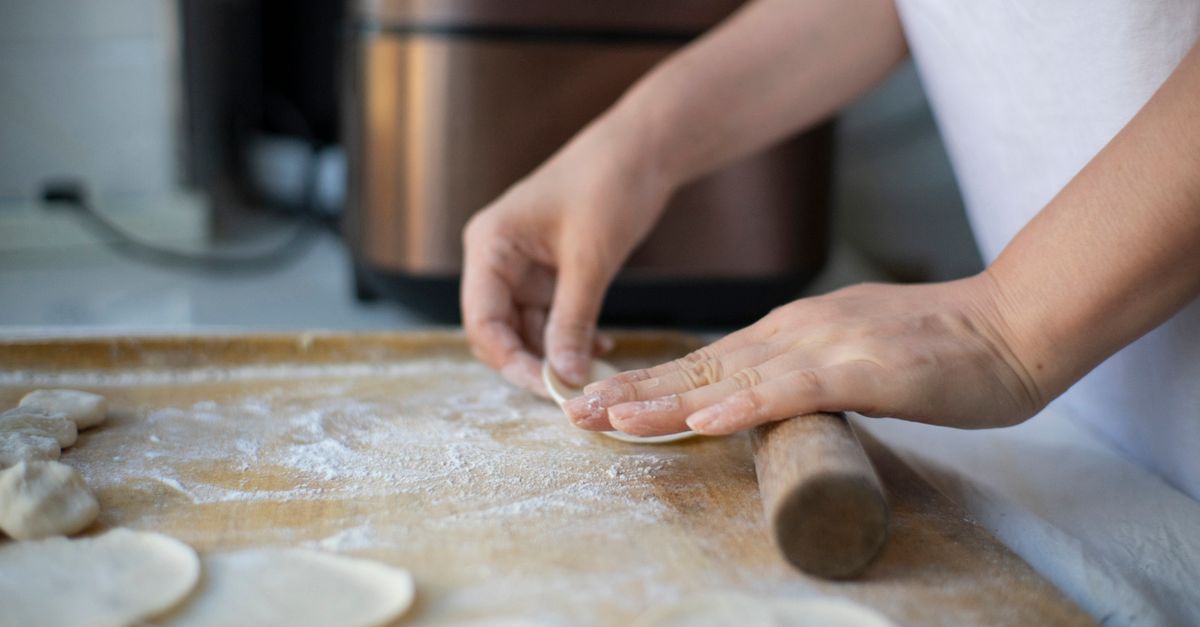
Flat pin method: Flatten each piece into a rough disc with your palm, then roll with a small rolling pin (a Chinese-style one with tapered ends is traditional, but any dowel works). Roll from the center outward, rotating the disc a quarter turn after each pass. Aim for a circle about 8–9 cm (3–3.5 inches) across for standard dumplings.
Pair-rolling shortcut: Stack two pieces with a light dusting of starch or flour between them, roll both at once, then peel apart. The starch layer keeps them from fusing, and you get two roughly round wrappers faster. This is a classic method used in busy restaurant kitchens.
Thickness Targets by Cooking Method
This is where home cooks often go wrong — rolling every wrapper to the same thickness regardless of how it’ll be cooked.
- Steamed dumplings: 2–2.5 mm. Thin enough to be slightly translucent at the pleats.
- Pan-fried / potstickers: 2.5–3 mm. Slightly thicker to withstand the initial fry without burning through before the filling cooks.
- Boiled dumplings: 2.5–3 mm. The wrapper absorbs water during cooking; if you go too thin, it turns gummy and may split.
- Soup dumplings (xiaolongbao): 1–1.5 mm. Genuinely thin — you should be able to read text through the wrapper when held up to light. These require a higher-starch, lower-gluten dough (some recipes replace 15–20% of the flour with tapioca or corn starch) to achieve that characteristic gel-like texture.
Edge vs. Center Thickness
For pleated dumplings, roll the edges slightly thinner than the center — roughly 1.5 mm at the edge, 2.5 mm at the middle. This gives you a thicker base to hold the filling and thinner edges that pleat and seal neatly without a doughy seam.
Filling, Folding, and Sealing
Fill immediately after rolling — wrappers dry out at the edges within 5–10 minutes of being rolled, which causes tears and poor seals. If you’re rolling and filling at the same time, keep rolled wrappers covered under a damp cloth.
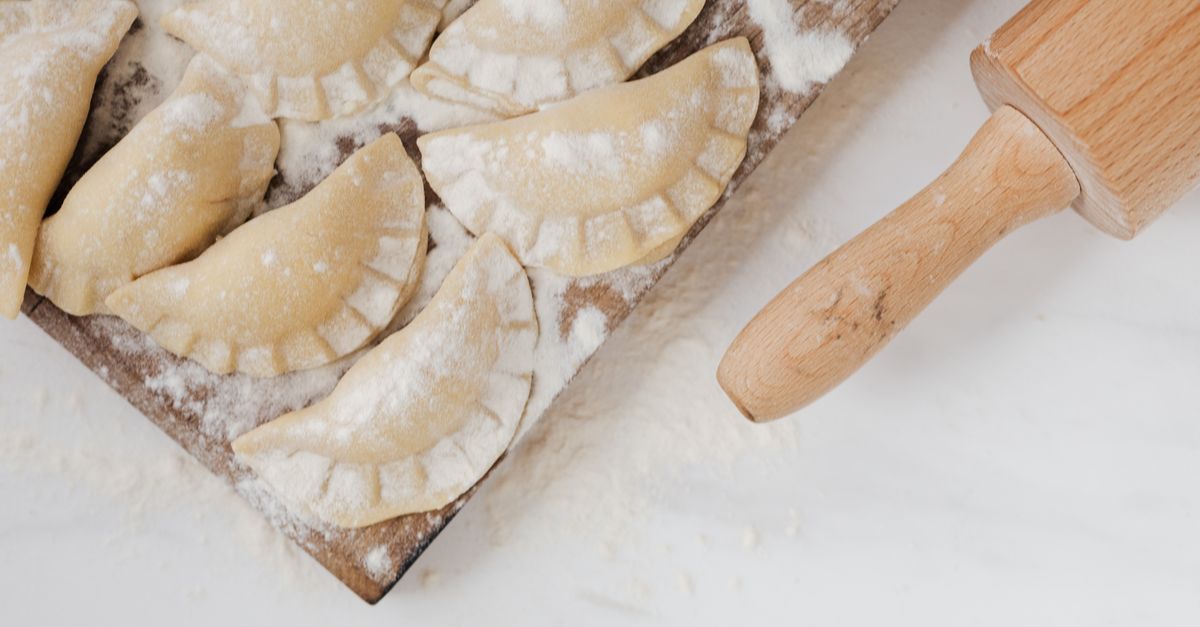
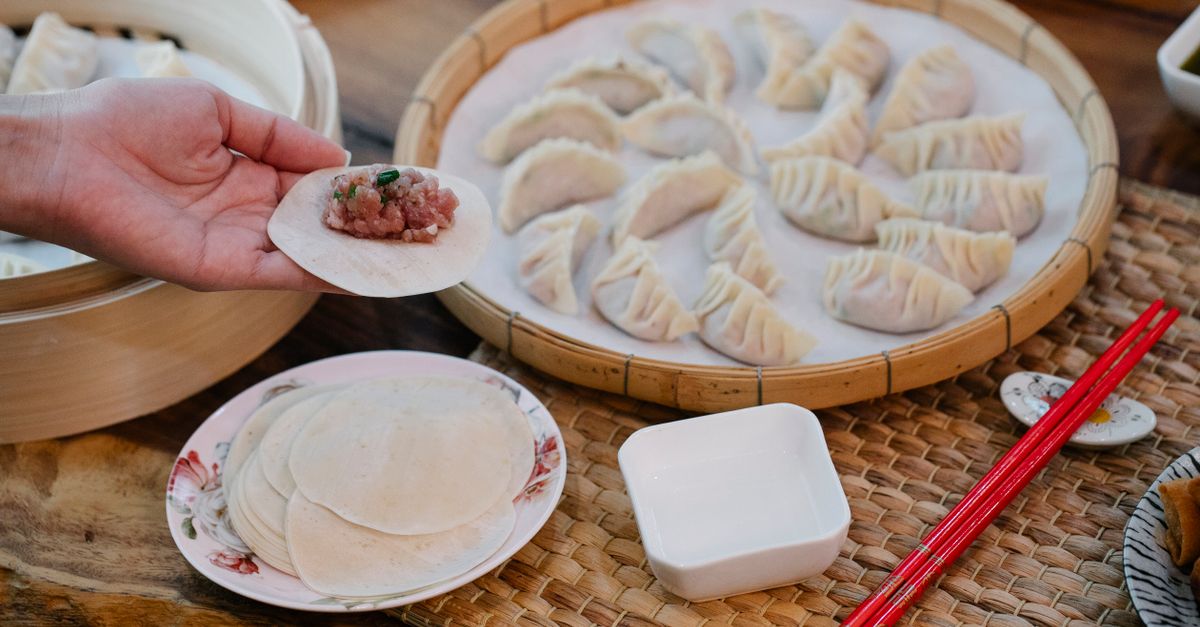
For a basic fold, place about 1 tablespoon of filling in the center, moisten the edge with a light touch of water (a fingertip dipped in water works; you don’t need egg wash unless you’re deep-frying), then fold and pleat. The classic crescent pleat involves pinching the front wrapper into small folds while pressing it against a flat back — five to seven pleats is typical. The seal should feel firm; press to expel any air pockets, which cause wrappers to burst during cooking.
If decorative pleating is taking you 10 minutes per dumpling, try the half-moon fold: fold in half and press the edges flat. It’s faster, looks clean, and holds just as well.
Cooking, Storage, and Troubleshooting
Cooking Notes by Method
Boiling: Drop dumplings into a large pot of lightly salted boiling water. Stir gently right after adding them to prevent sticking. Once they float, cook for another 2–3 minutes. Homemade wrappers are starchier than commercial ones — the water will cloud a bit; that’s normal.
Pan-frying: Heat oil in a flat-bottomed pan over medium-high. Add dumplings flat-side down and fry until golden (about 2–3 minutes), then add a splash of water (roughly 3 tablespoons), cover immediately, and steam until the water evaporates, another 3–4 minutes. This two-stage method — the classic “Shanghai fry” — gives you a crispy base with fully cooked filling.
Steaming: Line the steamer with parchment or cabbage leaves to prevent sticking. Steam over high heat for 8–10 minutes depending on filling size.
Making Ahead and Freezing
Homemade wrappers freeze well — and better when filled. Lay dumplings on a parchment-lined tray without touching, freeze solid (about 1–2 hours), then transfer to a bag. Cook from frozen; don’t thaw first or the wrapper gets soggy. Unfilled wrappers can be stacked with parchment between layers and refrigerated for up to two days, but they begin to stiffen and are best used the day they’re made.
Common Problems and Fixes
| Problem | Likely cause | Fix |
|---|---|---|
| Wrappers tear when folding | Too thin, or dough too dry | Roll slightly thicker; add a teaspoon more water next time |
| Wrapper snaps back when rolling | Gluten not relaxed | Rest the dough longer — 45–60 min minimum |
| Seams burst during cooking | Air pockets, or edge too thick/dry | Moisten edges, press out air, roll edges thinner |
| Wrapper turns gummy after boiling | Too thin, or overcooked | Target 2.5–3 mm for boiled; reduce cooking time |
| Wrappers stick together in storage | Not enough flour/starch dusting | Dust both sides with cornstarch before stacking |
Flavored and Colored Wrappers
Coloring dumpling dough is more than decorative — it’s a long tradition in festive Chinese cooking. The technique is straightforward: replace some of the water with a vegetable juice or purée.
- Green (spinach or pandan): Blanch spinach, blend with water, strain, and use the liquid. Expect a subtle green that fades slightly during cooking.
- Orange or pink (beet or carrot): Blend and strain beet juice or carrot juice. Beet color is vivid raw but shifts toward brown-pink under heat — this is normal, not a mistake.
- Black (squid ink or activated charcoal): Add ½ teaspoon squid ink or food-grade activated charcoal per cup of flour. The dough looks dramatic raw and keeps its color well after cooking.
- Purple (purple sweet potato): Steam, mash, and incorporate directly. This substitutes partly for water and adds a slight starchiness that softens the texture nicely.
Note that adding purées changes hydration. Start with slightly less water than usual and adjust.
For inspiration on natural flavorings and pigments to fold into your dough, Build a Versatile Spice Cabinet from Scratch: Skip The Stale Jars is a handy reference for building up a versatile pantry of ingredients.
Frequently Asked Questions
Can I use a pasta machine to roll dumpling wrappers?
Yes, and it speeds up the process significantly. Run the dough through at the widest setting first, then step down until you reach your target thickness. Setting 5 or 6 on most home pasta machines lands around 2–2.5 mm — roughly right for steamed or pan-fried dumplings. Cut into circles with a round cutter or the rim of a glass.
What’s the difference between dumpling wrappers and gyoza wrappers?
Gyoza is the Japanese adaptation of Chinese guotie, and the wrappers are almost identical. Commercial gyoza skins tend to be thinner and slightly more uniform than Chinese dumpling wrappers, but the homemade dough is essentially the same. Japanese recipes often call for a touch more water, producing a slightly softer skin.
Why is my dough crumbly and won’t come together?
Not enough water, or the flour absorbed more than expected (flour’s moisture content varies by brand and humidity). Add water one teaspoon at a time and knead it in fully before adding more. The dough should feel like smooth, firm Play-Doh.
Do I need a specific type of rolling pin?
No. A tapered Chinese rolling pin (about 30 cm long, thinner at the ends) gives you good control for small circles. A standard dowel, a wine bottle, or even a smooth-sided glass works. Avoid rolling pins with handles and a ball-bearing mechanism — they’re designed for pastry and give you less feedback through the dough.
Can the dough rest in the fridge overnight?
Yes, with one caveat: cold dough stiffens and needs about 20–30 minutes at room temperature before it’s pliable enough to roll without tearing. Wrap it tightly in plastic so the surface doesn’t dry out. Overnight resting actually develops a slightly smoother dough — a minor advantage if you’re prepping ahead.
Putting It Together
Making dumpling wrappers from scratch takes practice, not talent. The first batch might be lumpy or uneven — that’s fine; they’ll still taste better than frozen commercial wrappers. Focus on the three things that matter most: proper dough hydration, a full rest, and rolling the right thickness for your cooking method. Get those right and the pleating and folding become much easier. Once you have the basic doughs down, you can experiment with flavor and color, or push toward the paper-thin sheets that xiaolongbao demand. It’s a rewarding kitchen skill that compounds — each batch you make is noticeably better than the last.