How Do You Actually Cut Kitchen Food Waste?
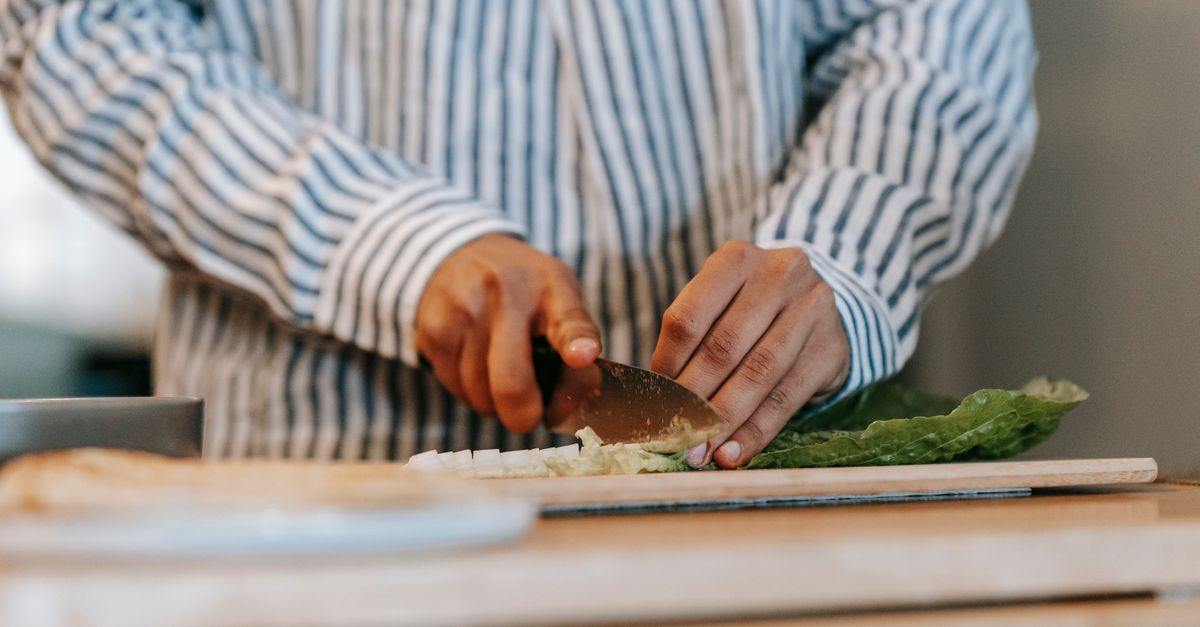
Managing food waste in the kitchen is less about willpower and more about systems. Most of it comes down to three overlapping habits: buying smarter, storing better, and cooking with what you have before it turns. Get those three working together and waste drops sharply, almost without thinking about it.
What Causes the Most Waste at Home?
The biggest culprits in most kitchens are fresh vegetables, bread, and prepared meals that get forgotten at the back of the fridge. Produce bought with good intentions spoils before it gets used; bread goes stale or moldy mid-loaf; leftovers that are not visible get ignored until they are no longer safe.
The pattern is almost always the same: the gap between what you plan to cook and what actually happens during the week. Understanding your own gap is the first practical step. Track what you throw away for two weeks. You will likely find two or three specific categories that account for the bulk of it.
Shopping in a Way That Matches How You Actually Cook
The grocery store is where most waste is committed, even if the bin is where it shows up later. Buying more than you will realistically use this week is the core problem, and it is easy to fix with a small shift in approach.
Plan meals loosely, not rigidly. A strict meal plan sounds efficient, but if Tuesday’s plan calls for salmon and you are too tired to cook it, the fish sits until it goes off. Plan a pool of ingredients for the week that can flex into two or three different dishes depending on how your week goes. Chicken thighs, for example, can become a stir-fry, a tray bake, or a soup with very little effort.
Use a running list that lives in your kitchen. Rather than trying to reconstruct what you need from memory while standing in a supermarket, keep a note (paper or phone) that you add to the moment you run low on something. This reduces both over-buying and the duplicate purchases that come from uncertainty.
Buy the size that matches your household. A single-person household buying a large bunch of fresh herbs will waste most of it. Frozen herbs, herb pastes in tubes, or a small pot on a windowsill often serve better. Match pack sizes to your real consumption rather than to the better per-unit price on the larger version.
Storage: The Difference Between Four Days and Four Hours
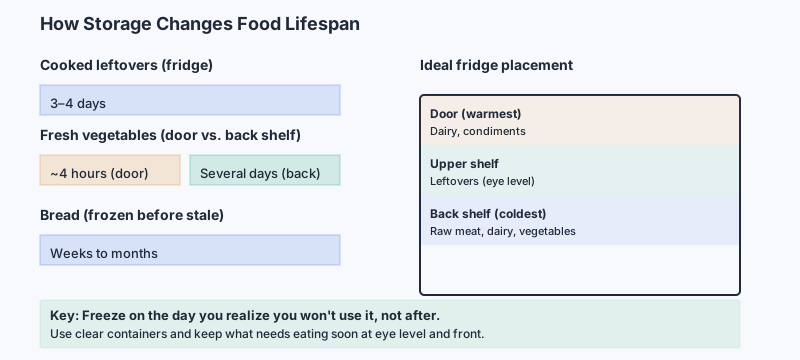
How long food lasts once it is home depends more on how it is stored than on how fresh it was when you bought it. A few specific changes here make a noticeable difference.
Temperature and placement in the fridge matter. The back of a fridge shelf is colder than the door; dairy keeps better there. Fruits that produce ethylene gas, such as apples and pears, speed up the ripening and decay of nearby vegetables if stored next to them. Keeping them separated extends the life of both.
Keep the fridge visible. Opaque containers encourage forgetting. Use clear containers or glass jars so that leftovers are visible at a glance. Place the things that need using soonest at eye level, at the front. This sounds obvious, but it is consistently the single change that has the most impact on whether leftovers actually get eaten.
Understand the difference between “use by” and “best before.” A “use by” date is a safety limit; the food should not be eaten after that date. A “best before” date is about quality, not safety: the food is typically still safe to eat after that point, though it may not be at its best. Discarding food solely because it has passed a “best before” date is one of the more preventable causes of waste. The UK Food Standards Agency explains this distinction clearly and it applies in most regulatory frameworks.
Freeze before it goes, not after. Most households wait too long to freeze food. Bread, cooked grains, soups, meat, and many cooked dishes freeze well. The habit to build is freezing something on the day you realize you will not get to it in time, not the day after.
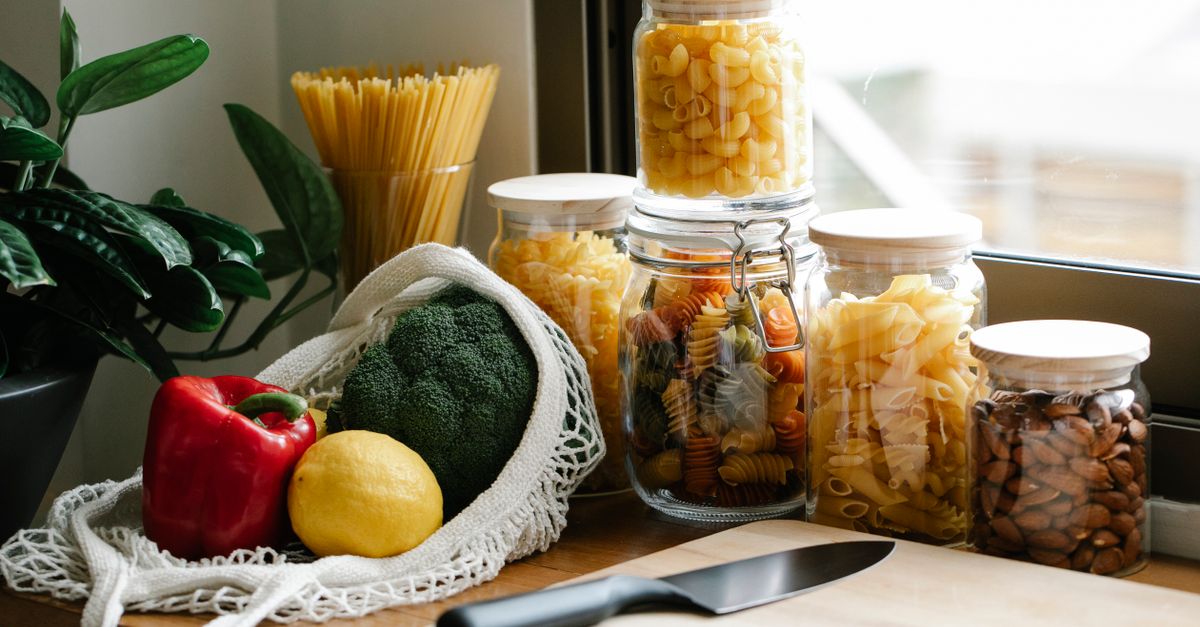
Herbs in particular wilt fast if stored carelessly, so it’s worth checking Best Ways to Store Fresh Herbs (So They Actually Last) for methods that extend their life well beyond a few days.
What Stores Well in the Freezer (and What Does Not)
Most cooked proteins, soups, stews, sauces, and bread freeze without significant quality loss. Raw eggs in their shells do not freeze; neither do most soft salad leaves, cucumbers, or whole tomatoes (though cooked or blended tomato freezes fine). Cooked pasta and rice freeze acceptably if portioned immediately after cooking, though the texture changes slightly on reheating. Knowing what works lets you commit to freezing confidently rather than guessing.
Cooking With What You Have
Once buying and storage habits are tightened, the remaining waste usually comes from ingredients that have no obvious home in this week’s meals. This is where a few cooking approaches pay back consistently.
The “end of week” cook. Pick one meal per week, usually toward the end of your shopping cycle, that is deliberately built from what is left rather than from a recipe. A frittata, a fried rice, a grain bowl, a thick soup: all of these absorb a wide range of vegetables, cooked proteins, and grains without requiring anything specific. Learning two or three of these flexible formats is more valuable than any recipe book dedicated to reducing waste.
Trim-to-table thinking. Many parts of vegetables that are habitually discarded are edible and often good. Broccoli stems, cauliflower leaves, carrot tops (in small amounts, as a herb), leek tops, and Parmesan rinds (added to soups for depth) are the most practical examples. This is not about being frugal in an ascetic sense; it is about not throwing away something that tastes fine.
Portion cooking more carefully. Cooking too much is the most common route to wasted leftovers. If your household reliably does not eat reheated rice or pasta, cook smaller amounts rather than hoping this time will be different.
When Something Has Already Gone Too Far
Not everything can be saved, and attempting to use spoiled food creates genuine safety risks. The practical rule is: if there is visible mold on soft foods (soft fruits, cooked leftovers, soft cheeses, bread), discard the item. Mold on a soft food has typically penetrated further than the visible surface suggests. Hard cheeses and firm root vegetables with surface mold can sometimes be salvaged by cutting away a generous margin around the affected area, but the benefit is usually small and the judgment call requires care.
For cooked food that has been sitting in the fridge: when in doubt about whether something is still safe, the guidance from food safety authorities is consistent. Cooked food stored properly in the refrigerator is generally safe for a few days, but the exact window depends on the specific food, storage temperature, and how it was handled. If there is any doubt about safety, discarding it is the right call. No recipe or environmental argument overrides a genuine food safety concern.
Composting as a Last Resort, Not a First One
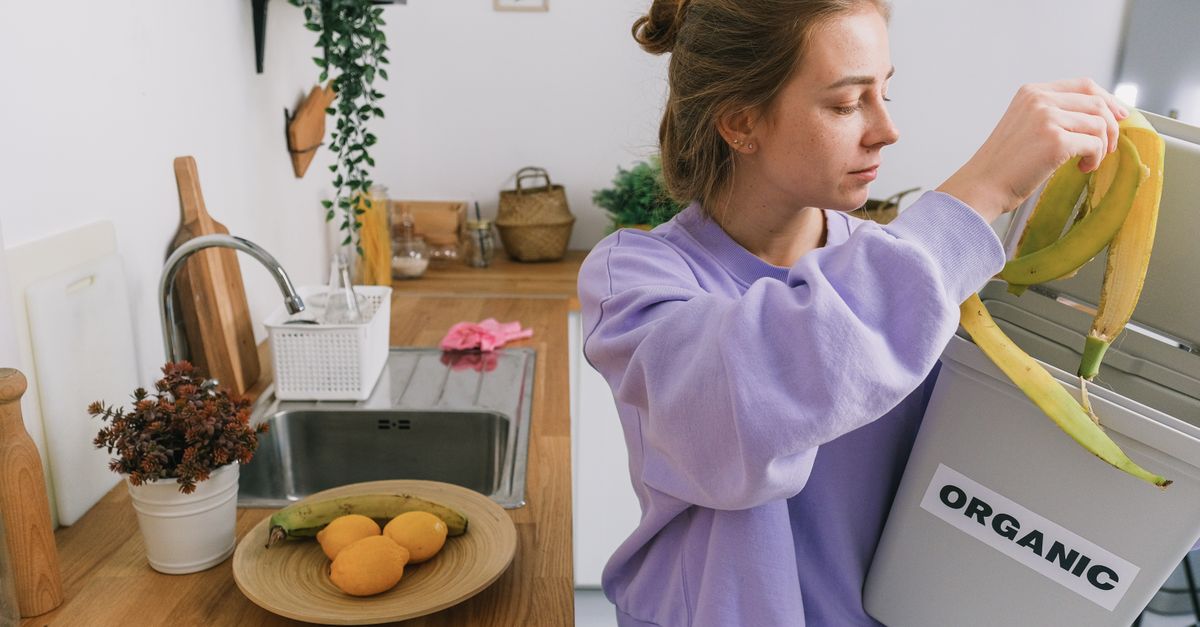
Composting food scraps is genuinely useful and far better than landfill. But it is easy to use composting as psychological permission to buy and waste more than you need to, reasoning that it will be composted anyway. Composting is valuable for the unavoidable scraps: peelings, cores, coffee grounds, eggshells. It is less defensible as a routine destination for food that could have been eaten.
If you have outdoor space, a simple compost bin handles most kitchen scraps. In a flat without outdoor access, a countertop bokashi system, a small worm bin, or a local food waste collection service are the realistic alternatives.
Before you toss those vegetable trimmings into the compost bin, consider turning them into something useful first, as explained in Homemade Vegetable Broth from Kitchen Scraps: Save Scraps, Skip Waste.
Frequently Asked Questions
How long can cooked food safely sit in the refrigerator?
The safe window varies by food type and storage temperature. As a general principle, most cooked dishes kept in a covered container in a fridge set at or below 5°C (40°F) are safe for roughly three to four days. Fish and shellfish are best eaten sooner. If you are unsure, check guidance from a food safety authority rather than relying on a rule of thumb.
Is it safe to refreeze food that has already been frozen and then thawed?
Food that has been thawed in the refrigerator (not on the counter) can generally be refrozen, though the texture may deteriorate with each freeze-thaw cycle. Food thawed at room temperature should be cooked before refreezing, not refrozen raw. Never refreeze food that has been left at room temperature for more than two hours.
What is the most impactful single change someone can make to reduce food waste?
The evidence points consistently to visibility in the fridge. Moving food that needs using soon to the front and into clear containers costs nothing and prevents the “I forgot it was there” losses that account for a large share of household waste.
Does freezing food kill bacteria that might already be present?
Freezing pauses bacterial growth but does not kill bacteria that were already in the food before freezing. When food is thawed, any bacteria that were present before freezing become active again. This is why food safety guidance stresses that you should freeze food while it is still in good condition, not after it has already been sitting too long.
Are “use by” and “best before” dates the same thing?
They are not, and confusing them contributes to unnecessary waste. A “use by” date is a food safety instruction: the food should not be eaten after that date regardless of how it looks or smells. A “best before” date refers to quality: the food is typically still safe after that date, though it may have declined in texture, flavor, or nutritional value. The UK Food Standards Agency provides clear guidance on this distinction.