Oven-Roasting a Whole Fish to Flaky Perfection
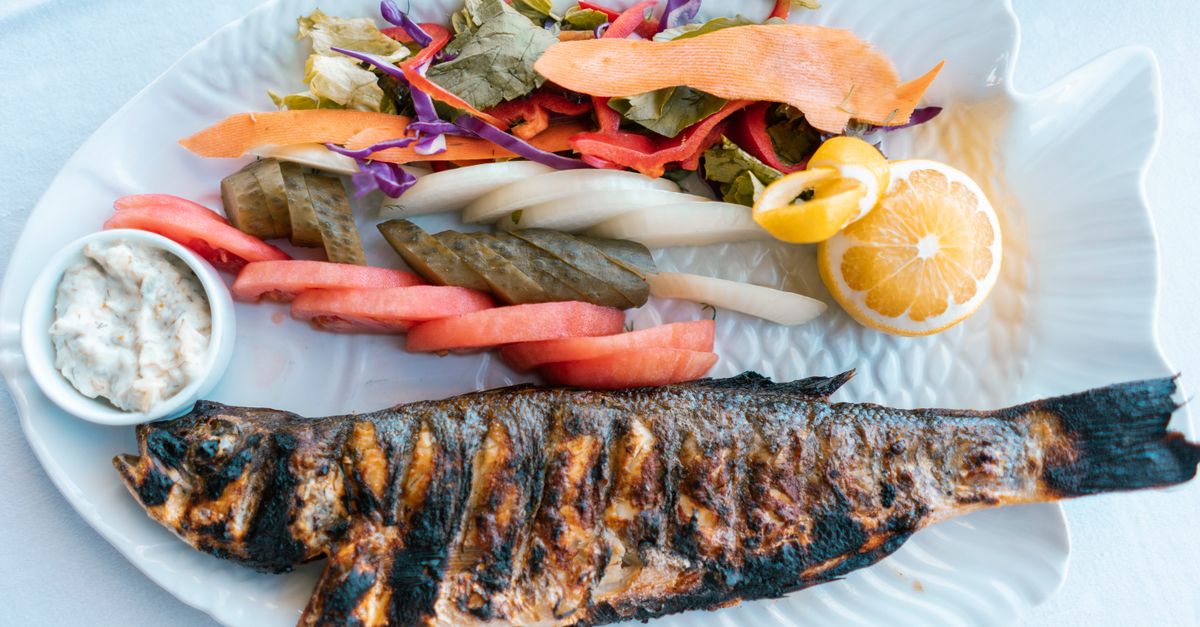
Cooking a whole fish in the oven is one of the most forgiving techniques in home cooking. The skin and bones act as natural insulation, keeping the flesh moist while the oven does most of the work. The result is juicier, more flavorful than fillets, and the presentation is genuinely impressive with very little extra effort.
Choosing the Right Fish for Oven-Roasting
Not every fish behaves the same in the oven, so the choice matters. Look for species that are firm enough to hold their shape when lifted and have a moderate fat content — too lean and they dry out quickly, too oily and the flavor can become overpowering at high heat.
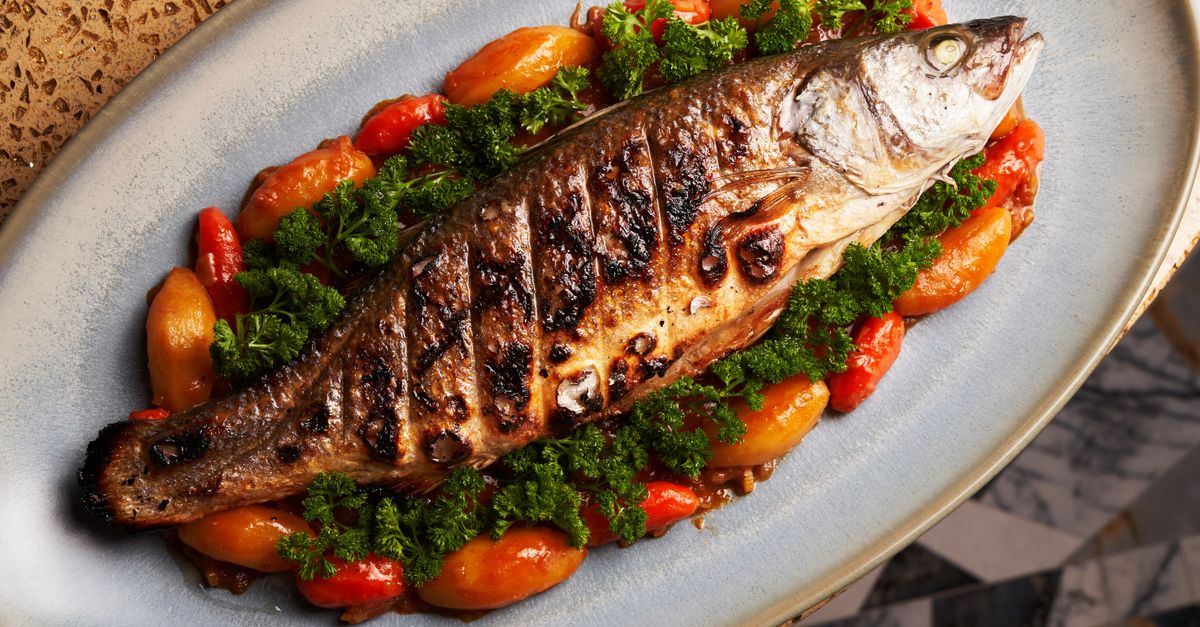
Good all-around options include sea bass, branzino, snapper, dorade (sea bream), and trout. Salmon is workable but its higher oil content means it cooks faster than you might expect. Tilapia can be done whole but its thinner body means you need to watch it closely.
For size, a fish that weighs around 1 to 1.5 lb (roughly 450–700 g) after gutting will typically serve one person as a main. A 2 to 3 lb fish serves two comfortably. The single most useful thing you can do is ask your fishmonger to scale and gut the fish for you — they will do it in seconds.
What to look for when buying: clear, bright eyes (not cloudy or sunken); firm flesh that springs back when pressed; bright red or pink gills, not brown or grey; a clean, ocean-like smell rather than a strongly “fishy” one.
Preparing the Fish Before It Goes In
Once home, pat the fish dry inside and out with paper towels. Moisture on the skin is the enemy of a good crust; a dry surface is what allows the skin to crisp up rather than steam.
Score the flesh: Use a sharp knife to cut 3 or 4 diagonal slashes through the skin down to the bone on each side. These cuts serve two purposes — they let heat penetrate more evenly, and they give seasoning a direct path to the flesh. Space the slashes about an inch apart and angle them roughly 45 degrees.
Season generously: Rub the outside with olive oil first, then salt — including inside the cavity and inside each slash. Sea salt or kosher salt works well here because the coarser grains stick to the skin and draw out a little surface moisture as the fish rests, which furthers the crisping effect.
Fill the cavity: This is where whole fish cooking really opens up. Stuff the belly with aromatics: a couple of lemon slices, a few sprigs of thyme or rosemary, two or three smashed garlic cloves, a bay leaf. These steam gently inside the fish as it roasts, pushing fragrance through the flesh from the inside.
Let the prepared fish rest at room temperature for about 15 to 20 minutes before cooking. A fish going straight from the refrigerator into a hot oven takes longer to cook evenly through, which increases the chance of the outside overcooking before the center is done.
Many of the same prep principles apply to poultry, so How to Roast a Whole Chicken: Crisp Skin Starts With Prep is a useful companion guide for getting crisp results with another whole roast.
Oven Temperature and Timing
There is no single correct temperature, but there are two distinct approaches and they produce noticeably different results.
High Heat (220–230°C / 425–450°F): Crispy Skin Priority
This is the most common choice and the one to reach for when you want the skin to crisp up. At this temperature, a 1 to 1.5 lb fish will be done in roughly 12 to 16 minutes. A 2 to 3 lb fish takes closer to 20 to 25 minutes, though the exact time depends on how thick the fish is at its widest point, not just its weight.
Place the fish on a lightly oiled rimmed baking sheet or in a shallow roasting pan. Do not crowd the pan — if you are cooking two fish, use two pans or roast them in batches. Crowding traps steam and the skin will not crisp.
Moderate Heat (180–190°C / 350–375°F): Gentler and More Forgiving
Lower heat is better for larger fish or for beginners worried about timing. The flesh stays moist for longer before it dries out, giving you a wider window to catch it at the right moment. Skin will not be as crispy, but the flesh tends to be more evenly cooked through.
At this range, a 2 lb fish takes roughly 25 to 30 minutes, though again this varies by thickness.
How Do You Know It Is Done?
The most reliable method is a probe thermometer. The internal temperature at the thickest part (along the backbone) should read 60°C / 140°F for most white-fleshed fish. The flesh should be opaque and should separate cleanly from the bone when you press it with a fork near the slash marks — the flesh will begin to flake along its natural lines.
If you do not have a thermometer, slide a thin knife or skewer into the thickest part and hold it there for 5 seconds. Pull it out and touch it to your wrist — it should feel warm, not cool or cold.
Building Flavor: Marinades, Rubs, and Sauces
Whole fish absorbs flavor well through the cavity and the score marks, so there is no need for long marinating times. Fifteen to thirty minutes is typically enough. Longer marinades with acid (lemon juice, wine, vinegar) can begin to “cook” the surface of the flesh and make it mushy, so keep acid-heavy marinades short.
Simple Mediterranean style: olive oil, lemon zest, minced garlic, fresh thyme, salt, pepper. Rub into the slashes and cavity, roast at high heat.
Miso and ginger: white miso thinned with a little sake or mirin, freshly grated ginger, a touch of sesame oil. Brush over the scored skin. Use moderate heat since miso sugar burns quickly at very high temperatures.
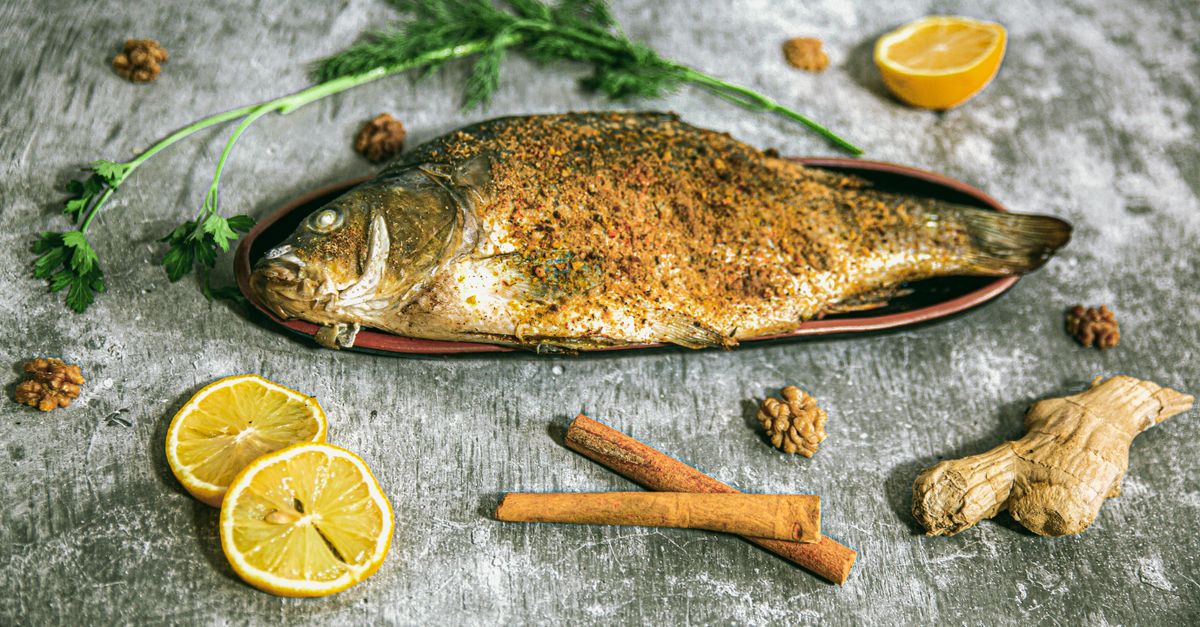
Spiced North African style: ground cumin, coriander, smoked paprika, a pinch of cayenne, mixed into olive oil to form a paste. Push the paste into each slash and the cavity.
For sauces served alongside rather than during cooking, consider a simple salsa verde (parsley, capers, lemon, olive oil) or a quick pan sauce made by deglazing the roasting pan with a splash of white wine after the fish comes out.
Serving a Whole Roasted Fish at the Table
Serving a whole fish looks dramatic but it is not difficult once you know the sequence. You need a large spoon and a fork, or two forks.
- Run a fork or knife along the lateral line (the visible seam running down the center of the fish) to divide the top fillet into portions.
- Lift each portion away from the bones — the flesh will come away cleanly.
- Once the top fillet is served, lift the tail and pull the spine and rib bones away as one piece. The bottom fillet will be underneath, ready to portion.
- Discard the aromatics from the cavity unless guests want to chew on a softened lemon slice (some do).
Drizzle with a little fresh olive oil and a squeeze of lemon right before serving. The fish will hold heat for a few minutes, so there is no need to rush.
Frequently Asked Questions
Do you need to remove the scales before roasting?
Yes, if you plan to eat the skin. Scales left on create an unpleasant texture and will not crisp up. Most fishmongers will scale the fish at no extra cost — just ask. If you are doing it at home, scrape firmly from tail to head with the back of a knife or a fish scaler under running water to control the mess.
Can you roast a whole fish on a bed of vegetables?
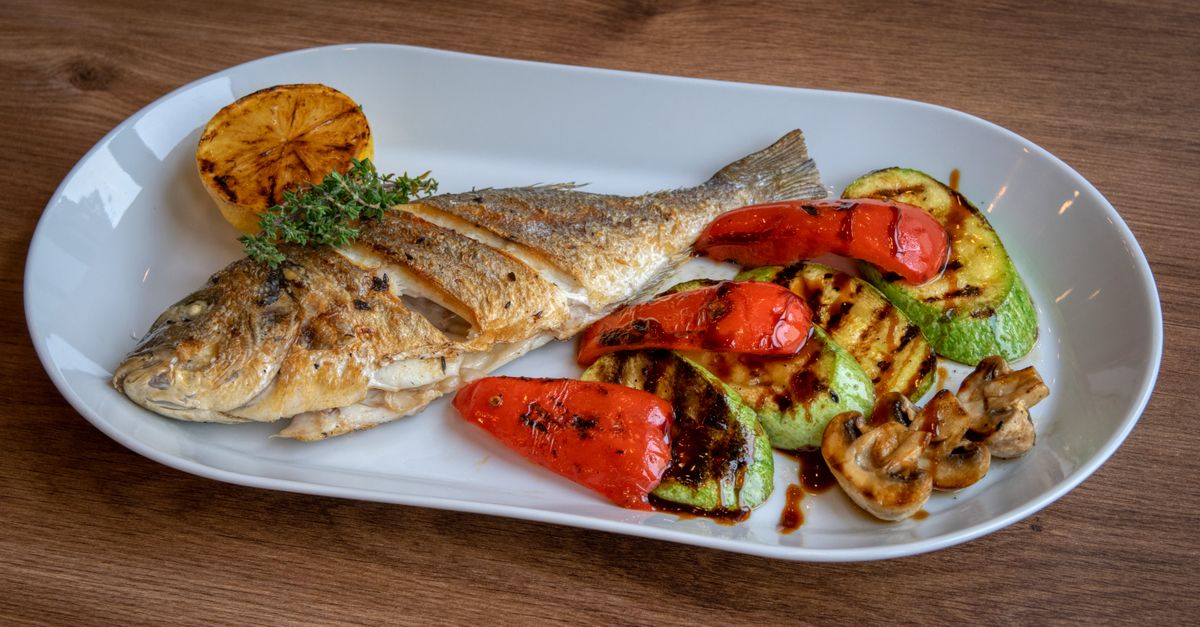
You can, and it is a good way to build a complete dish. Dense vegetables like sliced fennel, cherry tomatoes, and thin-sliced onion work well; they soften in the fish’s juices. Keep in mind that the vegetables will release moisture as they cook, which can prevent the skin from getting truly crispy. If crispy skin matters to you, roast the vegetables partly first, then add the fish for the final portion of the cooking time.
If you want to perfect the vegetable side of this technique, Roasting Vegetables for Perfect Caramelized Edges explains how to get those edges caramelized instead of soggy.
What is the best way to avoid the fish sticking to the pan?
Oil both the fish and the pan. A lightly oiled piece of parchment paper on the baking sheet reduces sticking further and makes cleanup easier. You can also place the fish on a thin bed of lemon slices, which acts as a natural rack and adds flavor. Do not try to move the fish until it is clearly releasing from the surface — at high heat the skin will naturally let go once it has crisped.
Why does the flesh near the head cook slower than near the tail?
The flesh near the tail is thinner and cooks faster. The area behind the head and along the backbone is the thickest part and takes the most time. This is why scoring matters — cuts near the thickest part let heat in closer to the bone. If you notice the tail end is done but the backbone area is still translucent, tent a small piece of foil over the tail while the rest finishes.
How should leftover roasted fish be stored?
Pick the flesh off the bones before refrigerating — whole carcasses are harder to store and the picked flesh lasts just as well. Keep it in a sealed container and eat it within two days. Cold leftover fish is excellent in salads, pasta, tacos, or fish cakes. Reheating it in an oven tends to dry it out; a gentle warm-through in a covered skillet with a splash of water or olive oil keeps it moist.