A Good Salad Spinner Transforms How You Wash Greens
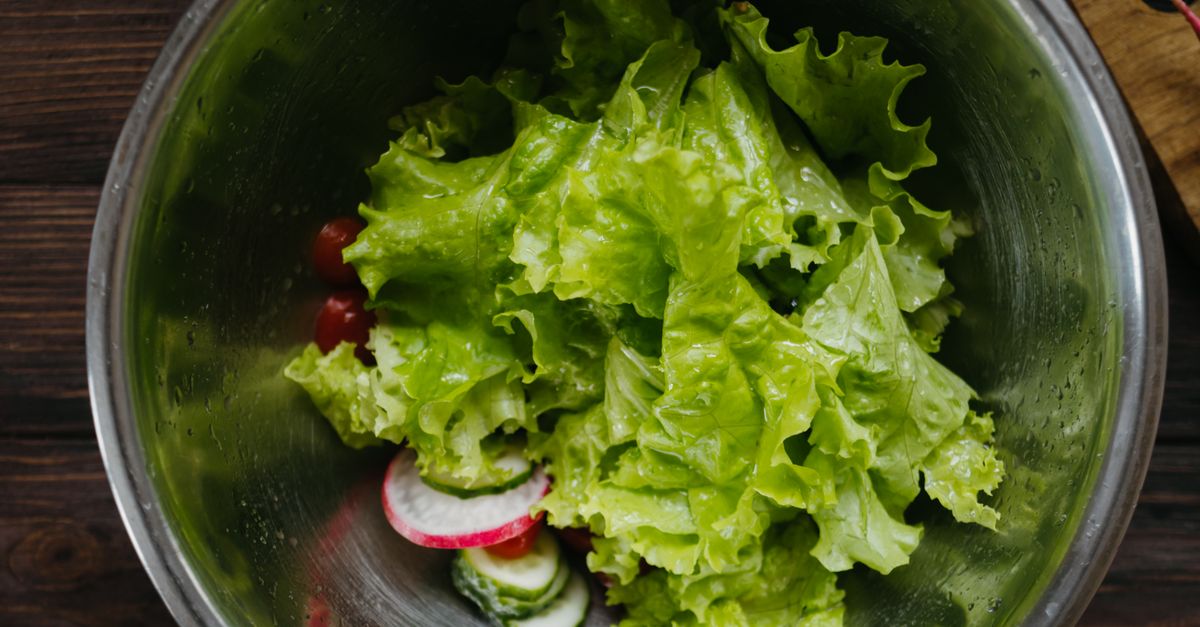
Wet lettuce is the enemy of a crisp salad. Dressing slides off, greens wilt faster in the fridge, and your knife work feels wasted. A salad spinner solves all of that at once — but only if you choose one that actually fits your kitchen, your batch size, and the way you cook.
This guide walks through what separates a genuinely useful spinner from a frustrating one, covering every variable that matters: bowl size, spin mechanism, build quality, and the specific ways different greens behave when you wash and dry them.
Why Drying Greens Matters More Than Most Cooks Realize
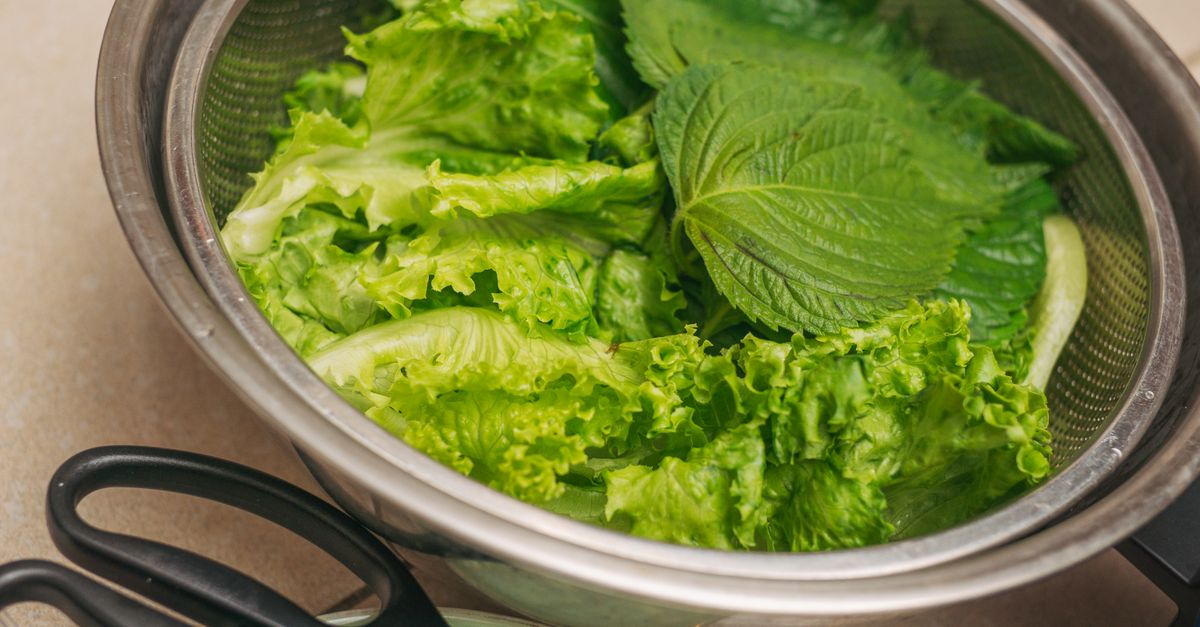
Water left on salad leaves does more than dilute dressing. Moisture accelerates cell breakdown once greens are cut, so a spinner is also a storage tool: dried greens layered with a paper towel inside an airtight container will typically stay crisp for several days longer than wet ones. The difference is most obvious with delicate leaves like baby spinach and butterhead lettuce, which collapse into slime quickly if stored damp.
For cooked applications — stir-fried bok choy, sautéed kale, wilted arugula — excess water steams the pan instead of letting the vegetables char or sear. A thorough spin cycle before cooking changes the texture of the finished dish.
The food safety angle matters too. A spinner lets you wash greens properly without worrying that half-heartedly patting them dry with paper towels has left grit or surface contamination behind. Washing under running water and then spinning out the excess is the practical way to reduce microbial load on raw produce.
Cutting down on wilted, wasted produce is also one of the easiest wins covered in Simple Ways to Save Money on Groceries (Without Couponing All Day).
What to Look for When Choosing a Salad Spinner
The market splits cleanly into a few design categories. Each has genuine strengths and genuine failure modes.
Pull-cord spinners
These use a retractable cord wound around a spindle — you pull the handle to accelerate the basket, release, and the cord rewinds automatically. Pull-cord models tend to reach high RPM quickly and are the choice of most professional kitchens. The trade-off is mechanical complexity: the cord housing and ratchet mechanism are the parts most likely to fail after heavy use, and they are rarely repairable. If the cord snaps or the spindle cracks, the whole unit is done.
Push-button (pump) spinners
A central pump button replaces the cord. Each press of the button drives the basket in one direction; a separate brake button stops it. These feel more controlled and are generally easier for people with limited grip strength. They are also, in most cases, sturdier over time because there are fewer moving parts to fatigue. The spin rate is lower than a well-used pull-cord model, but for most home cooks the difference is undetectable in the result.
Flat-handle (crank) spinners
Less common today, but still available. A rotating handle on the lid turns the basket. They are quiet, controllable, and work well for small batches, but they are slower to spin up and the handle sticks out, which makes storage awkward.
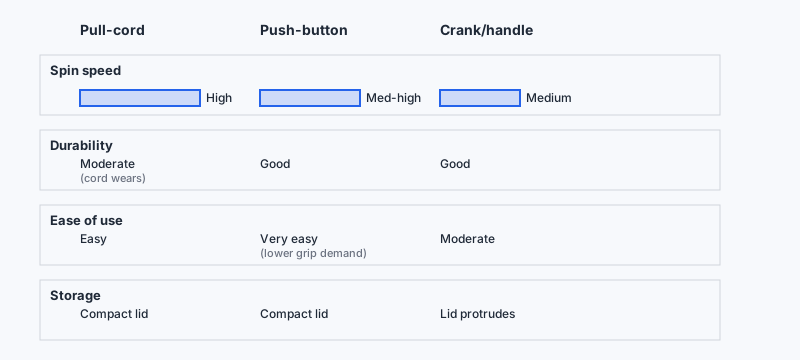
| Type | Spin speed | Durability | Ease of use | Storage footprint |
|---|---|---|---|---|
| Pull-cord | High | Moderate (cord wears) | Easy | Compact lid |
| Push-button (pump) | Medium-high | Good | Very easy, lower grip demand | Compact lid |
| Crank/handle | Medium | Good | Moderate | Lid protrudes |
Bowl size and capacity
This is the decision most buyers get wrong. A spinner that is too small forces you to work in multiple batches every time you wash a head of romaine or a bunch of kale. A spinner that is too large takes up half the cabinet and is slow to spin because the basket never fills enough to create useful centrifugal resistance.
For a single person or a couple preparing side salads, a medium basket (roughly the size of a large mixing bowl) is usually enough. For families, or for anyone who meal-preps a week’s worth of greens at once, you want a large capacity spinner. The best way to judge: bring your usual bunch of kale or your standard head of romaine to the store (or look up the manufacturer’s listed basket diameter) and compare it to how much you wash at once.
What the basket and bowl should do
The basket is the colander that holds the greens; the outer bowl catches the water and doubles as a serving or storage bowl. Look for:
- Basket hole size: Small enough to keep baby arugula and herb leaves from slipping through. Spinners designed for larger heads of lettuce often have wider-spaced holes that let small leaves escape or get caught.
- Bowl flatness: A flat-bottomed outer bowl sits stably on the counter and in the fridge. Curved or domed bottoms rock under load.
- Lid clip or lock: A lid that can clip shut turns the bowl into a storage container for the fridge, which is one of the genuinely useful features a good spinner offers.
- Non-slip base: Silicone feet or a suction base stop the bowl from spinning across the counter while you pump or pull.
Material and cleaning
Virtually all modern salad spinners use BPA-free polycarbonate or food-grade polypropylene for the bowl and basket. The difference in practice is weight and clarity: polycarbonate tends to be clearer (which looks nicer as a serving bowl) but can be heavier. Polypropylene is lighter, often more impact-resistant, and handles temperature changes better.
The lid mechanism — the pump, cord housing, or crank — is almost never dishwasher-safe on any spinner. The bowl and basket almost always are. Check the manufacturer’s instructions before putting any part in the dishwasher; heat can warp the bowl and deform the basket, ruining the fit.
For a thorough clean of the lid, disassemble it as far as the manufacturer allows and use a narrow brush (a bottle brush or old toothbrush) to clear the spindle housing, where debris and mold love to collect.
How Different Greens Behave in a Spinner
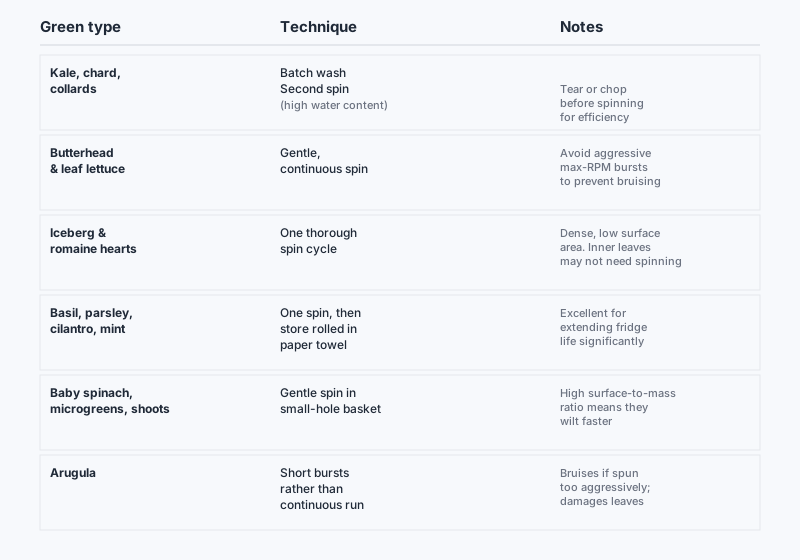
Not all leaves need the same treatment. Matching your technique to the green makes a noticeable difference.
Sturdy leaves (kale, chard, collards): Wash in batches since they are bulky. A second spin after emptying the first round of water is worth it — these thick leaves hold a lot of moisture in the wrinkled surface. Tear or chop before spinning if you want efficient drying.
Tender butterhead and leaf lettuces: Gentle, continuous spinning rather than aggressive bursts. Forceful over-spinning at maximum RPM can bruise soft leaves against the basket wall.
Iceberg and romaine hearts: Dense and relatively low in surface area per gram of leaf. One thorough spin cycle is usually sufficient. The inner pale leaves of iceberg barely hold water and often do not need spinning at all.
Herbs (basil, parsley, cilantro, mint): A spinner is excellent for herbs. Spin once, then roll the herbs loosely in a paper towel inside the fridge — they last significantly longer than herbs stored upright in water once they have been fully dried.
Baby spinach, microgreens, pea shoots: Use a spinner with small-holed basket mesh. Spin gently; very small leaves dry quickly and can bunch up if over-spun. These benefit most from the fridge-storage trick because their high surface-to-mass ratio means they lose moisture and wilt especially fast.
Arugula: Peppery arugula bruises if you spin it too aggressively. Short bursts rather than long continuous runs.
Getting the Most Out of Your Spinner
Fill the basket to about two-thirds capacity — overfilling reduces spin efficiency because leaves pack together and stop water from being thrown to the outer wall. Under-filling means there is not enough mass to maintain momentum.
After spinning, pour out the collected water and spin a second time without adding more water. That second dry spin typically removes a surprising amount of residual moisture.
If you meal-prep, spin your greens in larger batches, then store them directly in the outer bowl with a lid clipped on — or transfer to a container with a damp paper towel at the bottom (not wet, damp) to maintain just enough humidity to prevent desiccation without introducing the sliminess of excess water.
For the food safety baseline: washing produce thoroughly under running water before spinning is the standard recommendation for reducing surface contamination. A salad spinner is not a substitute for that step; it comes after it.
Frequently Asked Questions
Does a salad spinner also work for washing produce, or just drying it?
The spinner itself is a dryer. Washing happens in the sink under running water, in a colander, or by filling the outer bowl and swirling the basket in it. Most people use the outer bowl as a wash basin — fill it, submerge the basket of greens, agitate, lift the basket out, and then spin. The centrifugal step only removes water that is already on the leaves.
Once your greens are dry, keeping them that way matters just as much, so check out How to Store Leafy Greens So They Stay Crisp Longer for tips on making them last.
Can you spin herbs without damaging them?
Yes, with care. Use a brief spin rather than a full continuous run. The main risk with herbs is bruising the stems and leaves against the basket wall at high speed, which releases oils and accelerates browning on basil in particular. Two or three short pumps or a few seconds of cord pull is usually enough.
Is a larger spinner always better?
Not for everyone. A large spinner is harder to store, heavier to use, and slower to build effective spin speed when you only have a small handful of greens in it. Match the spinner capacity to the typical batch you wash. If you regularly cook for four or more people or prep a week’s worth of greens at once, go large. For single-serving salads, a smaller spinner is faster, easier to clean, and easier to store.
How do you get mold out of the lid mechanism?
Disassemble the lid as far as the manufacturer allows. Use a narrow brush, warm water, and mild dish soap to scrub the inside of the spindle housing and any channel where the cord or pump plunger travels. Rinse well and leave the lid in parts to air-dry completely before reassembling. If mold returns quickly, the mechanism is probably retaining water and may need more frequent disassembly after each wash.
Do salad spinners really extend the fridge life of greens?
Drying greens before storage is a well-established kitchen practice for extending crispness, and the reasoning is sound: moisture accelerates both physical wilting and microbial breakdown of cut leaf tissue. How much longer your greens last depends on the green, the temperature of your fridge, and how thoroughly you dried them. The effect is real, but results vary with conditions. Butterhead lettuce and baby spinach show the biggest difference; dense romaine hearts show less.