Compound Butter Takes Minutes and Transforms Any Meal
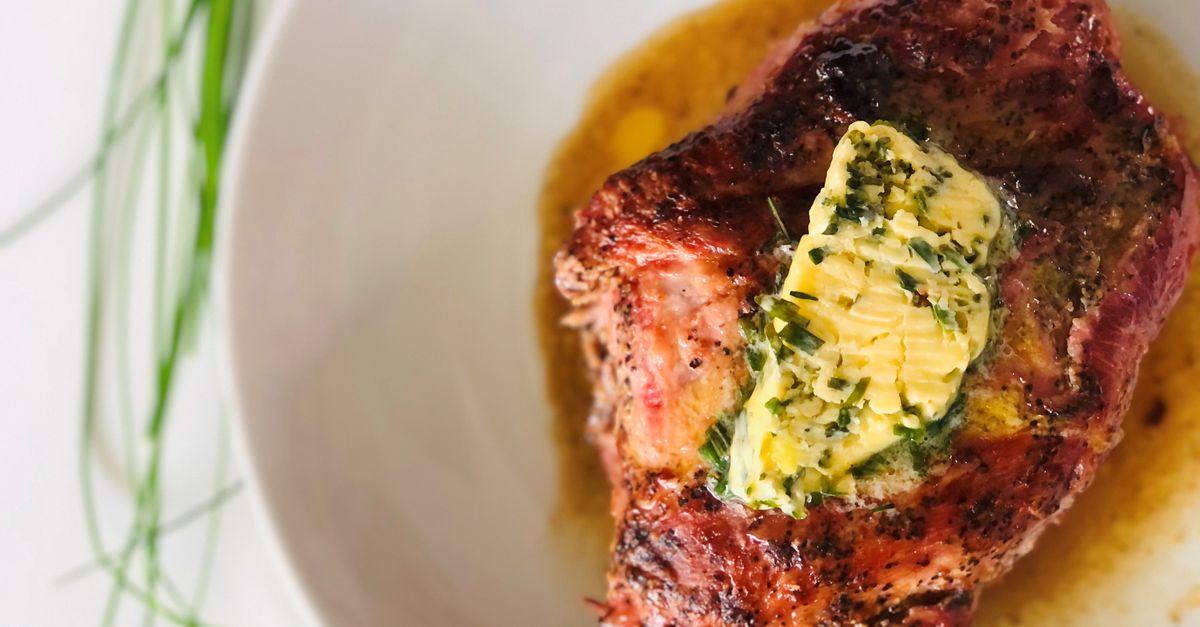
Softened butter, a few aromatics, and a quick roll in plastic wrap: that is the entire process. Compound butter is one of the most practical things you can prep on a Sunday afternoon, because a single batch flavors a week of weeknight dinners without any extra work at the stove.
The concept is simple: mix flavorings into room-temperature butter, shape it into a log, chill it, and slice off rounds as needed. Each slice melts over hot food and delivers a concentrated hit of flavor that plain butter never quite manages.
What Butter Should You Start With?
Unsalted butter gives you complete control over seasoning, which matters more here than in most recipes because you are adding salt from other sources (cheese, anchovies, soy sauce, miso). Salted butter is not wrong, but taste carefully before adding more salt.
Fat content changes the texture noticeably. Standard butter in most markets runs around 80% butterfat. European-style butter typically sits higher, around 82–84%, and that extra fat makes for a creamier, richer mouthfeel that shows up clearly in a compound. If you can find it and the cost is reasonable, it is worth trying at least once.
The butter must be genuinely soft before you start: not melted, but soft enough that a spoon drags through it without resistance. Pull it from the fridge one to two hours before you plan to mix, depending on your kitchen temperature. Rushing this step with a microwave almost always gives you a partially melted mess that is hard to shape and separates slightly when chilled.
If your butter is rock-hard and you’re in a hurry to get started, How to Soften Butter Quickly: Skip The Microwave Meltdown offers a few quick fixes that beat the microwave.
The Core Method
These steps apply to every variation.
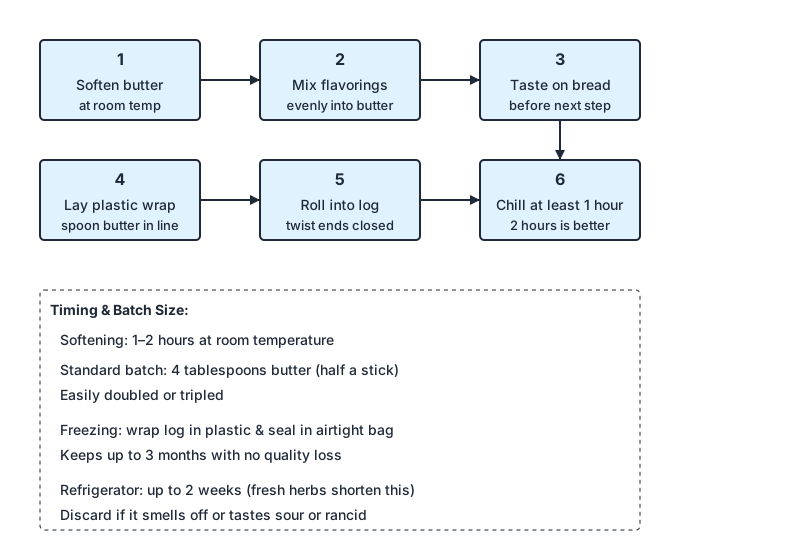
- Soften the butter fully at room temperature. A standard batch starts at around four tablespoons (half a stick), but there is no reason you cannot double or triple it.
- Mix your flavorings in. A fork works for small batches. A rubber spatula or a stand mixer fitted with a paddle works better for larger ones. The goal is even distribution, with no pockets of un-mixed herb or spice.
- Taste it. This is the step most people skip. A small smear on a piece of bread tells you exactly what a slice will taste like on a steak, a piece of fish, or a bowl of pasta.
- Lay a sheet of plastic wrap flat. Spoon the butter in a rough line across the lower third of the sheet.
- Roll it into a log. Fold the bottom edge of the wrap over the butter, press gently to compact it, and roll forward while twisting the ends closed like a candy wrapper. Aim for an even cylinder so you get consistent rounds when you slice.
- Chill. At least an hour in the refrigerator firms it enough to slice cleanly. Two hours is better.
To freeze: place the wrapped log inside a zip-lock bag or an airtight container. It keeps well for up to three months with no meaningful quality loss, which is the main reason to make a large batch.
Flavor Combinations Worth Making
The combinations below are genuinely useful rather than just decorative. Each one works differently on different foods.
Herb and Garlic
Mince garlic finely (raw garlic is pungent; roasted garlic is sweeter and mellower), then mix with chopped flat-leaf parsley, thyme, and a little lemon zest. This is the version most people make first, and it is good on steak, roast chicken, grilled bread, or steamed vegetables. A few flakes of flaky salt stirred in at the end add texture.
Brown Butter Base
Melt the butter in a light-colored pan over medium heat, stirring until the milk solids turn golden-brown and smell nutty. Pour it into a bowl and refrigerate until just barely solid again, then whip it and treat it like softened butter from there. Brown butter compound is exceptional on pasta, gnocchi, roasted carrots, or pancakes.
Miso and Ginger
White miso is mild and works well here. Start with roughly one teaspoon of miso per two tablespoons of butter, add fresh grated ginger, and a small drizzle of toasted sesame oil. Taste before adding any salt: miso is already salty. This version is excellent on salmon, soba noodles, roasted mushrooms, or corn.
Anchovy and Caper
Two or three anchovy fillets finely minced, a few capers also finely chopped, a little lemon juice, and some black pepper. The anchovy flavor mostly disappears into the butter: what you taste is a deep savory richness rather than fishiness. Excellent on lamb, on grilled steak, or melted onto roasted broccoli.
Blue Cheese and Walnut
Crumble the blue cheese finely and fold it in with toasted walnuts (chopped, not whole) and a little fresh thyme. Because blue cheese is already salty and rich, this version needs almost nothing else. It is strong enough that a small slice goes a long way. Good on burgers, on a thick cut of beef, or on endive leaves as a quick appetizer.
Honey and Cinnamon
A simpler sweet direction: raw honey, ground cinnamon, and a pinch of flaky salt. Goes on cornbread, biscuits, waffles, sweet potatoes, or winter squash. The salt stops it from reading as pure dessert.
| Variation | Best on | Key salt watch |
|---|---|---|
| Herb and garlic | Steak, chicken, grilled bread | Taste before adding extra salt |
| Brown butter | Pasta, roasted veg, pancakes | Generally unsalted |
| Miso and ginger | Salmon, mushrooms, corn | Miso is already salty |
| Anchovy and caper | Lamb, beef, roasted brassicas | Anchovies and capers both add salt |
| Blue cheese and walnut | Burgers, beef, endive | Blue cheese is very salty |
| Honey and cinnamon | Cornbread, squash, waffles | A pinch of salt balances sweetness |
How to Use Compound Butter
The most obvious use is the finishing pat: pull hot protein off the heat, place a slice on top, and let it melt over the surface. Steak, pork chops, salmon fillets, and chicken thighs all respond well to this.
Beyond that:
- Pasta sauce shortcut. Reserve a cup of pasta cooking water. Toss the drained pasta with two or three slices of herb or miso butter, adding pasta water a splash at a time until you have a glossy, emulsified sauce.
- Under poultry skin. Push softened compound butter between the skin and flesh of a whole chicken or turkey before roasting. It bastes the meat from the inside and browns the skin.
- Roasting vegetables. Toss cut vegetables with a slice of melted compound butter instead of plain oil before putting them in the oven. The milk solids brown slightly and add flavor.
- Compound butter toast. A thick slice of good bread, toasted, with a round of blue cheese or anchovy butter melting into it: that is a complete appetizer.
- Scrambled eggs. Finish the eggs off the heat with a small slice of herb butter instead of the usual plain butter. The difference is immediate.
For a fun way to serve your finished batch alongside other spreads and toppings, check out Flavored Butter Boards: The Complete How-To Guide.
Storing and Knowing When It Has Turned
In the refrigerator, most compound butters keep for up to two weeks if the add-ins are fresh aromatics, dairy, or cured ingredients. Fresh herbs and garlic shorten shelf life slightly compared to dried spices or roasted aromatics, because they carry more moisture and surface bacteria. If anything smells off, or the butter has developed a sour or rancid note, discard it.
In the freezer, three months is a reasonable horizon for best quality, though it often stays usable beyond that. Slice the log before freezing if you want to pull individual rounds without defrosting the whole thing.
Do not leave compound butter sitting at room temperature for hours on the counter. Soft butter holding raw garlic or fresh herbs in a warm kitchen is not a safe long-term storage environment.
Frequently Asked Questions
Can you make compound butter without plastic wrap?
Yes. Parchment paper works as a direct substitute and is easier to handle for some people. Shape the log the same way and tie or fold the ends shut. You can also press the butter into a small ramekin, smooth the top, and cover with a lid or foil. The log shape is purely about portion control and easy slicing.
Does compound butter freeze well?
It freezes very well, which is part of why it is worth making a large batch. Wrap the log tightly in plastic or parchment, then seal it in an airtight bag to prevent freezer odors from getting in. Slice rounds directly from frozen if you only need one or two, or defrost the whole log in the refrigerator overnight.
Can compound butter be made with plant-based butter?
Most plant-based butters work, but the texture varies widely by brand. Some are softer at room temperature and produce a sloppier log that does not firm up as cleanly. Taste your plant-based butter on its own first: many are already seasoned or have a mild flavor that interacts with aromatics differently than dairy butter does.
What is the best ratio of flavoring to butter?
There is no single correct answer, and this is genuinely where personal preference dominates. A common starting point is roughly one tablespoon of combined aromatics per four tablespoons of butter, then adjusting up or down after tasting. Strongly flavored additions like miso, anchovy paste, or blue cheese need less volume to make an impact than milder additions like fresh herbs.
Why does my compound butter look grainy or separated after chilling?
This usually happens because the butter was too warm (partially melted) when you mixed it. Melted butter breaks its emulsion, and re-solidifying it does not bring it back together cleanly. The fix is patience: if the butter ever looks greasy or liquid during mixing, refrigerate it for ten minutes to firm it slightly before continuing. Grainy texture can also come from unmixed salt crystals; use fine salt or crush flaky salt before folding it in.