Bleeding a Radiator for Even, Consistent Heat
Why Your Radiator Heats Unevenly — and What Trapped Air Does
A radiator that’s hot at the bottom but lukewarm at the top is one of the most common complaints in homes with hot-water central heating. The culprit is almost always trapped air. When air accumulates inside a radiator, it sits above the water and blocks circulation through part of the panel. The result is a patchy heat output that wastes energy and leaves some rooms colder than others.
Air enters the system in several ways: through micro-leaks at joints, during routine maintenance, through dissolved oxygen that gradually comes out of solution in the water, or when the system is topped up. None of these is a design flaw — it’s simply how pressurized water heating systems behave over time. Bleeding is the straightforward fix.
What You Need Before You Start
You don’t need specialist tools. The essentials are:
- A radiator bleed key — a small square-headed tool that fits into the bleed valve. Most hardware stores sell them for under a dollar or pound. Some modern radiators use a flat-head screwdriver slot instead.
- A cloth or small container — to catch the trickle of water that escapes when you open the valve.
- A pressure gauge (optional but recommended) — for checking the system pressure afterward, especially in sealed (pressurized) systems.
Check whether your system is an open-vented system (with a small tank in the loft) or a sealed system connected to a boiler with a pressure gauge on the front. For sealed systems, system pressure often drops slightly after bleeding, and you may need to re-pressurize by opening the filling loop until the gauge reads between 1 and 1.5 bar. Check your boiler manual for the exact target pressure — it varies by model.
How to Bleed a Radiator: Step by Step
1. Run the Heating, Then Turn It Off
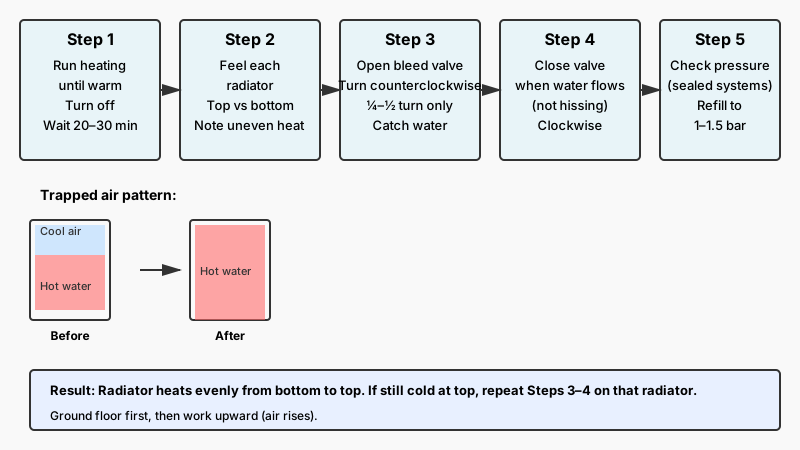
Switch the heating on and let it run until the system reaches its normal operating temperature. This circulates water and pushes trapped air toward the top of each radiator, making it easier to release. Once fully warm, turn the heating off and allow the radiators to cool for about 20–30 minutes. You want the system pressurized but not pumping — an active pump can draw air back into the system as you bleed, and hot water scalding risk is reduced when the pump is off.
2. Identify Which Radiators Need Bleeding
Feel across the surface of each radiator with your hand (after the system has been on for a while). A radiator that is noticeably cooler at the top than the bottom almost certainly has trapped air. Write down or remember which ones feel uneven — you’ll bleed them all in a single session, starting on the ground floor and working upward.
Working from the lowest radiator to the highest is good practice: air rises, and releasing air at the bottom of the system first prevents you from inadvertently pushing bubbles upward into radiators you’ve already bled.
3. Open the Bleed Valve
Locate the bleed valve — a small square or slotted fitting usually at the top of one end of the radiator. Place your cloth or container directly below it. Insert the bleed key and turn it counterclockwise — only about a quarter to half a turn. Do not fully remove the valve.
You’ll hear a hissing sound as air escapes. Hold the cloth there; the hiss will last anywhere from a few seconds to a minute or more depending on how much air is trapped. When the hissing stops and a steady, unbroken stream of water begins to flow (not just a drip, but a continuous trickle), close the valve clockwise immediately. Over-bleeding wastes water and can cause a pressure drop.
4. Check the Pressure (Sealed Systems)
After bleeding all the radiators you identified, go to your boiler and check the pressure gauge. If it has dropped below 1 bar, use the filling loop (usually a silver or chrome valve underneath the boiler, connected to the mains cold-water supply) to bring it back up to the boiler’s recommended level — typically 1 to 1.5 bar when the system is cold. Check your boiler manual: a system run at too low a pressure won’t heat efficiently and may trigger a fault code. A system run significantly over pressure is a safety concern.
5. Run the Heating Again and Re-Check
Turn the heating back on. Once the system reaches temperature again, feel across the radiators you bled. They should now heat evenly from bottom to top. If a radiator still has a cold upper section, it may have more air trapped — repeat the bleeding process on that unit. Occasionally a particularly stubborn pocket requires two or three bleeds.
When Bleeding Alone Isn’t Enough
If you find yourself bleeding the same radiators repeatedly every few weeks, or if the water that comes out is black or dark brown, something more is happening:
Persistent air ingress usually points to a leak somewhere in the system — perhaps at a joint, pump seal, or expansion vessel. A pressure gauge that consistently drops between uses is a reliable sign of this.
Black or very dark water (called magnetite sludge) is corroded iron and steel from inside the system. It settles in radiators and blocks flow channels — which also causes uneven heating. In this case, bleeding won’t fully solve the problem. You need a power flush, a process where a specialist pushes water and cleaning chemicals through the system at high pressure and flow to remove sludge. Adding a magnetic filter (or inhibitor chemical) afterward prevents the sludge from reforming.
Cold bottom, hot top is less common but indicates the opposite problem: sludge has settled and is blocking water circulation at the base. Again, this points toward a power flush rather than bleeding.
Only one zone heating suggests a zone valve or pump issue, not a bleeding problem.
If your heating bills still feel too high even after sorting out the radiators, our guide How to Make Your Home More Energy Efficient: Seal, Insulate, Save tackles the bigger picture of keeping warmth in your home.
Maintenance Rhythm: How Often Should You Bleed?
There’s no universal schedule. Many plumbers suggest doing a check at the start of each heating season — typically before the colder months arrive — and again mid-season if you notice uneven heat. If your system has a good-quality magnetic filter (checked and cleaned annually), you’ll likely need to bleed less often than a system running without one.
After any maintenance on your boiler or system — a pump replacement, a new radiator, topping up the pressure — bleeding is worth doing proactively, since air enters at those moments.
If you’re tackling this task because you’ve just settled into a new place, How to Make Moving to a New Home Less Stressful: Start Early, Stay Calm offers useful tips for handling all the other overwhelming to-dos that come with it.
Frequently Asked Questions
How do I know if my radiator needs bleeding or has a different problem?
The clearest sign is a radiator that is hot at the bottom and cool or cold at the top. If the whole radiator is cold but others in the house are working, the issue is more likely a stuck thermostatic valve (TRV), a closed lockshield valve, or a circulation/pump problem — not trapped air.
Can I bleed a radiator while the heating is running?
It’s safer not to. The circulating pump can draw more air in through the open valve, and pressurized hot water can spray out unexpectedly. Let the pump stop, allow the water to cool slightly, then bleed.
Why does the water that comes out look rusty or black?
Dark water is magnetite — fine iron oxide particles from internal corrosion. It signals that your system needs a chemical inhibitor added and possibly a power flush. Bleeding alone won’t remove enough sludge to solve the underlying problem.
My boiler pressure keeps dropping after I bleed. Should I be worried?
A small, one-time drop after bleeding is normal and expected — you’ve released water along with the air. If the pressure drops again within a few days without bleeding, there’s likely a slow leak somewhere in the system. Have a plumber investigate.
Do I need to bleed every radiator in the house each time?
Not necessarily. Only bleed radiators that show signs of uneven heating. If they all seem fine and heat evenly, leave them. That said, if you notice one or two with issues, it’s worth quickly checking the rest while you have the bleed key out — it takes only seconds per radiator to test.