Ceramic Stovetop Sticky Residue: Getting a Streak-Free Finish After Every Clean

Cleaning a ceramic stovetop and ending up with a sticky, streaky surface is one of those frustrating outcomes that makes the effort feel pointless. The cooktop looks worse than before you started, and running a cloth over it again just smears things around. The problem is almost always the cleaning product itself — either too much of it was used, it wasn’t fully removed, or the wrong type was applied to a surface that punishes excess.
This is fixable, usually in under ten minutes, and avoiding it next time is straightforward once you understand what causes it.

Why Ceramic Stovetops Go Sticky After Cleaning
Ceramic glass is non-porous and smooth, which means any residue sits on the surface rather than soaking in. Most commercial stovetop cleaners are cream-based and designed to be applied sparingly, buffed in, and wiped off completely. When too much product is used — or the surface isn’t fully dry before the cloth passes over it — a thin film of cleaner, surfactant, or wax remains behind. Heat from the next cooking session can then partially bake that film on, making it feel tacky and look hazy.
Three main culprits account for most sticky-after-cleaning situations:
- Undiluted or excess cleaner: Cream ceramic cleaners (like those sold in small bottles) are concentrated. A pea-sized amount is usually enough for the whole surface; more than that leaves a residue that’s hard to remove completely with a single wipe.
- Rinse water left behind: If you wipe with a damp cloth but don’t follow with a dry one, water and dissolved cleaner sit and dry into a film.
- Silicone-based or waxy polishes: Some products marketed for ceramic stovetops contain silicone or wax to produce shine. These feel sticky when overused, especially in warm kitchens, and they build up with repeated applications.
Spray-based kitchen degreasers can also leave stickiness if they contain surfactants that aren’t fully neutralized and rinsed.
Removing the Sticky Layer Without Making It Worse
The fix is a two-stage process: dissolve the residue, then remove it cleanly. You do not need a dedicated stovetop product for this stage — in fact, that may be what caused the problem.
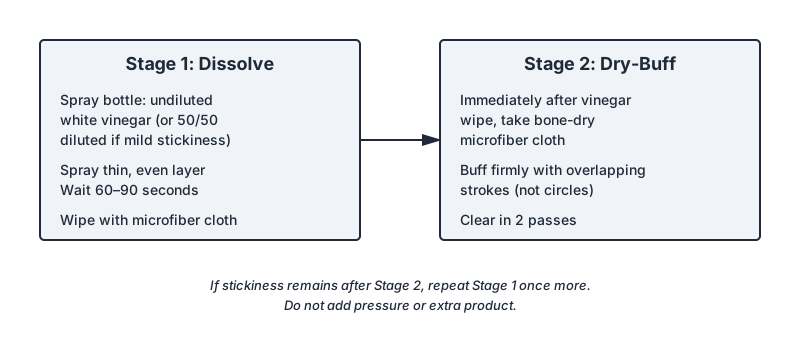
Stage 1: Dissolve the residue with diluted white vinegar
Fill a spray bottle with undiluted white vinegar, or dilute it 50/50 with water if the stickiness is mild. Spray a thin, even layer across the entire surface and let it sit for sixty to ninety seconds. The mild acidity breaks down the alkaline residue left by most cream cleaners and cuts through waxy buildup.
Wipe with a clean microfiber cloth using broad, overlapping strokes — not circles, which just redistribute the film. When the cloth feels dry or starts dragging, flip to a fresh side.
Stage 2: The dry-buff
This is the step most people skip, and it’s the one that makes the difference between streaky and clear. Immediately after the vinegar wipe, take a second dry microfiber cloth — bone dry, not just wrung out — and buff the surface firmly. A little friction here clears the last of the moisture and vinegar film. Hold the cloth flat and work in the same overlapping pattern.
The surface should be clear and smooth within two passes. If there’s still haze, repeat Stage 1 once more; don’t add pressure or extra product.
What if the stickiness is from baked-on cleaner?
If previous cleaning left residue that was then heated, it can feel almost gummy and won’t respond well to vinegar alone. In that case:
- Warm the stovetop very slightly — not hot, just warm to the touch — by turning a burner on low for thirty seconds and then off again. The mild warmth softens baked-on residue.
- Spray vinegar on the warm (not hot) surface and wait two minutes.
- Use a ceramic-rated scraper (a flat razor-style blade tool designed for glass cooktops) held at a low angle to gently lift the softened film. Do not use abrasive pads or steel wool.
- Follow with the dry-buff step above.
The same instinct to over-scrub can backfire on other kitchen surfaces too, which is why Keeping Cast Iron Rust-Free After Every Wash is worth a look if you’re also dealing with a stubborn skillet.
Cleaning Technique That Prevents Stickiness From Returning
The sticky outcome is easy to engineer and just as easy to prevent. A few technique adjustments mean you won’t have to fix this again.
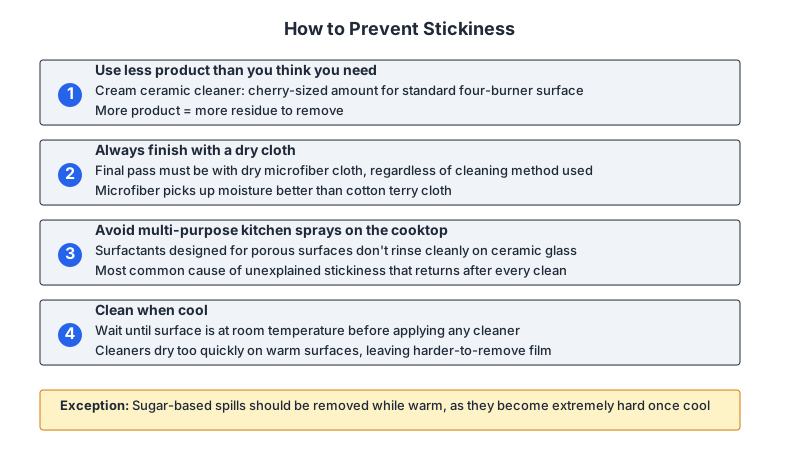
Use less product than you think you need. With cream ceramic cleaners, a very small amount — roughly the size of a cherry — distributed thinly is enough for a standard four-burner surface. More product means more residue to remove.
Always finish with a dry cloth. This is non-negotiable on ceramic glass. Whatever cleaning method you use — vinegar, commercial cream, a damp cloth — the final pass must be with a dry cloth. Microfiber works better than cotton terry cloth here because it picks up rather than pushes moisture.
Avoid multi-purpose kitchen sprays on the cooktop. Products designed for countertops and splashbacks often contain surfactant blends tuned for porous surfaces. On ceramic glass, those surfactants don’t rinse cleanly and are the most common cause of unexplained stickiness that returns after every clean.
Clean when cool. Applying any cleaner to a warm or hot surface causes it to dry too quickly, before it has time to work, and it leaves a harder-to-remove film. Wait until the surface is at room temperature.
Wipe up spills immediately (when safe to do so). Sugar-based spills are the exception: those should be removed while the surface is still warm because they become extremely hard once they cool and set. For everything else, a quick wipe when cold prevents the kind of baked-on buildup that requires more aggressive cleaning later.
| Cleaning Method | Leaves Streaks? | Tackles Baked Residue? | Notes |
|---|---|---|---|
| Cream ceramic cleaner (correct amount) | Rarely | Yes | Needs a thorough dry-buff to finish |
| Cream ceramic cleaner (excess) | Often | Yes | Overuse is the most common source of stickiness |
| Diluted white vinegar | Rarely | Mild only | Best as a final-stage rinse or for light film |
| Multi-purpose kitchen spray | Often | No | Surfactant residue builds up; avoid on glass cooktops |
| Warm water + microfiber only | No | No | Good maintenance wipe between deeper cleans |

If you want to keep every surface in the kitchen looking this good, not just the stovetop, our roundup 10 Tips for Keeping a Clean Kitchen Every Day offers plenty of habits worth adopting.
When the Surface Stays Hazy Despite Repeated Cleaning
Persistent haze that doesn’t respond to vinegar and dry-buffing is worth diagnosing separately. A few distinct causes produce this:
Mineral deposits from hard water. If your tap water is hard, the minerals left behind after evaporation create a whitish, slightly rough haze that feels faintly gritty. Undiluted white vinegar applied and left for three to five minutes, followed by a firm wipe, removes most of this. For heavy buildup, a paste of baking soda and water, left for a few minutes and then wiped off with a damp cloth followed by a dry one, can shift what vinegar alone cannot.
Silicone polish buildup from repeated applications. If the surface feels waxy or slick rather than sticky, and you’ve been using a polish product regularly, the layers have accumulated. A small amount of rubbing alcohol (isopropyl) on a microfiber cloth will cut through silicone buildup that vinegar won’t touch. Wipe in sections, turn the cloth frequently, and dry-buff immediately after.
Surface scratching. Fine scratches scatter light and look like haze no matter how clean the surface is. This isn’t a cleaning problem and can’t be fixed by cleaning products. Scratches happen from abrasive pads, rough cloths, or sliding cookware. If this is the cause, no cleaning technique will clear it — but you can minimize future scratching by using only soft cloths and lifting rather than dragging pots across the surface.
Frequently Asked Questions
Why does my stovetop feel sticky immediately after cleaning, even with a fresh cloth?
The most likely cause is surfactant residue from the cleaning product itself, or a cloth that wasn’t as dry as it felt. Microfiber cloths that have been through many wash cycles or washed with fabric softener can leave a slight waxy residue of their own. Wash your cleaning cloths without fabric softener and air-dry them, or try a paper towel for the final dry-buff to rule out the cloth as the source.
Is it safe to use white vinegar on a ceramic stovetop regularly?
Yes. Diluted or undiluted white vinegar is widely used on ceramic glass surfaces and won’t etch or damage them under normal use. It’s acidic enough to cut light residue and alkaline cleaner films, mild enough not to harm the surface. The only surface near the stovetop where vinegar needs care is natural stone countertops — it can etch marble or granite if left too long.
Can I use a razor blade on a ceramic stovetop without scratching it?
A ceramic-rated flat-blade scraper, held nearly flat against the surface (roughly a ten to fifteen degree angle), is safe on ceramic glass for removing baked-on deposits and film. The angle matters: a steep angle concentrates force on the edge and risks scratching. Always use a fresh blade — a nicked or rusty edge can scratch. Never use a blade on a cold surface if it has a baked-on sugar spill, as the brittle residue can chip and slide the blade unpredictably.
Why does the stovetop look clean when wet but streaky when it dries?
Wet surfaces reflect light more evenly, hiding thin films of cleaner, water minerals, or surfactant. As the surface dries, those films become visible as haze or streaks. The fix is always the dry-buff step done before the surface air-dries — if you wait for it to dry on its own, the streaks are already set and need another round of cleaning.
Do I need a special microfiber cloth for stovetops, or will any microfiber work?
Any clean, soft microfiber cloth works. The key variables are that the cloth should be dry for the final buffing pass, free of fabric softener residue (which leaves its own film), and not already saturated with a different cleaning product from a previous task. A cloth used to clean a greasy pan and only rinsed will deposit grease back onto the stovetop. Keep a set of dedicated kitchen cloths for the cooktop if cross-contamination has been an issue.