Removing Stubborn Stains from a Ceramic Stovetop Without Scratching

Ceramic stovetops look sharp when they’re clean and miserable when they’re not. Burnt sugar, splattered grease, and the chalky rings left by boiled-over water all behave differently, and the wrong cleaner or the wrong tool can trade a stain for a permanent scratch. The good news is that most stains surrender to a short list of inexpensive supplies, as long as you match the method to the mess.
Why Ceramic Stovetops Scratch So Easily
The surface is glass-ceramic, fired at high temperature to resist heat but ground smooth enough to reflect light. That smoothness is also its vulnerability: anything harder than the glass, or anything dragged across it under pressure, leaves marks that refract light and look like scratches even when they’re only surface scuffs.
Common scratch sources people don’t expect include:
- Abrasive sponges and scrubbing pads: even “light-duty” scourers rated for non-stick cookware can be too aggressive for glass-ceramic.
- Paper towels used dry: the wood fibers are mildly abrasive on a bare surface. Wet them first, or use a microfiber cloth.
- Granular cleansers: powders like baking soda feel gentle but become particle abrasives under lateral pressure. Keep the paste wet and use minimal force.
- Sliding cookware: dragging a cast-iron pan across the surface with any weight behind it is one of the fastest ways to scratch glass-ceramic permanently.
Matching the Stain to the Right Method
Not every stain needs the same approach. Reaching for the strongest option first usually means unnecessary risk to the surface.
Boiled-Over Water and Mineral Deposits
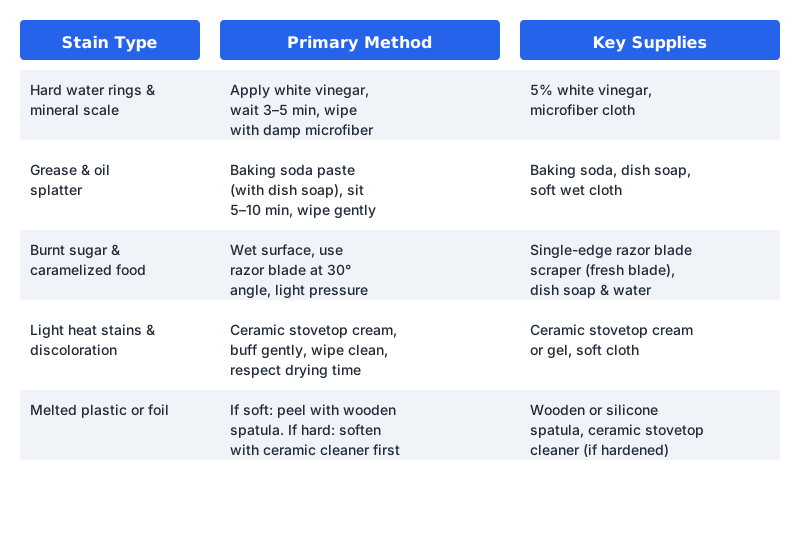
The white or grey rings left by hard water are mineral scale, mostly calcium carbonate. Acid dissolves it cleanly. Apply undiluted white vinegar (standard 5% acetic acid from the grocery store), let it sit for three to five minutes, then wipe with a damp microfiber cloth. For thicker deposits, soak a cloth in vinegar, drape it over the area for ten minutes, and wipe without scrubbing. Rinse with plain water afterward, because acid residue left on the surface can dull the finish over time.
Grease and Oil Splatter
Fresh grease wipes off with a damp cloth and a drop of dish soap. Baked-on grease that has had time to polymerize is harder: the heat has essentially cured it. Make a paste of baking soda and a few drops of dish soap (just enough liquid to bind the powder into a spreadable consistency), apply it over the affected area, and let it sit for five to ten minutes. The soap lifts the fat while the baking soda provides very mild mechanical action. Wipe it away with a soft, wet cloth using straight strokes rather than circular scrubbing, which concentrates pressure on one point.

For greasy messes that extend beyond the stovetop itself, Fix Stubborn Odors and Stains on Countertops and Cutting Boards tackles the same kind of buildup on nearby surfaces.
Burnt Sugar and Caramelized Food
This is the category that tempts people to scrub hard, which is exactly when scratches happen. Burnt sugar bonds to glass-ceramic at a molecular level when it cools, and trying to scrub it off dry will almost certainly scratch the surface.
The safe method requires a single-edge razor blade scraper specifically sold for glass stovetops. Hold it at a shallow angle (roughly 30 degrees to the surface) and push forward with very light pressure. The goal is to shave the deposit, not gouge it. Wet the surface first with a little dish soap and water so the blade glides rather than drags. Work in short strokes and wipe the debris away frequently so you’re not dragging re-deposited particles.
Important: use only fresh, sharp blades. A nicked or rusty blade drags and scratches. Replace blades after a few uses.
Melted Plastic or Foil
This is an emergency situation that requires fast action. While the surface is still warm (not hot, not cold), the plastic may still be soft enough to peel away from the edge with a wooden or silicone spatula. Do not use metal tools here.
If the plastic has already hardened, apply a small amount of ceramic stovetop cleaner (see below) and let it soften the bond before attempting the razor-blade method. Never heat the stovetop again to re-melt plastic; the fumes are a health concern and you risk spreading the damage.
Light Discoloration and Heat Staining
The brownish or rainbow-colored haze that appears around burner rings comes from oils burning at very low depth into the surface. A commercial ceramic stovetop cleaner (a cream or gel formulated specifically for glass-ceramic, not a multi-purpose abrasive) buffed on with a soft cloth and wiped off with a clean damp cloth handles this well. Apply it in small circular motions with very light pressure. Don’t rush the drying time the label specifies, because these products need contact time to lift the oxidized layer.
A Practical Cleaning Sequence for Weekly Maintenance
Built-up stains are always harder than fresh ones. A brief routine after each cooking session prevents the worst situations.
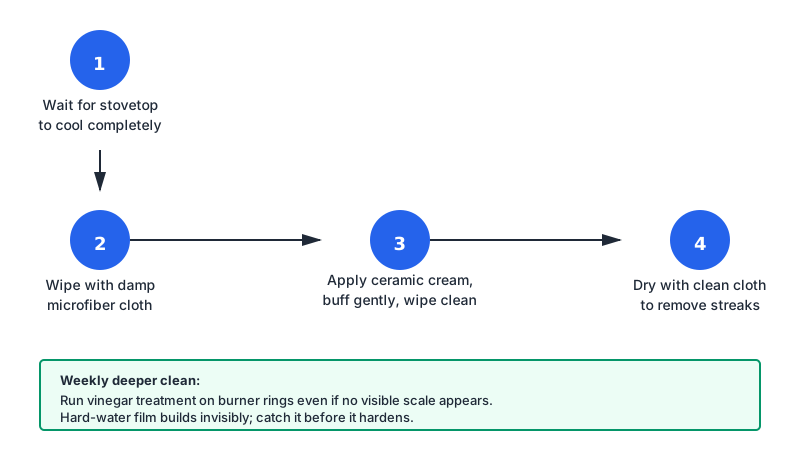
- Wait for the surface to cool completely before touching it. Cold glass-ceramic is less vulnerable to micro-abrasion than a warm surface, and you avoid burns.
- Wipe with a damp microfiber cloth to remove loose debris and fresh spills. No cleaner needed for this pass.
- Apply a small amount of ceramic stovetop cream or spray, work it in gently, and buff with a second clean microfiber cloth.
- Finish with a dry cloth to remove any streaks. The surface should look uniformly matte-glossy, not patchy.
For weekly deeper cleaning, run through the vinegar step on the burner rings even if you don’t see obvious scale. Hard-water film is nearly invisible until it has built up several layers, at which point it takes longer to remove.
What to Avoid Entirely
Some products are genuinely incompatible with ceramic stovetops, despite what their labeling implies:
- Bleach-based cleaners: bleach can etch the surface and is unnecessary since ceramic stovetops are non-porous.
- Ammonia or ammonia-based glass cleaners: these leave a film that attracts heat residue and may react with the ceramic coating on some cooktops.
- Magic Eraser-type melamine foam pads: these are a micro-abrasive. They work on painted surfaces because they cut the paint slightly; on glass-ceramic they do the same to the polish.
- Steel wool in any grade: even ultra-fine steel wool is far too abrasive.
- Citrus-based degreasers not formulated for ceramic: the acidity and surfactant concentration is often too aggressive; stick with plain white vinegar for acid cleaning.
If baked-on grime is also a problem in your kitchen, How to Deep Clean Your Oven Naturally Without Chemicals offers a chemical-free approach that pairs well with the gentle habits described here.
When a Scratch Is Already There
Light surface scuffs from mineral deposits or aluminum cookware sometimes only look like scratches. Before assuming the damage is permanent, clean the area thoroughly with ceramic stovetop cleaner and a clean cloth. Aluminum from a pan base can transfer to the stovetop surface and look identical to a scratch; the aluminum comes off with the right cleaner where a true scratch will not.
Deep scratches that catch your fingernail are permanent. They don’t affect cooking performance, but they do create edges where food and grease can collect. Keep them clean to prevent staining from getting worse around the damaged area.
Frequently Asked Questions
Can I use a regular razor blade instead of a stovetop scraper?
A single-edge razor blade itself is acceptable if it is held correctly and is sharp and clean. The handle matters because it controls the angle; a purpose-built stovetop scraper keeps the blade at the right low angle more consistently than improvising. Whatever you use, never hold the blade perpendicular to the surface.
Does baking soda scratch ceramic stovetops?
Baking soda can scratch if used as a dry powder rubbed under pressure, or if it is allowed to dry out while you are working. Keep the paste visibly wet and use very light pressure with a soft cloth. Rinse thoroughly afterward so no dried residue remains.
How do I remove the white haze that won’t come off with vinegar?
If standard vinegar soaking doesn’t move it, the haze may be baked-on mineral scale that has bonded to the surface more firmly than normal. Try a paste of cream of tartar moistened with a little water, left on for ten minutes, then wiped off with a damp cloth. If that also fails, the haze may be etching from a chemical cleaner used previously, which is not removable.
Is it safe to use dish soap directly on a ceramic stovetop?
Yes, plain dish soap is mild enough to be one of the safest cleaners for the surface. The risk with dish soap is leaving a film if it is not rinsed fully, which then burns onto the surface the next time you cook. Always follow a soap application with a thorough plain-water wipe.
How often should I apply a protective cream to the stovetop?
Frequency depends on how heavily you cook and what types of food. A light application of ceramic stovetop cream after a thorough cleaning, roughly once or twice a month for regular users, helps reduce how aggressively future spills bond to the surface. It is not a hard requirement, but it makes the next cleaning session noticeably easier.