Removing Sticky Residue from Kitchen Counters After Wiping
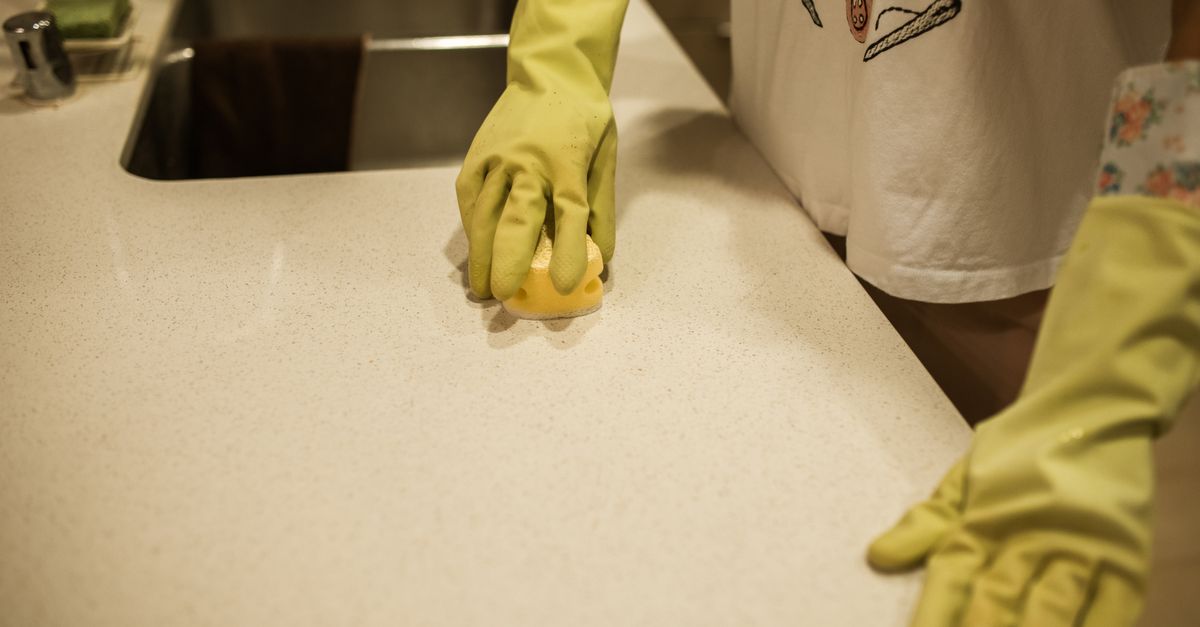
Dried splatters on a kitchen counter often leave behind a frustrating film after a quick wipe-down. The cloth lifts the bulk of the mess but leaves a tacky, slightly greasy layer that seems to attract more grime within hours. That stickiness is not dirt you missed — it is residue from the cleaning product itself, or from the partial breakdown of whatever spilled. Knowing which one is responsible tells you exactly how to remove it without damaging the surface.
Why Wipe-Downs Leave a Sticky Film
Soap-based cleaners — including most spray-on surface cleaners and dish soap diluted in water — work by surrounding grease and food particles so they can be wiped away. If the surface is not rinsed after cleaning, a thin layer of surfactant is left behind. On a countertop, that film dries sticky because surfactants are designed to attract water and grease. Every subsequent wipe adds another layer if the cycle is never broken.
Food residue does the same thing on its own. Sugary spills (juice, pasta sauce, condiments) dry into a translucent, resin-like coating. A single wipe lifts the surface layer but leaves a thin caramelized film embedded in any microscopic texture the counter material has. Oils behave differently: they polymerize slowly at room temperature, bonding to the surface and turning progressively more resistant to simple water wipes.
The result is almost always one of three things:
- Soap film from insufficient rinsing
- Partial sugar or starch residue from food
- Oxidized or polymerized oil
Identifying which you are dealing with is straightforward. Soap film typically feels uniformly slick and smears in straight lines. Sugary residue feels tacky and spotty, especially around the original spatter. Oil residue has a faintly greasy, slightly waxy quality and does not come up with plain water.
Matching the Fix to the Residue Type
For soap film: A plain water rinse with a clean, wrung-out microfibre cloth is usually all it takes. Wet the cloth thoroughly, wipe the area, then dry it immediately with a second cloth. The key step most people skip is the drying — leaving the counter wet re-deposits any residue the water loosened. For stubborn soap film on smooth surfaces like quartz or ceramic tile, a 50:50 mix of white vinegar and water cuts through surfactant buildup quickly. Avoid vinegar on marble, natural stone, or grout — its acidity etches those surfaces.
For sugary or starch-based residue: Warm water with a small amount of dish soap applied with a cloth and left to sit for one to two minutes softens the film before you wipe. The dwell time matters more than scrubbing pressure. After lifting the residue, follow with a plain water rinse and dry. For counters with slight texture (matte laminate, honed stone, unglazed ceramic), a soft-bristle brush works into the surface without scratching it.
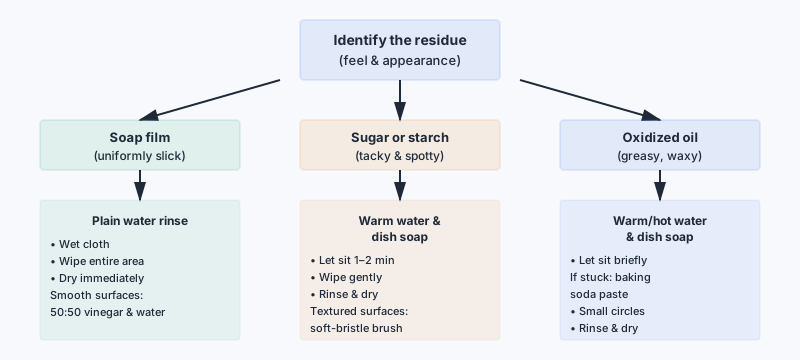
For oxidized oil residue: Plain water is ineffective. A small amount of dish soap with some heat — use warm to hot water and let it sit — starts to break down the polymerized layer. If that does not shift it, a paste of baking soda and a few drops of dish soap applied with a damp cloth provides mild abrasion. Work in small circles, rinse, and dry. On sealed wood or butcher block, use a dedicated food-safe oil (not a cleaning product) to condition the surface after stripping old oxidized oil from it.
Surface-by-Surface Approach
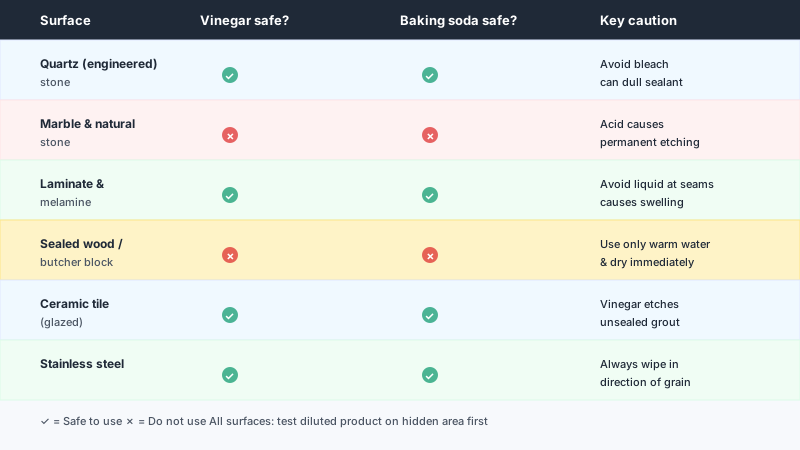
Different counter materials have different tolerances, and the fix that works on laminate can damage stone.
| Surface | Safe for vinegar? | Safe for baking soda? | Key watch-out |
|---|---|---|---|
| Quartz (engineered stone) | Yes, diluted | Yes, sparingly | Avoid bleach-based products; can dull sealant |
| Marble / natural stone | No | No | Even diluted acid etches the surface permanently |
| Laminate | Yes, diluted | Yes | Avoid pooled liquid near seams — swells the substrate |
| Sealed wood / butcher block | No | No | Use dish soap and warm water only; dry immediately |
| Ceramic tile (glazed) | Yes | Yes | Focus on grout lines separately; vinegar etches unsealed grout |
| Stainless steel | Yes | Yes, with the grain | Wipe in the direction of the grain to avoid micro-scratches |
Quartz and Engineered Stone
Quartz is non-porous and resists most residues, but the resin binders that hold it together can be dulled by harsh solvents (acetone, paint thinner) and degraded over time by bleach. For sticky residue, warm water with a drop of dish soap followed by a clean-water rinse is the standard approach. A diluted vinegar spray handles persistent soap film without damaging the resin.
Marble and Natural Stone
These surfaces need the most caution. Vinegar, lemon juice, and most bathroom-style acidic cleaners are off-limits — they cause etching that shows up as a dull, slightly rough patch that cannot be removed without professional polishing. For sticky residue on marble, use only warm water and a pH-neutral soap (marketed specifically as stone-safe). Let it dwell, wipe gently, and dry immediately. If the residue does not shift with that, a stone-specific cleaning product from a hardware store is the appropriate next step.
Laminate and Melamine
Laminate is more tolerant of diluted vinegar and baking soda pastes than stone, but its main vulnerability is moisture at the edges and seams. Keep cleaning products away from seams where two laminate sheets meet, and never let any liquid pool there. Wipe in controlled strokes toward the center of the counter rather than dragging liquid toward edges.
If stickiness extends beyond the counter to a drawer front or cabinet door, Fix a Sticky Kitchen Drawer or Cabinet Door: Wax, Sand, Realign, Done walks through fixing that separately.
Wood and Butcher Block
Wood absorbs liquids readily, so residue removal has to be quick and the surface dried without delay. Dish soap and warm water applied and immediately wiped off handles most sticky films. Avoid soaking the surface. After cleaning, a light application of food-safe mineral oil replenishes the wood and makes future spills easier to wipe before they dry.

Breaking the Cycle So Residue Does Not Return
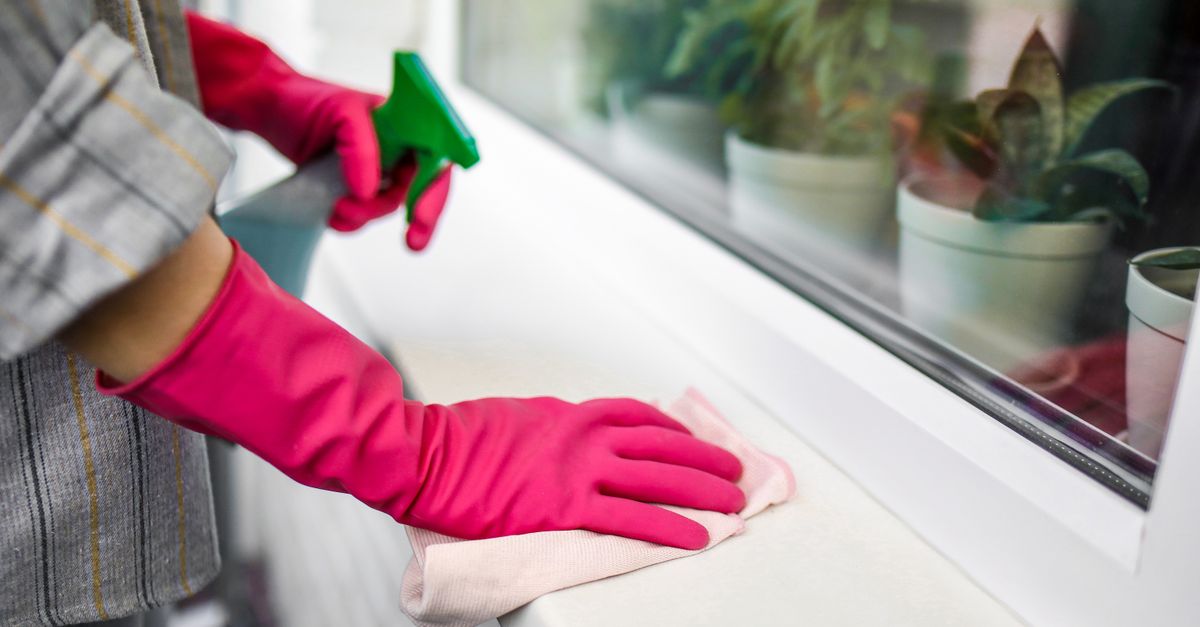
The most common reason sticky residue keeps coming back is a cleaning routine that adds residue at the same rate it removes it. Switching away from soap spray as the final step — and finishing every wipe-down with a plain water rinse and a dry cloth — stops the buildup cycle. Two cloths for every clean (one damp, one dry) is more effective than one spray-soaked cloth.
For households that use spray cleaners daily, rinsing the counter once a week with just hot water and a clean cloth removes the accumulated surfactant layer before it becomes thick enough to feel sticky.
Microfibre cloths outperform cotton terry cloths and paper towels for residue removal because their fiber structure mechanically lifts film rather than just spreading it. Wash microfibre cloths without fabric softener — softener coats the fibers and reduces their ability to pick up grease.
If greasy buildup on nearby cabinets is also a recurring problem, How to Remove Grease Buildup from Kitchen Cabinets offers a similar routine for keeping those surfaces clear.
Frequently Asked Questions
Why does my counter feel stickier after I clean it than before?
This almost always means the cleaning product is not being fully removed. Spray cleaners and diluted dish soap leave a surfactant film if the counter is not rinsed with plain water afterward. The film feels clean when wet but becomes tacky as it dries. Finishing every clean with a damp plain-water wipe and then drying the surface breaks this pattern.
Is it safe to use white vinegar on all kitchen counters?
No. White vinegar is safe on quartz, laminate, stainless steel, and glazed ceramic tile when diluted. It permanently etches marble, natural limestone, travertine, and unsealed grout. Check your counter material before using any acid-based cleaner.
What removes sticky residue from counters without leaving another film?
Warm water and a small amount of dish soap, followed by a plain-water rinse and immediate drying, is the most reliable combination. The rinse step is what prevents the soap from becoming the next layer of sticky film. For oil-based residue, a baking soda paste provides extra lift without leaving a deposit.
Can I use rubbing alcohol on kitchen counters?
Isopropyl alcohol (70% or diluted) cuts through oily and waxy residues on quartz, laminate, and stainless steel. Use it sparingly and avoid leaving it in contact with the surface for more than a minute or two. Do not use it on sealed wood, painted surfaces, or marble, where it can strip sealant or damage the finish.
How do I remove sticky residue from counter grout lines?
Grout is porous and traps residue differently than smooth surfaces. A soft-bristle brush with a paste of baking soda and water loosens the film without the acidity risk of vinegar (which should be avoided on unsealed grout). Scrub in short strokes along the grout line, rinse thoroughly, and let it dry before assessing whether a second pass is needed.