Removing Soap Scum from Shower Doors Without Scratching the Glass
Soap scum is one of the more stubborn things you will deal with in a bathroom, and shower glass makes it especially visible. The chalky, streaky film is a mix of soap residue, body oils, hard-water minerals, and mold spores that bonds to glass over time. The good news is that removing it without scratching requires the right chemistry, not force.
Why Soap Scum Bonds to Glass So Stubbornly
Glass shower doors have a microscopically porous surface. Soap scum does not simply sit on top — it fills those tiny pores and, once the water evaporates, hardens into a mineral-and-fatty-acid crust. Standard bathroom sprays do not always have enough acidity or dwell time to break that bond, which is why people tend to scrub harder than they should. Abrasive scrubbing is what causes scratches. The goal is to dissolve the scum chemically so it lifts off with little or no physical friction.
Choosing the Right Cleaner for the Type of Buildup
The buildup you see is usually two things layered together: a soap-and-oil film, and a hard-water mineral scale (mostly calcium carbonate). Each layer responds to a different chemistry.
| Layer | What dissolves it | Avoid |
|---|---|---|
| Soap and oil residue | Alkaline cleaners (dish soap, baking soda paste) | Solvent-heavy products that can fog seals |
| Hard-water mineral scale | Mild acids (white vinegar, citric acid, commercial descaler) | Strong hydrochloric-acid toilet-bowl cleaners |
| Combined heavy buildup | Acid first, then alkaline rinse | Mixing acid and alkaline at the same time |
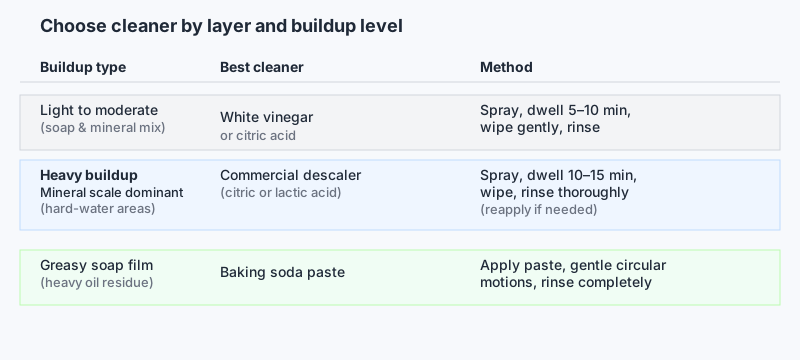
For light to moderate buildup, a single cleaner often handles both layers adequately. For heavy, long-standing scum, you will get better results treating the mineral scale with an acid first, rinsing, and then tackling the remaining film with dish soap.
White Vinegar and Dish Soap
This is the most accessible starting point. White vinegar (5% acidity) is mildly acidic enough to dissolve early calcium deposits without etching standard tempered or laminated shower glass. Mix roughly equal parts white vinegar and warm water in a spray bottle. Spray the entire door, let it sit for several minutes, then add a few drops of dish soap and gently wipe with a soft microfiber cloth. Rinse thoroughly.
One important caveat: vinegar should not be used on natural stone surrounds, on unsealed grout, or on doors with a shower-glass coating (like factory-applied water-repellent treatments). The acid can degrade those surfaces over repeated use. Check the door manufacturer’s care instructions if you are unsure.
Citric Acid Solution
Citric acid powder dissolved in warm water is a step up in descaling power and is gentler on rubber seals than undiluted vinegar. A few tablespoons dissolved in a spray bottle of warm water, left on the glass for ten to fifteen minutes, will soften even stubborn mineral deposits. Wipe with a non-scratch microfiber cloth or a soft sponge. This approach works especially well in areas with very hard tap water.
Baking Soda Paste
For greasy, soap-heavy scum with less mineral component, baking soda paste (baking soda mixed with just enough dish soap to form a spreadable consistency) cuts through body-oil residue effectively. Apply it with a damp microfiber cloth using gentle, circular motions. The key word is gentle. Baking soda is a very mild abrasive, but pressing hard or using a rough pad will still scratch glass. Use the paste as a chemical aid, not a scrubbing compound.
Commercial Descalers and Shower Cleaners
Products formulated specifically for hard-water removal typically contain citric acid, lactic acid, or glycolic acid at higher concentrations than a home vinegar solution. These products tend to work faster on heavy scale and often include surfactants that help lift the soap film at the same time. Look for products that are pH-balanced for glass and that specify they are safe on coated shower glass if your door has a protective treatment. The US EPA Safer Choice program certifies certain cleaners that have been screened for chemical safety, which is worth checking if indoor air quality or product safety matters to you.
The Safest Scrubbing Tools
Chemistry does most of the work; the tool just needs to carry the cleaner to the surface and wipe away what has dissolved. The wrong tool is where scratches happen.
Microfiber cloth: The safest default. A quality microfiber cloth has enough texture to lift dissolved scum without any mineral grit that could scratch.
Soft non-scratch sponge: The white or blue cellulose side of a kitchen sponge is fine. Never use the green or dark-colored scrubbing pad sides — those are often abrasive enough to scratch glass.
Squeegee: After cleaning, a rubber-edged squeegee is one of the best tools for pulling rinse water cleanly off the glass, which reduces the new deposits that form as water evaporates.
Avoid: Steel wool, abrasive powdered cleansers (unless specifically labeled safe for glass), magic eraser-type melamine foam on coated glass, and any tool that feels gritty when wet. Razor blades are sometimes recommended online for hardened scale. If you do try a razor, use a single-edge blade at a shallow angle with plenty of wet cleaner on the glass and move in one direction only — but this carries real scratch risk and is worth avoiding if any chemical method still has headroom.
Once the glass is spotless, keeping it that way is easier with the right tool in hand, as our roundup of Best Squeegees for Shower Glass: What Actually Works explains.
A Step-by-Step Routine for Moderate to Heavy Buildup
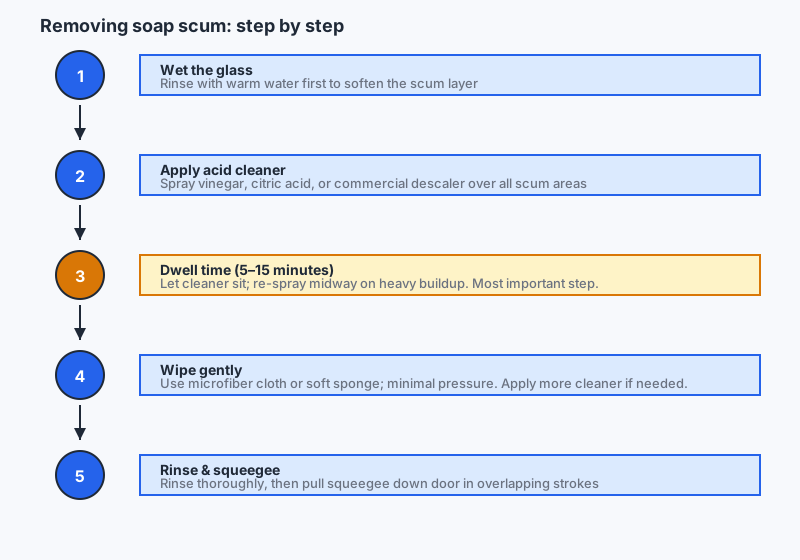
- Wet the glass. Rinse the door with warm water first. A dry surface can concentrate cleaner and makes wiping harder.
- Apply your acid cleaner. Spray white vinegar solution, citric acid solution, or a commercial descaler over the full surface. Make sure all the scum-covered areas are coated.
- Dwell time. This is the most skipped step and the most important one. Let the cleaner sit for at least five to ten minutes. On heavy buildup, some people re-spray once at the halfway point to keep the surface wet.
- Wipe gently. Use a microfiber cloth or soft sponge with minimal pressure. Work in small sections. If a section resists, apply more cleaner and wait rather than pressing harder.
- Rinse completely. Residual acid left on glass can attract more mineral deposits and potentially affect seals over time. Rinse with warm water until the surface feels neutral.
- Follow with dish soap if needed. If a greasy film remains after the acid step, apply a small amount of dish soap diluted in water, wipe, and rinse again.
- Squeegee and dry. Pull a squeegee down the door in overlapping strokes, then dry the edges and frame with a dry microfiber cloth.
Keeping Scum from Coming Back
The easiest scum to remove is the scum that never fully forms. A few habits make a meaningful difference.
Squeegee after every shower. Pulling water off the glass before it evaporates removes the dissolved minerals and soap before they can harden. Takes about twenty seconds.
Ventilate the bathroom. Running an exhaust fan during and for several minutes after a shower reduces the humidity that keeps the glass wet longer and gives deposits more time to set.
Rinse the door at the end of each shower. A quick cold rinse washes away most of the soap film before it bonds.
Apply a water-repellent treatment periodically. Products sold for glass shower doors (similar chemistry to car windshield water repellents) cause water to bead and run off rather than spreading across the surface. This slows deposit buildup noticeably. Reapplication frequency depends on the specific product and how often the shower is used.
Switch soap types if possible. Traditional bar soap is a bigger contributor to soap scum than liquid body wash or synthetic detergent bars, because bar soap contains fatty acids (talc or stearates) that react with hard-water calcium to form the insoluble scum compound. Switching to a liquid wash does not eliminate the problem entirely, but it can reduce buildup frequency.
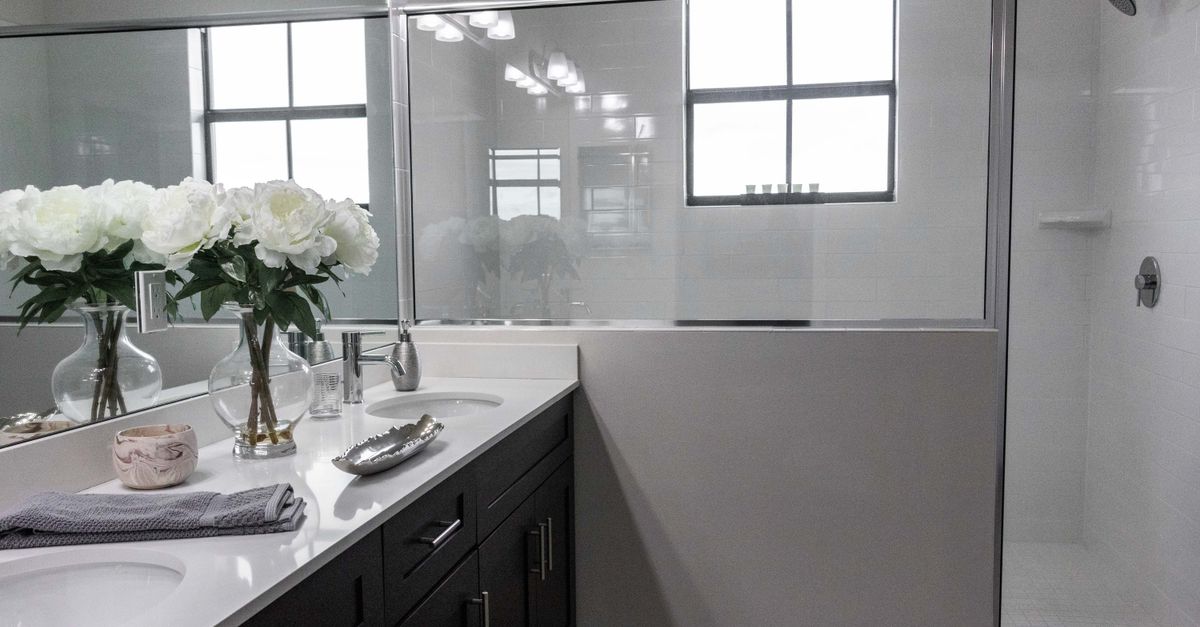
For a broader approach to the rest of the bathroom, check out Deep Clean Your Bathroom Without Harsh Chemicals for more gentle, effective habits.
Frequently Asked Questions
Will vinegar damage or etch my shower glass?
Standard 5% white vinegar is not strong enough to etch tempered shower glass under normal use. The risk is with factory-applied protective coatings, some of which are acid-sensitive — repeated vinegar use can degrade those over time. If your door came with a coating or water-repellent treatment, check the manufacturer’s care instructions before using any acid-based cleaner.
How long should I let the cleaner sit on the glass?
At a minimum, five minutes. For moderate buildup, ten to fifteen minutes gives the acid time to break down the mineral layer properly. For very heavy, long-standing deposits, you may need to repeat the application. Letting the cleaner dwell does more useful work than scrubbing harder.
Is it safe to mix vinegar and baking soda on the glass?
Mixing them together produces a brief fizzing reaction, but the two neutralize each other quickly, which actually reduces the cleaning power of both. Use acid and alkaline cleaners as separate steps with a rinse in between, rather than combining them at the same time.
Can I use a magic eraser on shower glass?
Melamine foam (the material in magic erasers) is a micro-abrasive. On plain, uncoated tempered glass it generally does not cause visible scratches, but on coated or treated glass it can strip the protective layer. Use it cautiously and only if you know your door is uncoated.
How often should I do a deep clean of the shower door?
That depends on water hardness and shower frequency, but a thorough descaling once or twice a month is a reasonable baseline for most households. If you squeegee after every use, you may find that a light clean once a month is plenty. Hard water areas typically need more frequent attention than soft-water areas.