Best Squeegees for Shower Glass: What Actually Works

A good shower squeegee is one of those tools you barely notice when it’s working and can’t stop cursing when it isn’t. The difference between a squeegee that clears your glass in two strokes and one that smears water around comes down to blade material, handle weight, and how well the rubber seats against curved or frameless panels. This guide breaks down what matters — and which styles suit which situations.

What Makes a Shower Squeegee Actually Good?
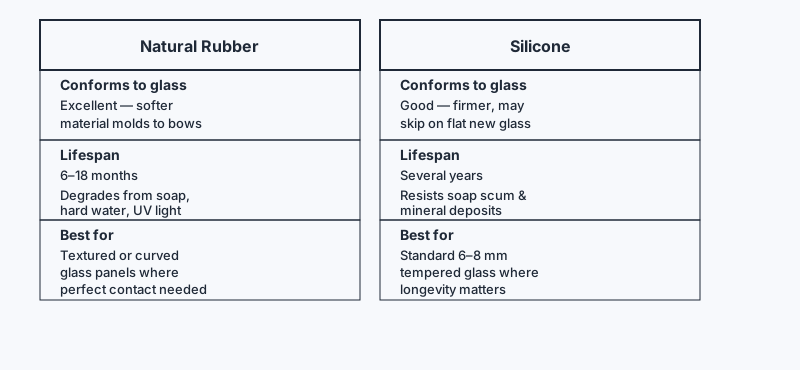
The blade is the single most important factor. A good shower squeegee leaves the glass dry in one clean pass — no streaks, no water creeping back behind the blade. To do that, the rubber (or silicone) lip must be soft enough to conform to slight bows and edges in the glass, yet firm enough to maintain consistent contact pressure.
The two most common blade materials behave differently in practice:
- Natural rubber is softer and conforms well to irregular surfaces. It clears water cleanly but degrades faster when exposed to soap, hard water mineral deposits, and UV light near skylights or frosted windows. Expect to replace a natural rubber blade every 6–18 months depending on frequency of use.
- Silicone is firmer, resists soap scum and mineral buildup, and lasts considerably longer — often several years with basic rinsing. Some silicone blades, however, can skip on perfectly flat, brand-new glass because they lack the slight tackiness of rubber.
For most walk-in showers with standard 6 mm or 8 mm tempered glass, silicone edges up over rubber on longevity alone. For shower enclosures with textured or slightly curved panels, softer rubber still wins on contact.
Handle design matters more than most reviews acknowledge. A T-bar handle (the classic horizontal bar + vertical grip) is the most versatile — it lets you use your wrist to angle the blade and follows the natural wiping arc without contorting your arm. Pistol-grip squeegees look ergonomic but can be tiring on larger frameless panels because you lose wrist rotation.
Blade width is a practical trade-off: a 10–12 inch blade covers large glass fast but can’t navigate the narrower spaces around door frames and hardware. An 8-inch blade is slower but works everywhere. Many households do well with a 10-inch for main panels and an 8-inch for door glass.
Styles Worth Considering
Classic T-Bar Squeegees
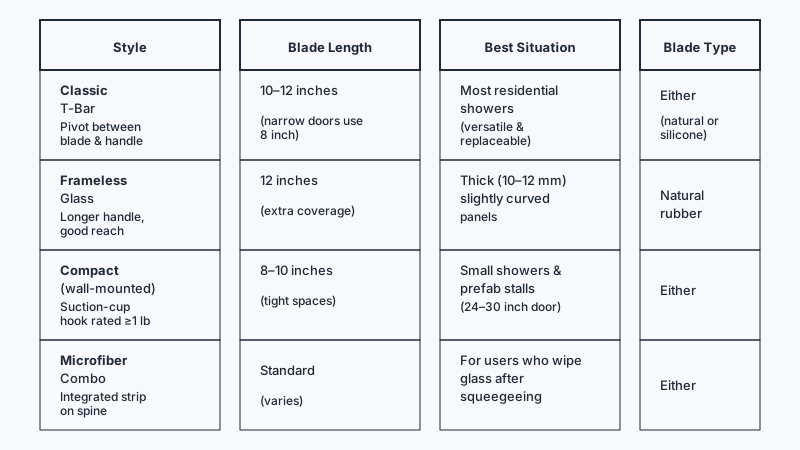
These handle most residential shower situations. The pivot between blade and handle absorbs angle changes, so the rubber stays flat against the glass even when you’re sweeping from upper corner to lower drain edge. Brands like Ettore and Unger — both window-cleaning industry staples — offer T-bar designs with replaceable rubber blades. This matters: buying a squeegee whose blade is also replaceable cuts long-term cost significantly.
Frameless-Glass Squeegees
Frameless and minimally framed shower enclosures have become common in remodeled bathrooms. The glass is often thicker (10–12 mm) and slightly bowed, and the lack of a metal frame means water can run around the edge rather than being channeled away. A squeegee for this context needs a slightly longer blade (12 inches is worth the extra coverage) and a handle with good reach so you don’t have to lean into the wet glass. Rubber blades outperform silicone here because they seal against the slight bow better.
Compact Squeegees for Tight Enclosures
Prefabricated shower stalls — the kind with three walls and a single glass door — are common in apartments and older homes. The door is usually no wider than 24–30 inches, and the side walls are often acrylic or fiberglass rather than glass, so you only need to squeegee one surface. An 8–10 inch compact squeegee mounted on the wall beside the door handle is the most practical setup here. Several models come with a suction-cup hook; check that the suction base is rated for at least 1 lb of holding force, or it will drop every few weeks.
Microfiber-Combo Squeegees
Some squeegees pair the rubber blade with an integrated microfiber strip on the back spine. The idea is to wipe away any remaining moisture after the main sweep. In practice, results vary — if the microfiber strip is too thick, it holds itself away from the glass and does nothing; if it’s thin and stays in contact, it does genuinely pick up residual film. Worth trying for people who wipe down the glass after squeegeeing anyway, but not necessary for a plain-glass finishing routine.

Does the Hook and Storage Matter?
Yes, practically speaking, because if storing the squeegee is inconvenient, it won’t get used. The realistic options:
- Suction-cup hooks: Easy to install, no drilling. The cups fail more often in steam-heavy showers because soap film prevents a good seal. Clean the tile and the cup face with rubbing alcohol before installing, and re-seat monthly. Choose a cup rated for at least 3–4 lbs.
- Adhesive wall hooks (command-style): More reliable than suction in high-humidity environments as long as the wall is completely dry during installation. Work well on tile but less reliably on textured grout lines.
- Rail or clip systems: Some premium squeegees ship with a dedicated wall rail (a narrow chrome bar that clips the handle). These are the most stable and also the most visually clean — worth the extra hardware if you’re fitting out a new bathroom.
- Over-door hooks: A fallback for renters who can’t mount anything. Fine for the squeegee’s weight but the door must open slowly or the hook jars loose.
If you’re already upgrading your shower routine, our guide Replace a Shower Head Yourself: What Actually Works covers another weekend project that pays off in daily convenience.
Tips for Streak-Free Results
Even the best squeegee streaks if used wrong. A few things that genuinely help:
- Start at the top and work in overlapping strokes downward. Beginning mid-panel and sweeping in random directions leaves triangles of water at every corner.
- Wipe the blade on a small towel between each stroke. Carrying that accumulated water back across clean glass is the most common source of streaks.
- Rinse the blade under the showerhead before first use of the day. Dry rubber skips; damp rubber glides.
- Replace the blade when it leaves a feathered edge — a wavy, uneven trail that no amount of technique fixes. That usually means the rubber lip has micro-tears or has hardened.
- For hard water areas, run a dilute white vinegar solution (roughly one part vinegar to four parts water) over the glass weekly, let it sit for two minutes, then squeegee. This slows mineral deposit buildup considerably. If scale has already built up, a purpose-made hard water remover works faster than vinegar on heavy deposits.
For more ways to keep grime from creeping back into other high-use spaces, check out 10 Tips for Keeping a Clean Kitchen Every Day.
Specific Products Worth Looking At
The squeegee market is filled with identical-looking items from generic sources. These five products represent genuinely distinct approaches and are widely available:
Ettore 12-inch Master Brass Squeegee — Ettore supplies professional window cleaners; this T-bar has a solid brass channel that keeps the blade perfectly tensioned and accepts replacement rubbers sold separately. Heavier than average (that’s intentional — the weight helps maintain contact pressure without extra arm force). Best for large frameless panels.
OXO Good Grips Shower Squeegee — One of the most sensible mid-range options. The handle grip genuinely helps on a wet hand, the blade is 10 inches and made from soft TPR rubber, and the suction hook is more reliable than most. Not a professional tool, but durable and widely stocked.
Unger Professional 10-inch Squeegee — Unger makes cleaning tools for commercial janitorial use. The 10-inch model has a lightweight aluminum handle, a replaceable natural rubber blade, and a swivel that lets the T-bar pivot ±30°, which is more useful than it sounds when sweeping corners. Replacement blades are cheap and sold separately.
Hiware 10-inch Squeegee — A value-tier pick that consistently outperforms its price. Silicone blade, stainless steel handle, comes with a suction hook. Good for households squeegeeing daily — the silicone blade holds up to repeated use better than cheaper rubber blades in the same price bracket.
Simplehuman Tension Shower Squeegee — Takes a different design approach: instead of a wall hook, it has a weighted self-standing base and stores upright on a ledge. The silicone blade is 9 inches and pivots to follow the glass. Works best in enclosures that have a ledge or bench — less practical where the only flat surface is a showerhead shelf.

Frequently Asked Questions
How often should I replace the squeegee blade?
For an average household squeegeeing once daily, natural rubber blades typically last 6–12 months before they develop micro-tears that cause streaking. Silicone blades generally last 2–4 years. Replace when you notice a feathered or wavy trail that consistent wiping technique doesn’t fix — that’s the blade, not the user.
Does squeegee size matter for a standard shower door?
A standard hinged shower door is 22–24 inches wide and about 72 inches tall. A 10-inch blade covers it efficiently in three vertical strokes. Wider blades (12 inch) save a stroke but are harder to maneuver around the door handle and frame. An 8-inch is the most nimble but requires four or five passes — fine if you prefer a lighter tool.
Can I use a squeegee on textured or frosted shower glass?
On lightly textured or acid-etched frosted glass, a squeegee will clear the majority of water but won’t eliminate it from the recessed texture valleys. A microfiber cloth wipe-down after squeegeeing helps. On deeply textured glass (rough pebble texture), a squeegee has limited effect — a chamois or microfiber cloth works better.
Will squeegeeing really prevent soap scum buildup?
Yes, to a meaningful degree. Most soap scum is a mineral-soap compound that forms when hard water and soap residue dry on the glass together. Removing water before it dries — which is exactly what a squeegee does — significantly slows that buildup. It doesn’t eliminate it entirely, especially in very hard water areas, but weekly cleaning becomes much lighter work.
What’s the best way to clean a squeegee blade?
Rinse the blade under running water after every use and hang it to dry rather than leaving it pressed against glass or a wall (that deforms the edge over time). Once a week, wipe the rubber or silicone with a mild soap solution and rinse. Avoid harsh solvents or bleach — these degrade both natural rubber and silicone faster than normal wear does.