Soaking and Baking Soda Lift White Residue from Glass Bakeware
White residue on the bottom of a glass baking dish is almost always mineral deposits or baked-on starch, and both respond well to acid or mild abrasion. You do not need harsh chemicals or heroic scrubbing. The right approach depends on what you are dealing with, so a quick look at the cause saves time.
What Is That White Residue, Exactly?
Two culprits account for the vast majority of cases.
Mineral scale (calcium and magnesium deposits) comes from hard tap water left on the dish as it dries, or from liquids like broth that evaporate during cooking. It looks chalky or powdery, feels slightly gritty, and does not come off with a quick rinse.
Baked-on starch or fat film comes from starches in bread, potato, or pasta dishes polymerizing under heat, sometimes mixed with a thin layer of oil. It looks milky or hazy rather than truly chalky, and has a slight smoothness to the touch rather than the gritty texture of mineral scale.
A quick test: rub a small area with a paper towel dipped in white vinegar. Mineral scale fizzes slightly and softens within thirty seconds. A starchy or fatty film does not react to acid and needs a different approach.
If you keep baking soda on hand for this kind of cleaning, Baking Soda vs Baking Powder: Key Differences Explained is worth a read to understand how it differs from its chemical cousin.
Removing Mineral Scale with Acid
Acid dissolves calcium and magnesium carbonate cleanly. You have two reliable options at home.
White vinegar soak: Pour enough undiluted white vinegar into the dish to cover the residue, or lay paper towels soaked in vinegar flat on the bottom so they stay in contact with the glass. Leave it for twenty minutes to an hour depending on how heavy the buildup is. Then scrub with a soft sponge or a non-scratch scrubbing pad. Rinse thoroughly with warm water. Most light-to-moderate scale comes off without any real effort.
Citric acid solution: Mix a tablespoon of citric acid powder (sold in bulk-food and homebrew stores) in a cup of warm water, pour it in, and let it sit for a similar amount of time. Citric acid is stronger than vinegar, without the strong smell, so it is useful when vinegar leaves behind a faint odor you dislike.
For severe scale that has built up over many uses, soak overnight. The glass will not be harmed by prolonged contact with either acid.
Once the soak is done, a paste of baking soda on any remaining spots acts as a gentle physical abrasive without scratching the glass surface. Apply it, leave it for five minutes, then rub with a damp sponge in small circles.
Lifting Baked-On Starch and Fat Film
If the vinegar test showed no reaction, the residue is organic rather than mineral, and you need a different strategy: heat plus detergent, or an alkaline soak.
Dishwasher detergent soak: Fill the dish with the hottest tap water you can get, add a full tablespoon of powdered dishwasher detergent (not liquid dish soap), stir to dissolve, and leave it for one to two hours. Powdered dishwasher detergent contains enzymes and oxygen-based bleach that break down starch and fat effectively at warm temperatures. After the soak, most of the film wipes away with a sponge. Rinse well.
Baking soda and dish soap scrub: For lighter film, wet the surface, sprinkle a generous layer of baking soda, add a few drops of dish soap, and work it into a paste. Scrub with a non-scratch pad. The mild abrasive action of baking soda combined with the surfactants in dish soap removes thin hazy film without scratching.
Bar Keepers Friend (or equivalent oxalic-acid cleanser): When the above methods leave a stubborn haze, an oxalic-acid powder cleaner cuts through polymerized starch and light rust staining on glass effectively. Wet the surface, sprinkle a small amount, rub gently with a damp cloth, and rinse thoroughly. These are safe on glass bakeware but rinse off fully before using the dish for food again.
When the Residue Is Both: A Combined Approach
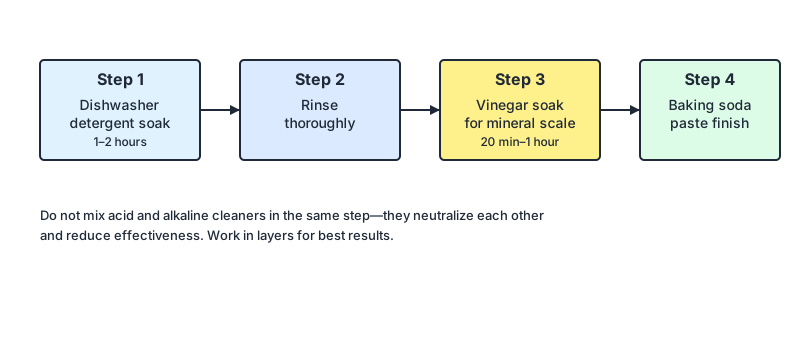
Sometimes a dish has mineral scale underneath a starchy film, especially if it has been used repeatedly for starchy casseroles with hard water. In that case, work in layers.
- Start with the dishwasher detergent soak to lift the starchy top layer.
- Rinse thoroughly.
- Follow with a vinegar soak to dissolve the mineral scale now exposed beneath.
- Finish with a baking soda paste to remove any remaining gritty spots.
This sequence avoids mixing acid and alkaline cleaners in the same step, which would neutralize both and reduce their effectiveness.
For another stubborn kitchen cleaning challenge that mixes grease and grime, How to Deep Clean a Microwave: The Steam Trick For Baked-On Grime offers a similarly effective steam-based approach.
What Not to Do with Glass Bakeware
A few common approaches cause more trouble than they solve.
- Steel wool or metal scourers: These scratch borosilicate and soda-lime glass, creating micro-abrasions that trap residue in future uses and eventually weaken the dish’s thermal resistance.
- Bleach on mineral scale: Chlorine bleach does not dissolve mineral deposits because they are inorganic. Using bleach on them wastes the product and leaves a residue of its own that requires additional rinsing.
- Putting a cold glass dish immediately into a hot oven after soaking: Not a cleaning issue, but a safety reminder. Thermal shock cracks glass bakeware. Dry the dish and let it reach room temperature before the next use.
- Oven cleaner spray: Some oven cleaners contain sodium hydroxide (lye), which can etch glass surfaces and is aggressive to handle. Avoid it on bakeware unless the manufacturer specifically approves it.
Preventing White Residue from Building Up
Prevention is straightforward once you know what causes it.
Dry the dish immediately after washing rather than letting it air-dry, especially if your tap water is hard. Mineral deposits form when water evaporates and leaves its dissolved solids behind. A quick wipe with a dish towel after rinsing eliminates most of the problem.
Use filtered or softened water for soaking and rinsing if you live in a hard-water area. Even one final rinse with filtered water before air-drying makes a visible difference.
Line the dish with parchment paper for starchy or high-sugar bakes. This is not always practical, but for bread, potato gratin, or lasagna it prevents direct baking-on of starch entirely.
Wash promptly after use. Residue that has not been heated a second or third time is far easier to remove than residue that has been baked on through multiple cooking cycles.
Frequently Asked Questions
Is white residue on glass bakeware safe to eat from?
Mineral scale (calcium and magnesium deposits) is chemically inert and not harmful, but it does make the dish harder to clean over time as new residue bonds to the rough surface. Baked-on starch film is similarly non-toxic, though prolonged buildup can affect how evenly the dish heats. Cleaning the dish restores its performance rather than being strictly a safety measure.
Can I use lemon juice instead of white vinegar?
Yes. Lemon juice contains citric acid, which dissolves mineral scale the same way vinegar does. It works well for lighter deposits and leaves less of an odor. For heavy scale, undiluted white vinegar or a citric acid powder solution gives more consistent results because the acid concentration is higher and more predictable than in lemon juice.
Why does my glass dish look hazy even after washing in the dishwasher?
Dishwashers use hot water that evaporates quickly, often depositing minerals from hard water directly onto glassware. Over many cycles, this builds up as a permanent-looking haze. A vinegar soak, as described above, usually removes it. If the haze does not respond to acid, the glass may be etched (surface damage from repeated dishwasher use), which is permanent and cannot be reversed by cleaning.
How long is too long to soak a glass baking dish in vinegar or citric acid?
Glass is chemically resistant to dilute organic acids at room temperature. Soaking overnight, or even for a full day, will not damage the dish. The acid concentration in household vinegar is too low to etch glass. If you are using a strong commercial descaler, follow its label instructions, as those sometimes contain stronger acids.
What if the residue comes back quickly after cleaning?
Rapid return of white mineral scale almost always means very hard water and air-drying. The fix is behavioral: dry the dish by hand immediately after the final rinse. If the haze returns after only a few uses despite hand-drying, consider a final rinse with filtered water, or add a small amount of white vinegar to the rinse water.