Cooking Eggplant Without the Grease Trap
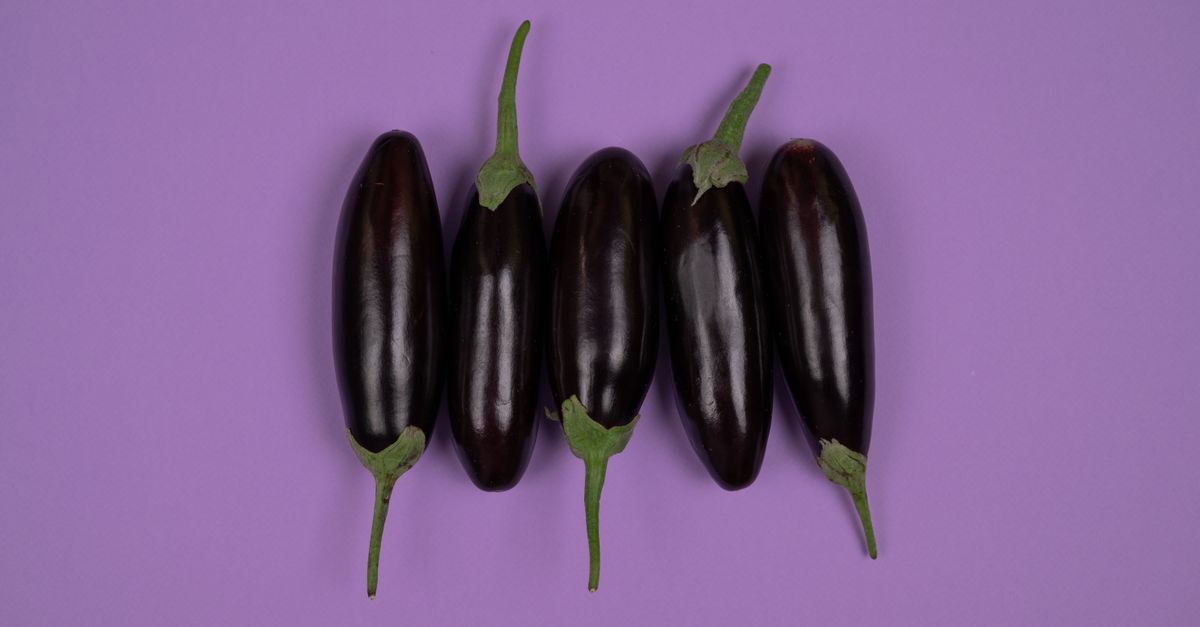
Eggplant has a reputation for drinking oil like a sponge — and if you’ve watched a whole stick of butter vanish into a single skillet of aubergine slices, you know the frustration is earned. But the oil-absorption problem is almost entirely a technique issue, not an ingredient issue. Get the prep and the heat right, and eggplant cooks up tender, creamy, and clean-tasting without any grease pooling on the plate.
Why Eggplant Absorbs So Much Oil in the First Place
The flesh of eggplant is made up of a sponge-like network of air pockets. When a raw slice hits hot oil, those pockets are open and essentially hollow — they pull in oil the way a dry sponge pulls in water. The problem is compounded by two things: low heat (which means the surface never seals quickly enough, so oil keeps seeping in) and not salting first (which leaves the cells fully inflated and ready to absorb).
There’s also a cooking-fat trap specific to frying: as eggplant cooks, it softens and collapses, then releases the oil it absorbed — but only if you keep cooking past that initial soak-in stage. Many cooks pull the pan too early, leaving oily, half-cooked pieces instead of the golden, un-greasy result they wanted.
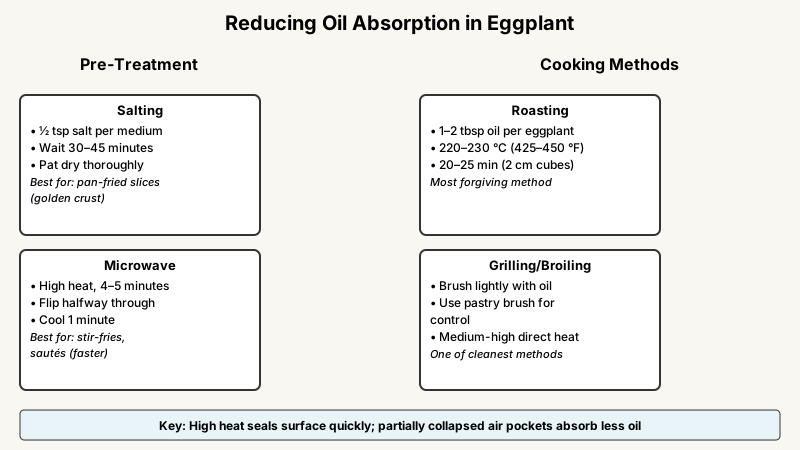
The fixes fall into two categories: pre-treatment (what you do before heat touches the eggplant) and cooking method (how you apply the heat).
Pre-Treatment: The Salt Step and the Microwave Trick
Salting (drawing out moisture)
The classic technique is salting sliced or cubed eggplant and leaving it to sweat for 30–45 minutes. Salt draws moisture to the surface through osmosis, and as that moisture comes out, the air pockets partially collapse. A partially collapsed sponge absorbs far less oil than an open one.
To do it correctly:
- Slice or cube the eggplant to your target size.
- Toss with about ½ teaspoon of fine sea salt per medium eggplant (roughly 350–400 g).
- Lay the pieces in a colander or on a wire rack over a sheet pan.
- Wait 30–45 minutes — you’ll see beads of moisture form on the surface.
- Pat dry thoroughly with paper towels before cooking. Wet surfaces steam instead of sear.
Some cooks skip salting for modern cultivars, arguing that selective breeding has reduced bitterness enough to make the step unnecessary. That’s partly true for bitterness, but the oil-absorption benefit is real regardless of variety. If you’re pan-frying or sautéing and oil-free cooking matters to you, salt-and-pat is still the most reliable pre-treatment.
The Microwave Alternative (faster, works well)
If you’re short on time, the microwave accomplishes something similar — and arguably better for oil control. Spread the (unsalted) eggplant pieces on a microwave-safe plate in a single layer. Microwave on high for 4–5 minutes for slices about 1 cm thick, flipping halfway through. The heat collapses the air pockets from the inside out, driving off moisture quickly. Let the pieces cool for a minute, then proceed to cook them.
Texture note: microwaved eggplant will be slightly softer going into the pan, which is fine for stir-fries and braises but less ideal when you want a firm, defined slice for grilling.
Salting vs. Microwaving: which works better?
For stir-fries and sautés: microwaving edges it slightly — faster, and the collapsed texture holds up well under high-heat tossing. For pan-fried slices or rounds where you want a golden crust: salting wins because the surface is drier, which promotes better browning.
Cooking Methods That Naturally Use Less Oil
Choosing the right method eliminates most of the oil problem before you even open the bottle.
If you’re trying to cut grease across your whole menu, How to Cook Frozen Vegetables Without Sogginess tackles a similar problem with a different watery vegetable.
Roasting in the oven
Roasting is the most forgiving no-oil-sponge method. Toss your pre-treated (salted and patted dry) eggplant pieces with just 1–2 tablespoons of oil for a whole medium eggplant. Spread on a sheet pan in a single layer — crowding causes steaming, which means the oil soaks in instead of crisping the surface.
Roast at 220–230 °C (425–450 °F) until the undersides are golden, about 20–25 minutes for 2 cm cubes, flipping once. The high heat means the surface sets fast, limiting how much oil penetrates. You can also roast with zero added oil on a parchment-lined tray; the eggplant caramelizes on its own sugars, though the texture is slightly different — drier and more concentrated in flavor.
Grilling or broiling
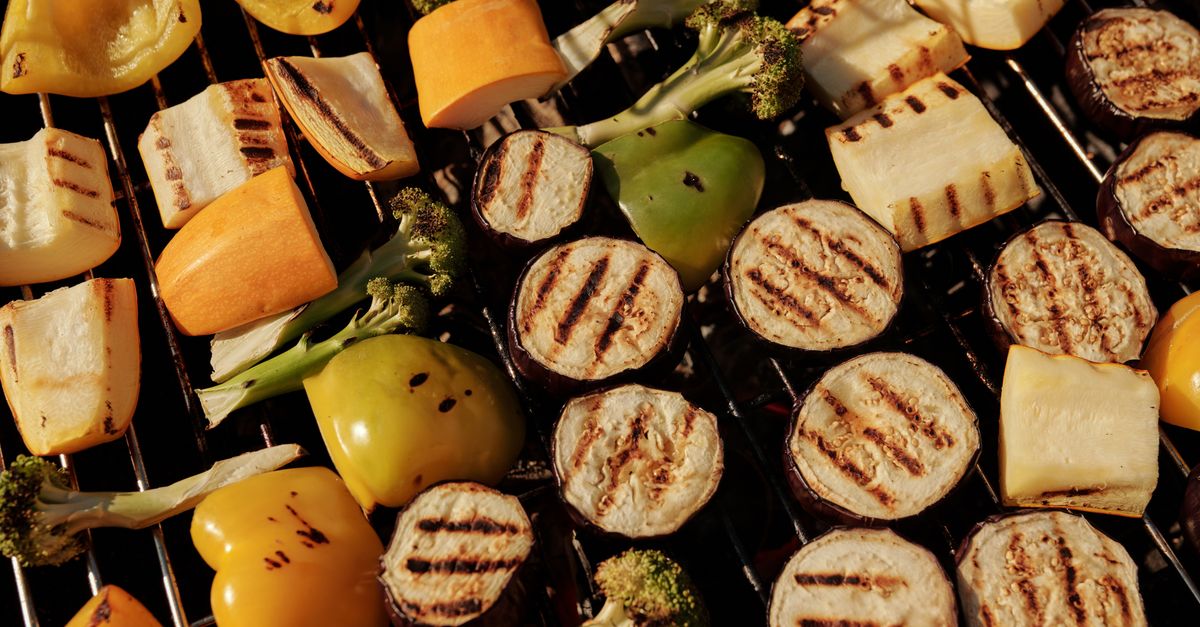
Grilling is one of the cleanest methods for eggplant. Brush the slices lightly with oil (a pastry brush gives you control — you use far less than a pour or a toss), and cook over direct medium-high heat. The dry ambient heat means the surface seals before oil has time to migrate inward. A grill or broiler also lets excess fat drip away.
For whole eggplant (the base for baba ganoush or miso nasu), no oil is needed at all. Place it directly over a gas flame or under a broiler until completely charred and collapsed — about 20–30 minutes — and the interior steams in its own moisture.
Dry-frying, then adding oil at the end
This is a traditional Chinese technique used in dishes like twice-cooked eggplant. Place the pieces in a dry, preheated wok or skillet over medium-high heat. Let them sit undisturbed until they start to shrink and the cut surfaces begin to take on some color — 3–5 minutes. Once collapsed, then add your flavored oil or sauce. At this stage the cells are already denatured and won’t absorb nearly as much fat.
This method requires no pre-treatment and yields a texture that’s silky and a little smoky — a great trade-off.
Air frying
An air fryer circulates very hot, dry air around the food, which mimics the oven-roasting effect at a smaller scale. Pre-treat the eggplant (salt or microwave), toss with 1 teaspoon of oil per medium eggplant, and cook at 200 °C (390 °F) for 12–15 minutes, shaking once. The result is golden, not greasy — one of the highest oil-efficiency cooking methods available for eggplant.
Pan-frying (the hardest method to keep lean)
If pan-frying is what the recipe calls for, the variables that matter most are:
- Pan temperature: Heat the pan until a drop of water skitters across the surface before adding oil. Then add just enough oil to coat the base — 1–2 tablespoons for a 26–28 cm skillet. High heat seals the surface within seconds.
- Don’t crowd: Pieces touching each other drop the pan temperature and start to steam, reopening the absorption window.
- Don’t press or stir constantly: Let the eggplant cook undisturbed until it releases naturally from the surface (2–3 minutes). Pressing it increases surface contact and oil uptake.
- Cook through: If the pieces look oily midway, keep cooking — the eggplant will begin releasing that oil back into the pan once it’s fully cooked. Resist pulling it early.
Getting Specific: Skins, Shapes, and Varieties
Not all eggplant is the same, and the variety you’re working with affects how oil-prone it is.
Globe (Italian) eggplant — the large, teardrop-shaped variety most common in Western supermarkets — has the densest, most sponge-like flesh. It benefits most from salting.
Japanese and Chinese eggplant — long, slender, thinner-skinned, with fewer air pockets and slightly sweeter flesh. These absorb noticeably less oil than globe eggplant even with no pre-treatment, making them a natural pick for quick stir-fries.
Indian (small, round) eggplant — dense and firm, often cooked whole or quartered. Stuffing or braising suits them better than high-heat frying, so the oil question is somewhat moot.
Leaving the skin on also limits oil absorption slightly, because the skin is a physical barrier. In methods where you’d peel (such as making a purée), you’re already planning to use other cooking techniques that manage oil less critically.
Common Mistakes That Make Eggplant Greasy
Starting with cold oil — oil that isn’t hot enough soaks in instead of searing. Always preheat the pan, then the oil.
Skipping the pat-dry step after salting — a wet surface suppresses browning and leaves no barrier against oil migration.
Adding oil in multiple batches — if the eggplant looks dry and you add more oil, it will absorb all of it. Instead, cover the pan briefly (the trapped steam finishes the cooking without extra fat) or reduce the heat.
Using too low a temperature in the oven — anything below 200 °C (390 °F) tends to stew rather than roast eggplant, which increases oil uptake.
Frequently Asked Questions
Does salting eggplant actually make a difference for oil absorption, or is it just for bitterness?
Both effects are real, though they work slightly differently. Salting collapses the cellular air pockets through osmosis, which physically reduces how much oil the flesh can take in when it hits a pan. Modern cultivars have had much of their bitterness bred out, so if bitterness is your only concern, you may be able to skip it — but for oil control, salting still earns its place.
How little oil can you actually use when pan-frying eggplant?
With a properly preheated pan and well-salted, pat-dry eggplant, you can sauté a medium eggplant (around 400 g) in as little as 1–1.5 tablespoons of oil. Beyond that, you’ll likely see sticking before browning. If that sounds like too much, switch methods: roasting or air frying at high heat uses less oil with better results.
Can you cook eggplant with no oil at all?
Yes, in specific situations. Whole eggplant can be charred directly over a flame or under a broiler with zero oil. Cubed or sliced eggplant can be roasted on parchment at high heat with no oil — it caramelizes on its own sugars but dries out faster, so keep the pieces thicker (2.5+ cm) and watch the timing. A non-stick pan allows dry-cooking in small amounts, though browning is less pronounced.
Why does restaurant eggplant taste so good — do they just use enormous amounts of oil?
Sometimes, yes. Many Chinese, Japanese, and Middle Eastern restaurants deep-fry eggplant briefly (30–60 seconds in oil at 180 °C) before finishing in sauce. The rapid deep-fry seals the surface instantly while achieving very fast cooking, and the sauce step then coats the outside rather than soaking in. It’s a different result from home pan-frying, and replicating it requires a lot of oil — though the eggplant ends up absorbing less total fat than a slow sauté would deliver.
Does the cut size affect how oily eggplant gets?
Yes. Larger cubes have a lower surface-area-to-volume ratio, meaning less exposed flesh to absorb oil relative to the piece’s interior. Thin slices or small dice offer far more exposed surface and tend to be greasier. If you’re worried about oil, cut thicker — roughly 2 cm cubes or 1.5 cm slices — rather than matchsticks or small dice.
The Short Answer
Eggplant gets oily when it’s raw, cold, or given too much time to absorb fat before heat seals its surface. Salt it and pat it dry, get your pan or oven genuinely hot before the eggplant goes in, don’t crowd the pieces, and — if the method allows — switch to roasting, grilling, or air frying where dry heat does the work. Do all of that together and the grease-sponge problem more or less disappears.