Cooking Okra Without the Slime: Methods That Work
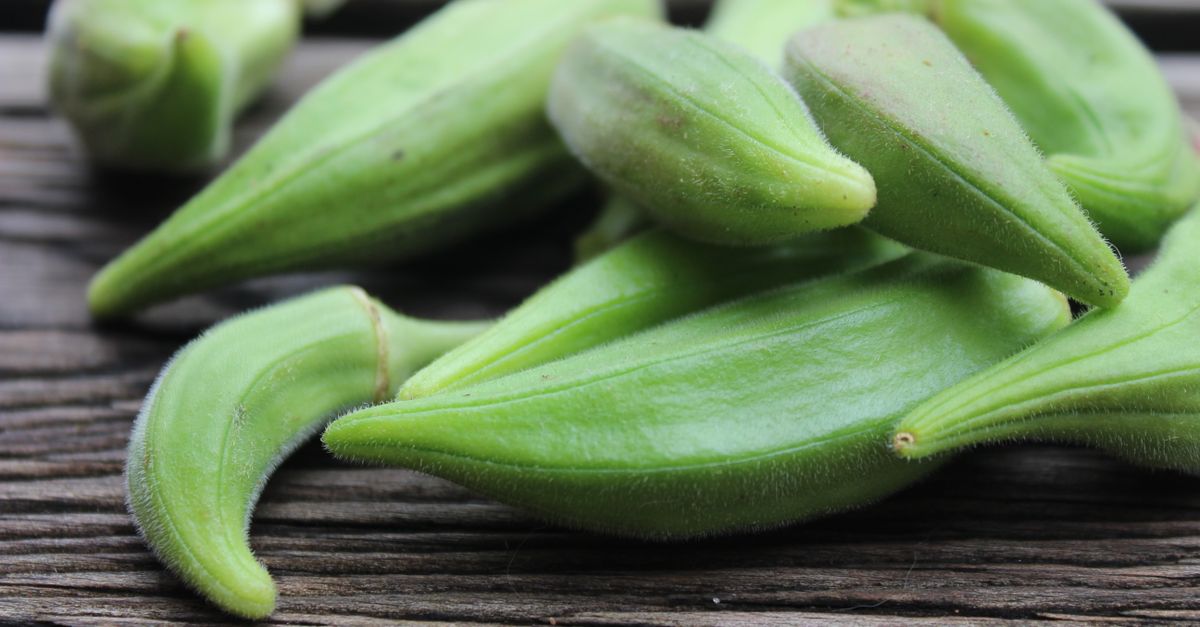
Okra has a texture problem that puts a lot of cooks off before they even start. That gelatinous, rope-like slime — the plant produces it as a natural moisture-binding mucilage — coats the inside of the pod and releases into whatever you’re cooking the moment heat and moisture meet. The good news: slime is not inevitable. A handful of reliable techniques, most of them simple, dramatically reduce or eliminate it. Here is what actually works and why.
Why Okra Gets Slimy in the First Place
The mucilage in okra is a polysaccharide-based gel — chemically similar to what makes aloe vera viscous. It sits inside the pod walls and seeds, and it becomes increasingly runny when exposed to water and heat. Cut the pod, add liquid, apply heat: slime. The goal of every anti-slime technique is either to keep moisture away from the mucilage, denature it quickly with high dry heat, or introduce an acid that breaks down the polysaccharide chains.
Knowing the mechanism matters because it tells you which shortcuts don’t work. Rinsing okra in cold water before cooking doesn’t reduce slime — if anything, surface moisture makes it worse. And cooking sliced okra in a wet braise from the start is almost guaranteed to produce maximum slime.
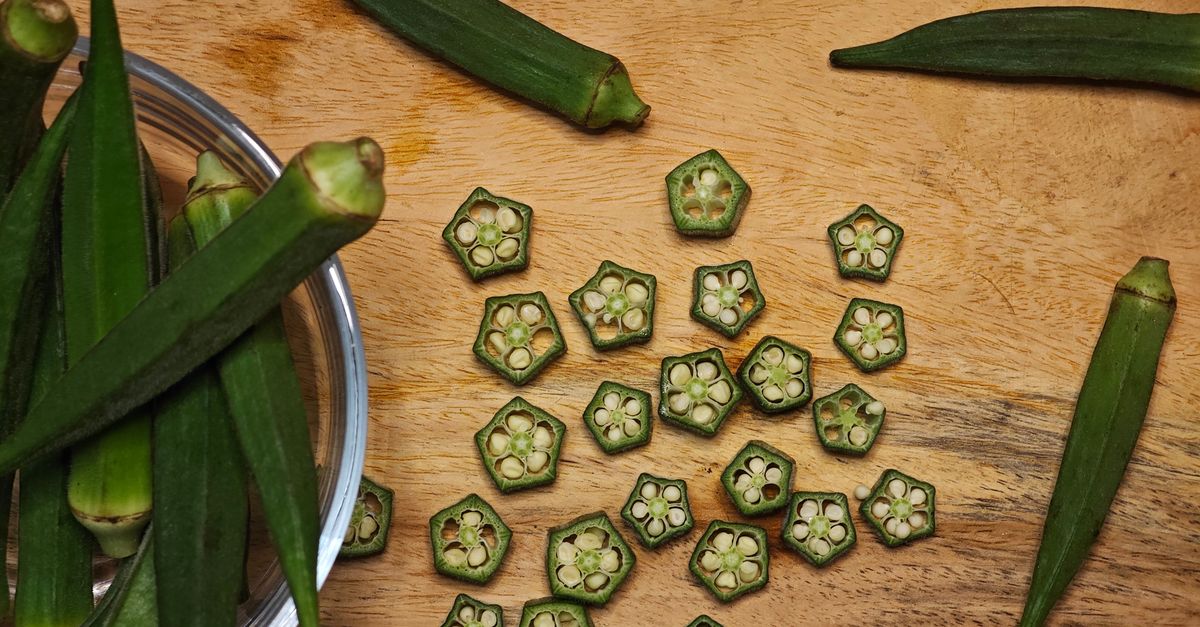
High-Heat Dry Cooking: The Most Reliable Fix
The same high-heat, low-moisture logic applies to other vegetables prone to turning mushy, as explained in How to Cook Frozen Vegetables Without Sogginess.
Roasting
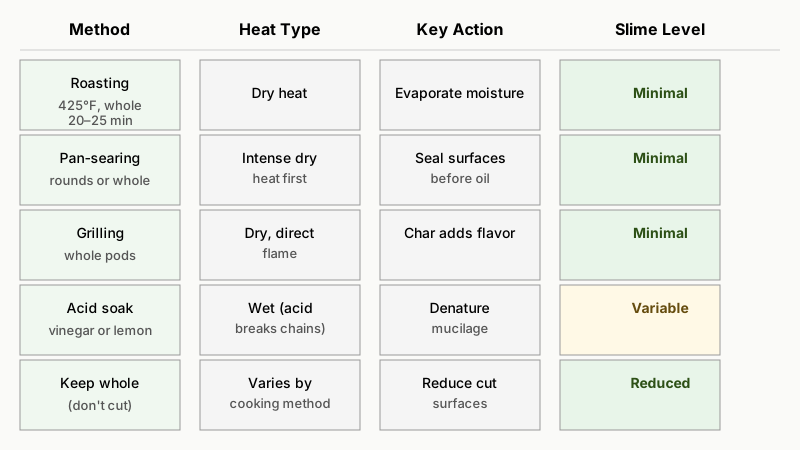
Roasting is the single most effective method for crisp, slime-free okra. Preheat your oven to 425 °F (220 °C). Dry the pods completely with a clean towel — moisture is the enemy — then toss lightly in oil and spread in a single layer on a sheet pan. Do not overlap them. Roast for 20–25 minutes, turning once halfway through. The dry oven air drives off moisture fast enough that the mucilage never gets a chance to become gooey. You end up with tender pods that have slightly crisp edges and almost no sliminess.
Pan-Searing and Stir-Frying
A screaming-hot cast-iron or carbon-steel pan works by the same principle: fast, dry heat. Cut the okra into rounds or leave pods whole, then add them to a dry, pre-heated pan before adding any oil. Let them sear for a minute untouched, then add oil and toss. The contact with intense heat immediately seals the cut surfaces. Work in batches so you don’t crowd the pan and drop the temperature — a crowded pan steams instead of searing, and steam is exactly what you’re trying to avoid.
Grilling
Hole-free grilling (skewers or a grill basket) keeps okra from falling through the grates while giving it direct flame contact. Toss pods in oil, season, and grill over medium-high heat for 3–4 minutes per side. The char adds flavor and the dry, intense heat eliminates slime almost entirely.
Acidity: Using Acid to Break Down Mucilage
Acid denatures the polysaccharides that create slime. This is why many traditional recipes — Louisiana gumbo being the most famous example — call for tomatoes alongside okra. The acid in tomatoes gradually breaks down the mucilage over the long cooking time, which is part of why a gumbo thickened with okra and one thickened with filé have very different textures by the time they’re done.
For quicker applications, try:
- A brief soak in vinegar. Toss sliced okra in a tablespoon or two of white vinegar, let it sit for 30 minutes, rinse, and dry thoroughly before cooking. Results vary — some cooks find it makes a meaningful difference, others less so — but it’s low-effort and worth trying.
- Lemon juice in the cooking liquid. For braised or stewed okra, adding the juice of half a lemon or a couple of tablespoons of tomato paste early in the process reduces the final sliminess compared to cooking without any acid.
- Cooking with tomatoes directly. Indian bhindi masala and many West African okra stews use fresh or canned tomatoes specifically because the acidity keeps the texture manageable. The longer you cook, the more the acid works.
Preparation Choices That Make a Difference
If you enjoy solving vegetable texture problems, Cooking Eggplant Without the Grease Trap tackles a similar challenge with a different notoriously tricky ingredient.
Keep Pods Whole When You Can
Most of the mucilage is released from cut surfaces. Cooking okra whole — just trimming the very tip of the stem without cutting into the pod — dramatically reduces how much slime enters your dish. This works well for roasting, grilling, stir-frying, and pickling.
Dry Thoroughly Before Cutting
Wash okra well in advance and let it dry on a towel for at least 30 minutes, or pat it completely dry just before cooking. Any surface moisture mixes with the cut mucilage immediately and makes things stickier. This is one of the simplest changes you can make and it costs nothing.
Cut and Air Out
Some cooks slice okra and leave it uncovered for 20–30 minutes before cooking. The cut surfaces dry slightly and the exposed mucilage firms up a bit. Not as powerful as a full vinegar soak or roasting, but useful when you need a quick fix.
Don’t Stir Constantly
In a pan, frequent stirring breaks the cut surfaces and releases more mucilage. Let okra sit undisturbed long enough to develop a sear before moving it.
Techniques for Dishes That Require Liquid
Some dishes — gumbo, Indian curries, pickled okra — inherently involve moisture, and you can’t simply roast your way out of them. Here the approach shifts from elimination to management:
-
Sear the okra first. Before adding it to a stew or curry, give sliced or whole okra 5–6 minutes in a hot dry pan until the cut edges start to brown. This pre-cooking step seals the surfaces enough that far less mucilage leaches into the final dish.
-
Add okra late. The longer okra sits in hot liquid, the more it releases. Adding it in the last 10–15 minutes of a braise keeps slime to a minimum while still flavoring the dish.
-
Lean into it for thickening. If the dish genuinely benefits from body — gumbo, certain stews, some West African soups — the mucilage is not the enemy. You’re using it deliberately as a thickener. Accept the texture and adjust expectations; the slime becomes the technique.
Pickling: Zero Slime, Maximum Flavor
Pickled okra is one of the cleanest results you can get. Whole pods submerged in a hot vinegar brine and refrigerated for at least 48 hours develop firm, snappy texture with virtually no sliminess. The acidity of the brine does the same work it does in cooking, but more thoroughly, because the pods sit in it for days. Pickled okra is a genuinely good argument for the vegetable to skeptics.
Frequently Asked Questions
Does freezing okra before cooking reduce slime?
Freeze-then-thaw does change okra’s texture, and some cooks find the thawed pods produce less slime when seared. The tradeoff is that frozen pods are softer and less suitable for high-heat roasting or grilling. It’s worth trying if you’re cooking in a stew or curry.
Is the slime actually harmful to eat?
No. The mucilage is edible and nutritionally inert — it’s the same substance that makes okra seeds useful as a food thickener in some cuisines. The issue is entirely textural, not a health or safety concern.
Why does my okra stew get slimier the more I stir it?
Stirring breaks down partially cooked okra, exposing fresh interior surfaces and releasing more mucilage into the liquid. Where possible, limit stirring and add okra close to the end of cooking.
Which variety of okra is least slimy?
Smaller, younger pods — regardless of variety — tend to have less developed mucilage than large, mature ones. Pods shorter than about 3 inches are generally more tender and less slimy. The Clemson Spineless variety is widely available and relatively mild in its mucilage production, though differences between varieties are modest compared to differences in cooking method.
Can I deep-fry okra to avoid slime?
Yes. Breaded and deep-fried okra (the Southern US standard) encases the pod in a dry, hot shell before any moisture can activate the mucilage. It’s one of the most popular ways to serve okra precisely because the texture is unambiguously crisp. The breading absorbs any released mucilage before it has any effect on what you’re eating.
Slime-free okra is mostly a matter of heat management and moisture control. Lead with high heat, keep surfaces dry, add acid when you can, and save the long liquid cooking for dishes that use the mucilage deliberately. Once those principles click, okra stops being a problem vegetable and becomes one of the most versatile things in a summer garden.