Fixing a Sticky Wooden Door That Swells in Humidity
Why Wooden Doors Swell and Stick in Humid Weather
Wood is hygroscopic — it absorbs and releases moisture from the surrounding air. When humidity rises, the wood fibers swell across the grain, adding width and thickness to a door panel. That extra volume is what turns a smoothly swinging door into one you have to shove with your shoulder. The effect is particularly pronounced in unpainted or poorly sealed door edges, which are the most porous surfaces on the slab.
The sticking usually follows a predictable pattern: the door is fine in dry months, then tight in summer or rainy seasons when indoor humidity climbs. That seasonal rhythm is your first diagnostic clue. A door that sticks year-round is a different problem — framing settling, hinge issues, or a warped slab — not simple swelling.

Diagnose Before You Cut: Find Where It’s Binding
Open the door fully and run your hand along all four edges — top, latch side, hinge side, bottom. Feel and look for shiny or scraped paint, which marks exactly where wood is contacting the frame. Slide a thin piece of card or paper around the closed gap; where it drags or won’t pass, that’s your binding zone.
Common binding spots:
- Top corner opposite the hinges — the most frequent culprit, because a door sags slightly at the latch side as hinges wear, pressing the top corner into the frame
- Full latch edge — often means the door is genuinely thicker from swelling
- Bottom edge — common when a new floor covering was added or when the door was never trimmed after installation
Mark the binding area with a pencil or painter’s tape before you do anything else. This prevents you from sanding the wrong edge.
The Right Fixes, From Least to Most Invasive
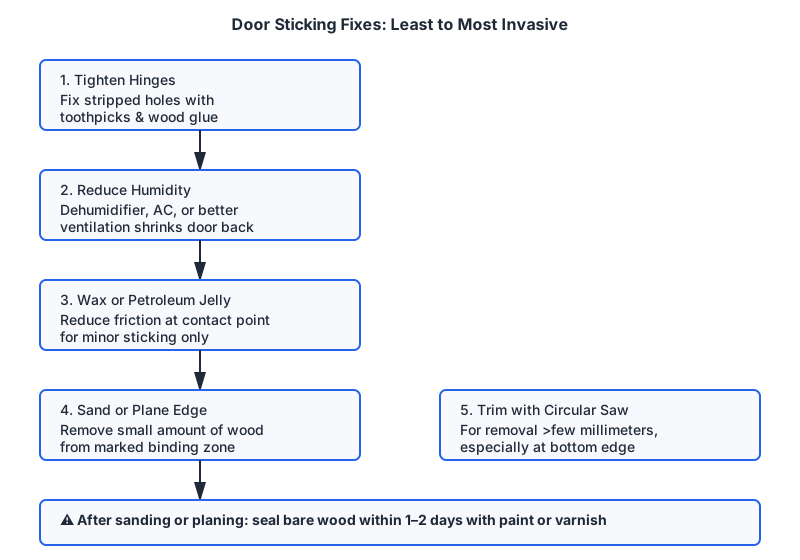
Start with the simplest intervention and only escalate if it doesn’t work. Most seasonal swelling can be solved without touching a plane or saw.
Tighten the Hinges First
Loose hinges let the door sag and bind at the top corner. Open the door and check every hinge screw. If screws spin freely without biting, the holes have stripped. The fix: remove the screw, push a toothpick or two (with a dab of wood glue) into the hole, let it dry, snap off the excess, then re-drive the original screw. The wood fills the hole and the screw grips again. This alone resolves a surprising number of “swollen door” complaints.
Reduce Humidity at the Source
If the binding is mild, lowering the room’s humidity can shrink the door back to a comfortable fit without any woodwork at all. A dehumidifier, better bathroom ventilation, or simply running the air conditioning more consistently can all help. This is a temporary management strategy, not a permanent fix — if the door is under-sealed, it will swell again every humid season.
If you’d rather tackle the root cause without buying new equipment, Indoor Humidity Control Without a Dehumidifier outlines several practical ways to keep indoor moisture levels down.
Apply Wax or Petroleum Jelly to the Binding Edge
For very minor sticking, lubricating the contact point buys time. Rub a candle stub, beeswax, or a thin layer of petroleum jelly on the edge where the door catches. This doesn’t remove material; it just reduces friction. It works best when the binding is marginal — a half-millimeter of contact rather than a real interference.
The same wax-and-sand approach works wonders indoors too, as explained in Fix a Sticky Kitchen Drawer or Cabinet Door: Wax, Sand, Realign, Done.
Sand or Plane the Binding Edge
When lubrication isn’t enough, you need to remove a small amount of wood from the area you’ve marked.
Sanding works well on light binding. Use 60- or 80-grit sandpaper on a sanding block (not just your hand — a block keeps the surface flat) and work with the grain on the marked area. Remove a little, test the door, repeat. It’s slow, but you’re less likely to overshoot.
A hand plane or electric planer is faster and gives a flatter result. If you’ve never used a hand plane, the most common mistake is taking too much off in one pass. Set the blade for a thin shaving. Work with the grain — on the top edge, that means planing from the corner inward toward the middle, not off the end, which can split the wood.
If the door needs to come off its hinges to plane the latch edge properly, tap the hinge pins up from below with a screwdriver and mallet. Have a second person hold the door as it comes free — a standard interior door is heavier than it looks.

Seal the Bare Wood Immediately After Planing
This step is skipped constantly, and it’s why the same door swells again next season. Any bare wood you expose — whether from planing, sanding, or trimming — is now the most permeable surface on the door. Paint, varnish, or a purpose-made exterior wood primer must go on within a day or two of the work.
Pay particular attention to the top and bottom edges of the door. Many doors ship with those edges unfinished, which means they’re open to moisture from both sides. Sealing all six faces of the slab (both faces, all four edges) dramatically reduces seasonal movement. You don’t need a thick coat — a single sealing coat of an appropriate finish is far better than nothing.
When the Binding Is Severe: Consider Trimming with a Circular Saw
If you need to remove more than a few millimeters — common at the bottom edge when new flooring has been laid — a hand plane becomes impractical. Set a circular saw to the exact depth you need (use a straight edge clamped to the door as a guide fence), and cut the edge cleanly. For hollow-core interior doors, you may expose the internal frame; if you cut more than about 10–15 mm off a hollow-core bottom, you’ll need to glue and clamp the internal rail back in place before rehanging.
What About Warped Doors?
A warped door binds differently — it presses at two diagonal corners while leaving gaps at the other two. Mild warping (under about 6 mm measured across the diagonal) sometimes self-corrects if you remove the door, stack it flat, and weight it in a dry space for several weeks. Moderate warping can sometimes be addressed by repositioning or adding a hinge — a third hinge in the middle of the door reduces the tendency to bow.
Severe warping rarely fixes permanently with DIY methods. At that point, door replacement is often more economical than repeated attempts to flatten the slab.
Preventing Seasonal Swelling Long-Term
Fixes are satisfying, but prevention makes the next humid season a non-event.
- Seal all edges before installation — including the top edge, which is almost always missed
- Maintain indoor humidity at a reasonably stable level year-round; wild swings are harder on wood than consistently higher humidity
- Check and refresh the door’s finish every few years, especially on exterior-facing or bathroom doors
- Inspect hinges annually — catching a loose hinge screw early prevents the sag-and-bind cycle from starting
Frequently Asked Questions
Can I fix a sticking door without removing it from the hinges?
Yes, in most cases. If the binding is at the top or latch edge, you can sand or plane it in place while the door is hung, as long as you can open it wide enough to work comfortably. Removing the door only becomes necessary when you need to work on the latch edge along its full length, or when a circular saw cut is required.
How much wood should I remove when planing a swollen door?
Remove as little as possible to get a smooth close, ideally in several light passes with frequent testing. Remember that the door will shrink back somewhat when humidity drops — if you remove too much in summer, you’ll have a drafty gap in winter. Leave just enough clearance for a piece of card to slide around without resistance.
Will a dehumidifier alone fix my sticking door?
Sometimes, if the swelling is mild and seasonal. Lowering indoor humidity can shrink the door enough to close freely without any woodwork. But if the door is unsealed at the edges, it will swell again the following humid season. The lasting fix combines moisture management with sealing the bare wood.
Why does my door stick only in summer and not in winter?
Wood absorbs moisture when ambient humidity is high and releases it when the air dries out. In most climates, summer brings higher humidity — especially in bathrooms, kitchens, and homes without air conditioning — causing the door to swell. In drier winter air, the wood shrinks back. This seasonal cycle is normal; it becomes a problem only when the door wasn’t sealed well enough to buffer the change.
Is it better to plane the door edge or the frame?
Plane the door, not the frame. The door is removable and has more material to work with. Trimming the door frame (the jamb) risks weakening it, disrupts the weather-strip or stop bead, and is harder to do cleanly. The only exception is a frame that’s badly out of square due to house settling — in that case, correcting the frame geometry may be part of the solution, but that’s a larger carpentry job.