Indoor Humidity Control Without a Dehumidifier
Excess indoor humidity does real, measurable damage — warped wood floors, peeling wallpaper, chronic mold growth behind walls — long before it feels oppressive. The good news is that a dedicated dehumidifier is only one tool among many, and several alternatives are cheaper, quieter, and require no electricity at all. This guide covers the full picture: what drives indoor moisture up, how to cut it at the source, and which passive and active strategies work best room by room.
Why Indoor Humidity Gets Out of Hand
Humidity rises from two directions: outdoor air that carries moisture in, and indoor activities that generate it.
Cooking, showering, breathing, and even houseplants add water vapor continuously. A family of four exhales roughly a liter of moisture into their home each night. Boiling a pot of pasta, running the dishwasher, and taking a ten-minute shower can add several more liters in an hour. On top of that, a home with poor vapor barriers allows ground moisture to wick up through crawl spaces and concrete slabs.
The EPA recommends keeping indoor relative humidity between 30% and 50%. Below that range, mucous membranes dry out and static electricity becomes a problem. Above 60%, dust mites thrive and mold can colonize damp surfaces within 24 to 48 hours.

Cut Moisture at the Source
The single most effective strategy — and the one least likely to appear on a product page — is reducing the moisture load before it enters the air. No ventilation system can keep up with a source it cannot overcome.
Fix Cooking Habits
Cooking produces steam continuously. Covering pots while boiling reduces steam by a meaningful margin. Using a range hood vented to the exterior (not recirculating) removes humidity and cooking byproducts directly. If your hood recirculates air through a carbon filter, it removes odors but does almost nothing for moisture — worth knowing before you assume it’s working.
Shorten and Cool Showers
A hot shower in a small bathroom can push relative humidity above 90% in minutes. Shorter and slightly cooler showers reduce steam generation substantially. Running the bathroom exhaust fan during and for 15–20 minutes after the shower is more important than most people realize — switching it off the moment you step out leaves residual steam to condense on cool walls and grout.
Vent the Dryer Properly
A clothes dryer vented indoors (sometimes done in winter to recapture heat) dumps enormous quantities of moisture — and lint — into living spaces. This is worth correcting even in cold climates. If the duct connection has come loose behind the dryer, the same problem occurs inadvertently. Check the duct connection annually.
Rethink Plant Placement
Houseplants transpire — they release water vapor through their leaves. A single large plant adds modest moisture, but a dense indoor jungle in a small, poorly ventilated room can shift relative humidity noticeably. Group plants near an open window or in a room with active ventilation rather than in enclosed spaces.
If overwatering is also a recurring problem in your plant corner, Beginner Tips for Indoor Gardening: Why Your Succulent Is Rotting explains how excess moisture habits can silently damage your greenery too.
Ventilation: The Fastest Free Tool
Ventilation dilutes humid indoor air with drier outdoor air. How effective this is depends entirely on outdoor conditions — it works best when outside air is cool and dry, which is typical of autumn mornings, winter days in most climates, and early mornings in dry summer climates. Ventilating during a humid summer afternoon moves the problem around without solving it.
Good airflow habits also make rooms feel less cramped and stuffy, a topic covered in How to Make a Small Room Look Bigger: Light, Color, And Tone Tricks.
Cross-Ventilation
Opening windows on opposite sides of the home creates cross-ventilation that moves air through rather than pooling it. A box fan in a window facing out on the humid side and a window open on the other side is cheap and often dramatically effective on the right day.
Exhaust Fans in Key Rooms
Bathroom and kitchen exhaust fans are humidity’s most underused enemies. They’re already installed in most homes; the habit of running them is what’s missing. Size matters: the Home Ventilating Institute recommends at least one air change per minute for bathrooms, which for a typical 5×8 bathroom translates to roughly 40–50 CFM. If your fan sounds like a jet engine but doesn’t seem to do much, check whether the duct is intact and the exterior vent flap opens freely — blockages and disconnected ducts are common.
Whole-House Ventilation
If the home is well-sealed (good for energy efficiency, sometimes bad for air quality), a heat recovery ventilator (HRV) or energy recovery ventilator (ERV) provides controlled fresh-air exchange while recovering most of the thermal energy. ERVs also transfer some moisture with the heat, which makes them especially relevant for humidity management. These are not cheap to install, but they serve double duty on air quality and humidity without the ongoing energy cost of a refrigerant-cycle dehumidifier.
Passive Absorption: Desiccants and Materials
Desiccants absorb moisture from the air chemically rather than mechanically. They’re silent, require no power, and work in spaces too small for a fan.
Silica Gel
The small packets found in shoe boxes and electronics packaging are silica gel — the same material sold in larger containers for household use. Placed in closets, under bathroom sinks, in camera bags, or inside a boat cabin, silica gel absorbs moisture until it saturates. Many formulations include color-change crystals (blue to pink, or orange to green depending on the brand) that signal when the product needs regenerating. Regeneration is straightforward: spread the crystals on a baking sheet and heat in an oven at around 250°F (120°C) for an hour. The moisture drives off and the crystals return to their original color. Silica gel is non-toxic and reusable for years.
Calcium Chloride Products
Products sold under names like DampRid work on a different principle — calcium chloride dissolves as it absorbs moisture, dripping into a reservoir that you empty periodically. These are effective in small, enclosed spaces: closets, bathrooms, RVs, storage units. They work passively down to quite low temperatures, which silica gel does less well. The drawback is that they’re consumable — the calcium chloride is used up and must be replaced. They don’t regenerate.
Rock Salt
Rock salt (sodium chloride) is a folk remedy for humidity that does absorb moisture, though slowly and to a limited degree compared to calcium chloride or silica gel. It works best in very humid, enclosed spaces. A bucket of rock salt in a damp basement closet will collect some moisture; it won’t replace a proper solution in a whole room. The salt eventually turns wet and briny and must be dried or replaced. It costs almost nothing, which makes it worth trying in a pinch.
Charcoal
Activated charcoal is primarily an odor absorber, not a meaningful desiccant. Standard charcoal (the type in bags marketed for the purpose) adsorbs some volatile organic compounds and a modest amount of moisture. Its humidity control effect in a room-sized space is negligible. In a small, sealed container — a gear bag, a camera dry box — it may help somewhat. Claims that a bowl of charcoal briquettes will solve a damp room problem are exaggerated.
Room-by-Room Strategies
Basement
Basements are the most challenging case because moisture often enters through the walls and floor via diffusion and bulk water intrusion — sources that ventilation and desiccants can’t overcome alone. The priority here is waterproofing: seal visible cracks with hydraulic cement or appropriate sealant, ensure gutters direct water away from the foundation, and grade soil so it slopes away from the house. A vapor barrier (6-mil polyethylene sheeting) on an exposed crawl space floor dramatically reduces ground moisture entering the air above it. Once the sources are controlled, ventilation and desiccants become genuinely useful.
Bathroom
Running the exhaust fan throughout the shower and for at least 15 minutes after is the core practice. If the existing fan is inadequate or noisy enough that people avoid using it, replacing it with a quieter, properly sized unit pays off quickly. Wiping down shower walls after use removes standing water that would otherwise evaporate. Hanging towels spread out, not folded, so they dry faster and add less moisture to the air over time.
Kitchen
Use lids on boiling water, run the range hood while cooking and for a few minutes after, and let hot food cool before covering it. A pot of stock simmering for hours uncovered adds more moisture to a kitchen than most other activities combined.
Bedroom
Humans exhale a significant amount of moisture overnight. Leaving the bedroom door open allows that moisture to diffuse rather than concentrate. Airing bedding daily (pulling it back rather than making the bed immediately) allows moisture trapped in fabric and the mattress to evaporate more readily.
When Passive Methods Aren’t Enough
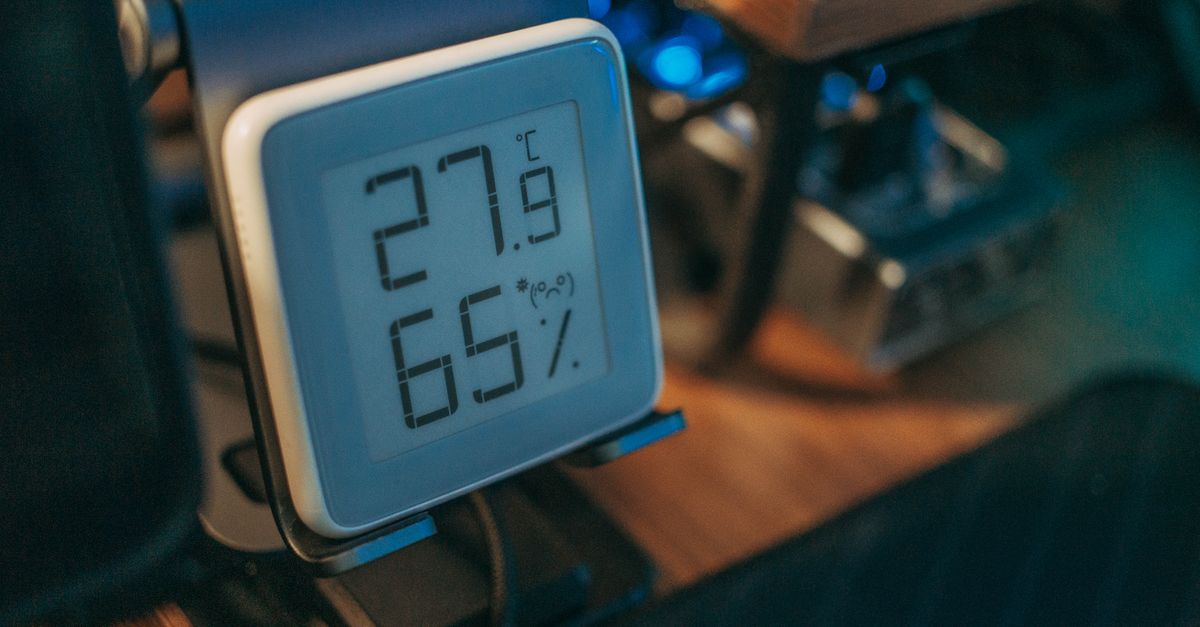
Passive and behavioral strategies work well for mild-to-moderate humidity problems in average climates. If your home regularly exceeds 60–65% relative humidity even after addressing ventilation and moisture sources, the underlying cause is likely structural — inadequate vapor barriers, poor drainage, or a fundamentally damp climate — and a dehumidifier or mechanical ventilation upgrade becomes appropriate. A hygrometer (a digital one costs under $15 at most hardware stores) is essential for diagnosing the actual severity and tracking whether your interventions are working.
The EPA’s guidance on mold and indoor air quality is worth consulting if you’re already seeing mold growth, since at that point the question shifts from humidity prevention to remediation.
Frequently Asked Questions
Does opening windows always lower indoor humidity?
Not always. Opening windows helps when outdoor air is drier than indoor air — typically in cool, dry weather or early mornings in summer. On a hot, muggy afternoon, outside air may carry more moisture than indoor air, making the situation worse. Check outdoor conditions before ventilating.
How do I know if my home’s humidity is actually too high?
Buy an inexpensive digital hygrometer (also called a humidity meter or thermo-hygrometer). Condensation on windows, musty smells, and visible mold are signs you’re already above healthy thresholds. Aim to keep readings between 30% and 50% relative humidity.
Can too many houseplants raise humidity significantly?
In most average-sized rooms with normal ventilation, a handful of houseplants has a small effect. In a small, sealed room with many large plants — think a dense collection of tropical specimens — the combined transpiration can noticeably shift readings. Grouping plants near an open window or using them in well-ventilated areas largely eliminates this concern.
Is rock salt as effective as DampRid for moisture absorption?
No. Calcium chloride (DampRid and similar products) absorbs moisture far more aggressively than sodium chloride (rock salt). Rock salt is a low-cost option for minor dampness in tiny enclosed spaces, but it is not a meaningful substitute for a purpose-designed desiccant in a room-sized application.
How often do I need to regenerate silica gel?
It depends on ambient humidity and the quantity of silica gel used. In a very damp environment, a small canister may saturate within a few weeks. Color-indicator silica gel takes the guesswork out of this — when the color shifts, it’s time to regenerate. After oven drying, it performs like new and can be reused indefinitely under normal conditions.