How Do You Make Cold Soups for Summer Meals?
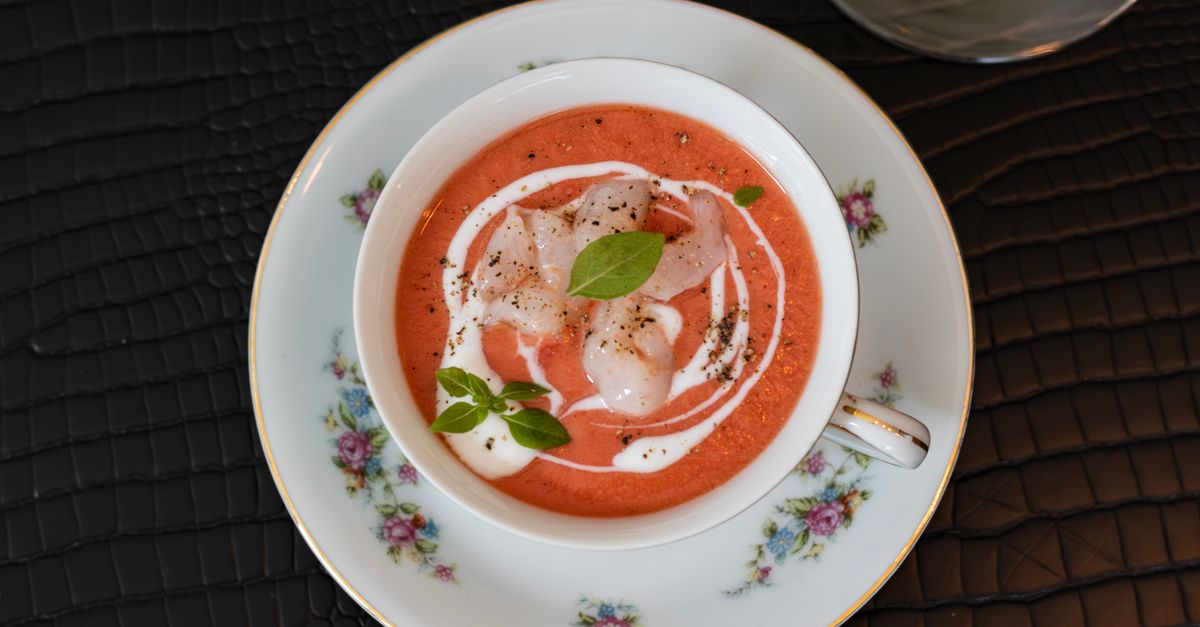
Cold soups occupy a strange gap in most home cooks’ repertoires: people know they exist, feel vaguely pleased when a restaurant serves one, then never think to make them at home. That’s a missed opportunity. Most cold soups are faster than their hot counterparts, they can be made hours ahead, and on a day when the last thing you want to do is stand over a burner, they require almost none.
This piece covers the main approaches: blended raw vegetable soups, cooked-and-chilled soups, dairy-based cold soups, and fruit-forward versions. Each method has its own logic, and knowing that logic lets you riff on it rather than follow a recipe to the letter.
What Makes a Cold Soup Actually Work?
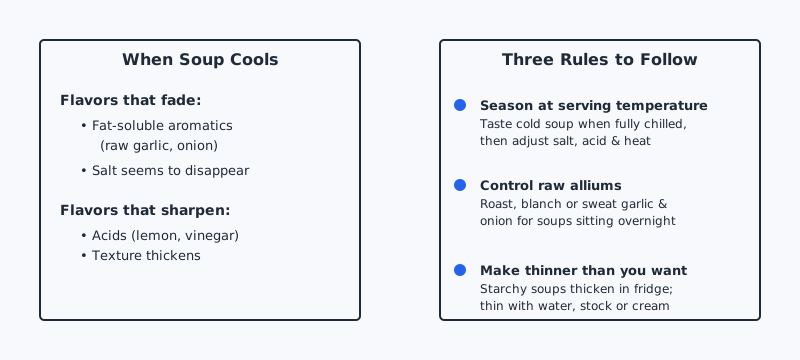
A cold soup is not just a hot soup served at room temperature. Chilling mutes certain flavors and sharpens others: fat-soluble aromatics like garlic and raw onion can become overwhelming, acids (lemon, vinegar) open up, and salt seems to drop off. If you season a cold soup to taste while it is still warm, it will almost certainly need more salt once it cools.
Three practical rules cover most failures:
- Season at serving temperature. Chill the soup completely, then taste and adjust salt, acid, and heat right before serving.
- Control raw alliums carefully. A clove of raw garlic blended into vichyssoise sounds small; six hours later it tastes like a clove of garlic. Roast, blanch, or sweat alliums for any soup that will sit overnight. If you want raw bite, add a small amount at the end.
- Texture loosens as it sits. Starchy soups (potato-based, legume-based) thicken in the fridge. Make them slightly thinner than you want and thin further with cold water, stock, or a splash of cream at serving time.
Even though cold soups skip the stove, the same principles of balancing acidity, salt, and depth apply, as explained in Build Layers of Flavor in Soups & Stews.
Blended Raw Vegetable Soups
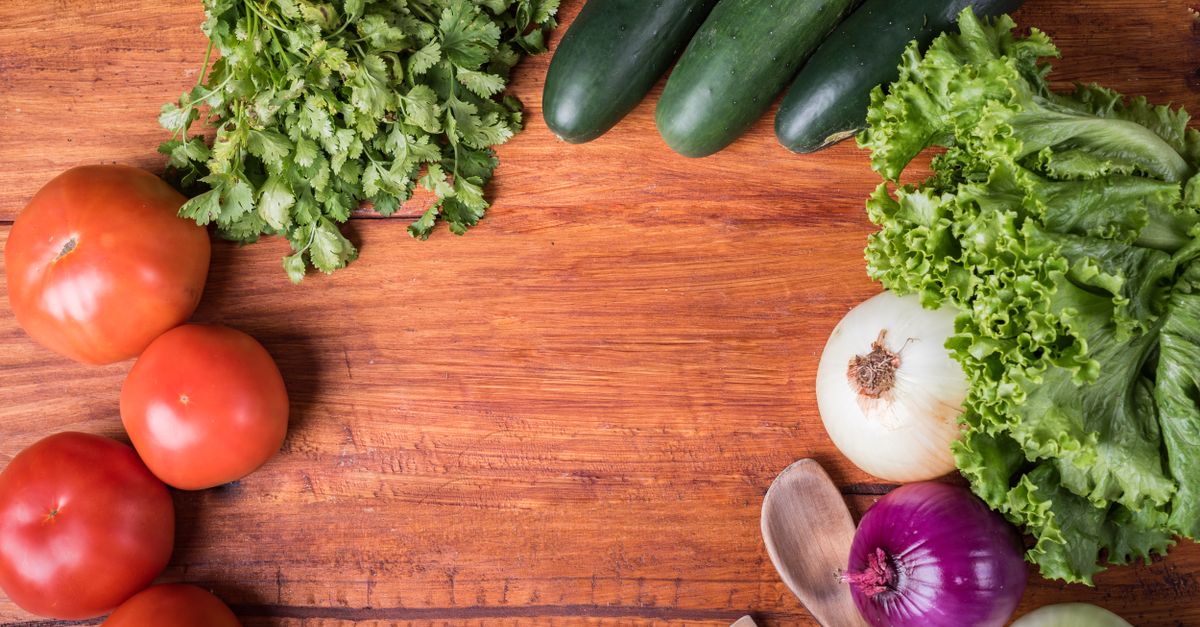
Gazpacho is the archetype and the easiest place to start. The classic Andalusian base is ripe tomatoes, cucumber, red pepper, a small amount of garlic, stale bread soaked in water, sherry vinegar, and olive oil. Everything goes raw into the blender. The bread is not optional filler; it emulsifies the oil and gives the soup body without cream.
The ratio that tends to work: roughly twice as much tomato as cucumber, with pepper and bread making up the rest. Blend in two stages if you want a silkier result: first the vegetables with no liquid, then stream in olive oil and vinegar as you would for a vinaigrette. Strain or leave chunky depending on preference.
Beyond gazpacho, the blended-raw method works on:
- Green gazpacho: tomatillos, green grapes, cucumber, toasted almonds, sherry vinegar. The grapes cut what would otherwise be an aggressively vegetal result.
- Tomato-watermelon: watermelon replaces about a third of the tomato. The sugar in the watermelon softens the acid and you need less vinegar.
- Cucumber-yogurt: blended cucumber, Greek yogurt, dill, a small amount of raw garlic, and lemon. Thin to a pourable consistency with cold water. This crosses into the dairy-based category.
For raw soups, produce quality is non-negotiable. Because nothing gets cooked, whatever flavor the vegetable has is the flavor you get. Out-of-season supermarket tomatoes produce an out-of-season-tasting soup. In midsummer when tomatoes actually taste like something, this soup is effortless. In February it is a disappointment.
Cooked-and-Chilled Soups
Not every cold soup starts raw. Vichyssoise is a leek and potato soup blended smooth and chilled; borscht is often served cold; roasted red pepper soup works well at any temperature. The cooked-and-chilled method solves the raw allium problem entirely and gives you more control over texture.
Vichyssoise is worth understanding in some depth because it teaches the method. Sweat leeks gently in butter until they are completely soft with no color. Add diced waxy potato and enough chicken or vegetable stock to cover generously. Simmer until the potato is fully tender (pressing a piece against the side of the pot should crush it with no resistance), then blend until very smooth. Pass through a fine sieve if you want the classic result. Stir in heavy cream, chill thoroughly, and season with salt and white pepper at the table.
The common mistake is under-cooking the potato. If it has any remaining starchy graininess before blending, that texture survives the blender and the sieve. Cook it longer than you think necessary.
Roasted vegetable soups follow the same logic: roast the vegetables for depth and caramelization, blend with stock, chill, and finish with something acidic at serving time. Roasted tomato, roasted carrot with ginger and miso, roasted beet: all work. The roasting step can be done the night before, which means the actual soup comes together in minutes.
Cold borscht (the kind with buttermilk or sour cream rather than the chunky hot variety) is blended or very finely shredded cooked beet thinned with buttermilk or kefir, soured with lemon or vinegar, and served with a hard-boiled egg and fresh dill. It is sharp, deeply colored, and takes less than 20 minutes once the beets are cooked.
Dairy-Based Cold Soups
Yogurt and buttermilk are natural bases for cold soups because their acidity is already doing structural work. They do not need much help from vinegar or lemon.
Tzatziki crossed with soup is the simplest version: Greek yogurt blended with cucumber, mint, dill, garlic (blanched or very small amount raw), and enough cold water to bring it to a spoonable consistency. Finish with olive oil and flaky salt. It serves as a starter or a sauce for grilled lamb served at the same meal.
Buttermilk corn soup is cold-weather logic applied to summer produce. Blend raw corn kernels scraped from the cob with full-fat buttermilk, a small amount of jalapeño, and a squeeze of lime. The raw corn gives sweetness; the buttermilk gives tang; the jalapeño gives low-level heat that builds rather than hits. Because nothing is cooked, the color is bright and the flavor is fresh.
Almond soup (ajo blanco) is technically in this group: blanched almonds blended with water, a small amount of garlic, sherry vinegar, and good olive oil. It looks and pours like a white soup and is traditionally served with peeled grapes or a slice of melon. The texture depends entirely on blending time; a high-powered blender for two full minutes produces something silky, while a standard blender may leave it slightly grainy no matter how long you run it.
Fruit-Forward Cold Soups
Fruit soups are common in Scandinavian and Central European cuisines and deserve more attention in other contexts. The approach is simple: blend ripe fruit with enough liquid (water, juice, wine, or yogurt) to achieve a spoonable consistency, then balance the natural sweetness with acid and sometimes a small amount of salt.
- Strawberry soup: blended strawberries, a small amount of lemon juice, a splash of dry rosé or white wine if using alcohol, and a thin stream of olive oil to round the texture. Serve very cold with crème fraîche.
- Chilled cherry soup: a Hungarian classic. Cooked tart cherries (sour cherries work better than sweet), a little sugar, a cinnamon stick during cooking (removed before blending), and finished with sour cream. It operates somewhere between dessert and starter depending on how sweet the cherries are.
- Melon soup: ripe honeydew or cantaloupe blended with a small amount of ginger, lime juice, and a few mint leaves. Almost no effort. Almost no cooking. Almost irresistible if the melon is ripe.
For fruit soups, ripeness is as important as it is for raw vegetable soups. An under-ripe melon produces an under-ripe soup and no amount of technique fixes it.
Getting Ahead: Storage and Serving
Most cold soups improve after several hours in the fridge. Flavors meld, the temperature drops to where it should be, and the texture stabilizes. Making them a day ahead is almost always a good idea.
Storage times vary by ingredient. Dairy-based soups and fruit soups are best within two days. Cooked vegetable soups generally hold for three to four days. Raw vegetable soups like gazpacho are best within two days; after that the fresh vegetable quality begins to fade.
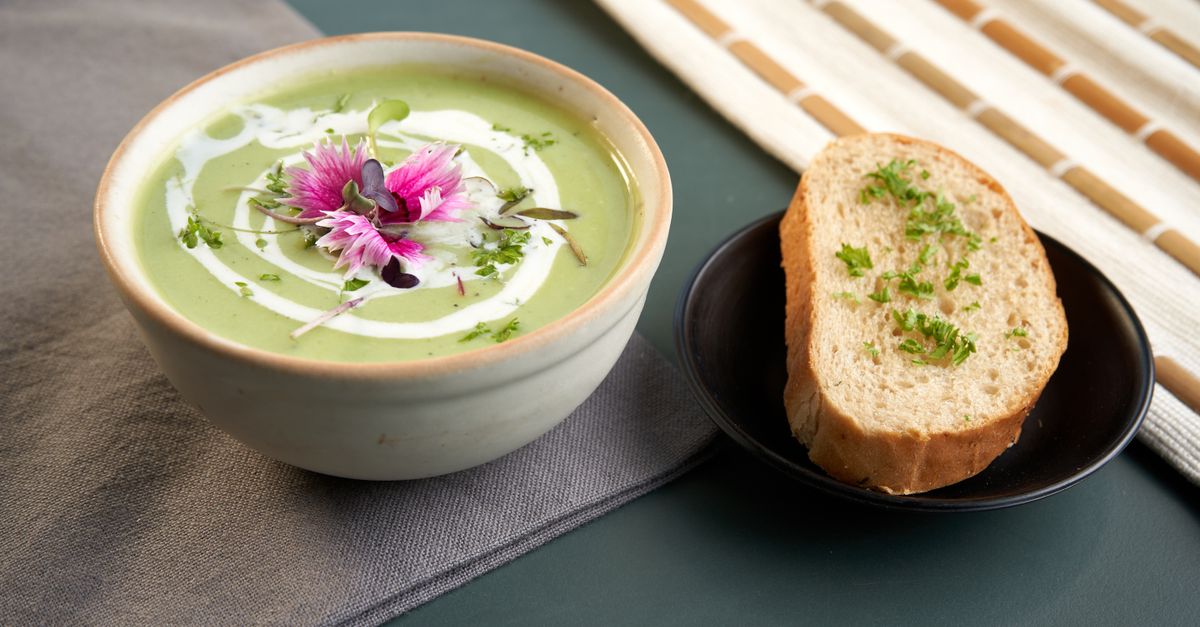
For serving: pre-chill the bowls in the freezer for ten minutes. It sounds minor but the difference between a cold soup in a warm bowl and a cold soup in a properly chilled one is noticeable. Garnish should add contrast in texture and flavor, not just color: a drizzle of good olive oil, a few drops of hot sauce, crispy croutons (added at the last moment so they do not soften), a small pile of finely diced raw vegetable, or torn herbs.
If serving outdoors, keep the bowls over crushed ice until the moment you bring them to the table. A cold soup that warms up in a bowl on a summer table is nobody’s best experience.
If you like prepping food in advance, Freezer Friendly Meals for Busy Weeks: 20 Practical Ideas offers more ideas for stocking your freezer with ready-to-go options.
Frequently Asked Questions
Do cold soups need thickening agents like cornstarch?
Not typically. The body in most cold soups comes from blended vegetables (the fiber and pectin in tomatoes and peppers), bread (as in gazpacho), starchy ingredients like potato, or dairy fat. Cornstarch works in hot soups because it gelatinizes with heat; in a cold context you would need to cook it out first, then chill, and most recipes do not bother because better natural thickeners are already present.
Why does my gazpacho taste flat even when seasoned?
Flatness in gazpacho usually points to one of three things: under-ripe tomatoes, not enough sherry vinegar, or too little salt at serving temperature. Taste it ice-cold, add acid first (a few drops of vinegar or lemon), then salt, and wait 30 seconds for the salt to dissolve before tasting again. A tiny pinch of sugar can help if the tomatoes are genuinely mediocre, though it will not fully rescue very watery out-of-season fruit.
Can you freeze cold soups?
Some can, most should not. Dairy-based soups (yogurt, buttermilk, sour cream) separate badly when frozen and thawed. Blended raw vegetable soups lose their fresh character. Cooked puréed soups without dairy freeze reasonably well; vichyssoise is the exception since the cream tends to separate on thawing, though you can re-blend it. In practice, because most cold soups take under 30 minutes to make, it is rarely worth freezing them.
How do you stop blended soups from becoming frothy?
Foam forms when you blend too aggressively with too much air. Blend in a full container rather than a half-empty one (less air space), and if your blender has a lower setting, use it for the first 30 seconds. After blending, rest the soup in the fridge for at least an hour; most foam will dissipate on its own. Straining also removes residual air bubbles.
What garnishes work well for cold soups?
The garnish should do something the soup cannot: add crunch (croutons, toasted seeds, fried capers), sharpness (finely diced raw shallot, pickled cucumber), creaminess (a spoon of crème fraîche, a thread of olive oil), or heat (a drop or two of chili oil). Avoid garnishes that go soggy quickly if the bowl will sit on the table for any time before eating.