Shared Bathroom Cabinet Organization for Roommates and Partners
Living with someone else means sharing space that was probably designed for one person’s routine. A bathroom cabinet quickly becomes a source of friction when toothpaste tubes multiply, skincare products blur together, and nobody can find the ibuprofen in under thirty seconds. The fixes are mostly physical and surprisingly simple.
Divide the Space Before You Add Anything
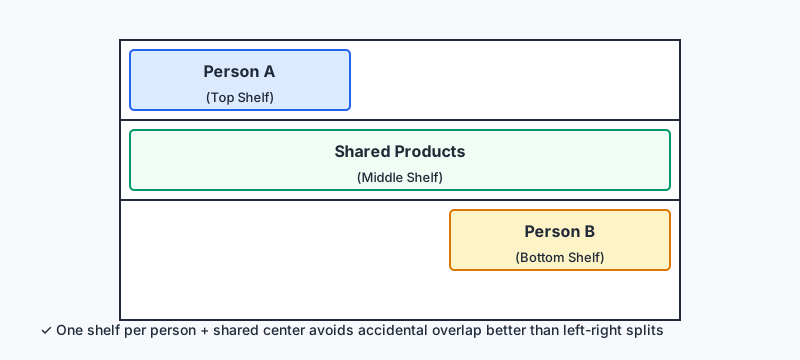
Start with a blank slate. Pull everything out of the cabinet, wipe down the shelves, and agree on a clear territorial boundary before a single bottle goes back in. For a medicine cabinet with three shelves, one shelf per person plus a shared shelf in the middle works better in practice than splitting each shelf left-to-right. A left-right split sounds fair but is easy to violate accidentally every morning when you are half-awake.
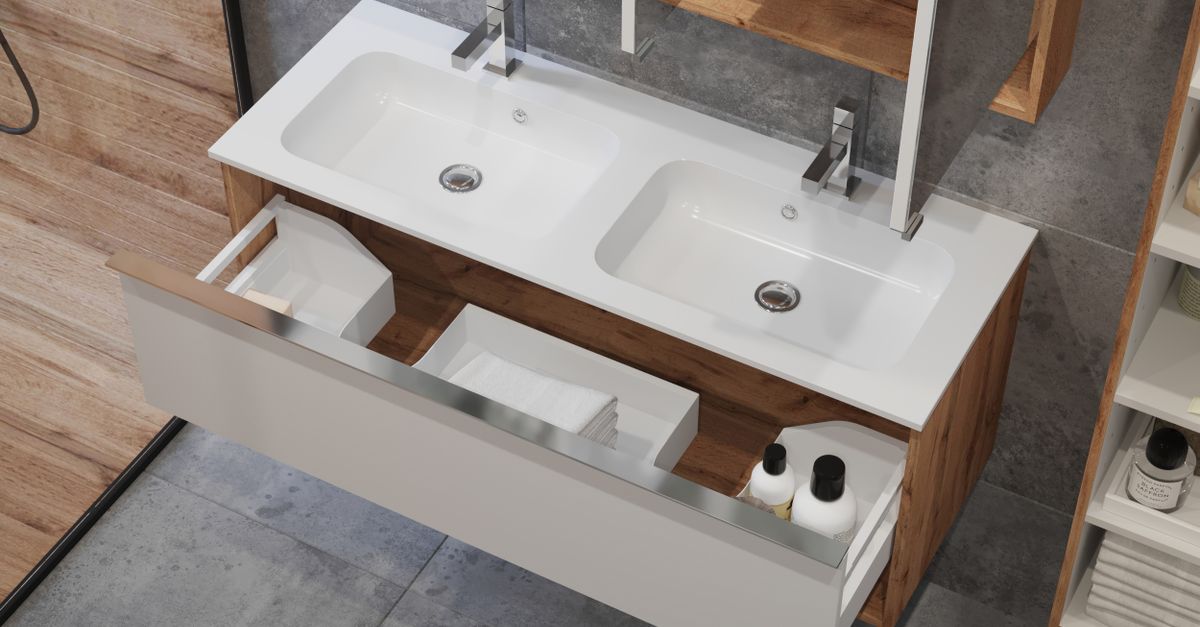
For under-sink cabinets, zones work better than shelves: a drawer or pull-out bin per person on opposite sides, with cleaning supplies in the center. The goal is that each person can see and reach their own things without moving anyone else’s.
If one person uses significantly more products than the other, allocate space proportionally rather than rigidly fifty-fifty. Agree on this before things go back in. Resentment about a quarter-shelf more of space matters a lot less than both people being able to function in the morning.
A System for Telling Products Apart
Color-coded bins or baskets are the most durable solution for shared spaces. Each person picks a color or basket style, and everything in their routine lives in that container. The bin itself does the labeling: you do not need to mark individual bottles.
For products that live outside a bin (toothbrushes, razors, a face wash that sits on the shelf rather than inside a basket), a few practical options hold up well over time:
- Colored dot stickers or washi tape: Wrap a small strip around the neck of the bottle. Cheap, removable, and immediately visible. Colored washi tape also comes in dozens of patterns, so each person’s tape is distinct rather than just different.
- Labeled baskets: A small adhesive label or a clipped tag on each basket makes it clear whose zone is whose even when guests or new roommates are involved.
- Separate drawers: If the vanity has drawers, one per person is the cleanest system because there is no ambiguity about what belongs where.
Avoid writing names on shared surfaces with permanent marker. It makes the bathroom feel temporary and looks bad when you eventually want to re-organize.
The same labeling and zoning logic works well beyond the bathroom, as shown in Spice Cabinet Organization: 7 Steps to Easy Cooking.
Shared Products Need Their Own Rules
Shampoo, first aid supplies, cotton rounds, toilet paper: some products genuinely belong to both people. Give shared items a dedicated spot that is neither person’s zone, and agree on a restocking rule before the shortage happens.
A simple approach: whoever uses the last of a shared item puts it on a small whiteboard or notepad stuck to the inside of the cabinet door. Replenishment then happens on the next shopping trip without blame or a forgotten text. A whiteboard marker on a laminated card works just as well as an actual whiteboard and costs almost nothing.
For expensive skincare or medications, do not put them in the shared zone even if you are willing to share. Having them in your own basket makes it obvious when something has been used without a conversation first.
What to do with medications
Medications deserve their own small container (a zip pouch or a flat box) within each person’s zone, even in a small cabinet. Mixing medications into a general pile is how you take the wrong thing in the dark at 2 a.m. If you keep any over-the-counter medications in a shared spot, label the container clearly and agree that neither person takes from it without checking with the other first.
Maintaining It Without a Weekly Argument
Organization systems fail when maintenance is heavier than the problem it solves. A few habits that genuinely reduce drift:
Return, do not relocate. Every bottle goes back to its own zone after use. This is the single rule that matters most. If putting something back takes more than five seconds, the zone layout probably needs to change, not the habit.
A quarterly reset. Every few months, both people pull their section out, check for expired products, and remove anything they no longer use. This stops the slow creep of empty bottles and products that have been replaced but not thrown out. Fifteen minutes twice a year is easier than a full reorganization every spring.
Talk before adding, not after. If someone moves in with a new skincare routine or buys a large diffuser that needs shelf space, bringing it up before it appears in the cabinet is a small thing that prevents almost all of the usual friction.
Accept imperfect days. A system does not have to be followed at 6 a.m. before work. Build in enough slack that one or two bottles out of place does not trigger a reset. The right amount of structure is the minimum amount that prevents you from losing your things.
When the Cabinet Is Genuinely Too Small
Sometimes the problem is not organization but cubic inches. A few options add real storage without remodeling:
- Over-door organizers: A narrow over-door rack adds several shelves of space while keeping everything visible. Assign one pocket column per person and it works exactly like the shelf system.
- A second small cabinet: A wall-mounted cabinet added next to the existing one is a weekend project and often costs less than a month’s worth of skincare products. Each person gets a cabinet and the question of shared territory disappears entirely.
- A shelf inside the shower: Products used in the shower do not need to compete with cabinet space. A rust-resistant caddy or a corner shelf keeps shower products separate from the general cabinet without any zoning conversation.
- Bedroom overflow: Not every product needs to be in the bathroom. Backup stock, infrequently used treatments, and anything used only at a dressing table stays in the bedroom until the bathroom supply runs out. This alone often frees up a full shelf.
If the clutter problem extends past the cabinet into the rest of the house, How to Declutter Your Home Step by Step (That Actually Works) offers a broader approach worth starting with.
Frequently Asked Questions
How do we split storage space fairly when one person has far more products?
Fairness means each person can access and store what they actually use, not that the square footage is mathematically equal. A reasonable approach is to allocate roughly what each person’s daily routine requires, then put a soft cap on storage per person so routines do not expand indefinitely without a conversation. If one person’s collection genuinely needs a second solution (a bedroom shelf, an under-sink basket), that is usually cheaper and less stressful than the ongoing negotiation over shared inches.
What is the easiest way to keep products from getting mixed up?
Color-coded bins or baskets with each person’s items stored together inside them. The basket does the labeling, individual bottles do not need to be marked, and when someone adds a new product it automatically goes into their color without any decision. Colored washi tape around bottle necks is the best backup for things that sit outside the bin.
How often should we reorganize the shared cabinet?
A light tidy every week or two (return anything that has drifted, throw out empties) and a proper reset every three to four months. The quarterly reset is where you both check expiration dates, remove products you stopped using, and confirm the zone layout still matches both your routines. Routines change seasonally, so what worked in summer may not work in winter.
What if my roommate or partner does not stick to the system?
The system is probably more friction than it needs to be. When a system requires constant reminders it usually means a physical change is easier than a behavioral one: a dedicated bin that makes the right spot obvious, fewer items overall, or a layout that puts each person’s things within arm’s reach without thinking. Make the right behavior the path of least resistance and most people follow it without conversation.
Should medications always stay in the bathroom cabinet?
Not necessarily. Humidity and heat from showers can degrade some medications faster than a bedroom drawer or a dry kitchen cabinet would. For medications you take regularly and need at hand, a sealed container in your zone of the bathroom cabinet is fine. For anything heat-sensitive or infrequently used, a cool, dry location elsewhere in the home is the better call. Check the storage guidance printed on the packaging.