Silence a Squeaky Bed Frame Without Replacing It

Why Bed Frames Squeak in the First Place
Most squeaks come from one of three sources: wood rubbing against wood, metal grinding against metal, or a joint that has worked loose and allows two surfaces to flex against each other under load. Before you reach for any tool, narrow down which type you are dealing with — the fix is completely different depending on the cause.
A quick diagnostic: strip the mattress and box spring off the frame, then press down on each corner and each slat with your body weight. Rock the headboard and footboard. If the squeak disappears without the mattress, the noise is in the frame itself. If it only appears with the mattress on, check the box spring or mattress foundation first — a worn spring or a cracked slat inside the mattress may be the actual culprit.
Fixing Loose Joints and Hardware
Loose bolts and dowels are the single most common cause of a squeaky bed frame, and tightening them takes minutes.
Start by removing the mattress and foundation, then systematically tighten every bolt, nut, and wing nut on the frame. Use the correct wrench size — if you torque a too-small wrench on a furniture bolt, you can strip the head. On most mid-range frames the bolts will accept a standard 10 mm or 12 mm wrench, but always check.
After tightening, test again. If the bolt feels firm but the joint still moves, the wood around the bolt hole may have compressed or worn out over time. In that case, remove the bolt, squeeze a small amount of wood glue or furniture epoxy into the hole, let it cure fully (check the manufacturer’s guidance on the adhesive packaging), then re-insert and tighten the bolt. The filler gives the bolt fresh material to bite into.
Metal-frame beds often have hook-slot connections where rails slot into receivers on the headboard and footboard posts. These loosen as the metal wears. Pull the rail out, wrap the hook end in a single layer of plumber’s tape (PTFE tape — the thin white tape from the plumbing aisle), and re-insert it. The tape fills the microscopic gap and stops metal-on-metal rattle without permanent alteration.
Before you start tightening bolts, Building Your First Home Tool Kit Without the Guesswork can help you make sure you have the right wrenches and screwdrivers on hand.
Lubricating Wood and Metal Surfaces
Once joints are tight, friction between surfaces is usually what remains. The right lubricant depends on the material.
If squeaky hinges around the house also bother you, our guide to How to Fix a Squeaky Door Hinge: Silencing Hinges With Household Oils uses the same household oil tricks.
Wood-on-wood contact
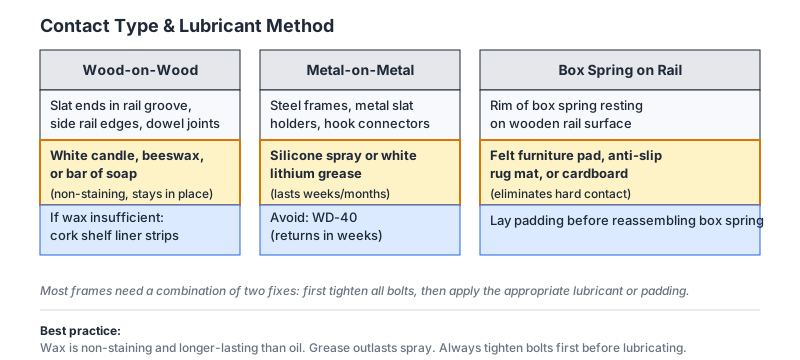
Rub a plain white candle, a block of beeswax, or a bar of soap along every surface where two pieces of wood slide or press against each other — slat ends where they rest in the rail groove, the top edge of side rails where the box spring sits, and anywhere a wooden peg or dowel fits into a matching hole. Wax is non-staining and stays in place far better than oil, which soaks in, disappears, and may darken the wood.
If wax does not fully solve the problem, cut small rectangles of cork shelf liner and place them between the slat ends and the rail groove. Cork compresses slightly under load, which eliminates both the rattle and the squeak.
Metal-on-metal contact
For steel frames and metal slat holders, a spray of silicone lubricant or a smear of white lithium grease on every moving or contact surface works well. Avoid WD-40 as a permanent solution — it is a penetrating solvent and water displacer rather than a long-lasting lubricant, so the squeak tends to return within a few weeks. Silicone spray and white lithium grease stay put considerably longer.
The box spring contact surface
The rim of a box spring resting on a wooden rail creates a surprising amount of noise. Lay an old felt furniture pad, a strip of anti-slip rug mat, or even a folded section of cardboard along the top edge of the side rail before putting the box spring back on. The padding eliminates direct hard-surface contact and often kills a squeak that seemed to come from inside the frame.
Addressing the Headboard and Footboard
Headboards and footboards that bolt directly to the frame have their own set of failure modes. The strut bolts are usually the first to loosen, but even after tightening they can vibrate against the side rails.
Add rubber washers. Place a rubber washer — available from any hardware store in the plumbing or fasteners aisle — on each bolt between the metal strut and the frame. Rubber absorbs vibration that a bare metal washer cannot, and it also prevents the bolt from working loose as quickly.
Use thread-locking fluid sparingly. A single drop of medium-strength threadlocker (the blue variety, not the permanent red) on the bolt threads before tightening will hold the bolt in place through normal mattress movement. Medium-strength formulas can still be removed with a wrench later if you need to disassemble the frame.
Free-standing headboards that attach to the wall rather than the frame introduce a different squeak: the headboard shifting on wall anchors or on floor glides. Tighten any wall anchor screws, and put small adhesive felt pads on the floor glides so the headboard does not scoot on hard flooring.
Checking and Replacing Slats
Missing or cracked slats allow the remaining slats to flex more than they should, which causes both squeaks and sags in the sleeping surface. Walk the slats with your fingertips before reassembly: each slat should sit flat and feel solid, not wobbly or cracked through.
For slats that rattle in their holders, a strip of foam weatherstripping tape pressed into each holder slot before re-inserting the slat fills the gap precisely. Cut it flush so the slat still sits flat.
If a slat is cracked but the frame uses a standard width, a hardware store or timber merchant can cut a replacement from a common softwood like spruce in a few minutes. This is not a frame replacement — it is a single part that costs very little. Measure the existing slat’s length, width, and thickness before you go.
For frames with a center support leg, make sure the leg actually contacts the floor. A single turn of the adjustable foot can be enough: if the leg is suspended even a millimeter off the ground, the center of the frame flexes downward under weight, and every slat above it rattles.
When the Floor Is the Problem
Occasionally the squeak is not the bed at all — it is the floor beneath the frame legs flexing on a subfloor fastener. Test this by lifting each leg slightly while a second person presses on the mattress. If the noise stops when you lift a particular leg, the floor is the source.
Place rubber furniture cups or small rubber furniture pads under each leg. These serve two purposes: they stop the leg from sliding on hard flooring, and they break the direct contact that allows the floor’s own vibration to amplify through the frame.
Frequently Asked Questions
Does tightening bolts always fix a squeaky bed?
Not always, but it is the right place to start. Loose hardware causes the majority of squeaks, so tightening first saves time. If the squeak persists after everything is tight, move on to lubrication and then surface padding. Most frames need a combination of two fixes, not just one.
Can I use olive oil or cooking oil to lubricate a wooden bed frame?
Avoid cooking oils. They soak into wood fibers, can turn rancid over time, and may attract insects. Plain paraffin wax, beeswax, or a bar of soap deliver the same friction-reduction without the side effects. For metal joints, stick to silicone spray or white lithium grease.
My bed only squeaks at night but not during the day — why?
Temperature and humidity changes between day and night cause wood to expand and contract slightly. A joint that fits snugly in warm afternoon conditions may develop just enough gap to rattle in the cooler, drier hours of the night. Adding a foam or cork buffer at the joint addresses both the dimensional change and the noise.
How often should I re-tighten bed frame bolts?
Every six months is a reasonable interval for a frame in regular use. Frames with hook-slot metal connectors may need attention more often than bolted wood frames, because the hook wears against the slot with each movement. Building the check into a regular household routine — alongside changing smoke alarm batteries, for example — keeps the problem from coming back unnoticed.
Will a bunkie board or platform slat kit stop the squeak from a box spring?
Often, yes. A box spring adds a second structure on top of the frame, and that structure has its own internal springs and wooden frame that can squeak independently. Replacing it with a solid bunkie board or a closely spaced slat kit eliminates the box spring as a variable entirely. It is not a fix for a squeaky frame, but if you have isolated the noise to the box spring itself, swapping it out is a legitimate repair rather than a replacement of the main bed frame.