Stop Cloudy Glassware: What's Really Causing It

Two Very Different Problems That Look the Same
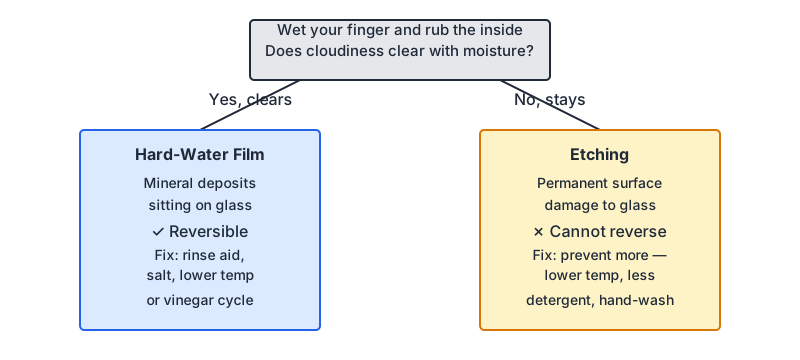
Cloudy glassware coming out of the dishwasher usually has one of two causes — and the fix for each is almost the opposite of the other. Etching is permanent microscopic surface damage to the glass itself. Hard-water film is a reversible mineral deposit sitting on top of the glass. Treating them as the same problem is why most attempts to fix cloudy glasses fail.
The quickest field test: wet your finger and rub it firmly around the inside of the glass. If the cloudiness clears with the moisture, you are looking at mineral deposit — soluble, fixable. If it stays no matter what, the glass has been etched.
Hard-Water Film: Mineral Deposits You Can Reverse
Tap water carries dissolved calcium and magnesium. When the dishwasher heats and evaporates water during drying, these minerals stay behind as a white, chalky haze — sometimes called limescale or hard-water spots. The harder your water supply, the faster it accumulates.
Rinse aid is the most important lever. Rinse aid works by breaking the surface tension of water so it sheets off glass rather than beading and evaporating in place. Without it, even soft water tends to leave spots. If your dishwasher has an adjustable rinse-aid dosage setting, increase it by one step at a time until spotting stops. Most machines ship with it set lower than optimal.
Dishwasher salt matters if your machine has a built-in water softener. Many European and Australian dishwashers include an ion-exchange water softener that replaces calcium and magnesium ions with sodium. This requires a separate reservoir of coarse dishwasher salt — not table salt, which clogs the mechanism. If your machine has this feature and the salt indicator is on, refilling it can make a dramatic difference. North American dishwashers typically do not have this feature.
Detergent quantity and type affect film too. Using too little detergent leaves minerals undispersed. Using too much can leave its own residue. Powders and tabs with a built-in rinse aid and water-softening phosphate alternatives (like citrate) tend to perform better in hard-water areas than plain powder alone. Follow the manufacturer’s fill line and adjust if you see persistent film.
Running a cleaning cycle periodically helps. Place a dishwasher-safe bowl containing about 250 ml (1 cup) of white distilled vinegar on the bottom rack and run a normal hot wash with the machine otherwise empty. The acid dissolves accumulated mineral scale inside the machine, which in turn reduces how much re-deposits onto glassware. Do this monthly if your water is very hard.
Etching: Permanent Damage You Can Only Prevent
Etching is the slow erosion of the silica in glass, leaving a grey or iridescent haze that no amount of cleaning removes. It is caused — alone or in combination — by:
- Water that is too hot. Cycles above about 60 °C (140 °F) increase the rate of silica dissolution significantly. Check your machine’s temperature setting if it is adjustable, and look for a “delicate” or “eco” cycle that runs cooler.
- Excessive or overly alkaline detergent. Many high-performance detergents are highly alkaline (high pH), which accelerates silica etching. Use the minimum effective amount, and consider switching to a detergent formulated for delicate glassware or lower-temperature cycles.
- Pre-rinsing too thoroughly. This is counterintuitive. Dishwasher detergents contain enzymes and mild abrasives that need food soil to work on. When glasses are spotless going in, the detergent attacks the glass surface itself. Scrape rather than rinse before loading.
- Soft or softened water. Paradoxically, very soft water — or water treated by a whole-house softener — accelerates etching because there are no competing mineral ions to occupy the detergent’s alkaline sites. If your home has a softener, reduce detergent dose and water temperature.
- Repeated long cycles. Every trip through the machine adds a little wear. Delicate crystal and thin-blown glasses accumulate etching faster than thick pressed glass.

Once etching appears, the surface cannot be restored. The goal is to stop it progressing.
Practical Adjustments That Address Both Problems
Because the two causes can overlap — a glass may have early etching AND mineral film — a combined approach covers most households:
| Adjustment | Helps Film | Helps Etching | Notes |
|---|---|---|---|
| Top up rinse aid | ✓ | ✗ | Check and refill monthly |
| Lower wash temperature | ✗ | ✓ | Use delicate or eco cycle |
| Reduce detergent dose | ✗ | ✓ | Especially with soft water |
| Refill dishwasher salt | ✓ | ✗ | Only on machines with a softener |
| Monthly vinegar cycle | ✓ | ✗ | Removes scale inside the machine |
| Load glasses upside-down | ✓ | ✓ | Encourages draining; avoids pooling |
| Skip heated dry | ✓ | ✓ | Open door post-cycle; air-dry instead |
| Hand-wash crystal | — | ✓ | Best option for heirloom pieces |
Skipping the heated dry setting is one of the easiest wins. High heat during drying bakes mineral deposits onto the glass and speeds up any ongoing etching. After the wash finishes, pop the door open a few inches and let glassware air-dry on its own. Most glasses are dry within 20–30 minutes in a warm kitchen.
Loading position matters more than most guides admit. Glasses should always go in the top rack, angled so water runs off rather than pooling in the base of a concave bottom. Glasses that trap a puddle of hot, mineral-laden water during drying are far more likely to spot.
If cloudy glasses are just one symptom of a kitchen that always feels behind, 10 Tips for Keeping a Clean Kitchen Every Day offers broader daily habits worth adopting.
What Water Hardness Actually Means for Your Routine
Water hardness is measured in grains per gallon (gpg) or milligrams per litre (mg/L). Very roughly: below around 60 mg/L is considered soft, 60–180 mg/L moderate, and above 180 mg/L hard to very hard. Your water utility is required to publish hardness data — check their annual water quality report (in the US) or contact them directly.
If your water is moderate to hard, the priority is rinse aid plus dishwasher salt (if your machine supports it). If your water is genuinely soft or chemically softened, the priority is lowering temperature and reducing detergent dose, because etching risk dominates.
There is no single setting that works for every household. Dial in your machine based on your actual water, and reassess if you move or if the municipality changes its treatment.
Is Clouding a Sign the Glass Is Unsafe to Use?
Mineral film carries no health risk — you are drinking dissolved calcium and magnesium that did not get washed away, not a contaminant. Etched glass is structurally intact for everyday use in almost all cases, though severely etched or chipped glass should be retired, since surface damage can harbour bacteria that are harder to remove.
Frequently Asked Questions
Does white vinegar in the rinse-aid dispenser work instead of commercial rinse aid?
Vinegar does reduce spotting temporarily because its acidity counteracts mineral deposits, but it is not a true rinse-aid substitute. Commercial rinse aids contain surfactants that break water surface tension in a way vinegar cannot replicate. Vinegar in the dispenser can also degrade the rubber seals in some machines over time. Use it as an occasional descaling treatment in the wash cycle, not as a permanent replacement for rinse aid.
Can I fix already-etched glasses?
No. Etching removes actual glass material from the surface. Once that texture is there, no polish, acid treatment, or buffing reverses it at home. The practical move is to stop further etching — lower temperature, less detergent, cooler dry — and if the glass is valuable, hand-wash from now on.
Why do new glasses cloud faster than older ones?
Factory glass often has a fine protective coating or simply smoother surface that wears away with the first few wash cycles. After that initial period, the rate of change typically slows, though cumulative etching continues with every wash. If you notice rapid clouding on brand-new glasses, reduce detergent and temperature immediately rather than waiting.
Does the brand of detergent matter much?
More than most people expect — especially water temperature and alkalinity vary between products. Detergents labelled for delicate or glassware use are generally formulated with lower alkalinity. Results vary a lot by water hardness and machine type, so if one product is leaving film or contributing to etching, trying a different format (tab vs gel vs powder) or a glassware-specific formula is a reasonable next step.
Should I wash wine glasses in the dishwasher at all?
Thin-blown crystal and lead-free crystal with a very fine rim are best hand-washed. Their wall thickness leaves little margin before etching becomes visible and structurally relevant. Everyday tempered or pressed glassware handles dishwasher cycles well when temperature and detergent are managed correctly. When in doubt, the hand-wash-and-air-dry method is always the safest option for glassware you care about.