Storing Photographs So They Stay Vivid for Decades
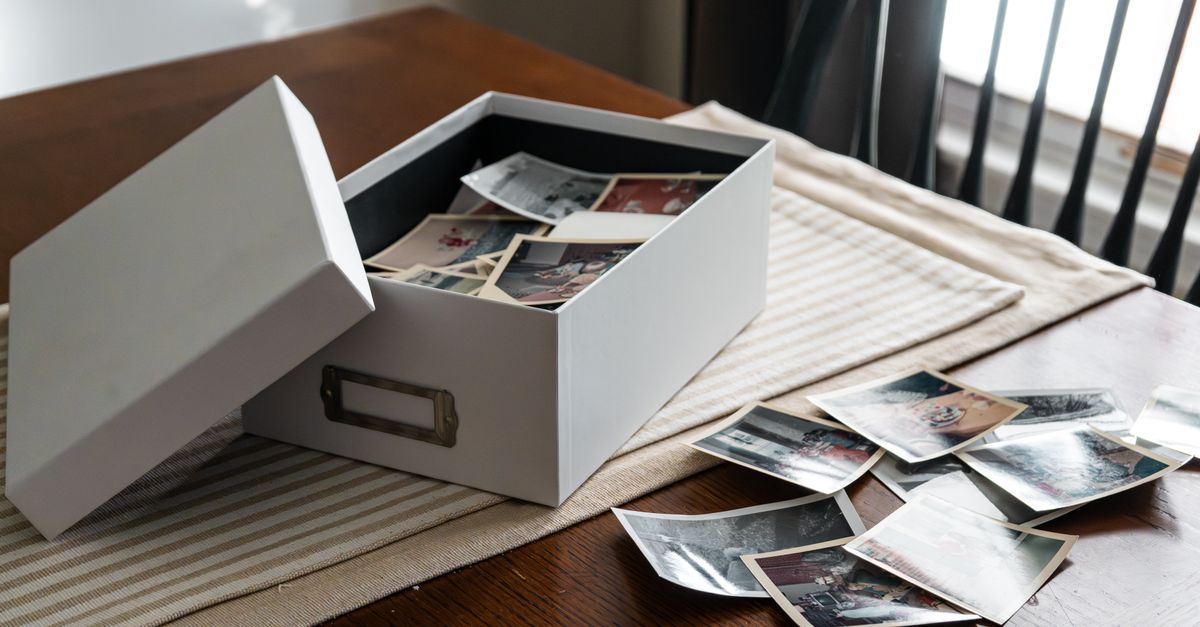
Photographs are one of the few physical objects that carry irreplaceable information — not just faces and places, but the specific light of a particular afternoon that no description can recover. Yet most prints lose their vibrancy not from dramatic accidents but from slow, invisible damage: a cardboard box in a warm closet, an album with the wrong kind of plastic sleeves, or a window that lets in the afternoon sun.
The good news is that the chemistry of fading is well understood, and protecting prints is not expensive. What it requires is a few deliberate choices about materials, environment, and storage format.
What Actually Makes Photographs Fade
Fading and color shift happen when dyes or silver particles in the image layer react with their environment. Three factors drive nearly all of it:
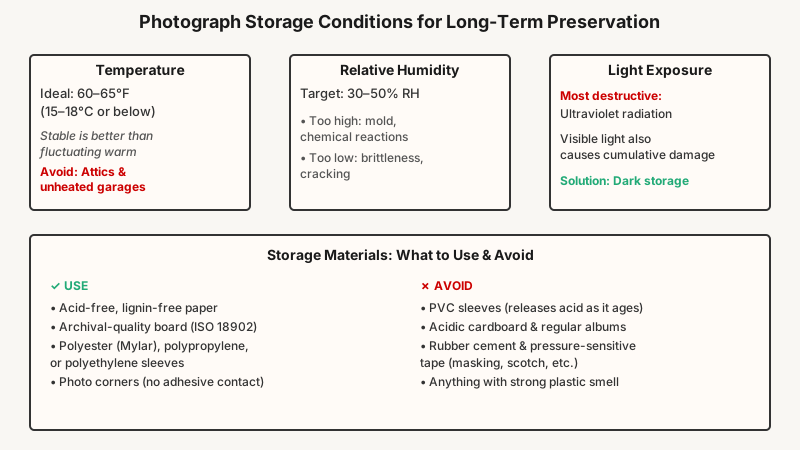
Light — Ultraviolet wavelengths are the most destructive, but visible light causes cumulative damage too. A print displayed in a sunny room can show noticeable color shift within a few years; the same print kept in a dark box may last a century.
Humidity and moisture — High relative humidity accelerates chemical reactions in the image layer and can cause mold, while very low humidity makes paper and gelatin layers brittle and prone to cracking. The recommended storage range is generally 30–50% relative humidity.
Acids and off-gassing chemicals — Ordinary cardboard and many plastics release volatile organic compounds and acids that attack dyes over time. This is the reason a print can fade inside a sealed album: the album itself is doing the damage.
Different print types also behave differently. Color inkjet prints, chromogenic (C-type) prints, Polaroids, slides, and black-and-white silver gelatin prints each have distinct vulnerabilities. Chromogenic prints are sensitive to humidity; some older inkjet prints fade faster in dark storage than in display (a counterintuitive effect called “dark fading”). Knowing your print type matters when you choose storage conditions.
Choosing the Right Materials
This is where most people go wrong. Buying a pretty album at a gift shop feels like preservation, but many albums use polyvinyl chloride (PVC) sleeves, acidic cardboard, or rubber cement — all of which actively degrade photographs.
Paper and Board
Use acid-free, lignin-free paper for any tissue or interleaving, and acid-free, archival-quality mount board or folder stock for enclosures. The words “acid-free” and “archival” are often used loosely, so look for products that meet the ISO 18902 standard (photographic albums, enclosures, and storage) or are tested to ANSI/NAPM IT9 standards. Suppliers who specialize in conservation materials — such as Gaylord Archival, Hollinger Metal Edge, and Light Impressions — are a reliable starting point.
Plastics
Not all plastic sleeves are equivalent. The safest options are:
- Polyester (Mylar/Melinex) — chemically inert, dimensionally stable, excellent for slides and negatives
- Polypropylene — slightly softer, good for prints, widely available
- Polyethylene — also safe, used in many archival sleeves
Avoid PVC entirely. It releases hydrochloric acid as it ages — a process that accelerates in warm, humid conditions. If a sleeve has a strong plastic smell or feels sticky or oily, it is likely PVC.
Adhesives
Avoid rubber cement, masking tape, and most pressure-sensitive tapes. If you need to attach a label or a note, use photographic-quality corners (the kind that hold without touching the image surface) or write on acid-free paper placed separately.
Storage Environment: Temperature, Humidity, and Light
Material choice and environment work together. Excellent enclosures in a hot, humid storage space still yield poor results.
Temperature
Lower is better for long-term stability — most conservation literature points to cool, stable temperatures (roughly 60–65°F / 15–18°C or below) as the ideal for color materials. Fluctuation is at least as damaging as a consistently moderate temperature, because repeated expansion and contraction stresses the paper and emulsion layers. A consistently cool interior room outperforms an attic or garage that swings between cold winters and hot summers.
For prints you want to preserve for multiple generations — several decades and beyond — dedicated cold storage (like a household chest freezer in a sealed, moisture-proof container) is what archivists use for color materials. This is a real option for irreplaceable prints, not just a professional luxury.
Humidity
Target 30–50% relative humidity. In very damp climates or damp basements, a small dehumidifier or silica gel packets inside storage boxes can help. Attics and basements are the two worst locations in most homes: attics get hot and dry in summer, damp in some climates; basements are prone to moisture and occasional flooding.
Light
For stored prints: darkness is free and highly effective. Keep boxes closed. For displayed prints, use UV-filtering glazing (glass or acrylic) in frames, and hang them away from direct sunlight and away from sources of heat. Even indirect light from a north-facing window accumulates over time.
Organizing Formats: Albums, Boxes, and Binders
Once you have the right materials and environment, you need a practical format that you will actually use and that lets you retrieve prints without damaging them.
Archival Boxes
Flatbox storage — where prints lie horizontally in acid-free enclosures inside an archival clamshell or drop-front box — is the format most professional archives use for prints. It puts no mechanical stress on the images, accommodates mixed sizes, and makes retrieval straightforward if prints are organized with labeled dividers. Prints should not be stored loose and should not touch each other directly unless separated by acid-free interleaving tissue.
Binders and Page Sleeves
For everyday family albums that people actually look through, archival binder pages in polyester or polypropylene are a practical middle ground. Choose pages without PVC, make sure the binder itself is covered in a stable material (buckram or cloth, not synthetic vinyl), and don’t overfill pages — pressure causes surface abrasion.
Slide and Negative Storage
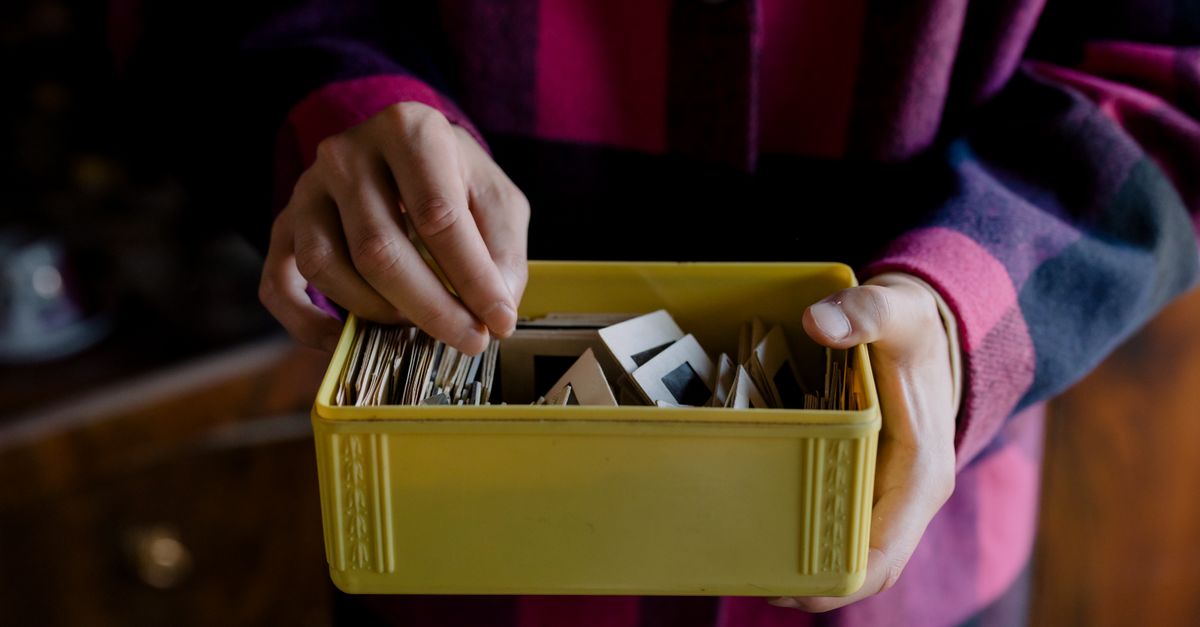
Slides and film negatives should be stored in individual archival sleeves (polyester is ideal), then in acid-free envelopes or in purpose-made sleeves that fit in binders. Keep negatives away from rubber bands and paper clips, which leave permanent impressions. Orienting negatives vertically in hanging files reduces the risk of edge damage.
The Case for a Digital Backup
Physical preservation and digital backup are not alternatives — they complement each other. A high-quality scan of an important print means that even if the original is damaged in a flood or fire, the image survives. Conversely, digital files can fail silently (bit rot, obsolete formats, forgotten passwords), so physical prints remain a meaningful backup for digital-only photos.
For scanning prints, a resolution of 600 dpi is a reasonable minimum for standard 4×6 prints you may want to reprint; 1200 dpi captures more detail and is worth doing for images you care about most. Save in TIFF format for the archival copy (it is lossless) and JPEG for sharing copies. Store files in at least two locations — an external drive at home and a second copy off-site (a cloud service, a drive at a relative’s home, or both).
For negatives and slides, dedicated film scanners or flatbed scanners with a transparency adapter produce better results than photographing them with a camera, though camera digitization has improved considerably.
If your collection includes both prints and files scattered across devices, How to Organize Digital Photos: A Step-by-Step System walks through building a system so nothing gets lost.
Special Cases Worth Knowing
Polaroids and instant prints are among the least stable photograph types. Original Polaroid integral prints (the classic folding square) are sensitive to both light and humidity and should be stored flat in dark conditions at moderate humidity. Reproductions from the original Polaroid negative — if one exists — are more stable.
Newspaper clippings are highly acidic and will damage any photograph they touch. If you need to store a clipping with a photograph, photocopy it onto acid-free paper and discard the original clipping, or store them in separate enclosures.
Magnetic photo albums with “sticky pages” were popular from the 1970s onward and are frequently cited as among the most damaging storage formats ever mass-produced. The adhesive yellows, hardens, and chemically attacks the emulsion; removing prints from these albums requires patience and sometimes a thin spatula or dental floss. If you have prints trapped in one, removal and transfer to archival storage is worth the effort.
Frequently Asked Questions
Does laminating photographs protect them?
No. Consumer lamination uses heat and plastics that accelerate fading and make future treatment or copying very difficult. Archivists consider lamination irreversible damage. If you want to protect a displayed print from dust and handling, frame it under UV-filtering glazing instead.
How long can properly stored prints last?
It depends significantly on the print type and how closely you follow good practice. Black-and-white silver gelatin prints stored in archival enclosures in a cool, dark environment can remain stable for well over a century. Color prints are more variable: chromogenic prints stored in the dark at moderate temperature can last many decades; some early dye-transfer prints have survived 80+ years in excellent condition. Poorly stored color prints can fade noticeably within 10–20 years.
Is a regular cardboard box safe for temporary storage?
For very short-term storage (a few weeks) while you gather proper materials, it is unlikely to cause catastrophic harm. Over months or years, the acid in ordinary cardboard migrates into prints and causes yellowing and embrittlement. Replacing cardboard boxes with archival ones is one of the highest-impact changes you can make.
Should I write on the back of photographs?
If you need to, use a soft graphite pencil (2B or softer) very lightly — never a ballpoint pen, felt-tip marker, or rubber stamp. Ink from most pens migrates through the paper and damages the image layer. A better practice is to write identifying information on an acid-free label or card placed in the same enclosure.
Can I store photographs in a safety deposit box?
It can work for small quantities, but bank vaults are not climate-controlled to archival standards and humidity can be unpredictable. A better solution for irreplaceable prints is archival storage at home in a stable interior room, combined with a quality digital backup stored off-site.