Making Your Dog's Crate a Place They Actually Love
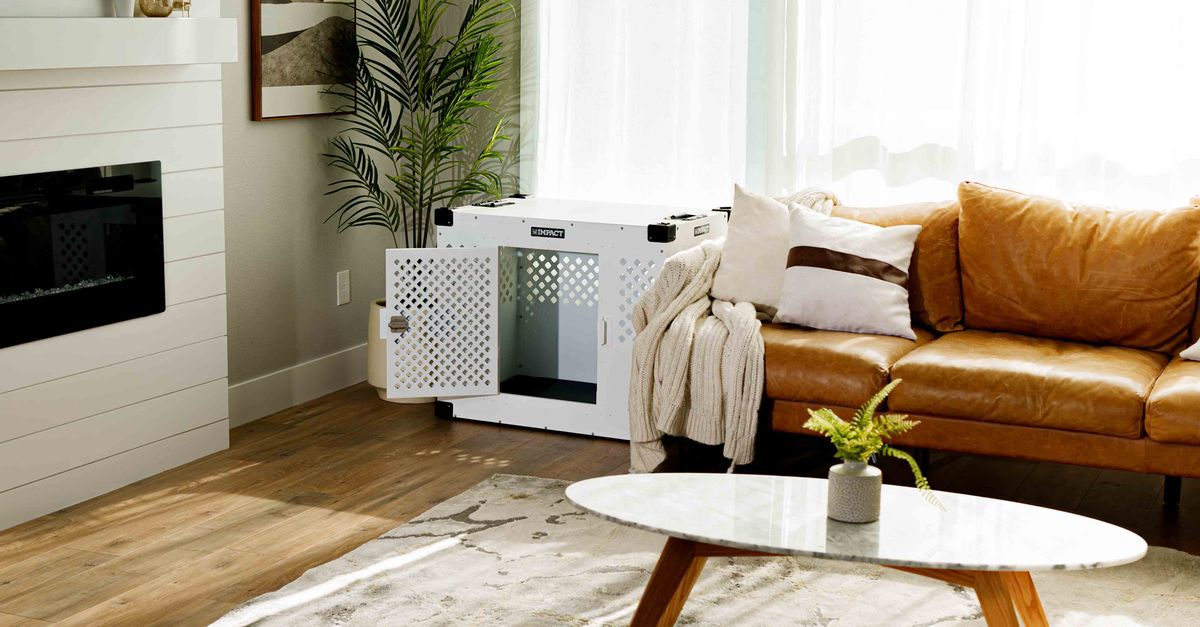
A crate that feels like punishment is a crate a dog will fight. One that feels like a den? That’s a spot a dog seeks out on their own. The difference almost entirely comes down to setup and how you introduce it — not the crate itself.
This guide covers every layer of that: the physical comfort, the sensory environment, and the step-by-step conditioning that turns a wire box into a retreat your dog genuinely chooses.
Choosing the Right Size (It Matters More Than You Think)
Before any bedding, blankets, or toys, the crate itself needs to fit correctly. A crate that’s too large can actually make dogs feel exposed rather than den-like — they may also use one end as a bathroom, which defeats the purpose. One that’s too small is simply cruel.
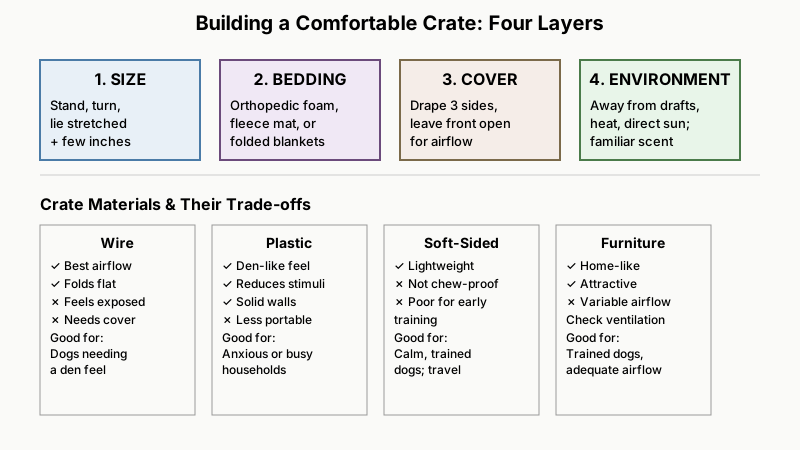
The rule of thumb: your dog should be able to stand up fully, turn around in a circle, and lie stretched out on their side with a few inches to spare. That’s it. More room than that isn’t automatically better, especially for puppies.
For puppies, most trainers recommend a crate fitted with a divider panel. You start with a smaller section and expand it as the puppy grows, which prevents accidents without buying multiple crates.
Crate materials affect comfort too:
- Wire crates have the best airflow and usually collapse flat for storage, but they feel open and exposed. Many dogs need a cover to feel settled.
- Plastic travel crates have solid walls that block visual stimulation, making them naturally den-like. They’re often preferred by dogs that are anxious in busy households.
- Soft-sided crates are lightweight and suitable for calm, already-crate-trained dogs. They’re not chew-proof and aren’t a good fit for early training.
- Furniture-style crates (wooden enclosures) look attractive in a home but vary widely in ventilation — check that airflow is adequate before using one for extended rest.
Building Physical Comfort From the Ground Up
Once you have the right crate, think about it in layers.
The Base: Bedding and Flooring
A bare wire or plastic floor is uncomfortable. Start with something that cushions the hips and elbows — pressure points dogs often develop calluses on if they rest on hard surfaces repeatedly.
Options that work well:
- Orthopedic foam inserts or memory foam pads. These are especially good for older dogs or large breeds prone to joint issues.
- Washable fleece or microfiber mats. Easy to clean, which matters because crates collect fur, drool, and the occasional accident.
- Folded blankets. Cheaper and easy to swap out, though they compress over time.
Avoid anything that retains heat heavily in warm weather, and steer clear of loose stuffing for puppies or strong chewers who might ingest it.
If your dog’s crate bedding has already picked up a lingering smell, Pet Odors in Carpet: Natural Fixes That Last can help you tackle it at the source.
The Cover: Creating a Den Effect
A cover — even a simple blanket draped over three sides of a wire crate — dramatically changes how most dogs experience the space. It reduces visual stimulation from foot traffic, dims the light, and mimics the enclosed feeling of a natural den.
Leave the front and part of one side uncovered so air can circulate. Check the fabric doesn’t sag into the crate or drape near a heat source. Commercial crate covers are sized to fit standard crate dimensions and are often worth the investment for a cleaner look and better fit.
Temperature and Airflow
Dogs are sensitive to temperature extremes. The crate’s location matters:
- Keep it away from drafts, exterior walls in winter, and direct sunlight through windows in summer.
- Don’t place a covered crate near a radiator, heating vent, or space heater.
- In summer, a small fan circulating air near (not blowing directly into) the crate helps a lot.
If your dog pants or seems restless in their crate without obvious reason, check whether the temperature around it is comfortable for a resting animal — dogs at rest don’t generate much body heat, so ambient temperature matters more than many owners expect.
Familiar Scent
Scent is a huge component of canine comfort that owners often overlook. An item that smells like you — an old T-shirt, a worn pillowcase — placed inside the crate can reduce stress significantly, particularly for dogs being crate-trained for the first time or after a disruption to routine.
Some owners also use a pheromone diffuser or collar (like those based on dog-appeasing pheromone, or DAP) near the crate area. Evidence on these products is mixed: some dogs respond noticeably, others show little difference. They’re low-risk to try, but don’t rely on them as a substitute for good conditioning.
Enrichment Inside the Crate
Physical comfort addresses the body; enrichment addresses the mind. A dog left in an empty crate with nothing to do will be less settled than one with an appropriate outlet.
Food-stuffed toys are the gold standard. A Kong, West Paw Toppl, or similar rubber toy packed with your dog’s regular food (moistened to stick), plain pumpkin purée, plain yogurt, or peanut butter (xylitol-free — check the label every time) and then frozen keeps most dogs occupied for 20–40 minutes and associates crate time with something actively enjoyable.
Chews — bully sticks, yak chews, raw marrow bones — work well for dogs who are settled chewers, though supervision is wise until you know how your dog handles them.
A worn chew toy for teething puppies reduces distress and gives them appropriate behavior to channel.
Avoid leaving anything in the crate your dog could shred into fragments and swallow. Know your dog’s chewing style before leaving any item unsupervised.
The Step You Can’t Skip: Gradual Introduction
The most comfortable crate in the world won’t feel safe to a dog who was pushed into it and left. The conditioning process is the single most important factor in long-term crate acceptance, and it’s worth doing properly even if it takes a week or two.
Stage 1 — Crate is just furniture. Leave the crate open in a common area with the door off or propped wide. Toss treats near it, then inside it. Let the dog go in and come out freely. No pressure.
Stage 2 — Door closes briefly. Once the dog walks in comfortably, close the door for 10–30 seconds while giving a treat through the bars or door, then open it before the dog shows any anxiety. Repeat multiple times.
Stage 3 — Duration builds slowly. Extend closed-door time in small increments — a few minutes, then five, then ten — always ending before the dog becomes distressed. Give a frozen stuffed toy to occupy them during longer stretches.
Stage 4 — You leave the room. Crate the dog with their enrichment, step out, return before they finish the toy. Gradually extend time out of sight.
The key rule throughout: never let the dog out when they’re barking or whining, because that teaches them that noise opens the door. Wait for a pause, even a brief one, then release them.
If your dog panics — panting, drooling, injuring themselves trying to escape — that’s beyond normal crate adjustment and warrants talking to a veterinary behaviorist or certified applied animal behaviorist. Forcing a dog with genuine separation-related distress through crate training without addressing the underlying issue doesn’t help and can make things worse.
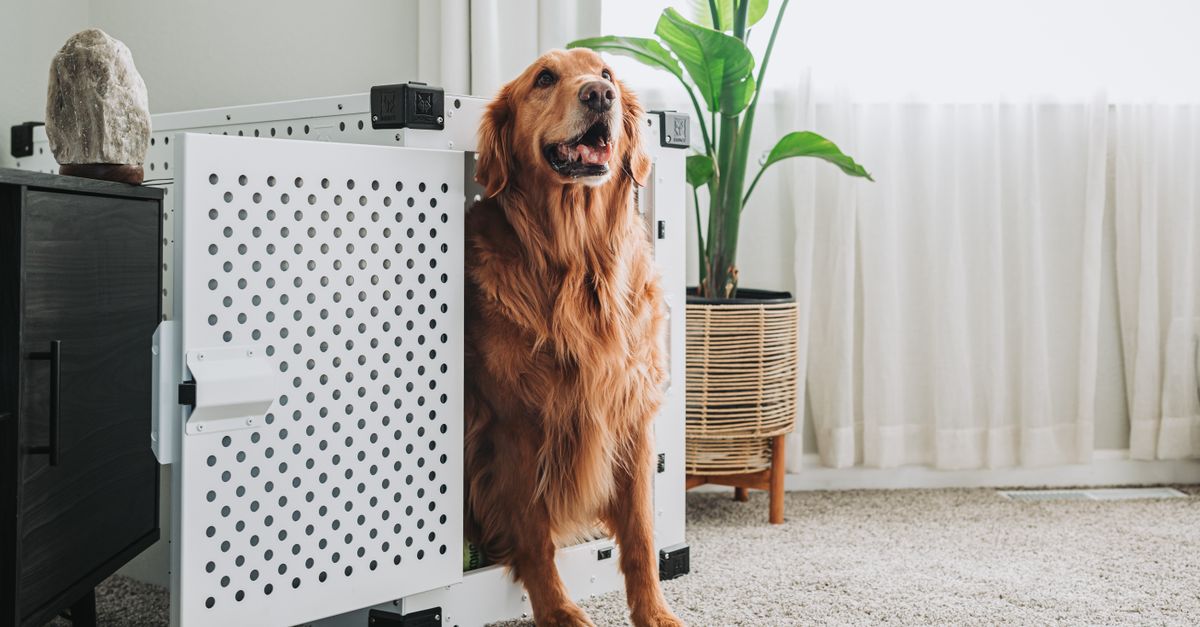
If your dog’s anxiety extends beyond the crate to loud noises and sudden chaos, How to Keep Pets Calm During Fireworks: Start Days Before, Not Hours offers a similar gradual approach to building calm.
Daily Habits That Reinforce Crate Comfort
How you use the crate day-to-day shapes how the dog feels about it long-term.
- Feed meals in the crate (with the door open at first) so the space becomes associated with something the dog values.
- Avoid using the crate as punishment. If you crate the dog after they’ve done something wrong, that negative association accumulates.
- Keep crating sessions reasonable in duration. Adult dogs should generally not be crated longer than 4–6 hours at a stretch during the day; puppies need out far more often — roughly one hour per month of age as a starting rule, up to a maximum of around 4 hours for most puppies.
- Create a consistent cue word. Something like “crate” or “bed” said in a normal, upbeat tone conditions the dog to respond predictably. Avoid dragging a reluctant dog or repeating the word anxiously.
- Let the dog choose the crate when the door is open. Many crate-trained dogs walk into their crate voluntarily when they want a rest — the goal is for it to become a genuine retreat, not just a management tool.
Frequently Asked Questions
Should I put water inside the crate?
For very short periods (under two hours), water usually isn’t necessary if the dog was well hydrated before going in and the crate isn’t warm. For longer periods, a clip-on water bottle (the type used for small animals or travel) works better than a bowl, which tips easily and soaks bedding. In hot weather, always provide access to water.
My dog sleeps in the crate with the door open but won’t go in if I close it — why?
This is a conditioned response to closure itself, often from an early negative experience. Go back to Stage 2 of the gradual introduction above: practice short door-closures with high-value treats, unpressured and repeated, until the act of the door closing stops predicting anything bad.
Can I use the crate at night and during the day?
Yes — many owners do this successfully. The total daily crate time still matters: if the dog is crated 8 hours at night and 4 hours during the day, that’s a long stretch and they’ll need adequate exercise, mental stimulation, and social time in between. Crating itself isn’t harmful when balanced; isolation and inactivity are the real concerns.
What if my dog has already developed a negative association with their crate?
Start the conditioning process from scratch as if the crate were brand new — ideally with a different-looking crate or moved to a different location to reduce the existing negative trigger. Go very slowly through Stage 1. It’s slower to undo a bad association than to build a positive one, but it is possible.
Are there dogs that shouldn’t be crated?
Dogs with separation anxiety or claustrophobia-like responses to confinement often do poorly in crates and may hurt themselves trying to escape. These dogs benefit more from a safe room, a baby-gated area, or veterinary behavioral support before any confinement training is introduced. A crate is a tool, not a universal requirement — use it only when it genuinely serves the dog’s wellbeing.