Preserving Fresh Herbs in Olive Oil for Long-Term Storage
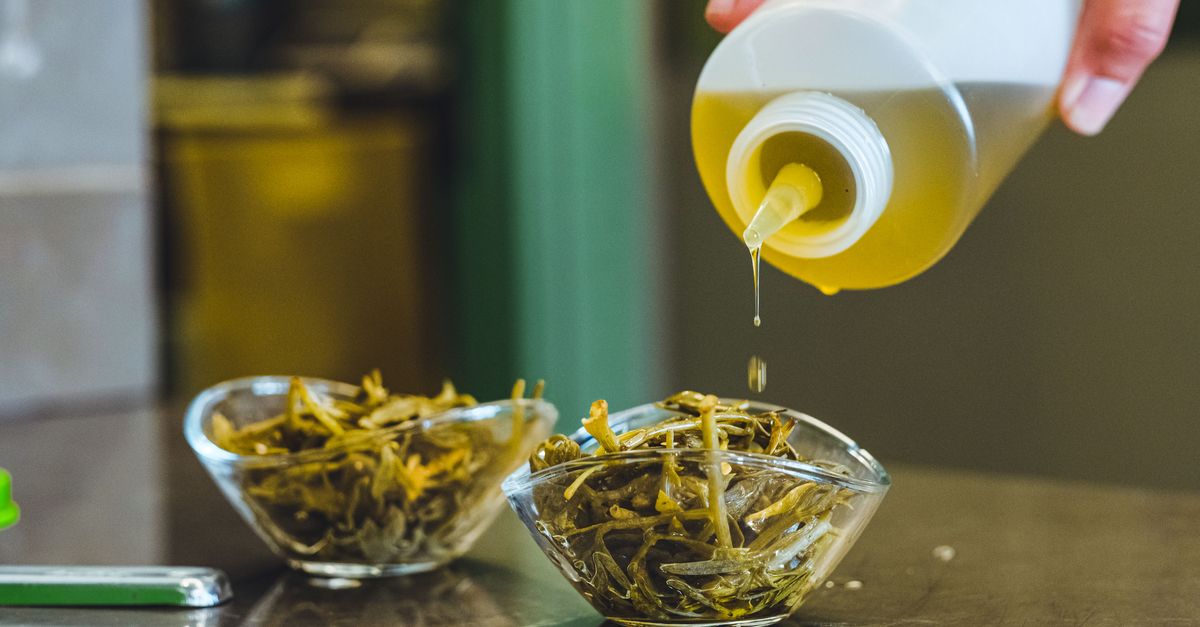
Fresh herbs are one of those kitchen assets that sit somewhere between perishable and precious. You buy a bunch of parsley for one recipe and spend the rest of the week watching it yellow. Freezing herbs in olive oil solves this in a way that plain freezing or drying cannot: the oil carries the herb’s flavor compounds, protects the leaves from oxidative browning, and gives you a ready-to-cook portion every time you reach into the freezer.
Before going further: the method works reliably only in the freezer. Storing raw herbs submerged in oil at room temperature or in the refrigerator creates conditions that favor Clostridium botulinum growth, the bacterium responsible for botulism. The USDA advises against storing garlic or herbs in oil at room temperature for this reason. Freeze the cubes within two hours of making them, and keep them frozen until use.
Choosing the Right Herbs
Not every herb behaves the same in oil, and selecting the right candidates saves you from discovering that some textures turn unpleasant after freezing.
Herbs that freeze well in oil: Basil, parsley, cilantro, chives, tarragon, sage, rosemary, thyme, oregano, and mint all preserve usably in olive oil. Robust, woody herbs like rosemary and thyme hold their structure almost completely. Tender herbs like basil and parsley soften on thawing but retain most of their flavor, which is what matters when you are adding them to a pan.
Herbs that do not benefit from this method: Dill and chervil are delicate enough that freezing in oil gives a mushy result with little aroma payoff. These are better dried or used fresh. Lemongrass, kaffir lime leaves, and similar fibrous aromatics are also poor candidates; their flavor compounds do not transfer efficiently into olive oil this way.
Mixing herbs before freezing: Blends work beautifully here. A parsley-and-garlic mix for pasta, a rosemary-and-thyme blend for roasting, or a cilantro-and-lime zest combination for Latin dishes can all be frozen as a single-purpose cube. Label the trays clearly.
If you want more detail on picking quality herbs before you even reach for the oil, check out How to Select and Prepare Fresh Herbs for Cooking.
Preparing the Herbs
Proper preparation determines both food safety and flavor quality. Rushing this step introduces moisture that dilutes the oil and promotes ice crystal formation.
-
Wash and dry thoroughly. Rinse herbs under cold water, shake off excess, and spread on a clean kitchen towel or paper towels. Pat dry, then leave them to air-dry for at least 20 minutes. Any standing water on the leaves will cause the oil to splatter when the cubes eventually hit a hot pan.
-
Remove tough stems. For parsley, cilantro, and basil, strip the leaves from the main stalk. The thinner stems on parsley are edible and can stay; woody rosemary and thyme stems should be stripped entirely.
-
Chop or keep whole. Tender herbs blend better if chopped roughly before going into the tray. Woody herbs can go in whole or lightly bruised. For a smoother result, pulse the herbs in a food processor with the oil rather than hand-chopping.
-
Choose the olive oil carefully. A mild, everyday extra-virgin olive oil works for most herbs. A very pungent, peppery oil can overwhelm delicate herbs like chives or tarragon; save assertive oils for robust herbs like rosemary. You do not need an expensive single-estate oil here; quality matters, but the purpose is cooking fat and flavor carrier, not tasting oil.
The Freezing Process
The standard ratio is roughly one tablespoon of chopped herbs to enough olive oil to fill a standard ice cube slot, which typically holds about one to two tablespoons of liquid. That said, there is no strict rule: pack the herbs as densely or as lightly as your intended use requires. A cube that is mostly herb and lightly coated in oil behaves differently from one that is half herb, half oil. Both are valid; decide based on what you cook.
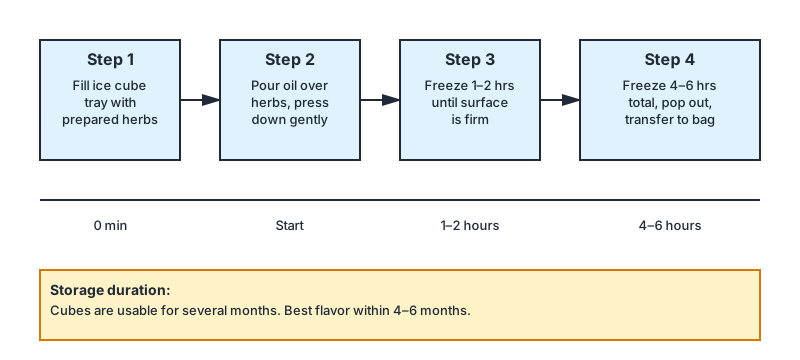
Step 1: Fill each slot of a silicone ice cube tray with the prepared herbs. Silicone is strongly preferred over rigid plastic because the frozen cubes pop out cleanly without cracking or sticking.
Step 2: Pour olive oil over the herbs, pressing the leaves down gently with a spoon so that oil penetrates between them and no pockets of air remain. Fill to just below the rim of each slot.
Step 3: Freeze the tray uncovered for one to two hours until the surface is firm, then cover with plastic wrap or a fitted lid to prevent the cubes from picking up freezer odors.
Step 4: Once fully frozen (allow at least four to six hours from the start, or overnight to be safe), pop the cubes out and transfer them into labeled zip-lock freezer bags or airtight containers. Squeeze out as much air as possible before sealing. Return to the freezer immediately.
Storage duration: The cubes are usable for several months. Flavor quality degrades gradually rather than dropping off a cliff, but most herbs show noticeable loss of brightness beyond four to six months. Use within that window for best results.
Using Herb-Oil Cubes in Cooking
The cubes are designed to go straight from freezer to pan, pot, or baking dish. Drop one into a cold sauté pan and let it melt before adding other ingredients; the oil disperses naturally and the herbs bloom in the heat. Alternatively, melt a cube in a small bowl in the microwave (about 20 to 30 seconds) and use it as a finishing drizzle over fish, roasted vegetables, or soup.
Avoid thawing cubes at room temperature and storing the liquid at room temperature afterward. Once melted and warmed, use the herb-oil mixture promptly for the same safety reasons mentioned at the start.
For pasta and grain dishes, drop a cube directly into the cooking liquid in the last minute of simmering. The olive oil enriches the broth and the herbs infuse without overcooking.
Frequently Asked Questions
Can you store herb-oil cubes in the refrigerator instead of the freezer?
No. Herbs preserved in oil must be kept frozen. The refrigerator does not reach temperatures low enough to prevent bacterial growth in anaerobic (oil-sealed) environments. The USDA and food safety authorities warn specifically against storing garlic and herbs in oil at refrigerator or room temperature due to botulism risk. Freeze within two hours of making the cubes.
For other everyday techniques that don’t involve oil at all, our roundup Best Ways to Store Fresh Herbs (So They Actually Last) is a handy companion read.
Does the type of olive oil affect how long the cubes last?
Fresh, high-quality extra-virgin olive oil tends to have a better oxidative stability because of its natural antioxidant content, which may offer marginally longer protection against rancidity compared with lower-grade oils. That said, at freezer temperatures the difference in practice is small. What matters more is keeping the cubes airtight and away from light once they are out of the tray.
Can you add garlic or other aromatics to the cubes?
Yes, and it is a popular approach: a cube of basil, garlic, and olive oil is a versatile cooking start for dozens of dishes. The same food safety rule applies: any mixture containing garlic or herbs in oil must be frozen, not refrigerated. The risk comes specifically from anaerobic, room-temperature storage, not from the combination itself.
Why do my basil cubes turn black?
Basil oxidizes rapidly when cut and exposed to air. Two things help: blanch the basil leaves in boiling water for five seconds and then plunge them into ice water before blending with oil, or add a small squeeze of lemon juice to the mixture. Blanching in particular sets the green color reliably. The flavor changes very slightly but the visual result is far better.
Can you use any other oil instead of olive oil?
Yes. Avocado oil, neutral grapeseed oil, or coconut oil all work with the same method. Avocado oil has a high smoke point, making those cubes useful for higher-heat cooking. Coconut oil turns solid at refrigerator temperature, so the cubes freeze and thaw somewhat differently. Use olive oil as the default unless a specific recipe or cuisine calls for something else.