Why Does My Coleslaw Always Turn Soggy?
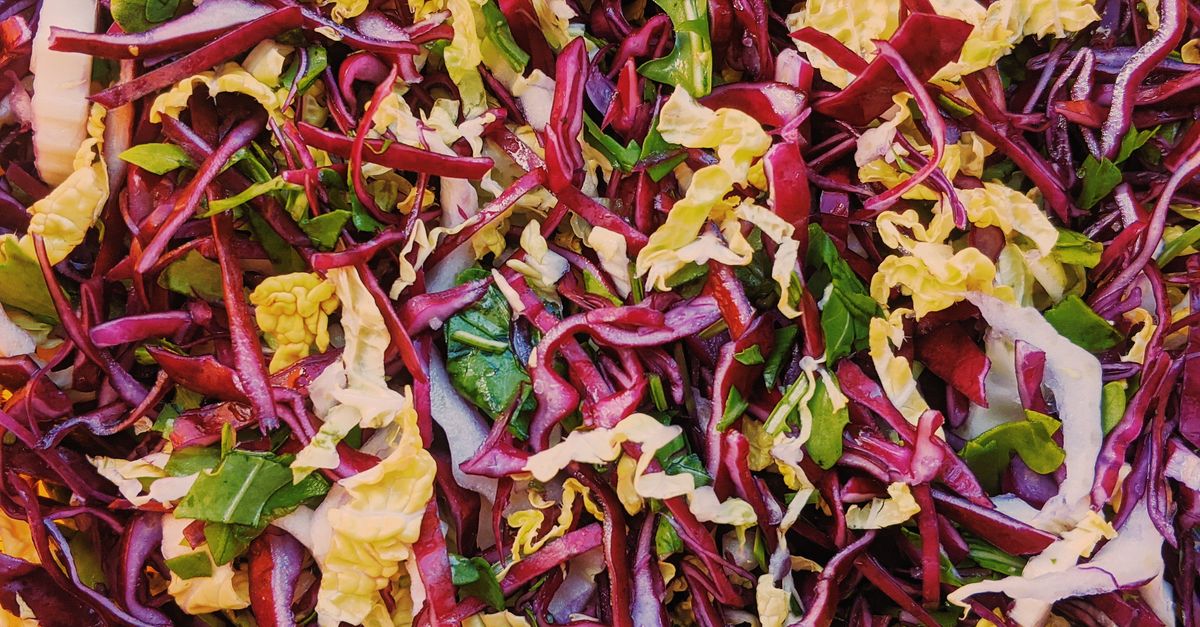
Coleslaw turns soggy because cabbage is mostly water, and that water migrates out of the cells once the cabbage is cut and meets salt or an acidic dressing. The result is a puddle at the bottom of the bowl and limp, pale strands within the hour. Avoiding that entirely is possible, but it requires addressing the moisture problem at two separate points: before the dressing goes on, and in how you store the finished slaw.
Why Cabbage Releases So Much Liquid
Cabbage cells hold a large amount of water, held in by osmotic pressure. The moment you shred the cabbage, you expose cut edges. Salt, vinegar, or even sugar in a dressing then pulls that water out through osmosis, fast. A typical batch can release a surprising amount of liquid in under 30 minutes, enough to thin out a thick creamy dressing or turn a vinaigrette watery.
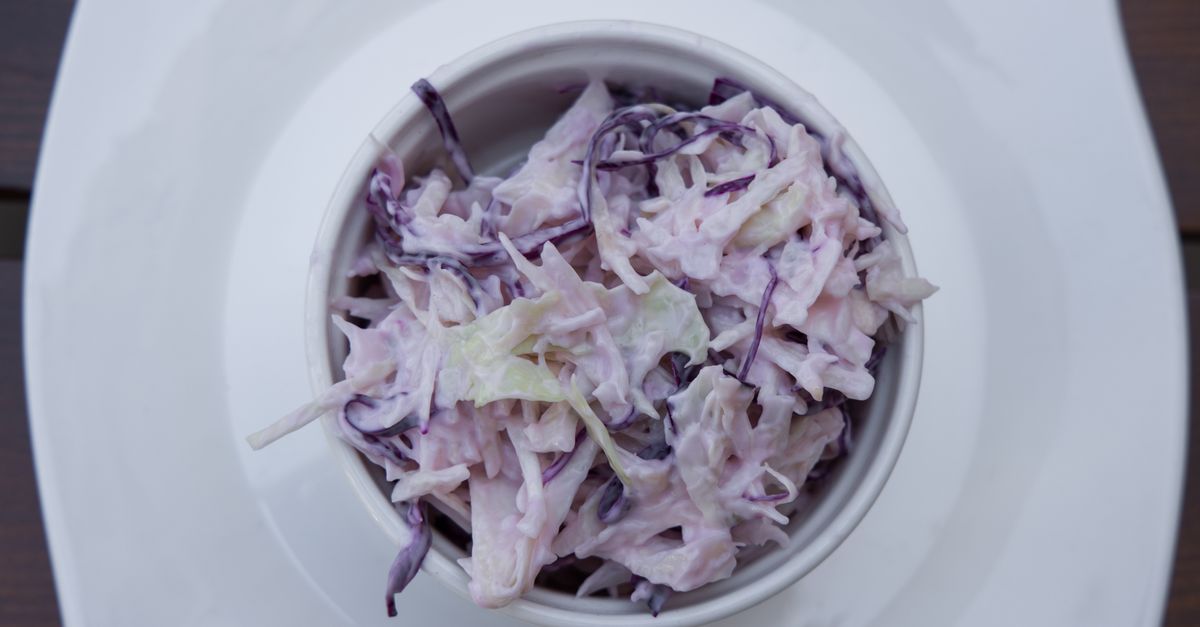
The same process happens with carrots and other additions, though cabbage is the main culprit because it makes up the bulk of the slaw. Red cabbage releases color along with moisture, which can turn a creamy slaw pink if you skip the pre-salting step.
The same osmosis principle that pulls water out of cabbage is at work in How to Caramelize Onions Properly: A No-Shortcut Guide, where salt and heat slowly draw moisture from onions to concentrate their flavor.
The Pre-Salt Method: Draw Out Moisture Before Dressing
The single most reliable technique is to salt the shredded cabbage before dressing it. This sounds counterintuitive because salt causes water loss, but that is exactly the point: you want the water out before the dressing, not after.
How to do it:
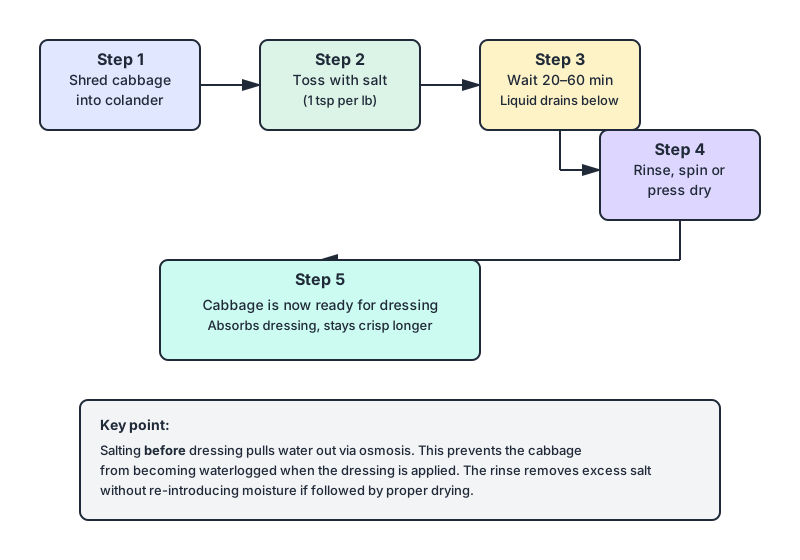
- Shred the cabbage to your preferred thickness and place it in a colander set over a bowl.
- Toss with a modest amount of kosher salt, roughly one teaspoon per pound of shredded cabbage. This is a technique step, not a seasoning step, so don’t worry about it making the slaw salty; most of the salt drains away.
- Let it sit for 20 to 60 minutes at room temperature. You’ll see liquid collecting in the bowl below.
- Rinse the cabbage briefly under cold water to remove the excess salt, then spin it very dry in a salad spinner or press it firmly between clean kitchen towels.
- The cabbage is now dehydrated enough that it will absorb dressing rather than waterlog it, and it will stay firmer for longer.
Skipping the rinse and relying on “just using less dressing” does not work as reliably, because the salt continues pulling moisture after the dressing is applied.
Choose and Build a Dressing That Won’t Turn Watery
Dressing choice matters almost as much as moisture control. Some dressings hold their body under pressure; others break down quickly.
Creamy dressings: Mayonnaise-based dressings are more stable than sour cream or yogurt-based ones because the emulsion in commercial mayo is quite robust. If you use Greek yogurt or sour cream, expect some separation after a few hours and drain any liquid before serving. A small amount of dijon mustard (a teaspoon or so) helps stabilize a creamy dressing and adds flavor without thinning it.
Vinaigrette dressings: Vinegar-dressed slaws start crisper but tend to taste more pickled over time. If you want a bright, tart slaw that holds texture, use rice wine vinegar or apple cider vinegar, both of which are slightly gentler on the cabbage than white wine vinegar. Add the oil last and dress close to serving time.
Sugar: A small amount of sugar in either style of dressing does pull moisture, so don’t go heavy with it if crunch is your priority.
Dress it at the last possible moment if you need maximum crunch. Even a pre-salted, well-dried cabbage will soften noticeably after sitting in dressing for several hours. For a party, keep the dressed slaw in the fridge and give it a toss right before it goes on the table.

Which Cabbage Variety Stays Crunchiest?
Not all cabbage behaves the same.
- Green cabbage (the standard round head) has a firm, waxy leaf structure that holds texture well and is the most reliable choice for make-ahead coleslaw.
- Red cabbage is similarly firm and adds color, but it bleeds aggressively if not pre-salted. It also stays crunchier for longer than napa cabbage.
- Napa (Chinese) cabbage has thinner, more delicate leaves with a higher water content. It wilts faster and is better suited to slaws you plan to serve the same day.
- Savoy cabbage falls between napa and green; the crinkled leaves are more tender, which gives a softer final texture.
For maximum staying power, buy a head of dense, heavy green or red cabbage rather than a pre-bagged shredded mix. Bagged mixes are convenient but they have already been cut and exposed to air, so they hold moisture less effectively and can arrive at your table softening before they even hit the dressing.
Cutting Technique: Thickness and Direction
How you cut the cabbage affects texture significantly. Thin, paper-fine shreds wilt quickly and feel almost translucent in a dressing. A slightly thicker cut, around 3 to 4 millimeters, retains more structural integrity and gives the slaw a satisfying bite.
Cut against the grain where possible: for a round head of cabbage, quarter it through the core, then slice across the width of each quarter. This creates shorter strands that are easier to eat and that hold dressing without going limp in clumps.
A mandoline on its thicker setting works well. A sharp chef’s knife is equally good if you’re comfortable with fast, even cuts. Avoid a food processor with a shredding disc for anything you want to stay crunchy; the blades tend to bruise the cabbage and release more cell moisture than a clean knife cut.
Storing Coleslaw Without Losing the Crunch
Even with every prep step right, storage habits determine how long a slaw stays good.
- Undressed vs. dressed: If you know you need the slaw to last more than a few hours, keep the cabbage mix and the dressing separate in the fridge and combine them just before serving. Pre-salted and dried cabbage will keep well refrigerated for a day or two before dressing.
- Airtight is essential: Exposure to air speeds wilting. Use a container with a tight lid, or press plastic wrap directly onto the surface of the slaw before sealing.
- Don’t freeze it: Freezing destroys the cellular structure of the cabbage entirely, and the result after thawing is soft and waterlogged regardless of preparation.
- Drain before serving leftovers: Even well-made slaw will accumulate some liquid at the bottom of the container overnight. Pour it off and toss the slaw briefly before serving.
If sogginess problems extend beyond slaw to your morning routine, How to Make a Breakfast Burrito: Skip The Soggy Wrap tackles the same moisture battle in a completely different dish.
Frequently Asked Questions
Can I make coleslaw the night before and keep it crunchy?
Yes, with conditions. Pre-salt, rinse, and thoroughly dry the cabbage, then refrigerate it undressed in an airtight container. Prepare the dressing separately. Combine them no more than an hour or two before serving. This approach will give you a noticeably crunchier result than dressing the slaw the night before.
Does adding vinegar make coleslaw go soggy faster?
Vinegar does accelerate cell softening, but the effect is gentler and slower than salt. A lightly vinegar-dressed slaw that has been pre-salted will still be acceptably firm the next day, though it will taste more pickled. A heavily vinegared slaw without pre-salting tends to wilt faster.
Why does my coleslaw taste too salty after the pre-salting step?
The rinse step is non-negotiable if the slaw tastes salty. Rinse the salted cabbage thoroughly under cold running water, then dry it well. The brief rinse does not re-introduce moisture in a meaningful way if you follow it with a proper spin or press-dry.
What is the best way to dry cabbage after pre-salting?
A salad spinner is the fastest method. Two or three spins usually removes most of the surface water. If you don’t have one, press the rinsed cabbage in batches between two clean kitchen towels and apply firm pressure. Spread it on a dry towel for a few minutes to air-dry further before dressing.
Does pre-shredded bagged coleslaw mix work with this method?
It works, but results are more variable. Bagged mix has already been cut, and some moisture loss has occurred in the bag. Pre-salt it the same way, but check it earlier (around 20 minutes) because the thinner, already-processed strands can over-soften with too long a salt contact. Rinse and dry carefully, and use it the same day.