Brushing a Cat That Hates Grooming: What Works
Why Some Cats Reject the Brush
Not every cat is born resisting grooming, but plenty develop strong opinions about it. The reasons matter, because the fix depends on the cause.
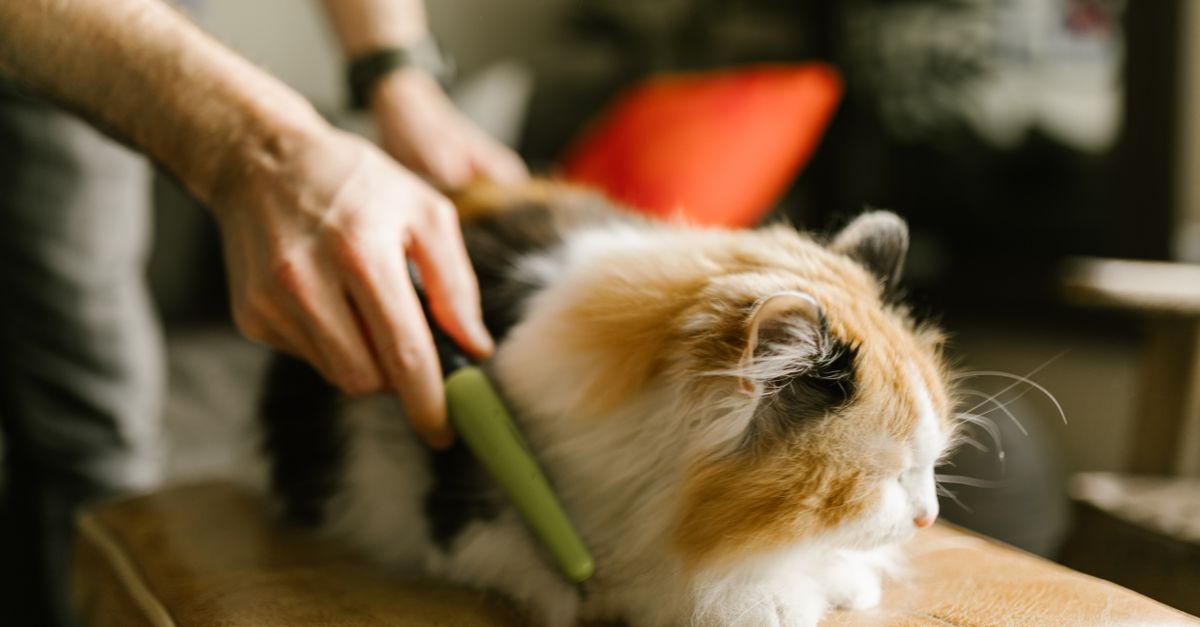
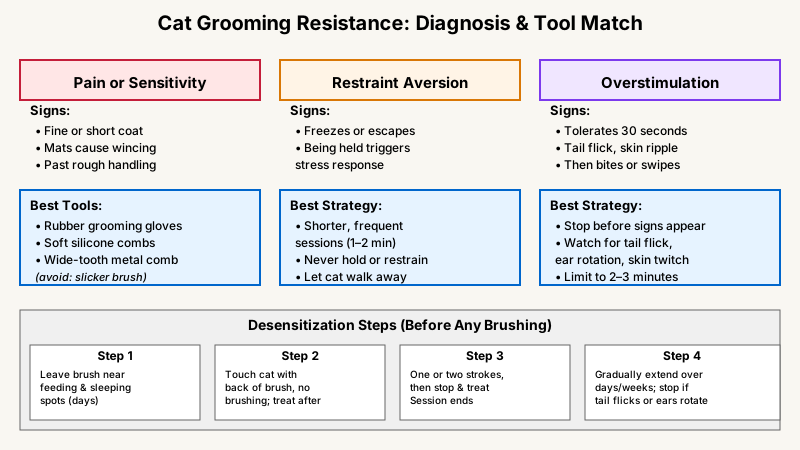
Sensitive skin is one of the most overlooked factors. Short-coated cats, particularly those with fine fur like Siamese or Abyssinians, can find the sensation of a bristle brush genuinely uncomfortable rather than pleasant. Longhaired cats often have mats that make any contact painful. A cat who was handled roughly during an early grooming session may have learned to associate the brush with discomfort — and that memory can persist for years.
Other cats are simply sensitive to restraint. Being held still, even gently, triggers a stress response. Some are easily overstimulated: they tolerate touch for thirty seconds, then flip a switch and bite. This is common in cats with what vets call “petting-induced aggression” — the threshold is real, not theater.
Knowing which category your cat falls into shapes your strategy. A pain-averse cat needs a gentler tool. A restraint-averse cat needs shorter, more frequent sessions. An overstimulated cat needs you to stop before they tell you to.
A cat’s general wariness of handling often traces back to how it settled in originally, a topic covered in How to Introduce a New Cat to Your Home: Why Slow Wins Trust.
Choosing the Right Tool for a Reluctant Cat
The wrong brush is often the whole problem. Slicker brushes — those dense wire-pin pads — are excellent for detangling but feel harsh on sensitive cats, especially without a mat of fur to act as a buffer. If your cat flattens their ears the moment the slicker appears, that’s diagnostic.
For resistant cats, start with one of these:
Rubber grooming gloves or mitts. These mimic petting. Many cats who flee from a brush will sit calmly while you stroke them with a rubber glove that picks up loose hair. The sensation is familiar; the tool is not threatening. Results vary by coat type — they work well on short to medium coats, less so on dense, tangled longhair.
Soft silicone combs. Flexible silicone teeth bend rather than snag. They remove loose undercoat without the scraping sensation of metal pins and are quiet, which matters more than you’d think. Metal tools make a faint raking sound that can put cats on edge.
Wide-tooth metal combs (for longhairs). If matting is the issue, a wide-tooth comb used at the tips first — never at the root — can work through tangles without yanking the skin. Work from the outer edge of a mat inward, a few hairs at a time.
Deshedding tools (use sparingly). Tools designed to pull out undercoat are efficient but stimulating. Even cats that tolerate them can be tipped into overstimulation within a minute. Limit deshedding sessions to two or three minutes maximum and watch body language closely.
A tip that rarely appears in grooming guides: warm the comb slightly in your hand before touching your cat. A cold metal comb on skin is a fast way to lose cooperation.
Building Tolerance Before You Brush a Single Hair
If your cat currently hides when you pick up the brush, trying to groom them right now is the wrong move. You need to run a short desensitization process first — and this is where most owners skip steps.
Step 1: Separate the tool from the act. Leave the brush on the floor near feeding spots or sleeping areas for several days. Let the cat sniff it, rub on it, ignore it. The goal is that the brush becomes part of the furniture, not a threat.
Step 2: Touch with the tool, don’t brush. With the brush in your hand, touch your cat’s shoulder with the back of the tool (the non-bristle side). No grooming — just contact. If they stay calm, give a high-value treat immediately. Repeat across several sessions.
Step 3: One or two strokes, stop. The first actual grooming stroke should be brief and end before your cat has any reason to object. Put the brush down. Give a treat. Walk away. The session is over. You are conditioning the cat to associate the brush with something good and with control — the session ends, nothing bad happens.
Step 4: Gradually extend. Over days or weeks — never hours — extend the number of strokes per session. The moment you see a tail flick, skin rippling across the back (called “rippling skin” or feline hyperesthesia in more pronounced cases), ears rotating back, or the head turning toward your hand, stop. You have reached the threshold for that session.
This approach is slower than just grabbing your cat and brushing, but it tends to produce cats who actually cooperate within a few weeks, rather than cats who get worse every time you try.
The same gradual, low-stress conditioning approach applies to other stressful situations, as explained in How to Keep Pets Calm During Fireworks: Start Days Before, Not Hours.
During the Session: Positioning, Timing, and Reading the Room
Even a desensitized cat needs the session itself handled well.
Timing matters. The optimal window is after a meal, when your cat is calm and slightly drowsy. Avoid post-play sessions when they’re still wound up, or first thing in the morning when some cats are naturally alert and reactive.
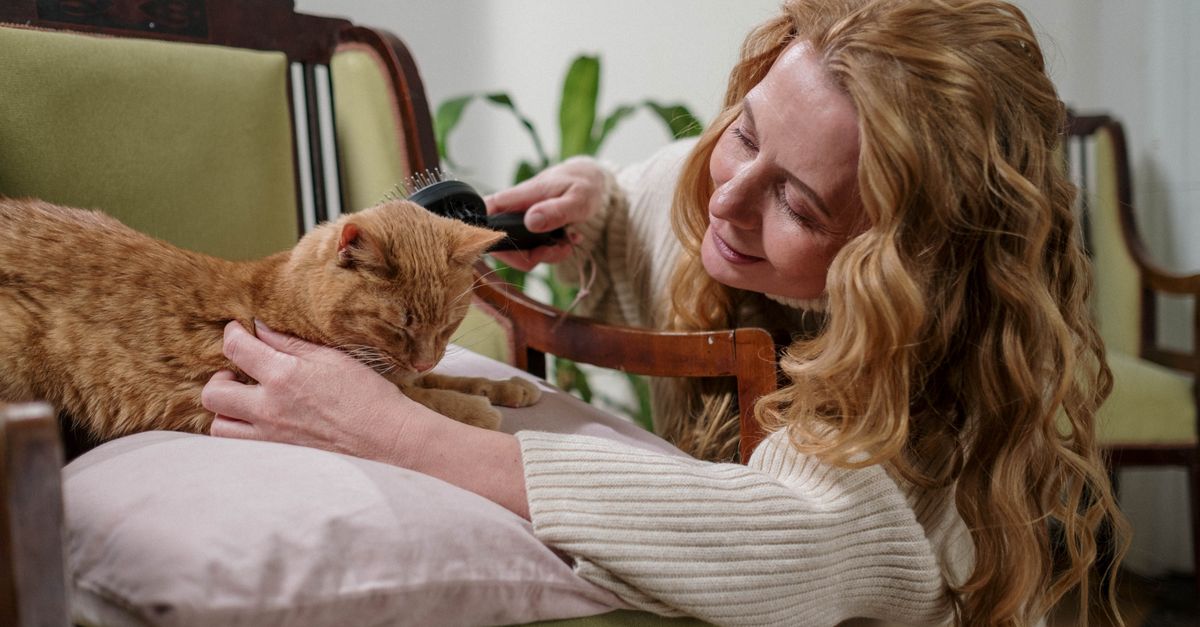
Let them choose their position. Forcing a cat onto their side or restraining them in your lap invites struggle. Let them stand, sit, or sprawl — whichever they naturally settle into. Grooming from above works for most cats; reaching underneath or around the belly region tends to escalate quickly for cats who dislike handling.
Focus on low-stakes areas first. The back, from shoulder blades to base of tail, is usually the most tolerated region. The belly, inner legs, and under the chin are more sensitive and should be introduced later, once trust is established. The tail is variable — some cats love it, others react strongly.
Keep sessions short. For a cat that actively resists grooming, two to three minutes of genuine brushing is a success. Don’t try to finish the whole coat in one go. Rotating which region you focus on across different sessions achieves full coverage without pushing the cat past their limit.
High-value treats during the session. A lick mat spread with a small amount of wet food can occupy the cat’s attention while you brush. This works particularly well for cats who are bored-aggressive rather than genuinely fearful — they’re too busy licking to care about the brush.
When to Call a Groomer or Vet
Some situations are outside the scope of home grooming:
- Matting that reaches the skin. Trying to brush out tight mats with a comb risks tearing the skin. A professional groomer or vet can safely shave the mat out. Don’t cut with scissors at home — the skin tents up into the mat and is easily nicked.
- Skin lesions, scabs, or redness. If grooming reveals anything that wasn’t there before, stop and book a vet visit. Skin issues change how any grooming feels and may be the source of the cat’s resistance.
- Severe behavioral reactions. If your cat escalates to hissing, biting that breaks skin, or full-body aggression with no prior warning, that’s a signal worth discussing with a vet. Some cats benefit from anti-anxiety support (behavioral or pharmaceutical) before grooming can be addressed as a training problem.
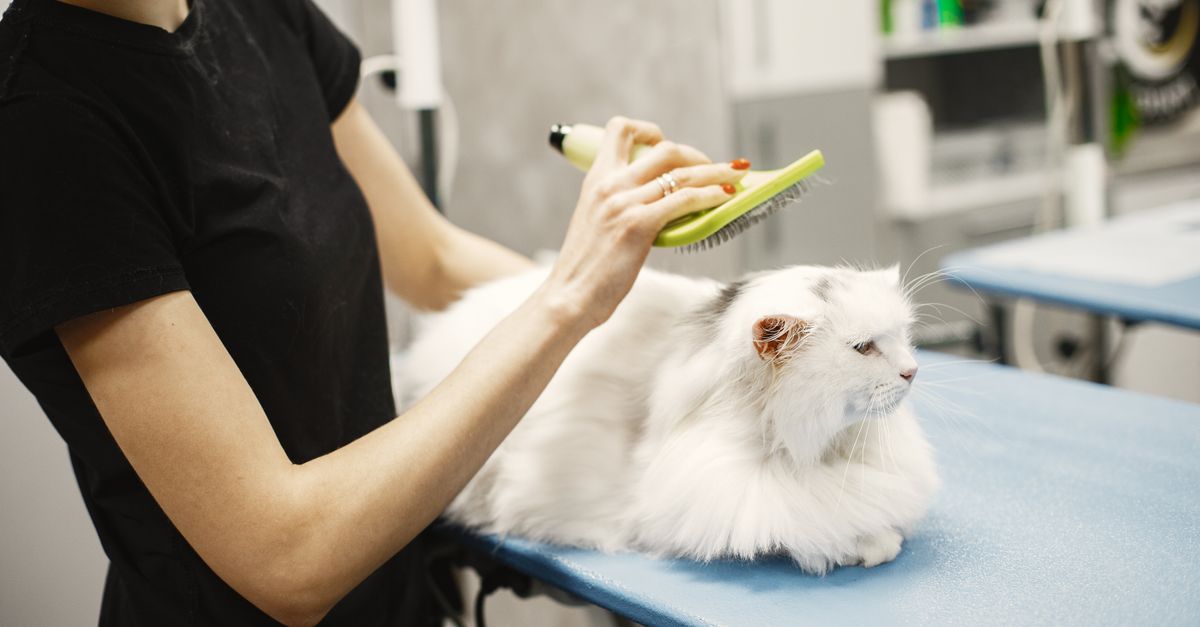
A professional cat groomer — particularly one who specializes in fearful or difficult cats — can also give you a realistic picture of your individual cat’s coat needs. Some longhaired cats genuinely need professional grooming every few months; others can be maintained at home with the right routine.
Frequently Asked Questions
How often should I brush a cat that hates grooming?
Start with once or twice a week for short sessions, and increase frequency only as your cat’s tolerance grows. Short-coated cats can often stay mat-free with once-weekly brushing once they’re cooperative. Longhaired cats ideally need three to four sessions per week to prevent matting, but building up to that gradually is more realistic and more humane than forcing it.
My cat only hates one part of being groomed — the belly. Do I need to change my whole approach?
No. Focus your sessions on areas your cat accepts, and simply skip the belly for now. Over time, you can slowly work toward the belly after building general tolerance. Many cats never fully accept belly brushing, and that’s okay — concentrate on the areas where mats are most likely to form (behind the ears, in the armpits, around the collar, at the base of the tail).
Can I use a human hairbrush on my cat?
In a pinch, a soft-bristle human paddle brush can work on short-coated cats, but the bristle spacing and stiffness are usually designed for human hair density. It won’t damage your cat, but it’s unlikely to remove much undercoat. A purpose-made rubber grooming glove is a better starting point for resistant cats.
My cat grooms themselves constantly — do they still need brushing?
Self-grooming removes surface dirt and loose hair but doesn’t prevent matting in longhaired coats the way manual combing does. Cats who groom heavily also ingest more hair, increasing the likelihood of hairballs. Even fastidious self-groomers benefit from occasional brushing — the goal is just to supplement, not replace, what they already do.
What if my cat has never been brushed and is now an adult?
Adult cats can learn to tolerate grooming, but the desensitization process may take longer than it would for a kitten. Set a realistic timeline of several weeks to a few months for meaningful improvement, use only positive reinforcement (never punish a negative reaction), and consider enlisting a cat behavior consultant if progress stalls.