Can You Make Crispy Pan-Fried Dumplings at Home?
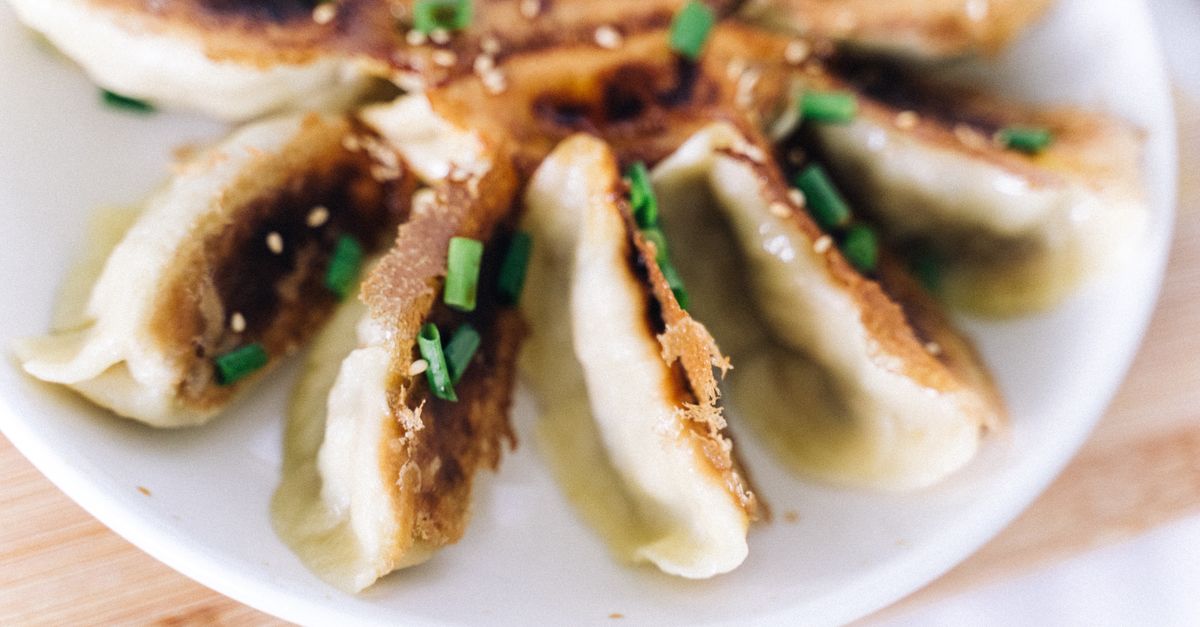
Pan-fried dumplings — the kind with a golden, crackling base and a steamed, tender top — look like a restaurant trick. They are not. The technique is reliable once you understand what each stage actually does, and a home skillet produces results that match or beat most takeout versions.
What Makes a Dumpling Base Go Crispy?
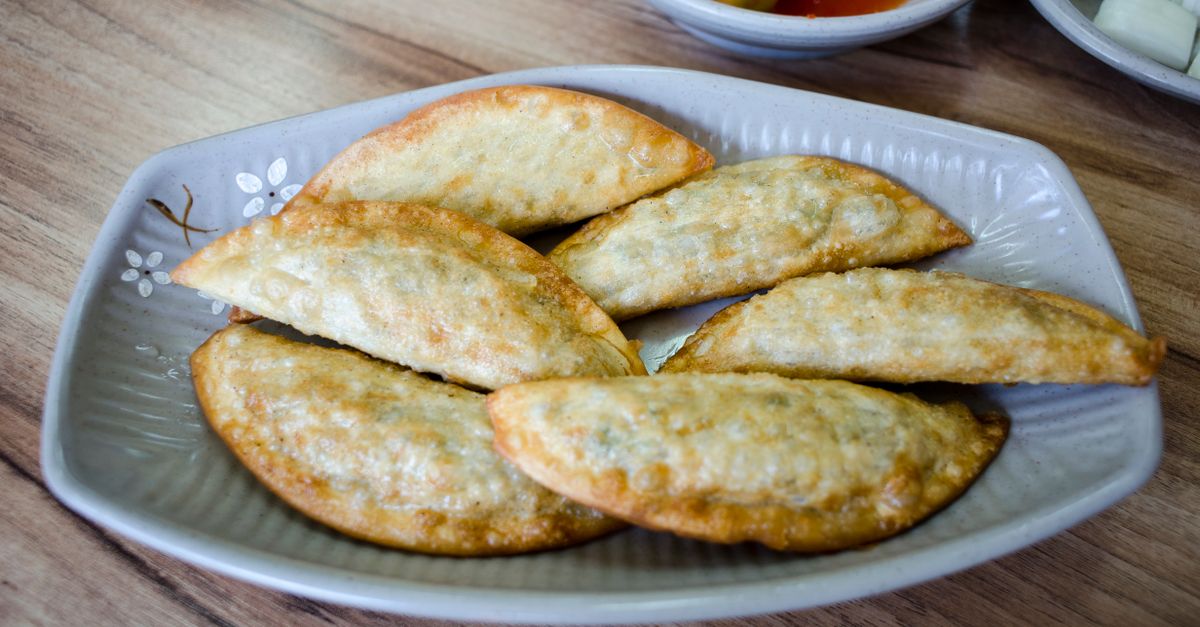
The crunch comes from dry heat converting the starch on the wrapper’s bottom surface into a rigid, golden crust. That requires two conditions working together: enough fat to conduct heat evenly across the base, and the surface of the wrapper staying in contact with the pan long enough to dehydrate and brown without burning.
The steaming phase that follows serves a different purpose entirely. It finishes the filling and softens the pleated top without overcooking the crust — provided you control the timing. Overcook the steam phase and the bottom re-absorbs moisture and softens. Rush it and the filling stays raw in the center.
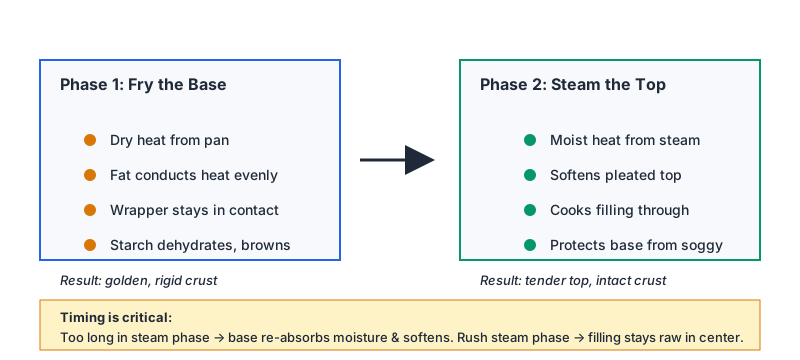
So the whole method is really a two-stage heat transfer: fry the base dry, then steam the filling through.
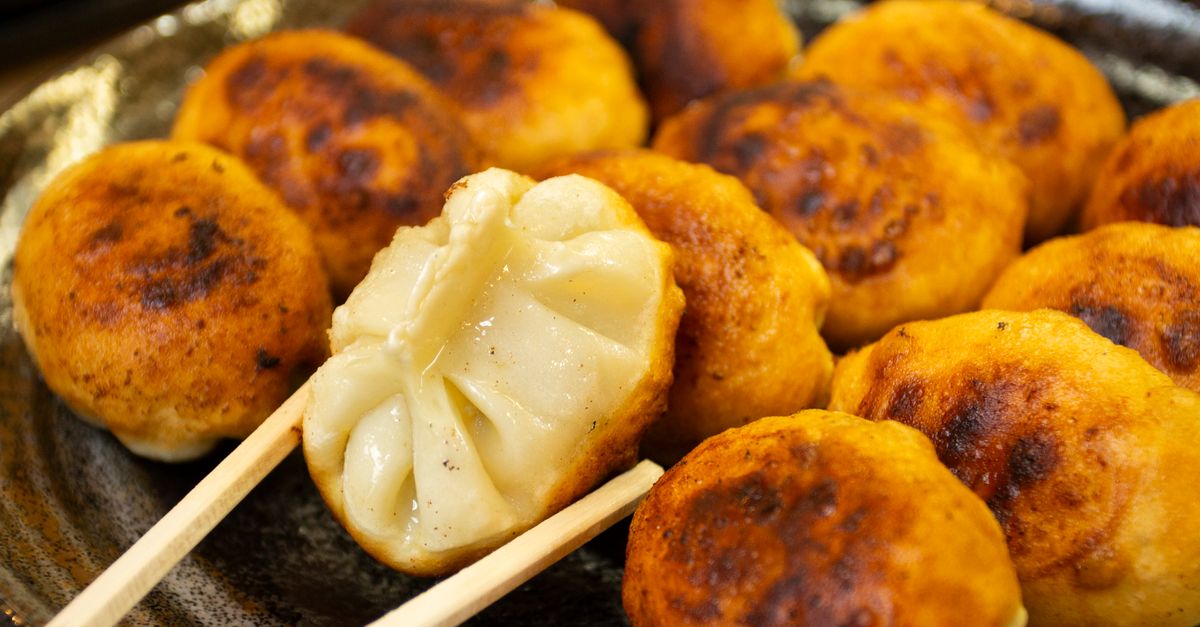
Choosing the Right Dough and Filling
Wrapper choice shapes everything downstream.
Hot-water dough (烫面): Made with boiling or near-boiling water, this dough is softer and slightly translucent. It browns well, crisps up fast, and is forgiving in a home pan. Most of the dumplings you see in Chinese restaurants with a pronounced lacy crust start with this dough. You can buy fresh round wrappers at most Asian grocery stores, labeled “dumpling wrappers” or “gyoza wrappers.”
Cold-water dough: Firmer and chewier, more opaque when cooked. It takes slightly longer to brown and can turn tough if overcooked on the steam phase. Good for boiled dumplings; workable for pan-frying but less forgiving.
Gyoza wrappers (Japanese style): Thinner, with a fine, even texture. They produce a delicate crust and are widely available. The thinner wrapper means the crust can go from golden to scorched quickly, so watch heat carefully.
For filling, the core principle is moisture management. A filling that releases too much liquid during cooking pools water in the pan and steams the bottom of the wrapper instead of frying it. To avoid this:
- Salt cabbage or other high-moisture vegetables ahead of time, let them sit for ten minutes, then squeeze out the liquid firmly in a clean towel.
- Do not over-season with liquid sauces before filling; add sesame oil and soy sauce after the squeeze, just before assembly.
- Chill the filling before wrapping — a cold, firm filling is easier to pleat and releases less water on first contact with the hot pan.
How to Fold Dumplings So They Stand Flat
The flat base is not optional for pan-frying — it is structural. A dumpling that falls sideways will have uneven contact with the pan, producing patchy browning.
The simplest reliable fold for beginners is the half-moon pleat:
- Place filling in the center of the wrapper, leaving at least a centimeter of bare edge around the filling.
- Fold the wrapper in half over the filling to form a half-circle.
- Pinch the center point closed.
- From the center, fold three or four small pleats toward one end, pressing each pleat against the flat back edge. Repeat on the other side.
- Stand the dumpling on its folded edge and press gently so the base flattens into a slight curve.
That curved, flat bottom is what sits on the pan.
If pleating feels slow, a simple crimped edge (press the two edges together firmly, no folds) works fine. The crust result is identical; the shape is a half-moon lying on its flat edge.
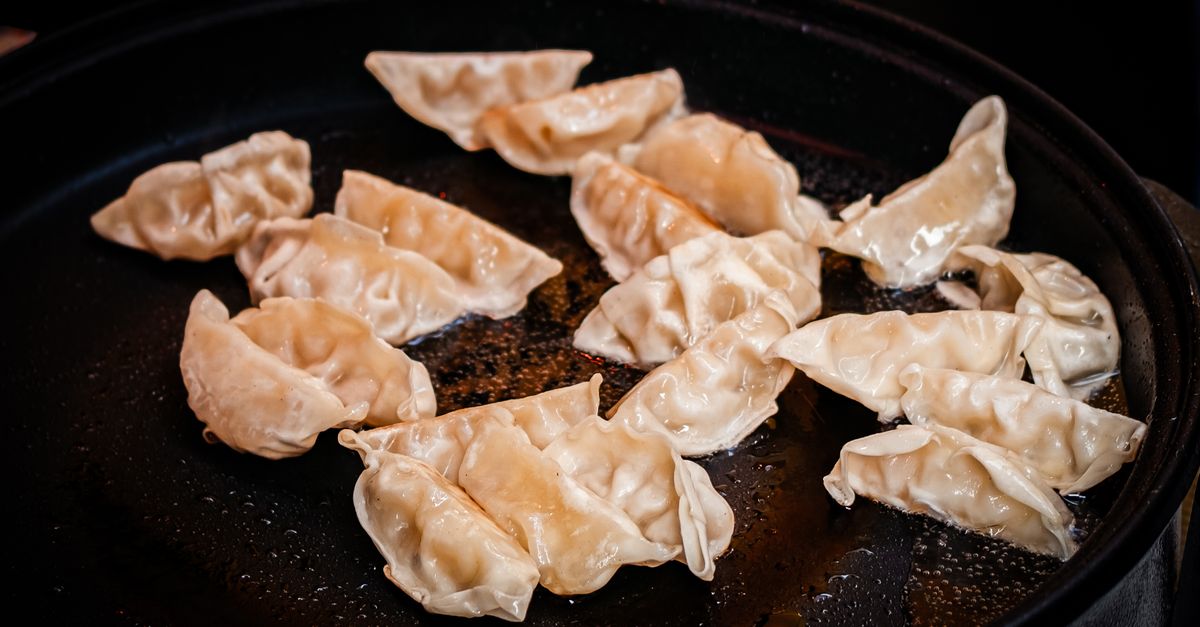
The Pan-Fry and Steam Method, Step by Step
This is the technique Chinese cooks call jiān jiǎo (煎饺) and Japanese cooks call yaki-gyoza. The principle is the same across both traditions.
What you need: A skillet with a lid (non-stick, stainless, or cast iron all work — see trade-offs below), neutral oil with a reasonable smoke point (vegetable, sunflower, or light sesame oil), and water for steaming.
Step 1: Heat the pan properly. Place the dry skillet over medium heat for about 90 seconds before adding oil. A cold pan causes sticking. Add enough oil to coat the base — roughly a tablespoon for a 26–28 cm skillet. The oil should shimmer but not smoke.
Step 2: Arrange dumplings flat-side down. Place them close together but not touching; they expand slightly. Crowding too much causes uneven steaming later. A single layer in one batch is important.
Step 3: Fry undisturbed until the base is golden. This takes roughly 2–3 minutes on medium heat for a fresh dumpling. Do not move them. You are looking for a pale gold color, not deep brown — the base will continue to darken slightly during the steam phase.
Step 4: Add water and cover immediately. Pour in enough water to come about 3–4 mm up the side of the dumplings — roughly 60–80 ml for a standard-sized batch. Stand back, because the water hitting the hot oil will spit. Cover the pan quickly. The steam trapped inside will cook the filling and the top of the wrapper.
Step 5: Steam until the water evaporates. This takes 4–6 minutes for fresh dumplings, 7–9 minutes for frozen ones (cook directly from frozen — no need to thaw). You will hear the sound shift from a wet bubbling to a dry sizzle. That is your cue.
Step 6: Remove the lid and let the base re-crisp. Once the water is gone, leave the lid off and let the dumplings fry for another 60–90 seconds. This dries out any residual moisture on the base and deepens the color. Do not rush this step.
Step 7: Slide, do not flip. Use a thin spatula to loosen the dumplings and slide them onto a plate crust-side up. Flipping them face-down on the plate traps steam and softens the crust.
Pan Surface Trade-offs
| Pan type | Browning quality | Sticking risk | Notes |
|---|---|---|---|
| Non-stick | Even, gentle | Very low | Best for beginners; crust is good but not quite as robust |
| Stainless steel | Excellent, deep | Higher if pan not preheated well | Rewards patience; do not move dumplings until they release naturally |
| Cast iron | Very even, robust crust | Low once seasoned | Holds heat well; slightly slower to respond to temperature changes |
| Carbon steel | Similar to cast iron | Low once seasoned | Lighter than cast iron; a favorite in professional Chinese kitchens |
The Lacy Crust Variation (Crispy Skirt)
If you have seen dumplings with a thin, translucent, crackled “skirt” connecting them, that comes from adding a starch slurry instead of plain water in the steam step.
Mix one teaspoon of plain flour or potato starch into the 60–80 ml of water before adding it to the pan. When the water evaporates, the starch remains in the pan as a thin film around the dumplings. As that film dries and crisps, it forms the lacy, golden lattice.
A few things to watch:
- The slurry burns faster than plain water. Keep the heat at medium, not high, during the drying phase.
- It works best in a non-stick pan; in stainless it can stick in patches.
- You need to invert the dumplings onto a plate as a unit — lay the plate over the pan and flip, then carefully lift the pan. The skirt is fragile.
If you enjoy chasing that lacy, crackling texture, you’ll also like Crispy Fried Eggs With Perfect Runny Yolks: Lacy Edges, Silky Centers, which uses a similar hot-oil technique to crisp up the edges of an egg.
Dipping Sauces Worth Making
The simplest version: equal parts light soy sauce and rice vinegar, with a few drops of chili oil. That balance of salt and acid cuts through the richness of the crust without overwhelming the filling.
For a more layered sauce: add a small amount of finely grated ginger, a pinch of sugar, and toasted sesame seeds. The ginger heat and sesame aroma lift the whole thing.
Avoid thick, heavily sweetened sauces — they mask the filling flavors rather than complementing them.
For an extra kick in your dipping bowl, check out How Do You Make Chili Oil at Home? and drizzle a spoonful over your soy-vinegar mix.
Frequently Asked Questions
Why are my dumplings sticking to the pan?
The most common cause is adding oil to a cold pan, or lifting the dumplings before the base has set. Let the pan preheat without oil, add oil and wait for it to shimmer, then add dumplings. Once placed, do not try to move them until the base forms a crust — at that point they release naturally.
Can I cook dumplings straight from frozen?
Yes, and it is often preferable. Add frozen dumplings to the hot oiled pan, fry the base for 3–4 minutes, then add water and cover. Increase the steaming time to roughly 8–10 minutes to ensure the filling cooks through. The final re-crisping step stays the same.
Why does the bottom go soft after I plate them?
Two likely causes: you lifted the lid too early and residual steam is condensing on the crust, or you placed them crust-down on the plate. Always serve crust-side up, and do the 60–90 second open-pan dry step before serving.
What is the difference between gyoza and Chinese pan-fried dumplings?
The cooking method is nearly identical. The main differences are in the wrapper (gyoza wrappers are thinner and the edges are rolled slightly thinner still) and the filling (Japanese gyoza typically uses cabbage and garlic chives with ground pork, seasoned with soy and sesame; Chinese jiān jiǎo fillings vary widely by region). The pan-fry technique transfers directly between the two.
Does it matter what oil I use?
For the frying base, use a neutral oil with a reasonable smoke point — vegetable, sunflower, grapeseed, or light (refined) sesame oil all work. Unrefined toasted sesame oil has too low a smoke point and will burn in the initial frying step; add a few drops to the dipping sauce instead.