Home Bibimbap: Simple Namul, a Runny Fried Egg, and Gochujang a Little at a Time
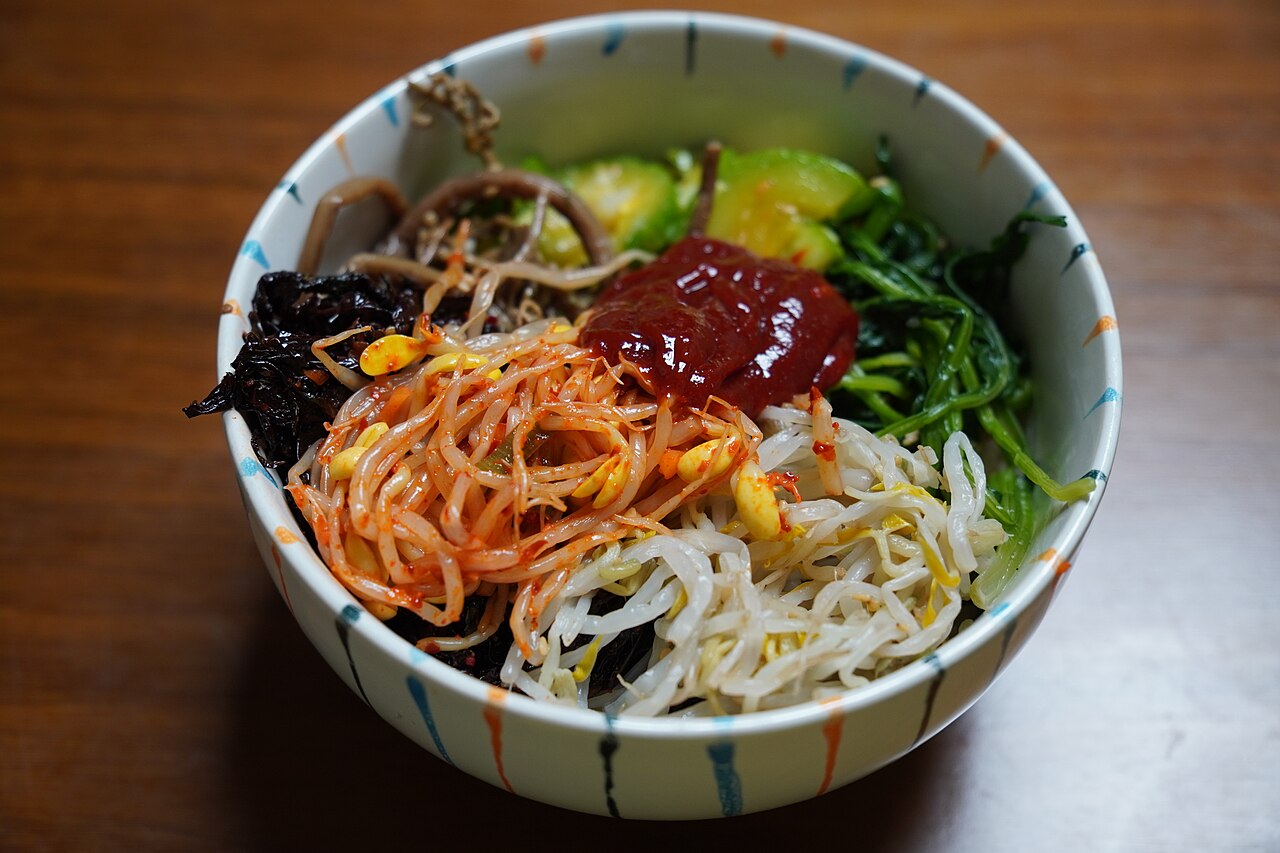
I learned bibimbap from my mother, and from friends too. Everyone makes it a little differently, and I’ve picked up a few ways along the way. I make it often.
Most of the time it’s because there’s a bit of spinach or seasoned bean sprouts left in the fridge. Put the namul (seasoned vegetables) neatly on rice, add gochujang and sesame oil, and you have a filling meal without any other side dishes. It’s especially handy when I need a quick lunch.
That doesn’t mean it’s always thrown together. When guests come, I make spinach, bracken, bellflower root, bean sprouts, carrot, and zucchini separately and arrange them by color. Set out with a little care, an ordinary home meal looks quite special.
When I first tried it myself, I thought you just mixed side dishes into rice. Once I actually made it, I found that draining the namul well and getting the seasoning right is what matters.
The big bowl after the holidays
When I was a kid, there was always a lot of namul left over after the holidays. After the ancestral rites, my mother would put the leftover bracken, bellflower root, and spinach into a big metal mixing bowl (yangpun) with rice and mix it all together for us.
There were a lot of us, so instead of making a bowl for each person, she mixed everything at once in that big bowl. When the smell of sesame oil came up, I’d sit next to it with my spoon, waiting.
I especially remember scraping up the rice stuck to the sides of the bowl. It felt different from eating out of your own bowl. With bits of different namul mixed in, every spoonful tasted a little different, and I liked watching the rice turn red as the gochujang spread. Back then I didn’t think of it as anything special. Looking back now, it’s the memory of the whole family eating together that makes bibimbap feel so warm to me.
Ingredients (3 to 4 servings)
Namul
- Spinach: 150 g (about 5 oz)
- Soybean sprouts (kongnamul): 200 g (about 7 oz)
- Bracken (gosari), already soaked and boiled: 150 g (about 5 oz)
- Bellflower root (doraji), cleaned: 120 g (about 4 oz)
Other toppings
- Carrot: 1/2
- Zucchini (Korean aehobak or regular zucchini): 1/2
- Fresh shiitake mushrooms: 3 to 4
- Ground beef: 150 to 200 g (5 to 7 oz), optional
- Eggs: 1 per person
For the beef
- Soy sauce: 1 tablespoon
- Sugar: 1 teaspoon
- Minced garlic: 1 teaspoon
- Toasted sesame oil: 1 teaspoon
- Black pepper: a little
Gochujang sauce (per serving)
- Gochujang (Korean chili paste): 1 tablespoon
- Toasted sesame oil: 1 teaspoon
- Sugar or rice syrup (oligodang): 1/2 teaspoon
- Toasted sesame seeds: 1 teaspoon
If you can’t do all four namul, spinach and bean sprouts alone are fine. More kinds of namul is nice, but a little of several kinds balances better with the rice than a lot of just one.
The namul
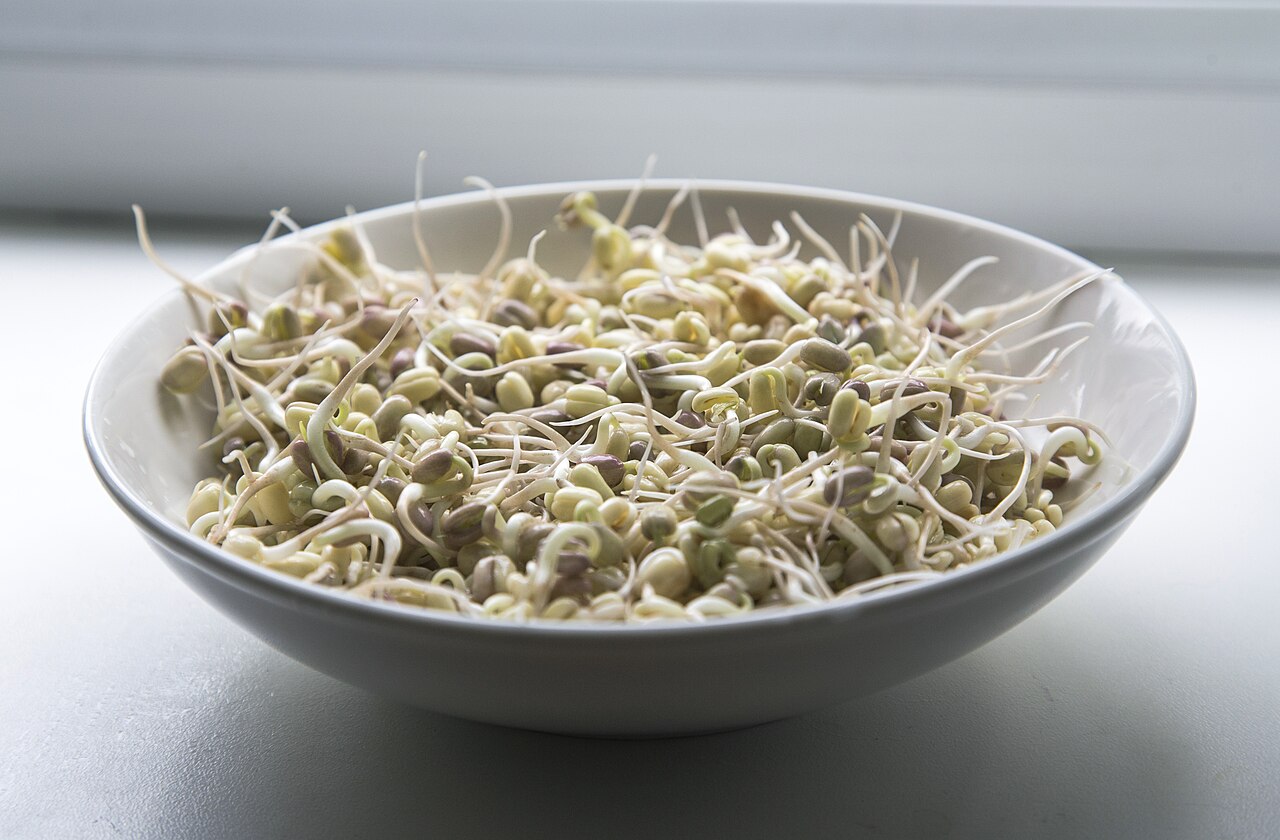
I season each namul separately and let them cool before they go on the rice. The flavors stay cleaner that way than if you cook everything together.
Spinach. Wash the dirt from the root ends well. Blanch it in boiling water with a little salt for only 30 to 60 seconds, then rinse it right away in cold water and squeeze out the water well. Toss it with 1 teaspoon of soup soy sauce (guk-ganjang) or a little salt, 1 teaspoon of sesame oil, 1/2 teaspoon of minced garlic, and a few sesame seeds. If you blanch it too long, it goes limp and the texture isn’t good.
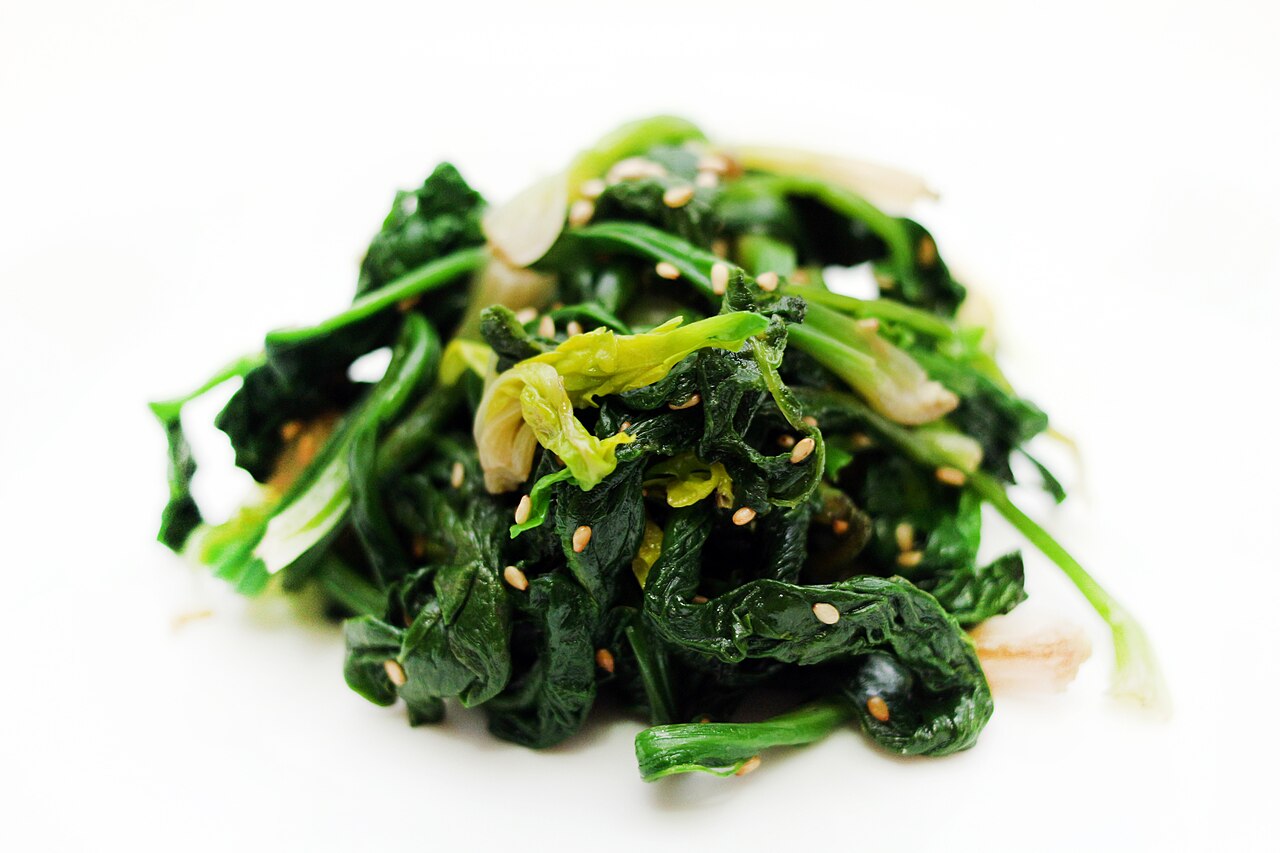
Photo: Hyeon-Jeong Suk, CC BY 2.0, via Wikimedia Commons
Soybean sprouts. Rinse them, then cook them in a pot with a little water and the lid on for about 4 to 5 minutes, or boil them for 3 to 5 minutes. Adjust the time to how thick they are, and make sure they’re cooked through so there’s no raw, beany smell. Drain them and toss lightly with about 1/3 teaspoon of salt, 1/2 teaspoon of minced garlic, 1 teaspoon of sesame oil, and sesame seeds. They should still be crunchy.
Bracken. I use bracken that’s already been soaked and boiled. Cut off the tough parts and cut it into easy-to-eat lengths, then toss it briefly with 1 teaspoon of soup soy sauce, 1/2 teaspoon of minced garlic, and 1 teaspoon of sesame oil. Stir-fry it, add 2 to 3 tablespoons of water or broth, and cook it over medium-low heat for about 5 to 8 minutes until tender. If you’re using dried bracken, it has to be soaked and boiled thoroughly before you use it.
Bellflower root. I use it already cleaned. If it’s very bitter, rub it with a little salt, rinse it, and drain it. Stir-fry it with 1 teaspoon of cooking oil, 1/2 teaspoon of minced garlic, and a little salt over medium heat for about 3 to 5 minutes, adding a splash of water if needed. Cook it too long and it loses its texture, so I keep it a little crisp.
Carrot, zucchini, mushrooms, and beef
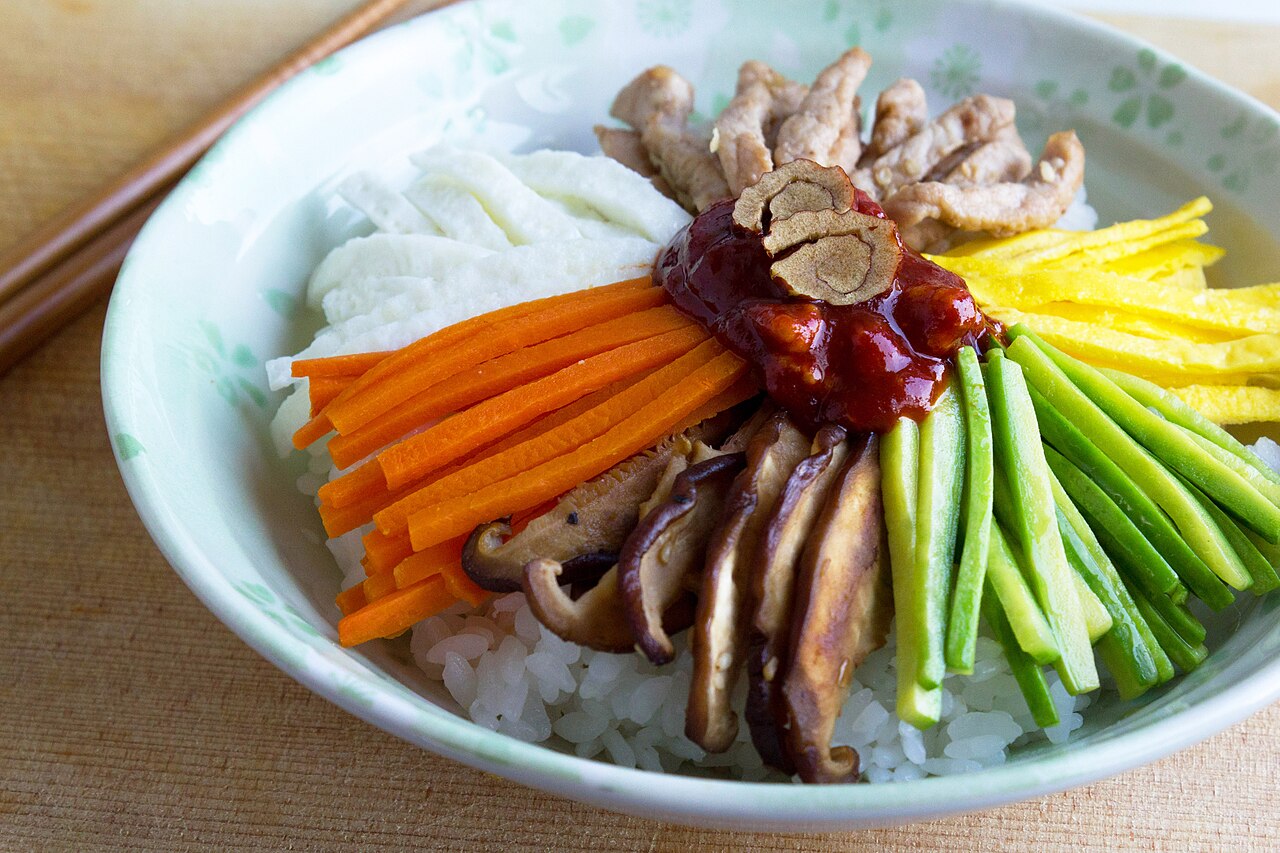
Photo: Chloe Lim, CC BY 2.0, via Wikimedia Commons
- Carrot: cut into thin matchsticks and stir-fry in a pan with a little oil for 1 to 2 minutes. Don’t cook it soft. Leave a little crunch.
- Zucchini: cut into matchsticks, season lightly with a pinch of salt, and stir-fry for 2 to 3 minutes. Zucchini lets out a lot of water as it cooks, so I cook it briefly over high heat and let it cool.
- Shiitake: slice thin, season with 1 teaspoon of soy sauce and a little minced garlic, and stir-fry in a little oil for about 2 to 3 minutes.
- Cucumber: in summer I sometimes add it raw, cut into thin strips, for its fresh crunch. Cut cucumber gets watery if it sits, so I cut it just before eating.
- Lettuce or perilla leaves: if I have them, I tear them by hand or cut them into strips.
When I add beef, I usually use 150 to 200 g of ground beef. Mix 1 tablespoon of soy sauce, 1 teaspoon of sugar, 1 teaspoon of minced garlic, 1 teaspoon of sesame oil, and a little pepper into the beef, then stir-fry it until it’s completely cooked.
Beef makes it more filling, but namul and mushrooms alone are plenty good. At home, depending on what’s in the fridge, I leave the beef out more often than not.
The egg
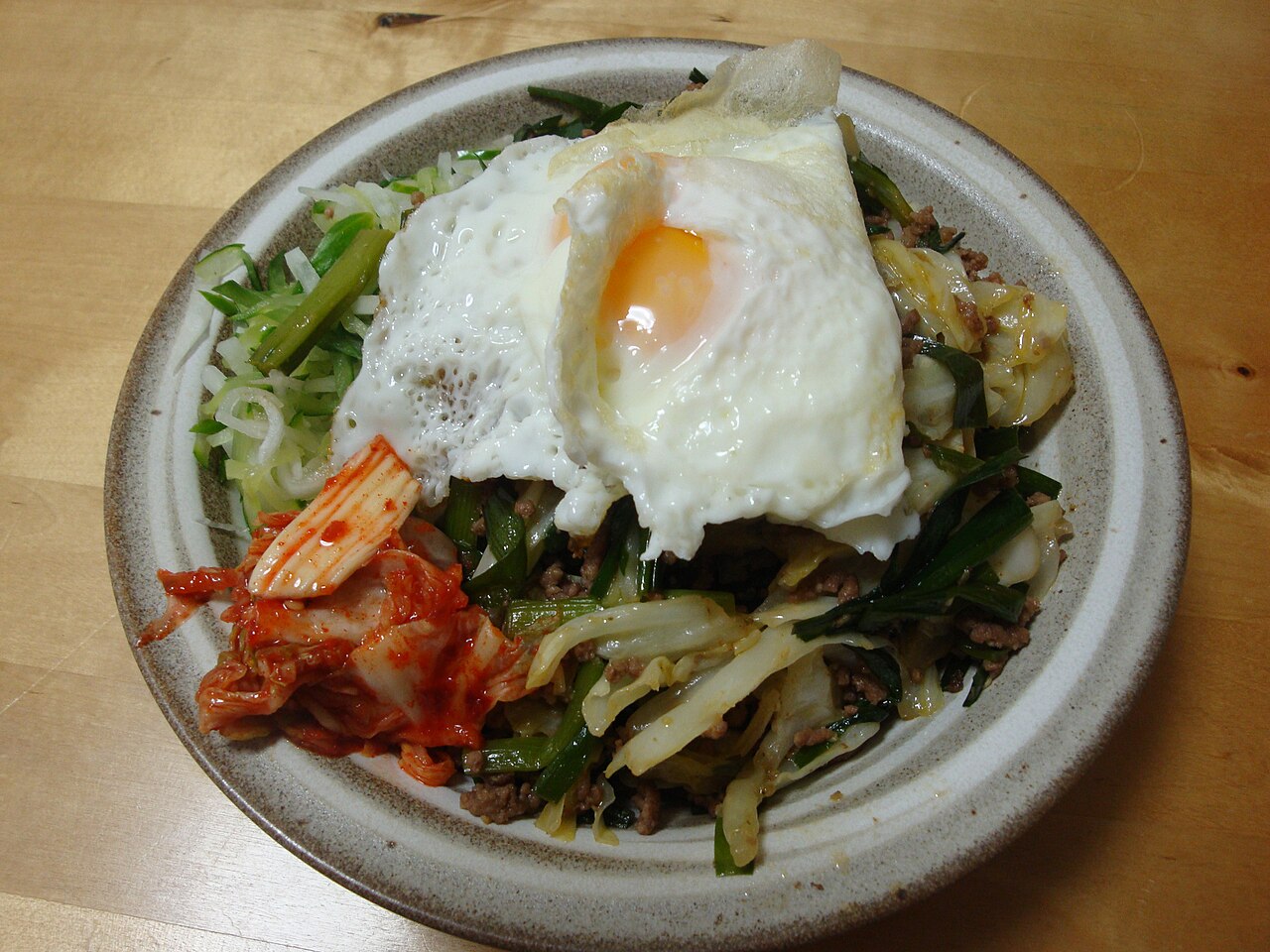
Photo: David Pursehouse, CC BY 2.0, via Wikimedia Commons
I mostly use a fried egg, one per person. I cook the white through but leave the yolk a little runny. When you mix it, the yolk breaks and blends into the rice and gochujang, and it makes everything milder. With a little oil over medium-low heat, the white doesn’t burn and the yolk stays soft.
For guests, I sometimes make a thin egg omelet, cut into strips, instead. The color is pretty and it makes the bowl look neat.
I hardly ever use a raw egg at home. If there are children, or anyone who should eat eggs fully cooked, I fry the egg until the yolk is set. A runny yolk is delicious, but bibimbap doesn’t have to have one.
Mixing it
Rice. Don’t cook it too soft. Freshly made rice is good, but if it’s giving off a lot of steam, turn it over lightly once or twice to let some moisture out. If you’re using leftover rice, heat it until it’s warm all the way through. Cold namul piled on hot rice leaves the whole bowl lukewarm, so I check namul straight from the fridge and warm it a little if needed.
Gochujang. I don’t add it all at once. Per serving, my starting point is 1 tablespoon of gochujang, 1 teaspoon of sesame oil, 1/2 teaspoon of sugar or rice syrup, and 1 teaspoon of sesame seeds. The namul is already seasoned, so too much gochujang at the start makes it salty fast. For anyone who doesn’t like it spicy, I tell them to start with 1/2 tablespoon and taste.
If I make the sauce ahead, I mix 4 tablespoons of gochujang, 4 teaspoons of sesame oil, 2 teaspoons of sugar, and 4 teaspoons of sesame seeds and divide it among four bowls.
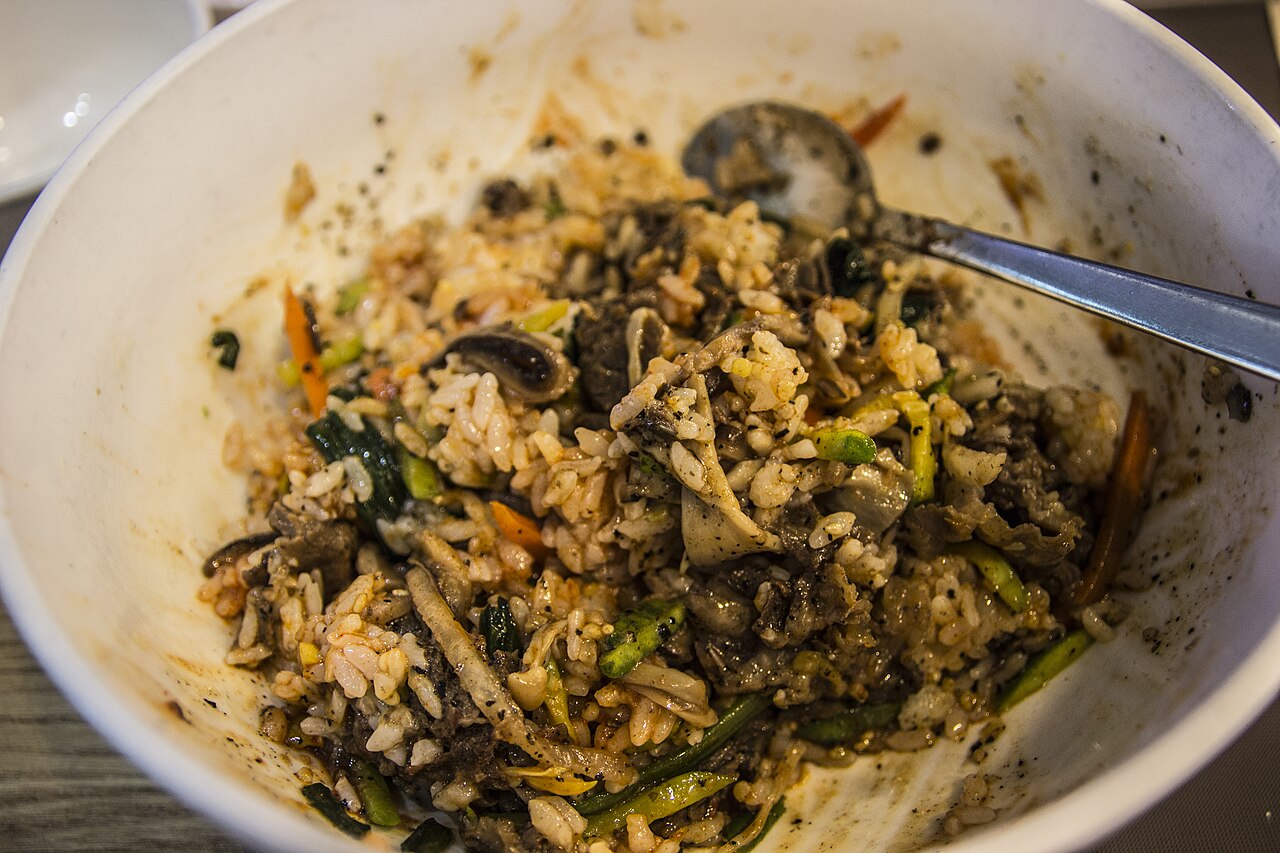
Photo: Shene81, CC BY 3.0, via Wikimedia Commons
- Add a little gochujang and sesame oil first.
- Turn the rice over from the bottom up, folding it through.
- Break the yolk and mix it in too.
- Don’t press down hard with the spoon from the start. It mashes the rice and turns it mushy.
- Taste a spoonful partway through, and if it’s bland, add a bit more gochujang.
I like it mixed evenly but with the colors of the vegetables still showing.
Bowls, and dolsot bibimbap
Day to day I use a wide, deep ceramic bowl I have at home. Several kinds of namul fit without spilling, and it’s easy to mix with a spoon. When it’s just family, I sometimes bring out a big stainless steel mixing bowl. It reminds me of eating as a kid, and it’s good for mixing everything evenly. But if people in your house like different levels of spice, separate bowls are easier.
Dolsot bibimbap, made in a stone pot, is for days when I want something a little special.
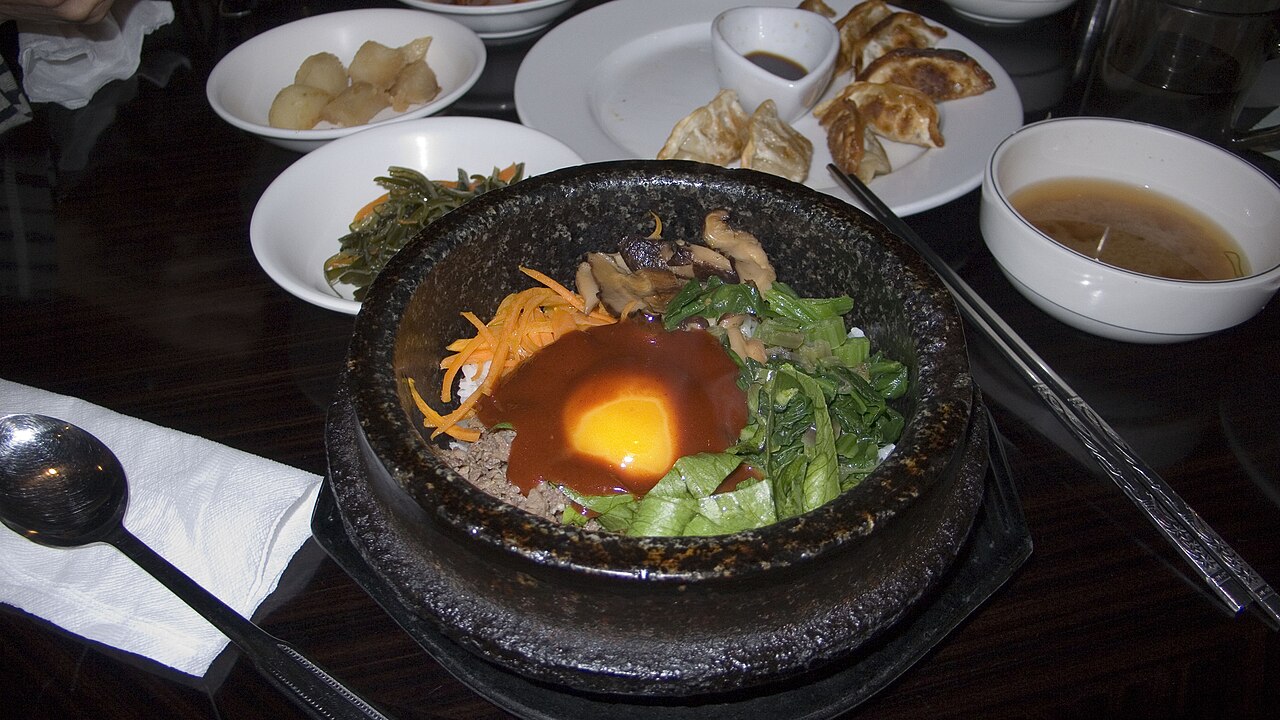
Photo: superturtle, CC BY 2.0, via Wikimedia Commons
- Check that your stone pot can go over a direct flame.
- Brush the inside with a thin layer of sesame oil or cooking oil.
- Add the rice, then the namul and beef.
- Start on low heat and adjust to medium-low, heating for roughly 5 to 8 minutes. It depends on the pot and how much rice is in it, so listen for sizzling at the bottom and wait for a toasty smell.
If the heat’s too high, the rice burns instead of forming a crust.
The best part of a stone pot is the crispy rice (nurungji) that forms on the bottom. Eat and mix as you go, then scrape up the rice stuck to the bottom. It’s nutty and delicious.
A hot stone pot stays hot long after it comes off the heat. Always set it on a trivet, and don’t touch it with your hands. I add the gochujang after the pot comes off the heat. It won’t burn, and the seasoning is easier to control.
What I eat with it
I think a clear soup goes best with bibimbap. At home I usually serve soybean sprout soup or radish soup. The bibimbap itself already has plenty of flavor from the namul, gochujang, and sesame oil, so I keep the soup from getting too salty or spicy. Sometimes I make doenjang soup, and then too I keep it light.
I don’t set out many side dishes. Napa cabbage kimchi or kkakdugi, or water kimchi, is enough. (If you want to make kkakdugi, here’s how my mother taught me.) Cool dongchimi or water kimchi is especially nice because it calms the heat of the gochujang between bites.
For guests, I sometimes add pan-fried tofu or jeon along with the kimchi and soup. But I think bibimbap is a full meal by itself.
Bibimbap from leftovers, and lettuce bibimbap
Honestly, the bibimbap I eat most at home isn’t the carefully prepared kind. It’s bibimbap made from leftover side dishes. If there’s a little seasoned bean sprouts, spinach, and stir-fried zucchini left in the fridge, I put it on rice, fry an egg, and mix. The ingredients change from day to day, so it tastes a little different every time.
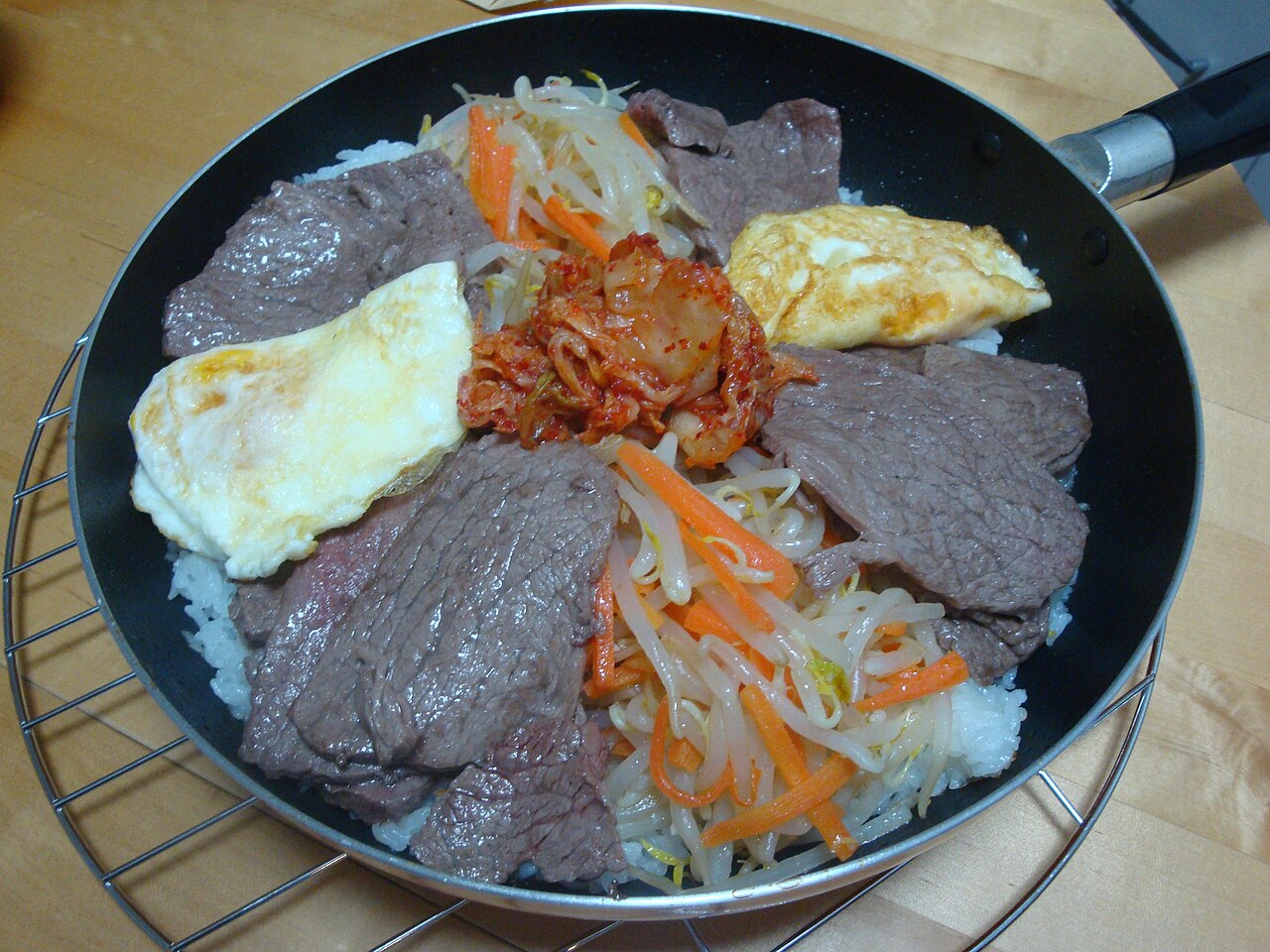
Photo: David Pursehouse, CC BY 2.0, via Wikimedia Commons
When there’s leftover kimchi, I sometimes chop it and add it, but if the kimchi is salty or has a lot of liquid, I use less.
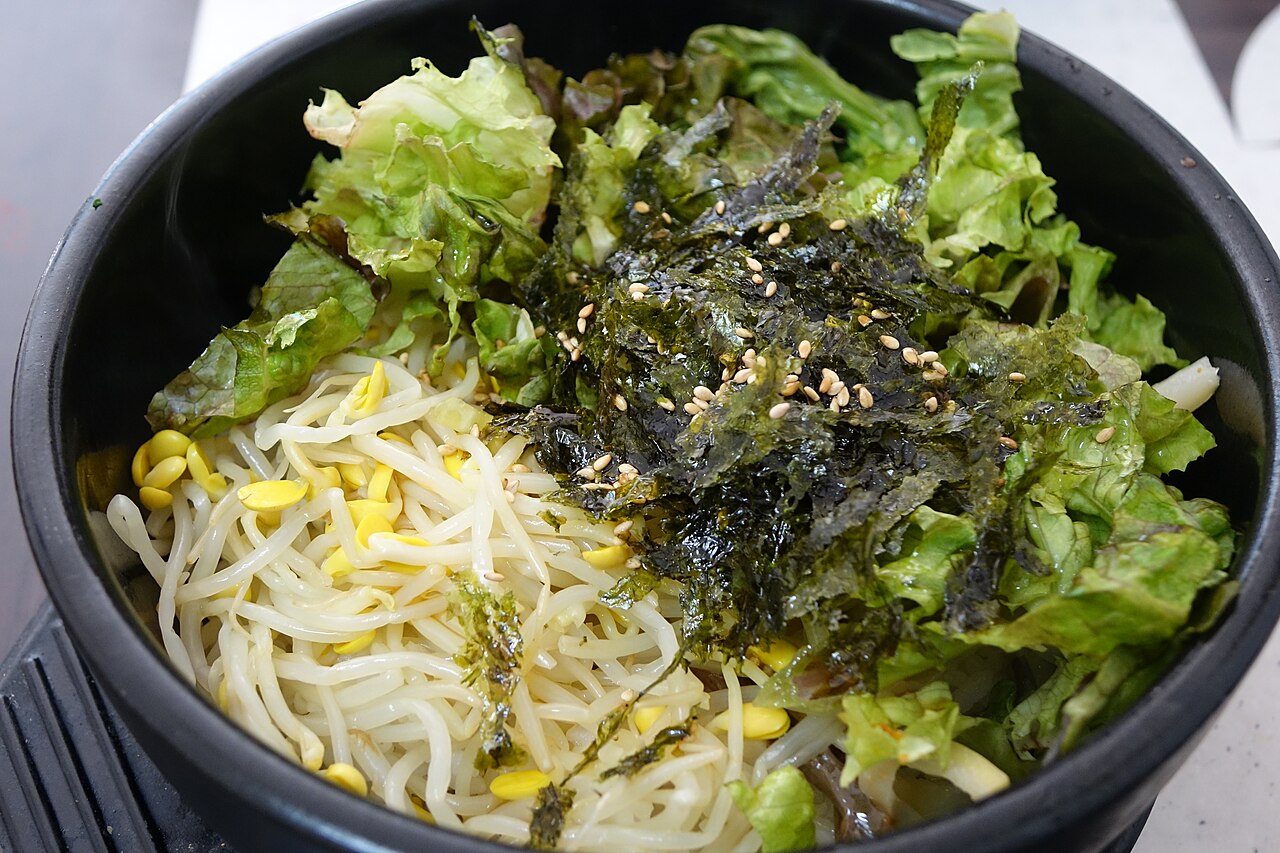
In summer I like lettuce bibimbap. Wash a handful of lettuce and a few perilla leaves, shake off the water, and pile them generously on the rice. Add cucumber, a fried egg, gochujang, and sesame oil, and you get something light and fresh without stir-frying any namul. Lettuce wilts fast, so mix it just before you eat.
If there’s any left
Namul is best eaten the day you make it. If there’s some left, let it cool completely, put it in a clean airtight container, and refrigerate it. I try to eat it within 1 to 2 days, and no later than 2 to 3 days. That assumes your fridge stays at 4°C (40°F) or below and the namul didn’t sit out at room temperature for long after cooking. Watery namul like bean sprouts and spinach especially shouldn’t be kept long.
- Namul that hands or used chopsticks have touched spoils faster, so take out only as much as you’ll eat.
- Store each kind separately rather than mixed in one container. It’s easier to keep track of, and the flavors don’t blend.
- If it smells off or feels slimy, I don’t eat it. But I also don’t assume old food is safe just because it smells fine.
Bibimbap that’s already mixed with gochujang, namul, and egg, I don’t keep. I eat it right away. Once it’s mixed, the vegetables release water and the taste and texture go downhill quickly.
If mixed bibimbap has been at room temperature for more than 2 hours, throw it out. In very hot weather, make that shorter. If you really have to keep some, refrigerate it right away and eat it at the next meal, reheated until it’s hot all the way through. But if it has raw vegetables in it, or several people were eating from it, don’t try to keep it.
What went wrong, and how to avoid it
| Problem | What to do |
|---|---|
| Watery, mushy bibimbap | Let blanched namul cool and drain it well. When I first made it, I scooped the spinach and sprouts out and added them right away, and water pooled while I mixed. Don’t squeeze so hard that the namul turns stiff, though |
| Too salty | Each namul is already seasoned. Start with less gochujang and add more later |
| Too bland | Instead of reaching for salt, add a little more gochujang or a little soy sauce seasoning |
| Soft, soggy carrot or zucchini | Don’t stir-fry them too long. Preheat the pan well and cook zucchini briefly, since thin strips cook fast and let out water |
| Heavy, stodgy bowl | Don’t cook the rice too soft |
In the end, bibimbap isn’t about great technique. It’s about controlling the moisture in the rice, the water in the namul, and the amount of gochujang.
If you’re making it for the first time
You don’t have to prepare five or six kinds of Korean namul from the start. Rice, egg, carrot, spinach, mushrooms, gochujang, and sesame oil are enough to begin with. If namul feels like a lot of work, blanch and season the spinach, and stir-fry the carrot and mushrooms.
- No soybean sprouts? Mung bean sprouts work. No Korean zucchini? Use regular zucchini. The taste and texture will be a little different.
- Gochujang: a regular gochujang for bibimbap from a Korean grocery is easiest. Brands differ in heat and saltiness, so start with about 1/2 tablespoon per serving, taste, and add more.
- Not good with spicy food? Use less gochujang and a little more sesame oil.
- Sesame oil: even a little has a strong aroma, so don’t pour in a lot at the start.
Bibimbap doesn’t have to look a certain way. Use vegetables that are easy to find where you live, like cucumber, cabbage, or mushrooms. Just wash raw vegetables well, and cook meat and eggs safely.
The simplest way: put two or three cooked vegetables and a fried egg on warm rice, add gochujang and sesame oil, and mix. It isn’t about having lots of ingredients. Getting the flavor and moisture of each one right matters more. Part of the fun of bibimbap is changing it bit by bit until it suits you.