How My Mother Taught Me to Make Kkakdugi (Korean Cubed Radish Kimchi)
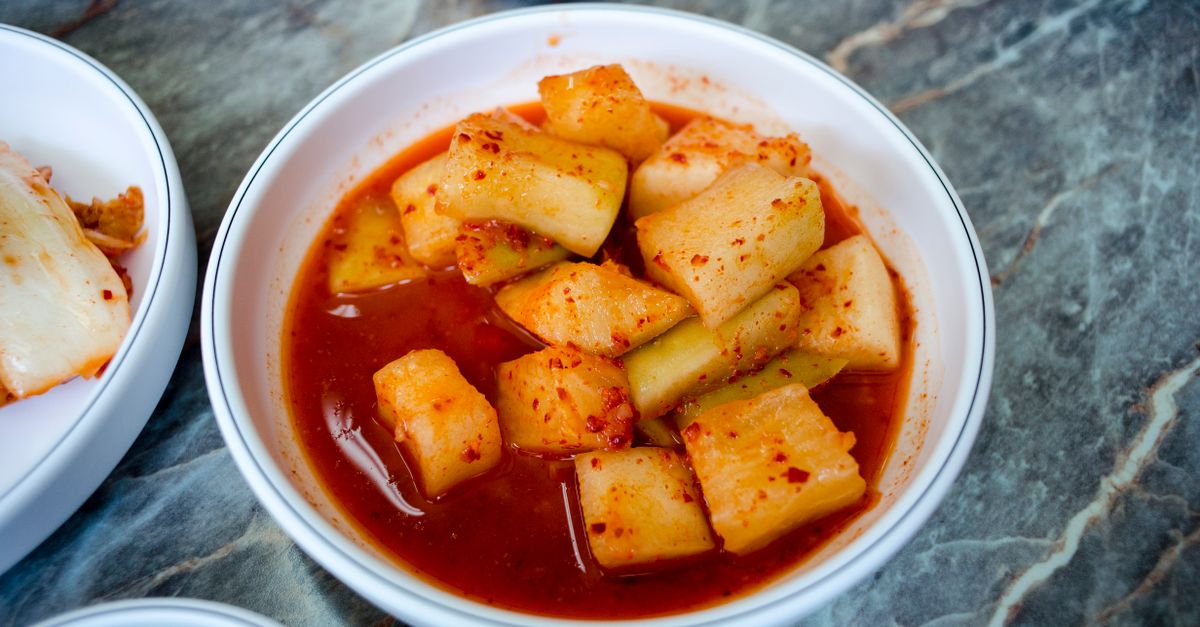
I learned to make kkakdugi from my mother last winter. Kkakdugi is the cubed radish kimchi you see next to almost every bowl of rice in Korea, and it looks simple: radish, salt, seasoning. What I didn’t expect was how much the result depends on a few small decisions, starting with the radish itself.
Below is the way we make it at home, with the amounts we use and the mistakes that taught me the most.
Ingredients (for 2 kg / about 4.4 lb of radish)
- Korean radish (mu): 2 kg (about 4.4 lb)
- Salt for salting: 30 to 40 g, preferably sea salt or roasted salt (see below)
- Gochugaru (Korean chili flakes): 40 to 50 g
- Minced garlic: 30 to 40 g
- Minced ginger: 5 to 10 g
- Jjokpa (Korean chives / thin green onions): 50 to 70 g
- Saeujeot (salted shrimp): 2 tablespoons
- Myeolchi aekjeot (anchovy fish sauce) or kkanari aekjeot (sand lance fish sauce): 2 tablespoons
- Flour paste: 8 to 10 g all-purpose flour cooked in 150 mL (about 2/3 cup) water
- No sugar
Start with the right radish
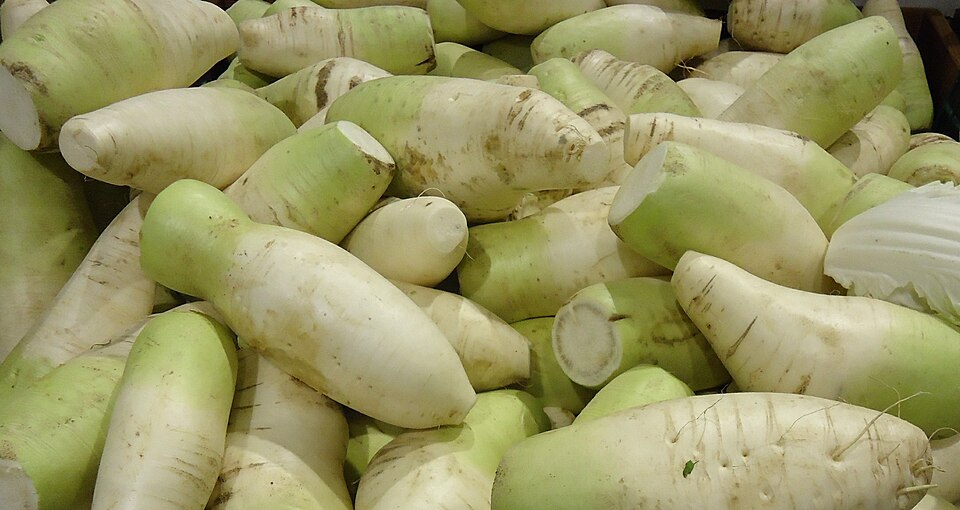
Photo: Tomwsulcer, CC0, via Wikimedia Commons
Most of the flavor comes from the radish, so this is the step not to rush. When we shop for one, we look for three things:
- Firm and heavy for its size. A radish that feels light or soft has usually lost moisture and crunch.
- A clear line between the pale green top and the white bottom. When the two colors are sharply separated, the radish is usually fresh and sweet.
- Not too big. An oversized radish is not better. A medium one is easier to handle and, in my experience, more reliable in taste.
This matters more than any seasoning. When the radish itself has no flavor, the finished kkakdugi can come out bitter, and nothing you add later really fixes that.
Cut and salt the radish
Peel the radish and cut it into cubes of about 2 cm (3/4 inch).
The salt matters more than you might think. Use a good salt, such as sea salt (Korean cheonilyeom) or roasted salt (guun sogeum): it gives the kkakdugi a deeper flavor than plain table salt. For 2 kg of radish we use 30 to 40 g of salt.
Toss the cubes with the salt and let them sit for about one hour. Around the 20 to 30 minute mark, turn the cubes over so the ones at the bottom and the ones on top salt evenly.
Watch the salt and the clock. Too much salt, or leaving the radish in it too long, and the kkakdugi stays too salty no matter how you season it afterward.
When the hour is up, don’t rinse the radish. Just pour off the liquid that has come out. That’s the way I recommend.
Make the flour paste
Stir 8 to 10 g of flour into 150 mL of water and cook it over low heat, stirring, until it thickens. Let it cool before using.
It helps the seasoning cling to the radish and helps the fermentation along, and in our experience it prevents a raw, grassy smell (Koreans call it punnae). The times I skipped it, the kkakdugi had exactly that smell.
Many recipes call for glutinous rice paste instead. I’ve tried both, and to me the flour paste tastes better.
Season and mix
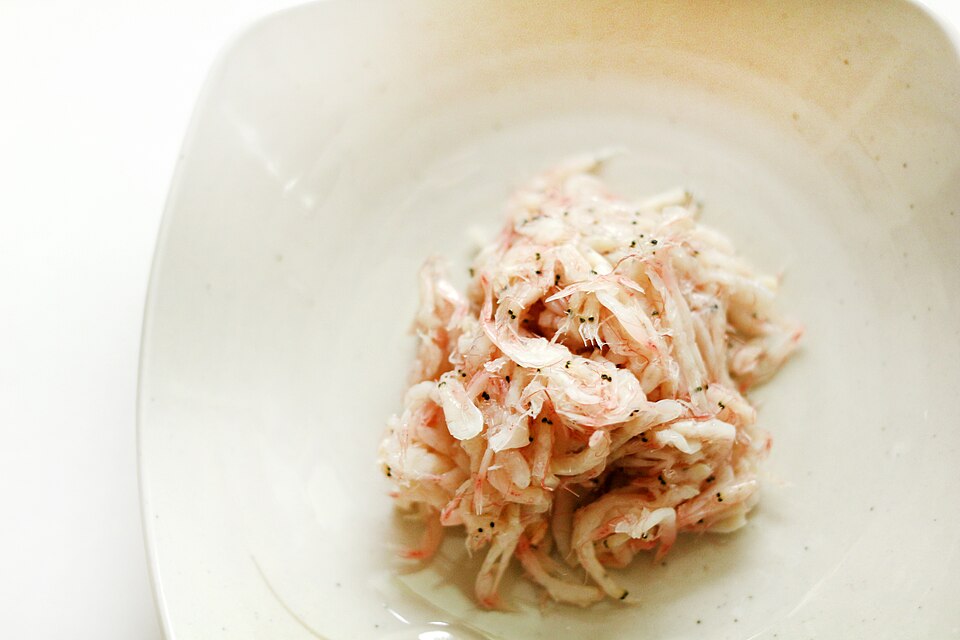
Photo: Hyeon-Jeong Suk, CC BY 2.0, via Wikimedia Commons
Combine the cooled flour paste with the gochugaru, garlic, ginger, and 2 tablespoons each of salted shrimp and fish sauce. My mother uses saeujeot together with myeolchi aekjeot; kkanari aekjeot works well in place of the anchovy sauce.
We don’t add sugar. A good radish brings its own sweetness, which is one more reason the radish choice matters so much.
Add the drained radish and the chopped jjokpa, and mix until every cube is evenly coated. Then pack it into a container.
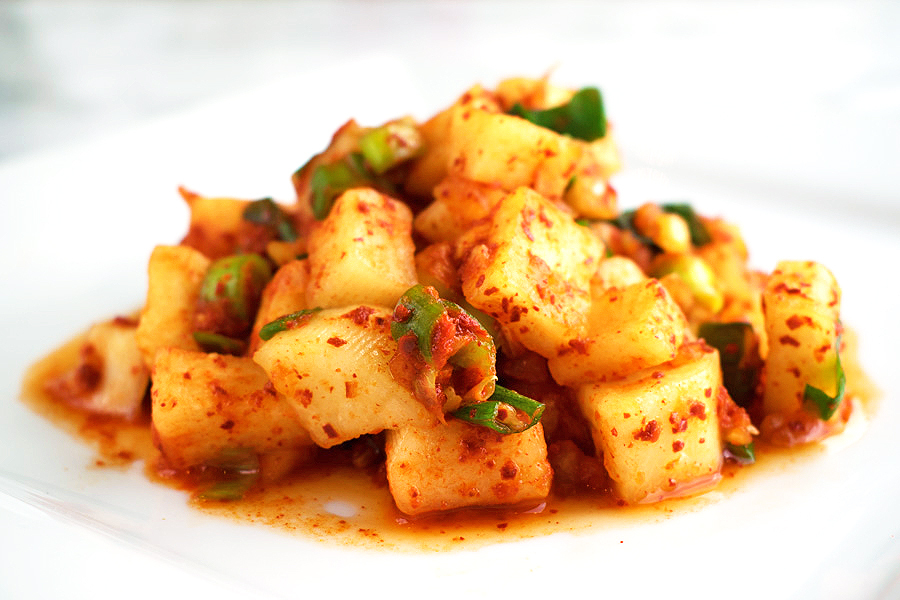
Photo: gildedgingerbread., CC BY 4.0, via Wikimedia Commons
Let it ripen, then refrigerate
I like my kkakdugi well fermented, so I leave it at room temperature for a day or two before eating. Taste it each day: it gets more sour and deeper as it ripens.
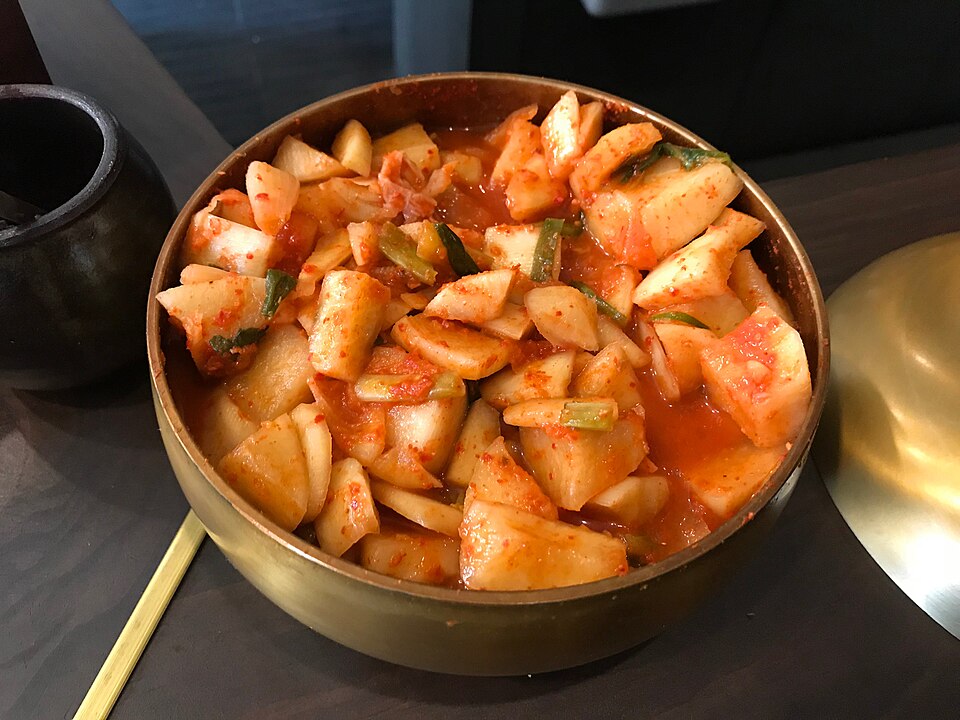
Photo: lazy fri13th, CC BY 2.0, via Wikimedia Commons
Once it’s ripe enough for you, move it to the fridge. If you prefer it fresher and crunchier, refrigerate it earlier, while it’s still less fermented.
What to eat it with
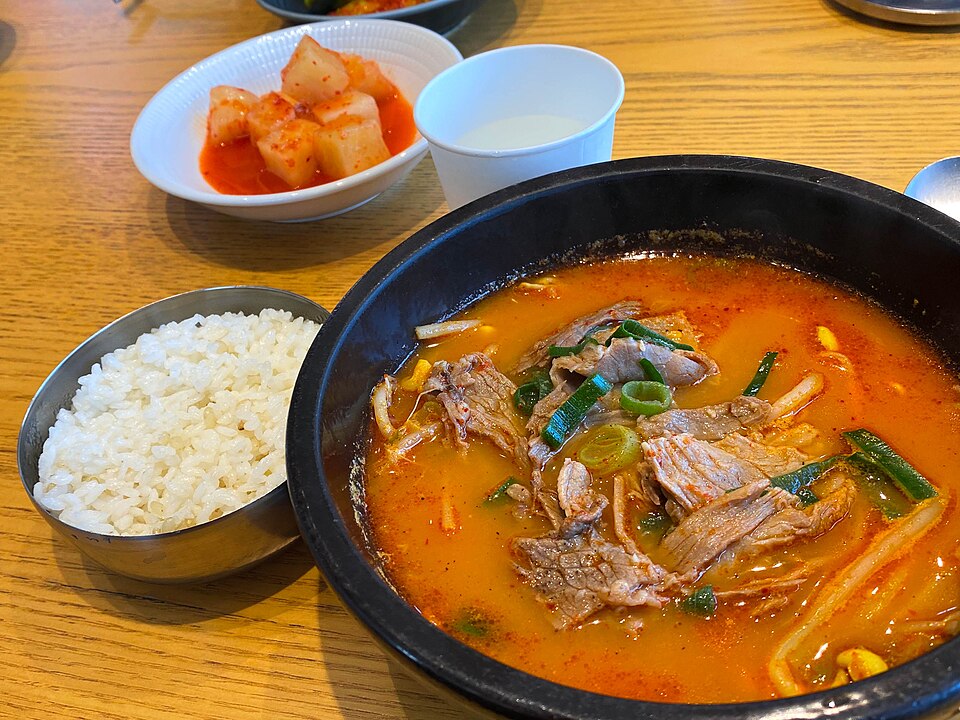
Photo: 기록을 남기는 기록을위한, CC BY 4.0, via Wikimedia Commons
Honestly, well-ripened kkakdugi goes with almost everything. A bowl of plain rice, a pot of ramyeon, soups, grilled meat: it adds crunch and a sour, savory bite to all of them.
For a Korean stew to serve it with, see My Mother’s Doenjang Jjigae (Korean Soybean Paste Stew) with Rice Water and River Snails.
What went wrong, and how to avoid it
| Problem | What caused it for us | What to do |
|---|---|---|
| Bitter taste | The radish itself had no flavor | Choose a firm, heavy radish with a clear green-white line |
| Raw, grassy smell | No flour paste | Add a small amount of cooked flour paste |
| Too salty | Too much salt, or salted too long | 30 to 40 g of salt per 2 kg, about an hour, turn halfway through |