How My Mother Taught Me to Make Gimbap for Trips and Picnics
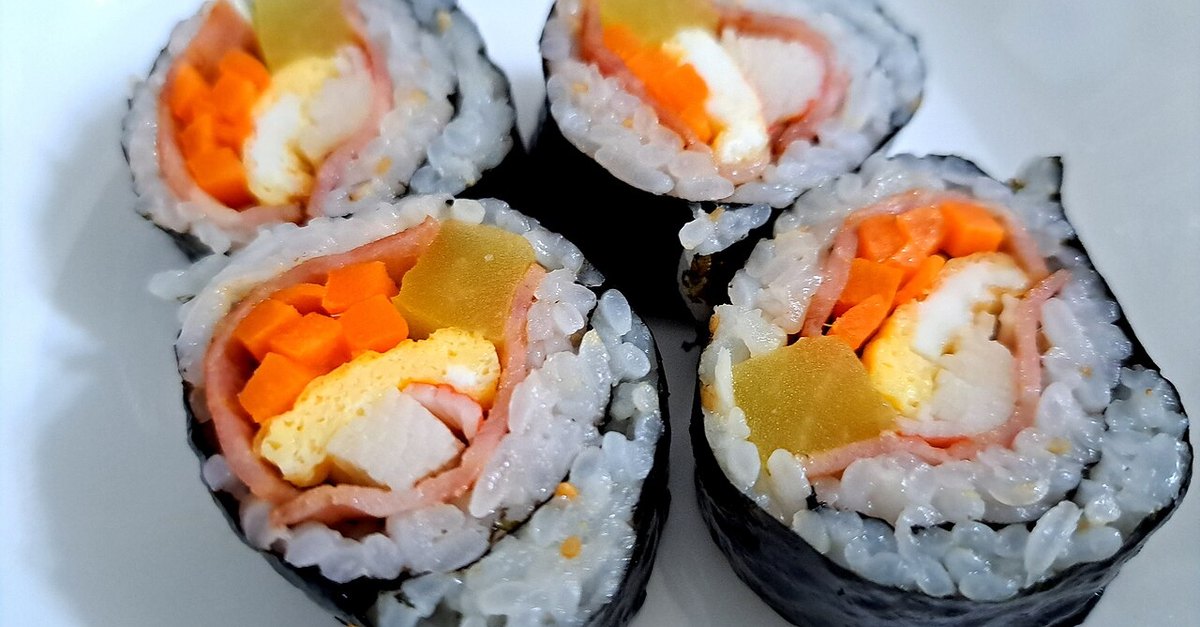
I learned to make gimbap from my mother, and it’s what we pack whenever we go on a trip or a picnic. Rolling it isn’t hard. What makes the difference is how you season the rice, how dry you keep the fillings, and how much you put in each roll.
As a child, gimbap day was one of the happiest days I can remember. While my mother rolled, I stood next to her and got to eat the ends of the rolls (kkodari), and I loved that. With gimbap, I still always end up eating too much: you keep picking up just one more slice.
Ingredients (5 rolls)
For the rice
- Cooked rice: 800 g (about 4 bowls), cooked on the firm side
- Salt: 1/2 to 1 teaspoon
- Sesame oil: 2 tablespoons, plus a little for brushing the rolls
- Toasted sesame seeds: 1 tablespoon
For the fillings
- Gim (dried seaweed sheets): 5 sheets
- Carrot: 1
- Danmuji (yellow pickled radish): 5 strips
- Spinach: 150 g
- Eggs: 3
- Gimbap ham: 5 strips
- Braised burdock root (ueong jorim): 5 strips, optional
- Imitation crab sticks (matsal): 5, optional
- Salt, cooking oil, and sesame oil for the fillings
Season the rice gently
Cook the rice so it comes out firm and fluffy rather than soft and wet (goseul-goseul, as we say). For that, use less water than usual when you cook it.
Then season it in this order:
- Loosen the hot rice lightly with a rice paddle.
- Sprinkle the salt evenly and mix well.
- Drizzle in the sesame oil and mix well.
- Add the sesame seeds last.
Mix gently the whole time so the grains don’t get crushed.
Prepare the fillings
- Carrot: Cut into thin matchsticks and stir-fry in oil with a pinch of salt. Don’t cook it too long; it should keep some bite.
- Spinach: Blanch in boiling water for 30 to 40 seconds, rinse in cold water, and squeeze out the water firmly. Season with salt and sesame oil.
- Eggs: Beat with a little salt, cook into a thin omelet, and cut it into long strips.
- Ham and crab sticks: Sear them lightly in a frying pan. This cooks off some moisture and adds flavor.
- Danmuji and burdock: I use store-bought ones straight from the package.
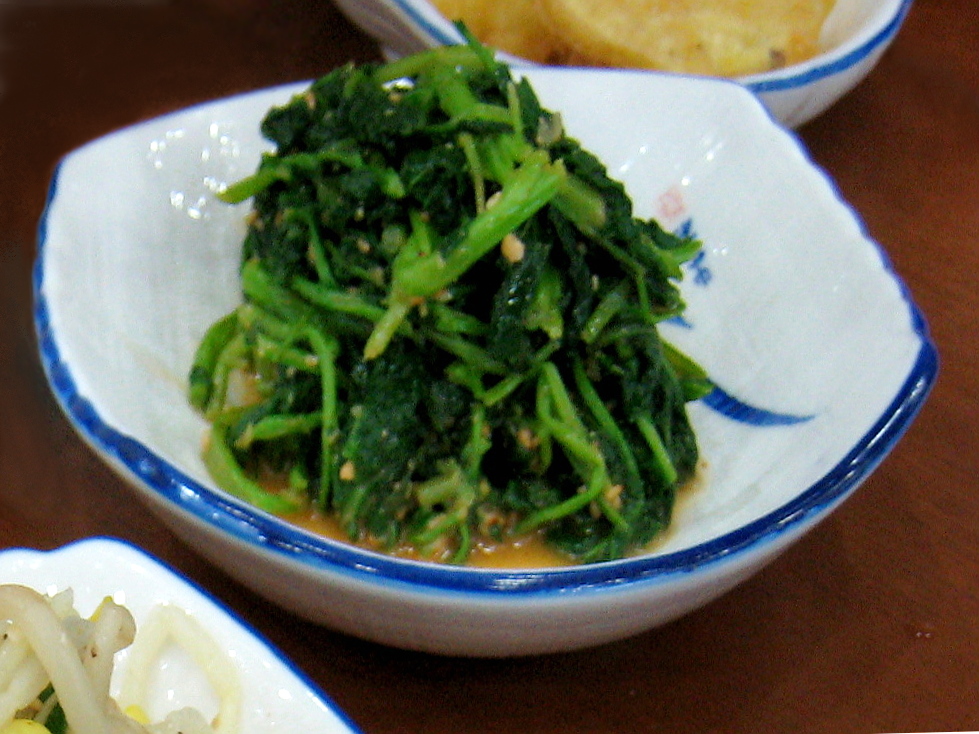
Photo: karendotcom127, CC BY 2.0, via Wikimedia Commons
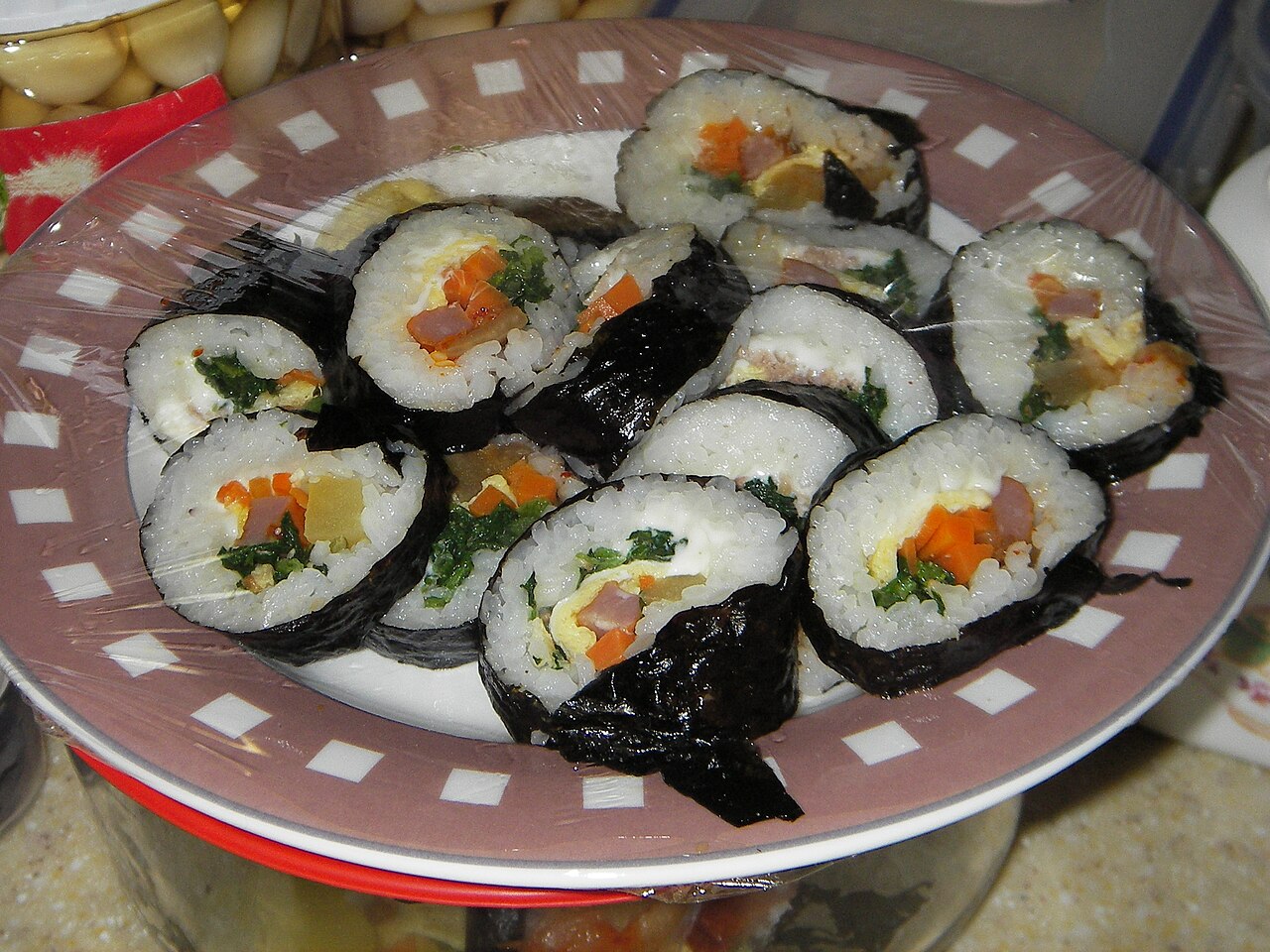
Photo: strikeael, CC BY 2.0, via Wikimedia Commons
Keep everything dry
This is the most important point. If the spinach, carrot, or any other filling is wet, the seaweed turns soggy after rolling. The same thing happens when the rice is too soft. So squeeze the spinach well, don’t overcook the carrot, and cook the rice on the firm side.
Roll it
Place the seaweed rough side up. Spread the rice thin and even over it, leaving the top 2 to 3 cm (about 1 inch) bare. A thin layer of rice lets the fillings’ flavor come through.
Lay the fillings across and roll tightly. Don’t overfill: too many fillings or too much rice makes the roll split open along the side.
When the roll is done, brush a thin layer of sesame oil over the outside. It gives the gimbap a nice shine.
Slicing without crushing
- Use a sharp knife. A dull blade squashes the roll.
- Wipe a little sesame oil or water on the blade and cut quickly.
- Don’t try to cut very thin slices; they won’t hold together. I cut mine about 2 cm (3/4 inch) thick.
- When you have several rolls to cut, wipe the blade often and oil or wet it again each time.
Make only what you’ll eat
Gimbap spoils quickly, so it’s best not to make more than you’ll eat. If you do have leftovers, put them in an airtight container in the fridge and eat them as soon as possible.
There’s also a good way to enjoy gimbap from the fridge: dip the slices in beaten egg and pan-fry them. For 2 rolls I beat 2 eggs with just a tiny pinch of salt (about 0.3 g).
What to eat it with
A simple, light broth soup (jangguk) is all I serve with it. Honestly, gimbap doesn’t need anything else.
If you have leftover rice and some sour kimchi on hand, my recipe for My Mother’s Kimchi Fried Rice (Kimchi Bokkeumbap), and Why the Kimchi Has to Be Sour is another quick way my mother turns pantry staples into a full meal.
Other fillings I like
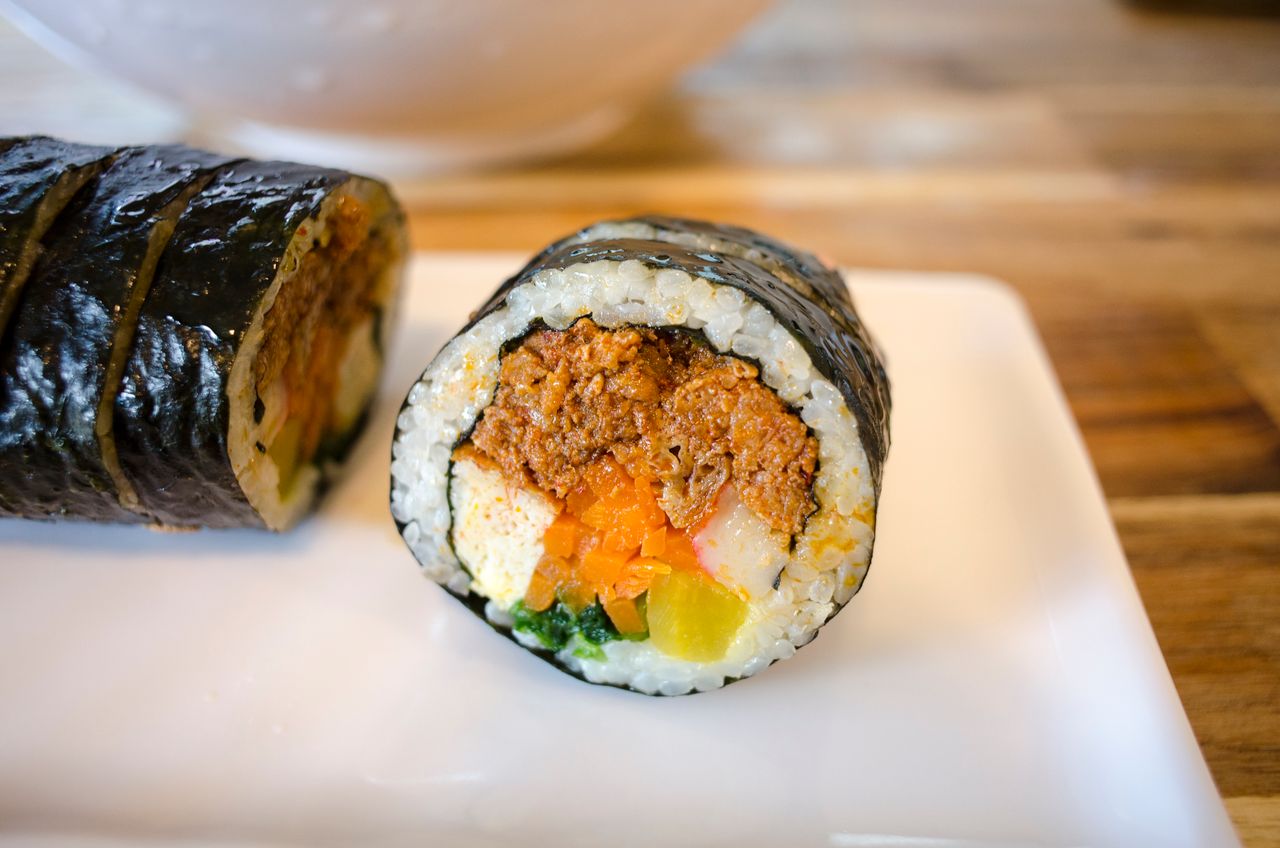
- Minced beef: gimbap with minced beef is delicious.
- Tuna: tuna gimbap is good too.
- Kkoma gimbap (mini gimbap): small rolls with very little filling inside, and still delicious.
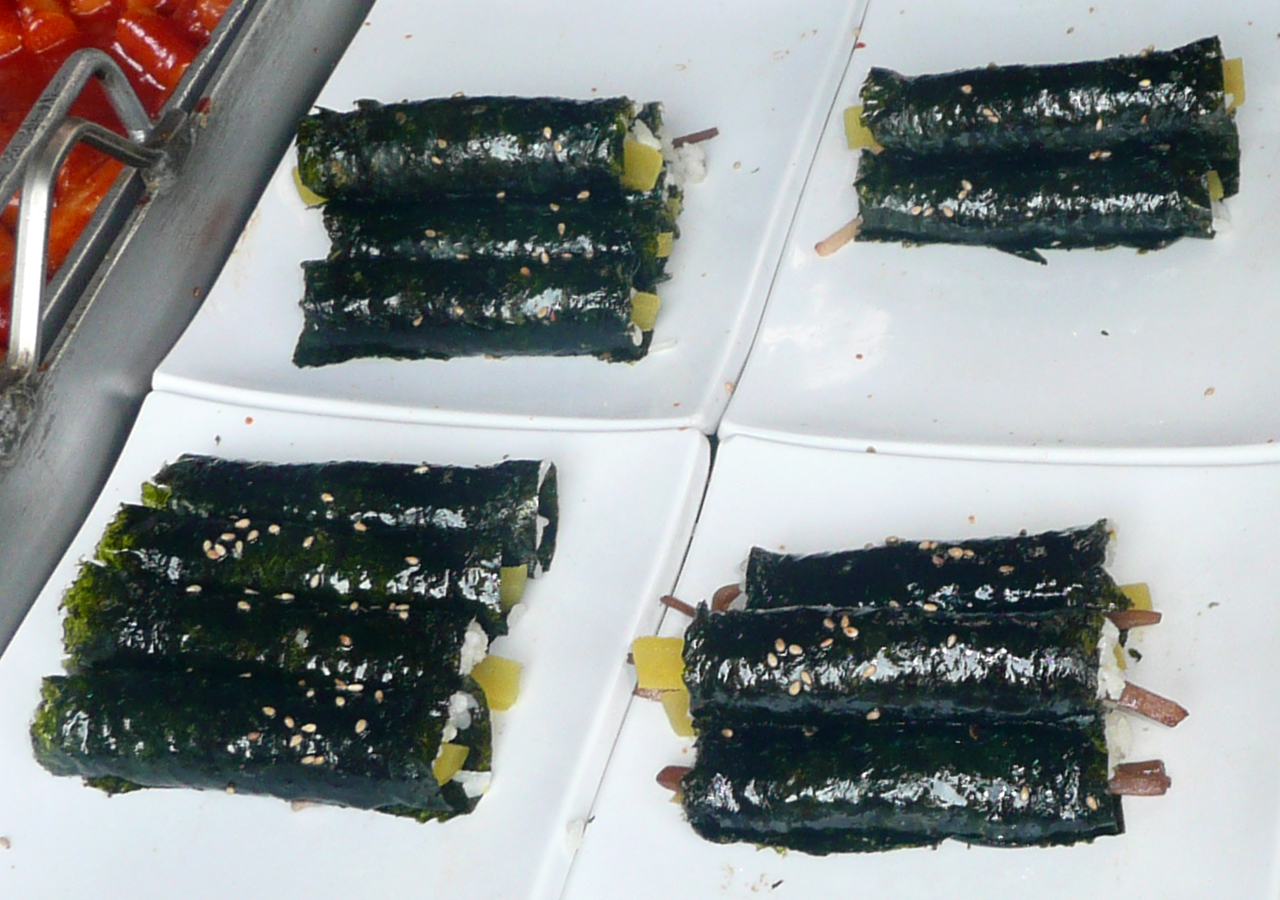
If you’re rolling gimbap for the first time
- Use good gim. All seaweed sheets look the same, but good gim clearly tastes better.
- Don’t let the rice get soggy. Rice that’s too firm isn’t great either, but wet, mushy rice ruins gimbap. It’s the worst thing that can happen to it.
- Pay attention to the danmuji and cucumber. The crunch in every bite comes from these two, and the danmuji matters most. (Many people leave the cucumber out.)
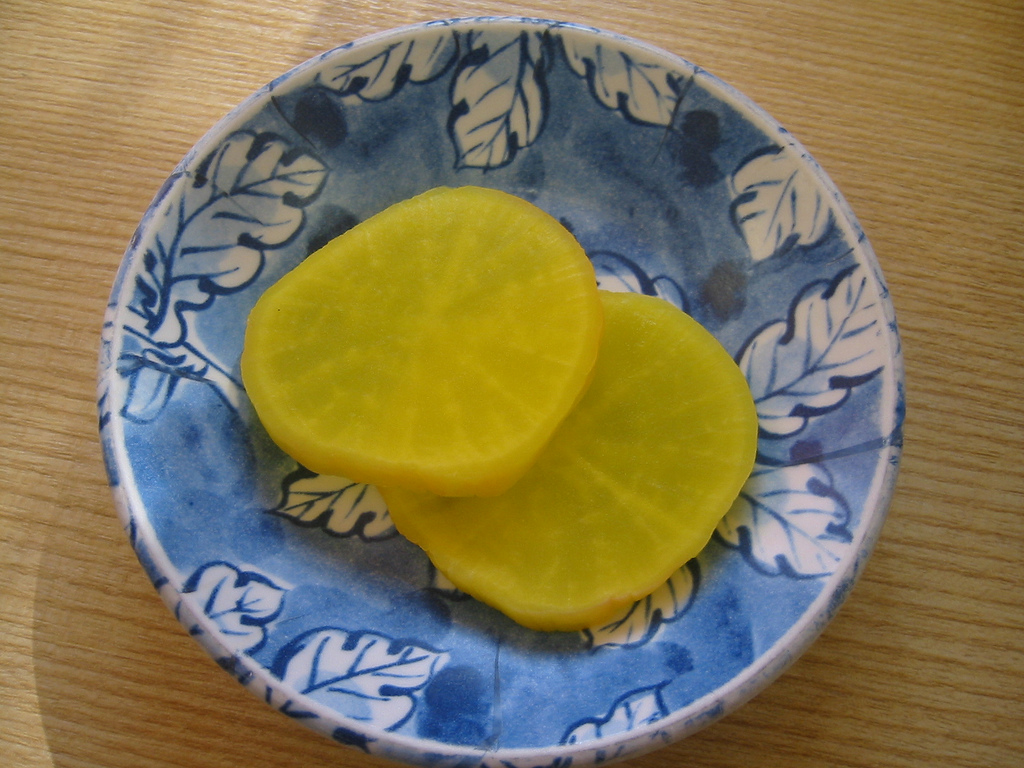
Photo: mdid, CC BY 2.0, via Wikimedia Commons
What went wrong, and how to avoid it
| Problem | What caused it for us | What to do |
|---|---|---|
| Soggy seaweed | Wet fillings | Squeeze the spinach well; don’t overcook the carrot; sear ham and crab sticks |
| Soggy seaweed | Soft, wet rice | Cook the rice firm |
| Roll splits on the side | Too many fillings or too much rice | Spread the rice thin and don’t overfill |
| Slices crushed or messy | Dull knife, slices too thin | Sharp blade, oiled or wet, wiped often |