My Mother's Kimchi Fried Rice (Kimchi Bokkeumbap), and Why the Kimchi Has to Be Sour
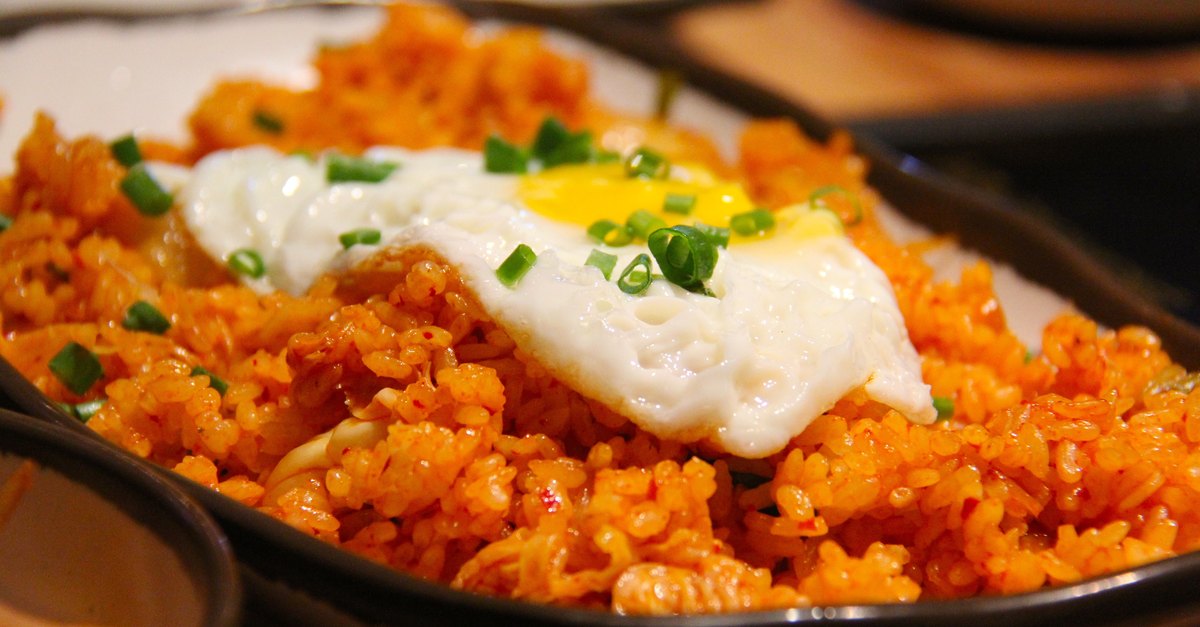
I learned kimchi fried rice from my mother. I ate it a lot as a kid. It’s fairly easy to cook, and you can eat it without any other side dishes, so I think that’s why she made it so often.
These days I make it now and then, usually when there’s a lot of cold rice left over.
Ingredients (2 servings)
- Cooked rice: 2 bowls, about 400 g (about 14 oz)
- Sour, well-fermented kimchi: 200 g (about 7 oz)
- Korean leek or large green onion (daepa): 1/2 stalk, about 40 g
- Onion: 1/4, about 50 g
- Pork belly or Spam: 80 to 100 g (about 3 to 3.5 oz)
- Cooking oil: 2 tablespoons
- Soy sauce: 1 tablespoon
- Sugar: 1 teaspoon
- Gochugaru (Korean chili flakes): 1 teaspoon
- Kimchi juice: 2 tablespoons
- Toasted sesame oil: 1 teaspoon
- Eggs: 2, one per person
- Toasted sesame seeds and crumbled roasted seaweed (gim): as much as you like
The kimchi has to be sour
Kimchi fried rice needs sour kimchi. Fresh kimchi that hasn’t fermented much makes it taste flat. This is the one rule I don’t bend.
Chop it small. The smaller the pieces, the better.
For another dish that depends on well-ripened kimchi, see My Mother’s Kimchi Jjigae (Korean Kimchi Stew) with Well-Ripened Kimchi and Pork Belly.
Cold rice works better
Any cooked rice will do, but with cold rice the grains break down less, and I think it tastes better. Hot rice is also one of the reasons fried rice turns mushy, so if you’re cooking rice fresh, let it cool first.
If you often find yourself with extra rice in the fridge, Best Ways to Use Leftover Rice: 12 Practical Ideas has plenty of other ways to put it to good use.
Prepare the rest
- Pork: pork belly is the best choice. Cut it small.
- Spam: cut it small too.
- Daepa and onion: chop them.
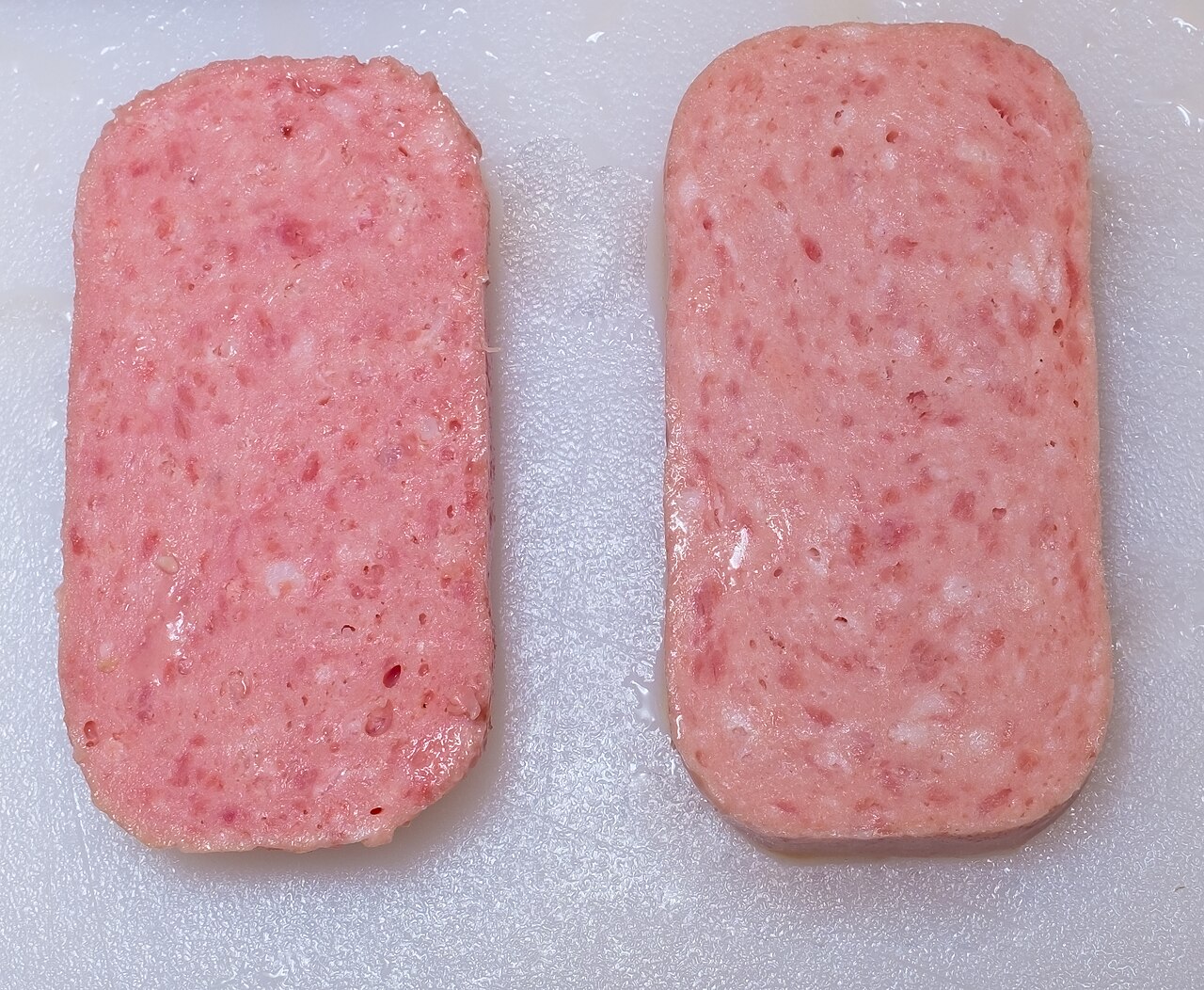
Cook the daepa, then the meat
Put the cooking oil and daepa in the pan and cook over medium-low heat. Once the daepa smells fragrant, add the pork or Spam and stir-fry.
I don’t give times for each step. They change too much with the pan, the heat, and the ingredients, so go by smell and by how the kimchi looks.
Cook the kimchi down
Add the onion and kimchi and stir-fry over medium heat. Add the sugar and keep going until the kimchi is soft and most of its liquid has cooked off. Don’t rush this part. Undercooked kimchi makes the rice taste bland, and leftover liquid makes it soggy.
Sizzle the soy sauce in the pan
Push everything to one side of the pan and pour the soy sauce into the empty space. Let it bubble until it smells toasty, then mix it into the rest. Watch it closely so it doesn’t burn.
Add the rice
Add the rice and stir-fry, breaking up the clumps with a spatula. Press down on it as you go so no lumps are left.
Add the gochugaru and kimchi juice to adjust the color and seasoning. Don’t pour in all the kimchi juice at once. Add it a little at a time.
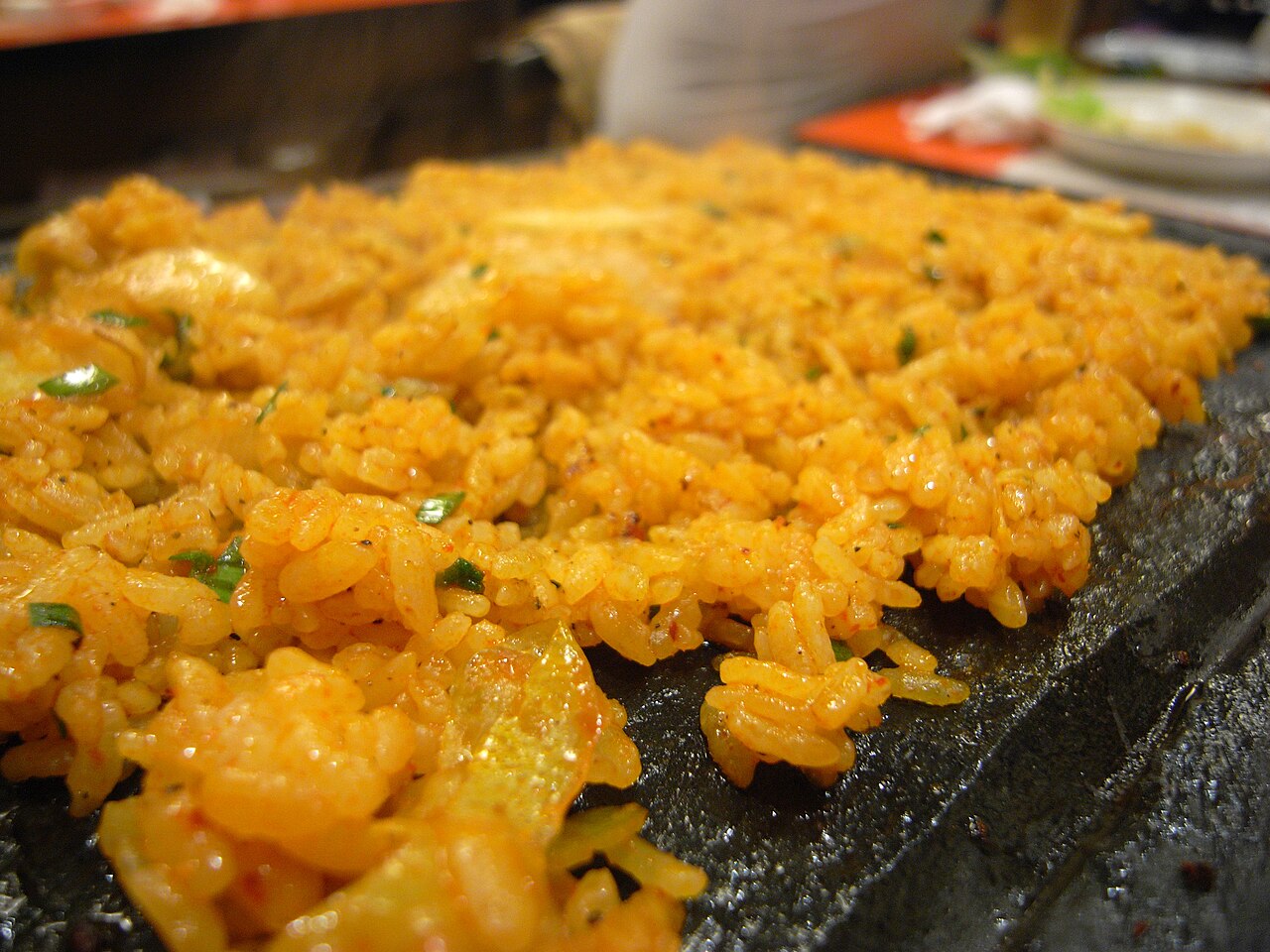
Photo: moso, CC BY 2.0, via Wikimedia Commons
Finish
Turn off the heat and stir in the sesame oil. Top each plate with a fried egg, then scatter gim and sesame seeds over it.
I like the egg runny. A yolk that’s barely cooked is good too.
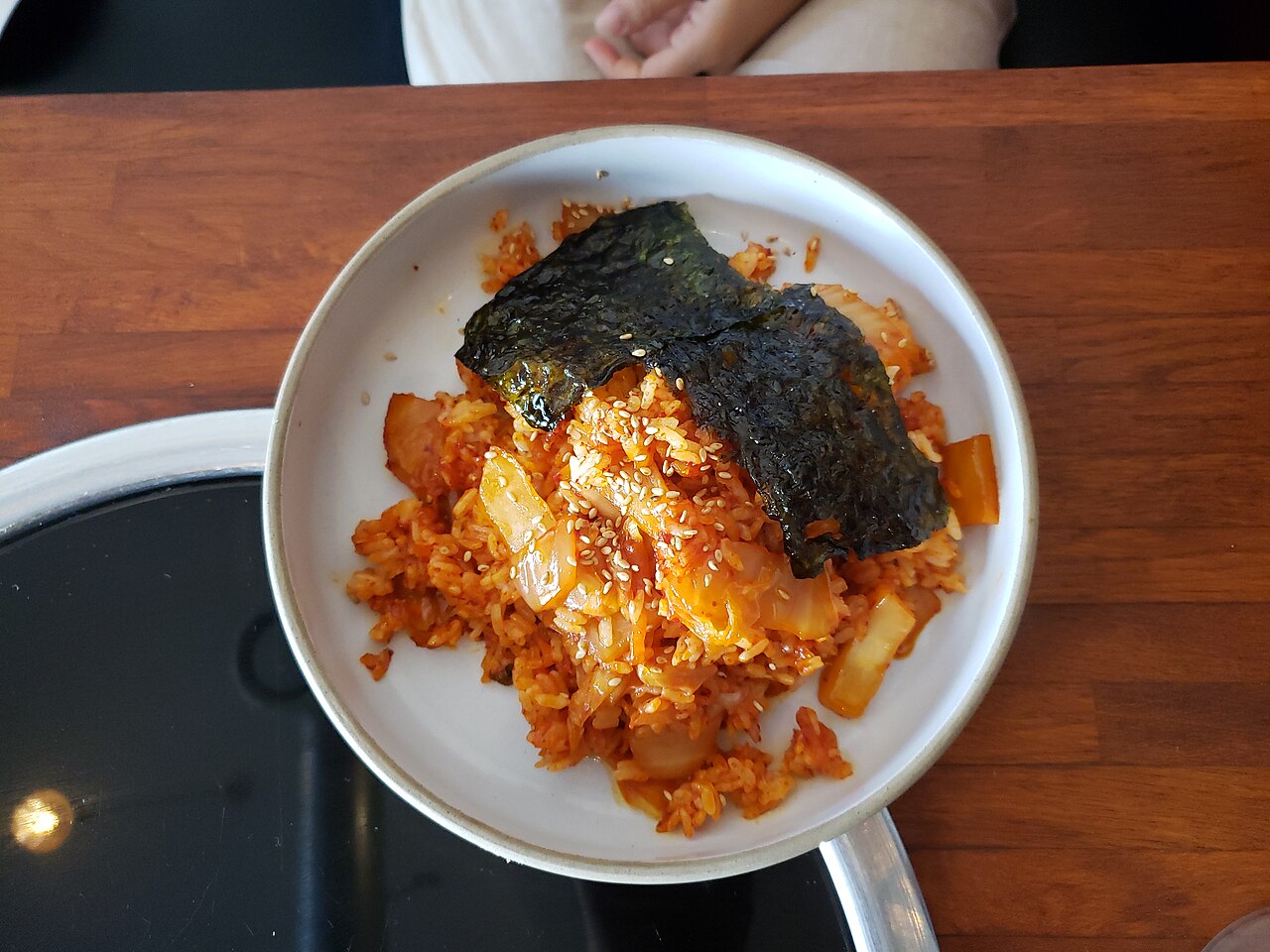
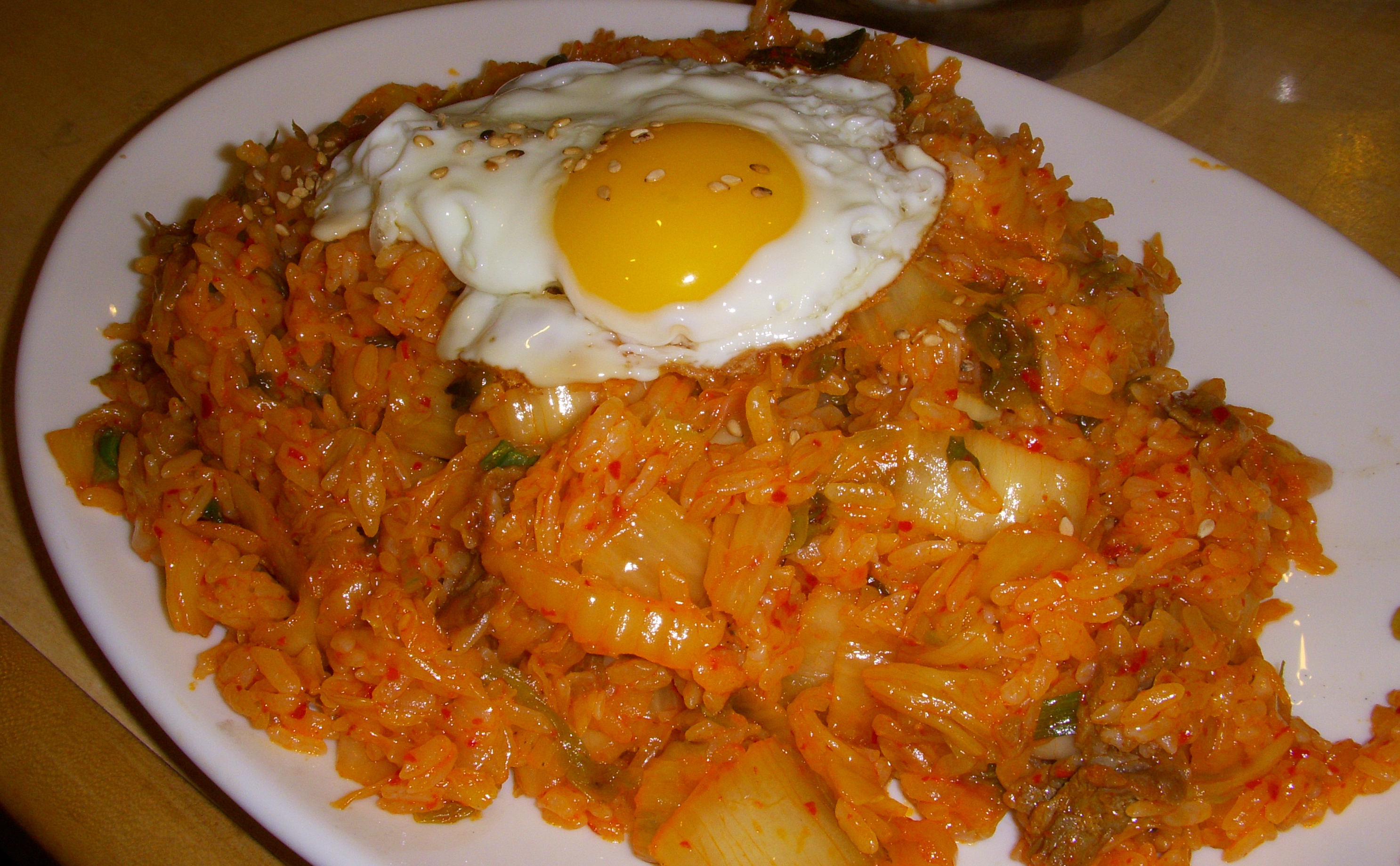
Photo: “Hodori @ 1am” (L. W. Yang on Flickr), CC BY 2.0, via Wikimedia Commons
What I eat with it
A simple jjigae or soup is all it needs. You don’t need any special side dishes.
If there’s any left
I just warm it up in the microwave and eat it as it is. Put leftovers in the fridge once they’ve cooled, eat them within 3 to 4 days, and heat them until they’re steaming hot all the way through.
Other ways to make it
- Butter: use it instead of the cooking oil, or together with it, right at the start.
- Seafood: shrimp or squid are good.
- Cheese: add it at the end. Any cheese that melts well works.
- Bacon instead of pork or Spam.
- Omurice: make the kimchi fried rice first. Mix eggs with a little milk, cook them into a thin sheet, and cover or wrap the rice with it. The soft egg tones down the sourness of the kimchi.
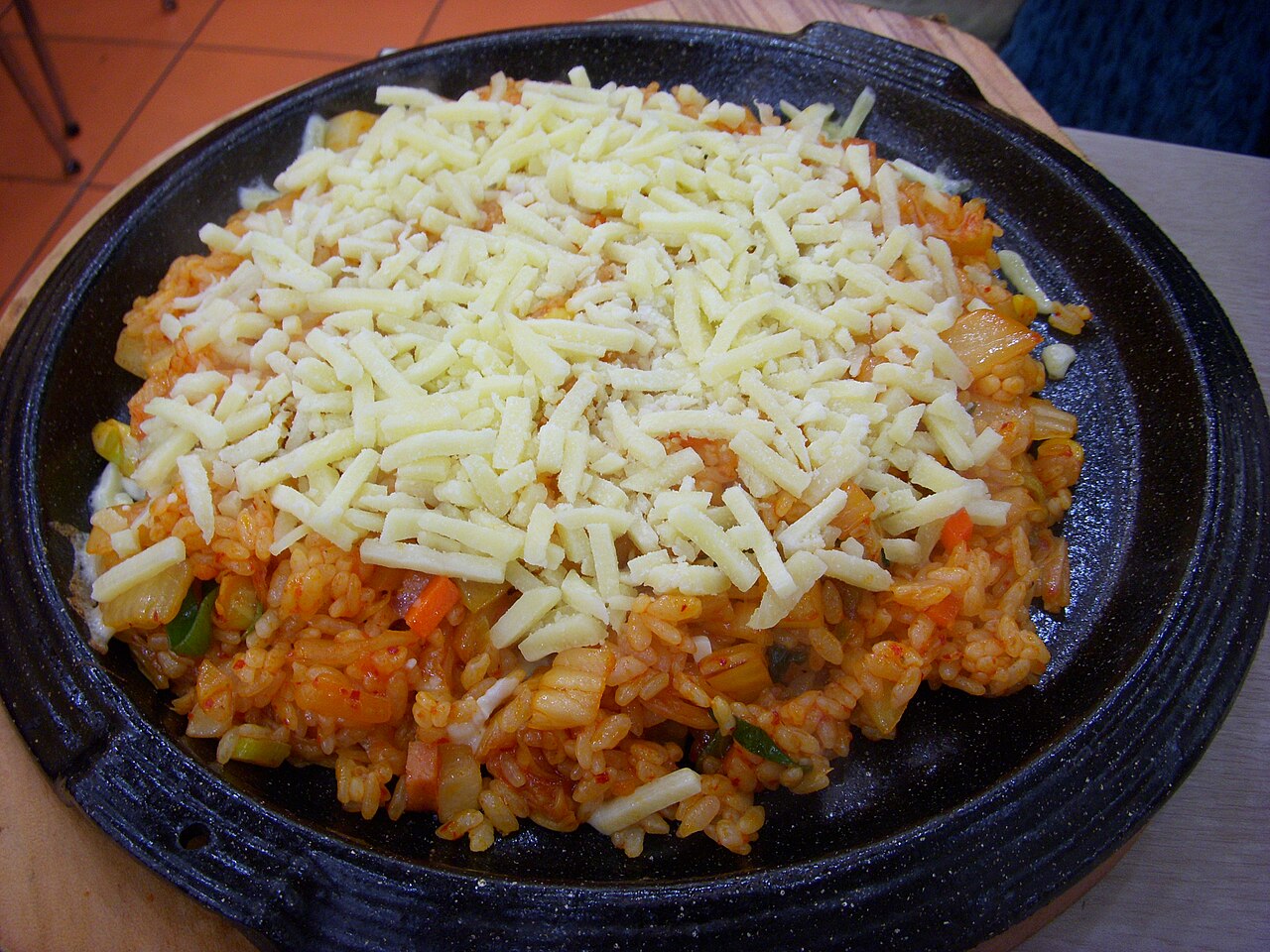
Photo: L. W. Yang, CC BY 2.0, via Wikimedia Commons
If you’re making it for the first time
- Use sour kimchi. It’s the most important thing.
- If you can’t find sour kimchi, add a little vinegar or something else sour. I can’t give an amount because it depends on how your kimchi tastes, so add a few drops at a time and taste.
- Try butter. If you didn’t grow up with this dish, it may taste even better to you with butter.
What went wrong, and how to fix it
| Problem | Cause | What to do |
|---|---|---|
| Soggy rice | Too much kimchi juice, or the rice was hot | Cook the kimchi until its liquid is gone, and use cooled rice |
| Bland taste | Kimchi not cooked long enough, or not enough seasoning | Add a little more soy sauce or salt |
| Too sour | Very sour kimchi | Add sugar, 1/2 teaspoon at a time |
| Too salty | Salty kimchi and Spam | Use less soy sauce |
| Rice in clumps | Clumps weren’t broken up after adding the rice | Press and break them up with the spatula as you stir-fry |
| Burnt taste | Soy sauce or seasoning cooked too long over high heat | Cook over medium heat |