My Mother's Kimchi Jjigae (Korean Kimchi Stew) with Well-Ripened Kimchi and Pork Belly
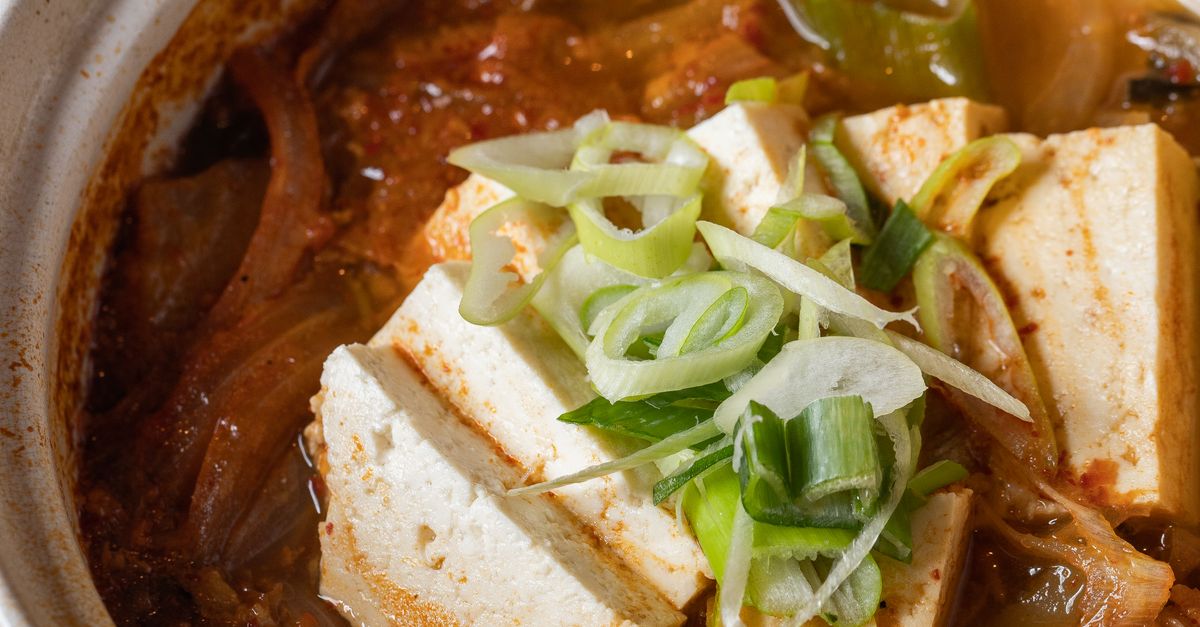
I learned to make kimchi jjigae from my mother, and it’s a stew I make often. It’s one of the most common dishes on a Korean dinner table, and the best version starts with kimchi that many people would think is past its prime.
When she taught me, my mother kept coming back to three things: the broth matters, the pork should be a fatty cut, and too much gochugaru makes the stew heavy and dull. Everything below follows from those.
Ingredients (2 to 3 servings)
- Well-ripened napa cabbage kimchi: 300 g (about 10 oz), roughly a quarter of a head
- Kimchi juice: 100 mL (a scant 1/2 cup)
- Pork belly (samgyeopsal): 200 g (about 7 oz), the fattier the better
- Broth: 600 mL (about 2 1/2 cups) of dried big-eyed herring broth (see below)
- Gochugaru (Korean chili flakes): 1 tablespoon
- Minced garlic: 2 tablespoons
- Soup soy sauce (guk-ganjang): 1/2 tablespoon
- Anchovy fish sauce (myeolchi aekjeot): 1/2 tablespoon
- Sugar: 1/2 tablespoon, optional
- Cooking oil: 1 tablespoon
- Tofu: 1/2 block
- Korean leek or large green onion (daepa): 1/2 stalk
- Onion: 1/2
- Cheongyang chili peppers: 1 to 2, optional
Make the broth
My mother always said the broth is what makes this stew, and I agree: use a real broth, not plain water. It changes the whole taste of the pot.
I make the same broth I use for doenjang jjigae. Simmer 4 to 5 dried big-eyed herring (dipori) in plain water for about 30 minutes, then take them out. A piece of dried kelp (dasima) in the pot with them makes it even better.
Use kimchi that’s very ripe
For this stew, the riper the kimchi, the better. Fresh kimchi doesn’t give the deep, sour flavor kimchi jjigae is known for.
The kimchi juice matters just as much. The more of it goes into the pot, the better the stew tastes.
That same well-fermented kimchi is also the secret to My Mother’s Kimchi Fried Rice (Kimchi Bokkeumbap), and Why the Kimchi Has to Be Sour, another dish where sourness is a feature, not a flaw.
Fry the pork, kimchi, and garlic
I use pork belly, and I look for pieces with plenty of fat, just as my mother told me. The fat is where much of the flavor comes from, and ripe kimchi and fatty pork are, to me, the best pairing there is.
Heat the oil in the pot and add the pork, the kimchi, and the minced garlic. Stir-fry until the outside of the pork is cooked and a little of its fat has melted out.
Always fry the pork and kimchi first, before any liquid goes in. Don’t skip this and just boil everything together.
Add the broth and seasoning
Pour in the kimchi juice and the broth. As it comes up to a boil, add the gochugaru, soup soy sauce, fish sauce, and sugar (if using).
Keep the gochugaru to about a tablespoon. My mother’s warning was that too much makes the stew heavy and dull.
Go easy on the sugar too. It’s optional, and too much makes the stew sweet. The tricky part is that you may not notice it while the stew is hot: the sweetness shows up once it cools.
Add the rest in stages
- Once the stew comes to a boil, let it cook for 15 to 20 minutes.
- Add the daepa, onion, and chili peppers, then cook for another 10 to 15 minutes.
- Add the tofu last and cook for about 5 more minutes.
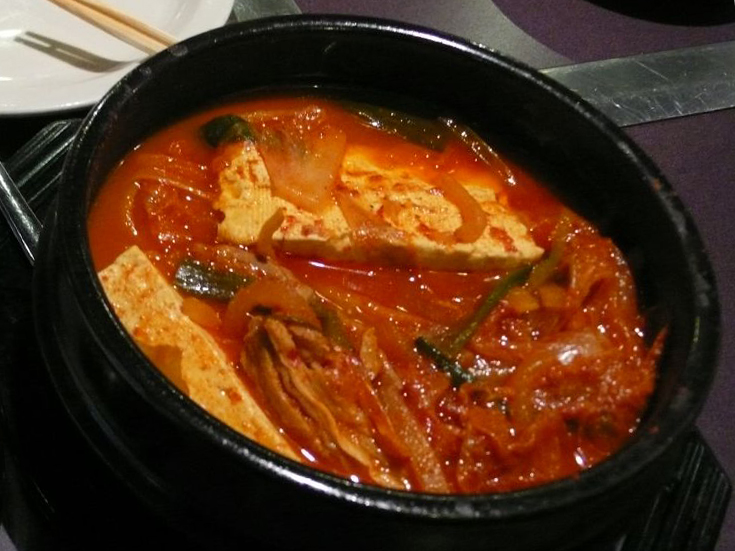
Photo: denver935, CC BY 2.0, via Wikimedia Commons
If you don’t like it sour
I like the sourness of well-ripened kimchi. If you don’t, there are two ways to soften it: rinse the very ripe kimchi lightly in water before using it, or add a little more sugar.
What to eat it with
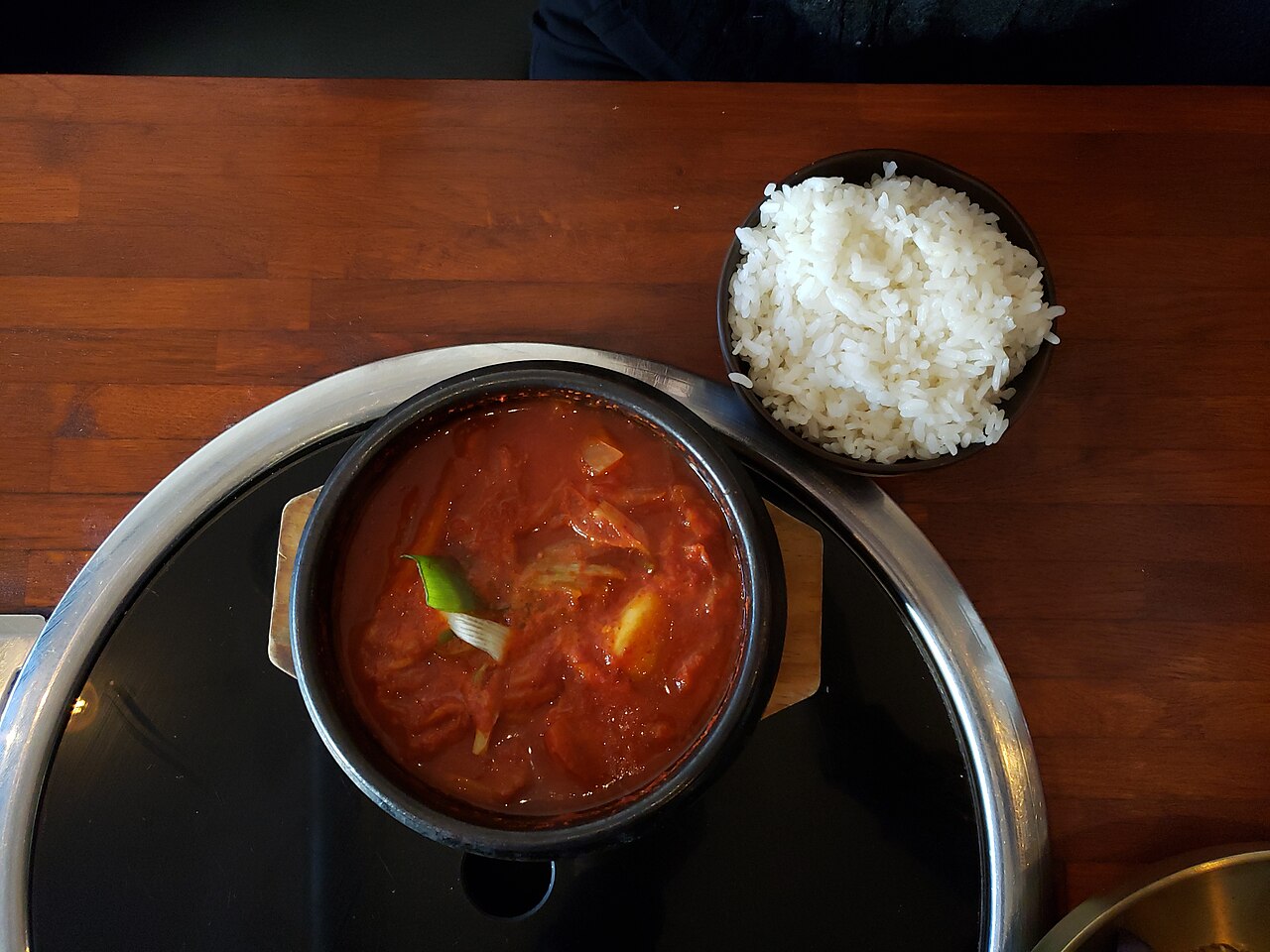
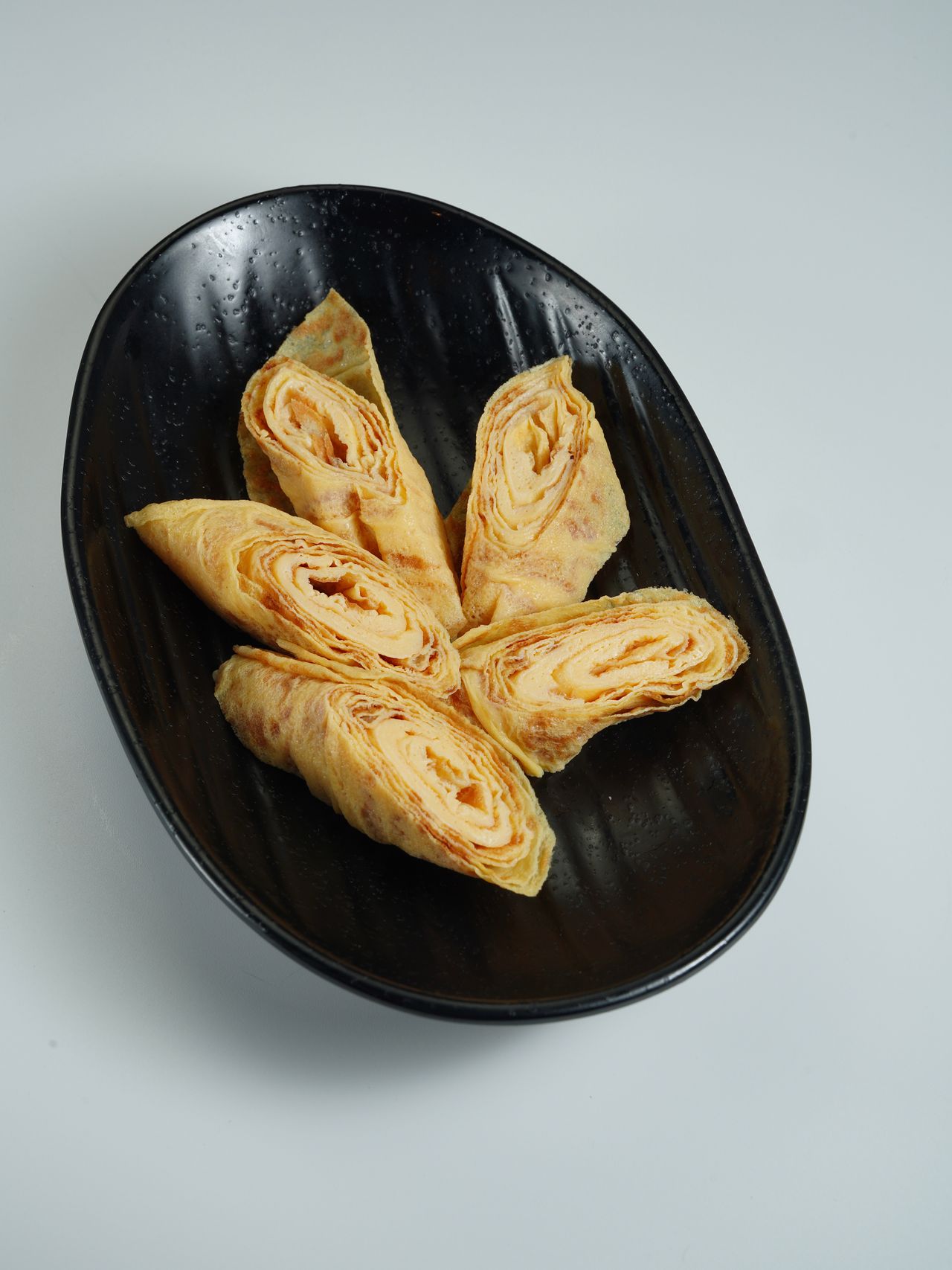
A bowl of hot white rice and a plate of gyeran-mari (Korean rolled omelet) is my favorite meal with kimchi jjigae. Gyeran-mari and kimchi jjigae are, to me, the perfect match.
Leftovers
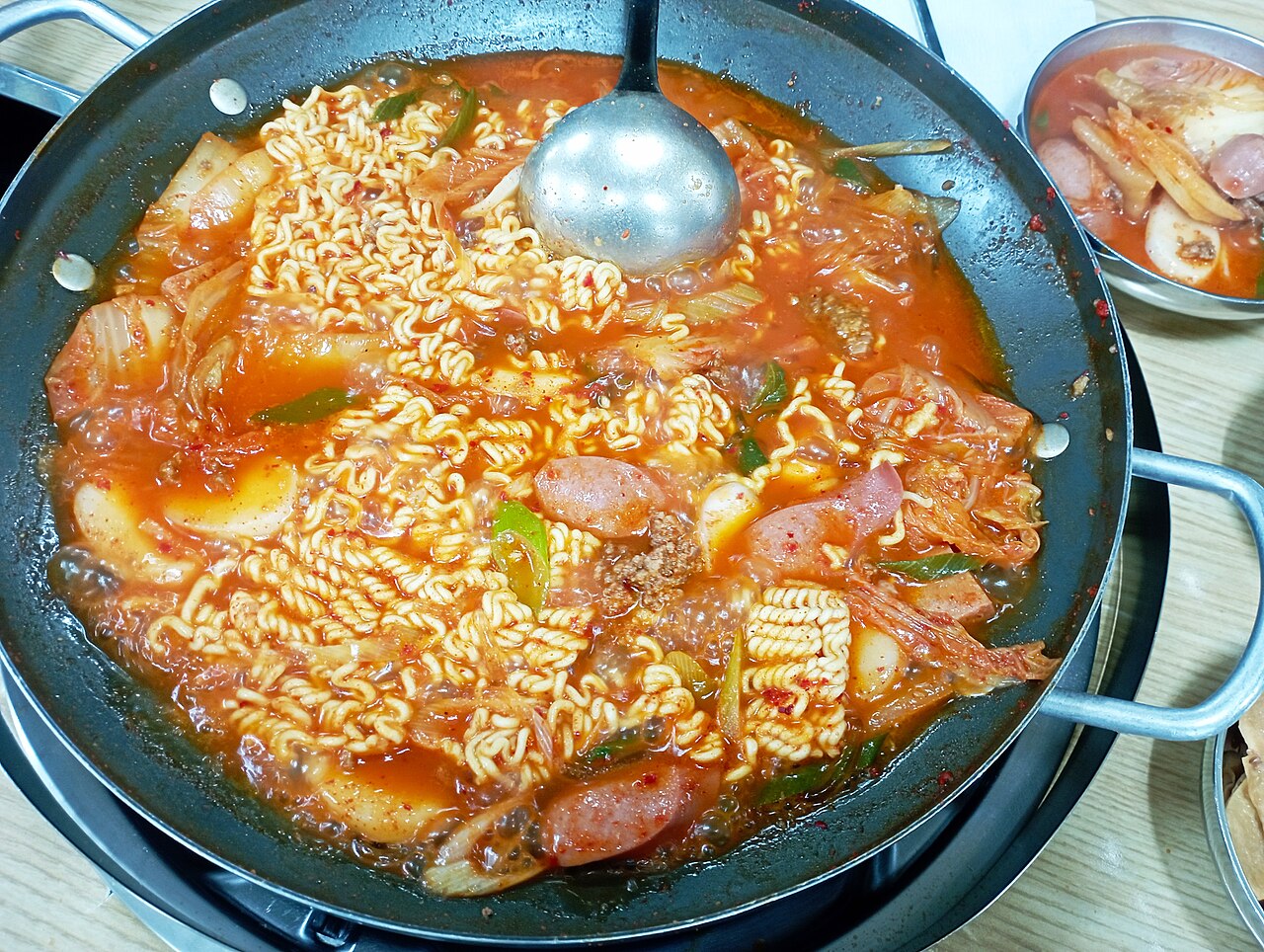
The first time around, I eat it with warm rice. With what’s left, I bring the stew back to a boil and cook a pack of ramyeon noodles in it.
In the fridge, I keep leftover kimchi jjigae for 1 to 2 days.
Other versions I like
Every home makes this stew a little differently. Pork is my favorite, but these work too:
- Canned tuna: kimchi jjigae with tuna is also delicious.
- Spam or ham: it turns the stew into something closer to budae jjigae (army stew).
- Canned saury (kkongchi): a different kind of kimchi jjigae again. Add the liquid from the can as well, not just the fish.
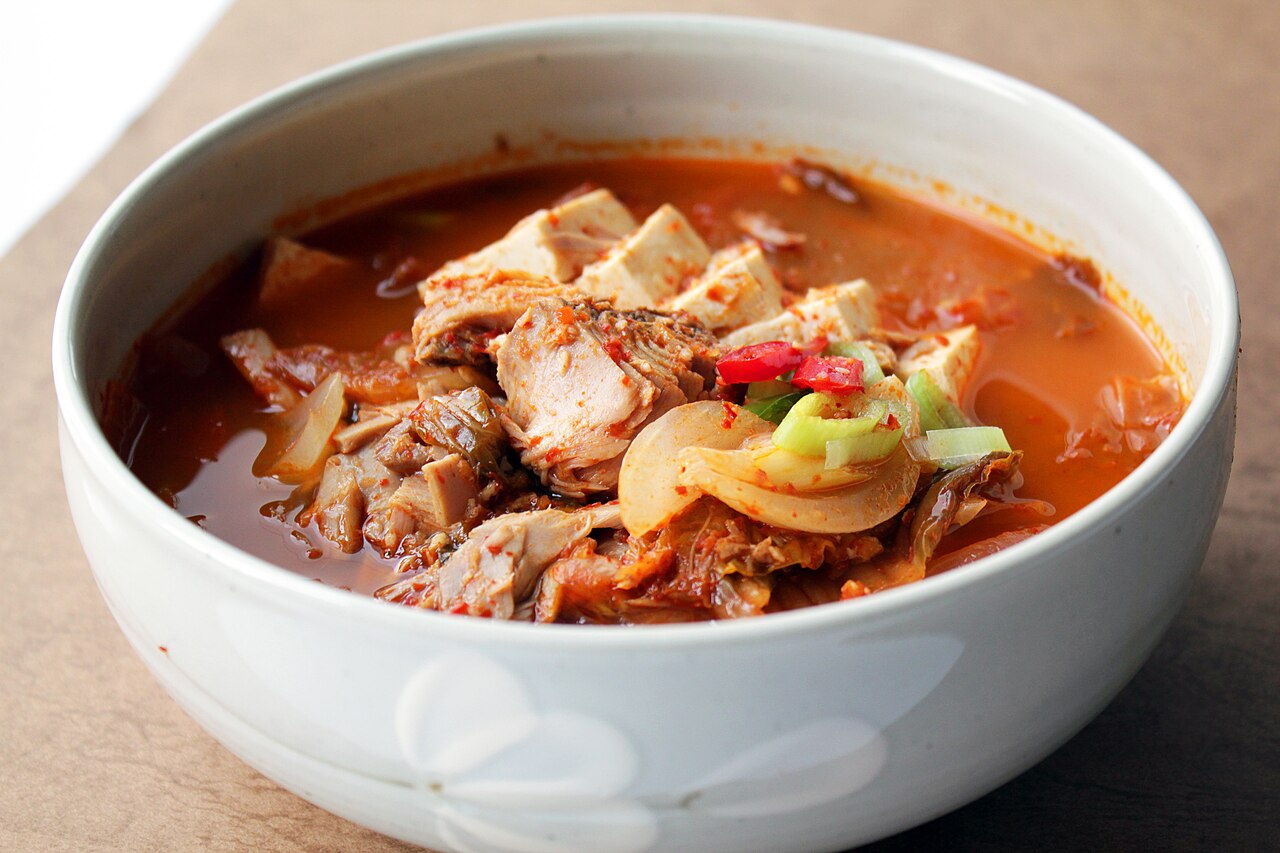
Photo: Chloe Lim, CC BY 2.0, via Wikimedia Commons
If you want another cold-weather stew with the same comforting spirit, try My Mother’s Sundubu Jjigae (Korean Soft Tofu Stew), and Why Big Spoonfuls Matter.
If you’re making it for the first time
- Use ripe kimchi.
- Use pork: ripe kimchi and pork belong together.
- Fry the pork and kimchi first, then add the liquid.
- Use broth, not water. It changes the whole taste.
What went wrong, and how to avoid it
| Problem | What caused it for us | What to do |
|---|---|---|
| Bland overall | Too little kimchi | Use about 300 g of kimchi for 2 to 3 servings, plus its juice |
| Heavy, dull taste | Too much gochugaru | Keep it to about 1 tablespoon |
| Too sweet once it cooled | Too much sugar | Keep it to 1/2 tablespoon, or leave it out |
| Too sour for some people | Very ripe kimchi | Rinse the kimchi lightly, or add a little more sugar |