My Mother's Sundubu Jjigae (Korean Soft Tofu Stew), and Why Big Spoonfuls Matter
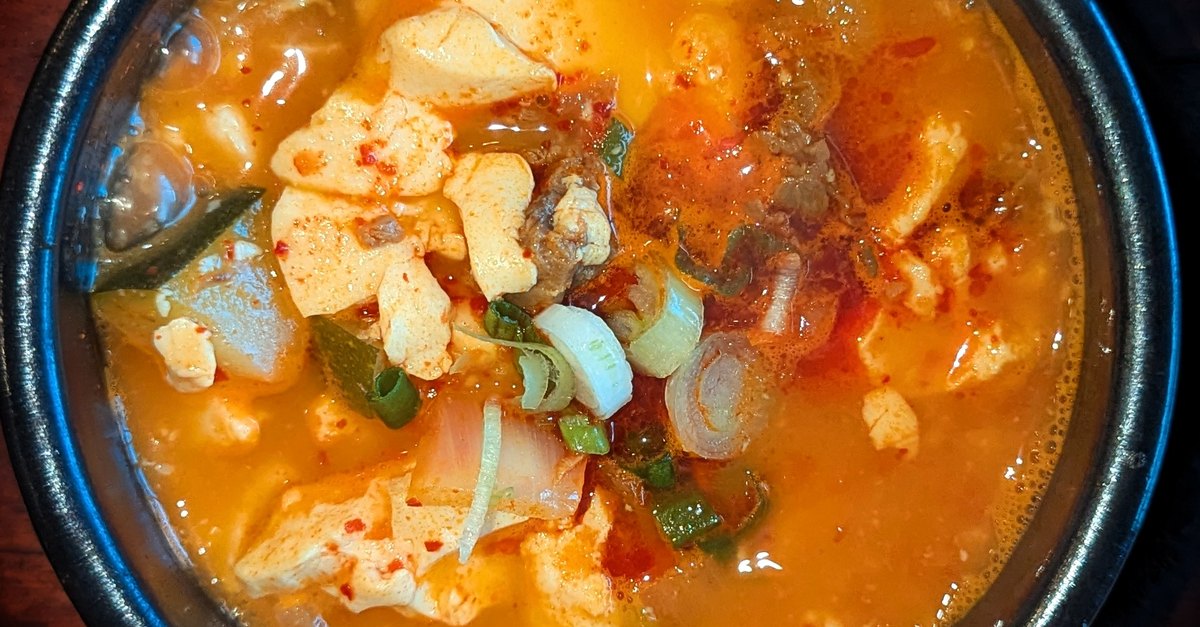
I learned sundubu jjigae from my mother, and it’s a stew I make often. It’s quick, it’s for two, and it rarely leaves anything behind.
When I was growing up, the tofu in it tasted different from house to house. Some families made their own, and even the tofu from the market was made by hand at small shops. Today most of us use packaged soft tofu, and the stew has lost some of that character. That’s why the rest of the pot, the chili oil, the broth, and the vegetables, matters so much.
Ingredients (2 servings)
- Soft tofu (sundubu): 1 pack, 350 to 400 g (about 12 to 14 oz)
- Ground pork: 100 g (about 3.5 oz), or clams: 150 g (about 5 oz)
- Korean leek or large green onion (daepa): 1/2 stalk
- Onion: 1/4
- Korean zucchini (aehobak): 1/4
- Minced garlic: 1 tablespoon
- Gochugaru (Korean chili flakes): 1 to 1 1/2 tablespoons
- Soup soy sauce (guk-ganjang): 1 tablespoon
- Anchovy fish sauce (myeolchi aekjeot): 1/2 tablespoon
- Cooking oil: 1 1/2 tablespoons
- Toasted sesame oil: 1/2 tablespoon
- Anchovy broth or water: 300 mL (about 1 1/4 cups)
- Egg: 1
- Salt and black pepper: a little
Choosing the tofu
Don’t buy the softest tofu you can find. Very soft sundubu falls apart easily in the pot, and the texture of the stew suffers a lot. Pick one that’s soft but still holds its shape when you scoop it.
Make the broth
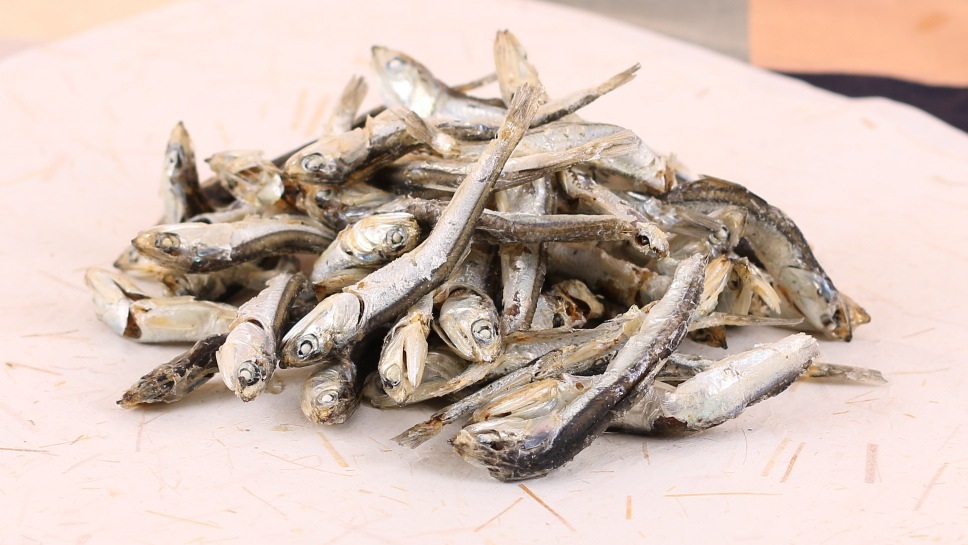
If you’re not adding seafood, the broth is what carries the stew. I make it the same way I make it for doenjang jjigae: simmer dried anchovies or dried big-eyed herring (dipori) in plain water for about 30 minutes, then take them out.
Be generous with the fish. The more you put in, the richer the broth.
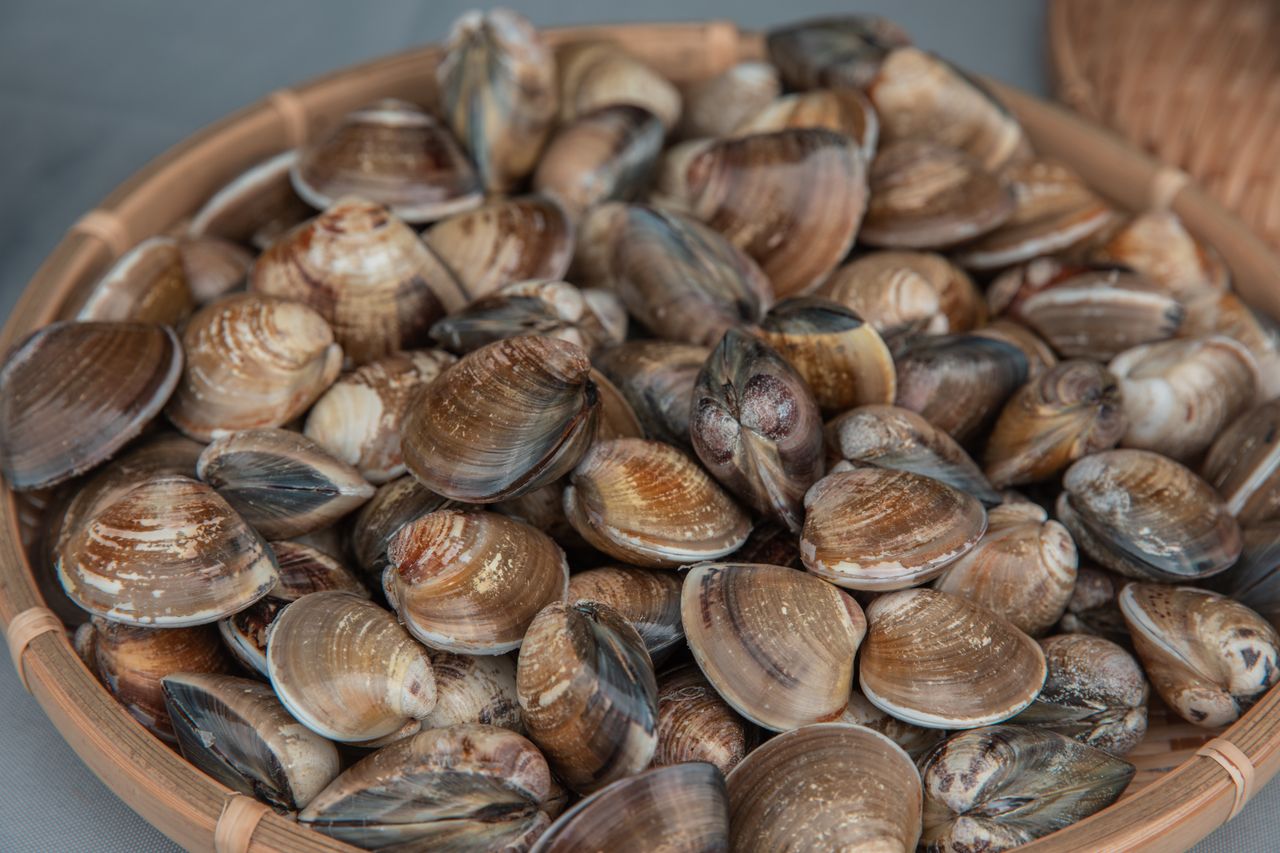
If you use clams, they do much of that work themselves. The clams act as the broth.
If you use clams, purge them first
Clams that haven’t been purged properly leave sand between your teeth, and that ruins the whole bowl. Here’s how I do it:
- Make salt water with cold water and salt, about 30 g of salt per liter (roughly 1 oz per quart).
- Put the clams in it.
- Leave them in the fridge for 2 to 4 hours.
Make the chili oil
Cut the daepa and set a little aside, finely chopped, for the top of the stew.
Heat the cooking oil and sesame oil in the pot. Add the rest of the daepa, the minced garlic, and the gochugaru all together, and fry for about 30 seconds. It’s so short that there’s no need to add them one at a time.
Watch the heat here. If the gochugaru or garlic burns, the whole stew tastes bitter, and there’s no fixing it after that. And don’t add more gochugaru than the recipe says: too much makes the stew taste heavy and dull.
Cook the pork and vegetables
Add the ground pork, onion, and zucchini, and stir-fry for about 5 minutes.
The vegetables are not filler. Zucchini and onion do a lot for the flavor of this stew, so don’t leave them out.
Add the broth and seasoning
Pour in the broth, add the soup soy sauce and fish sauce, and let it boil for about 10 minutes.
If you’re using clams instead of pork, add them now, as the broth goes in and starts to boil.
Add the tofu in big spoonfuls
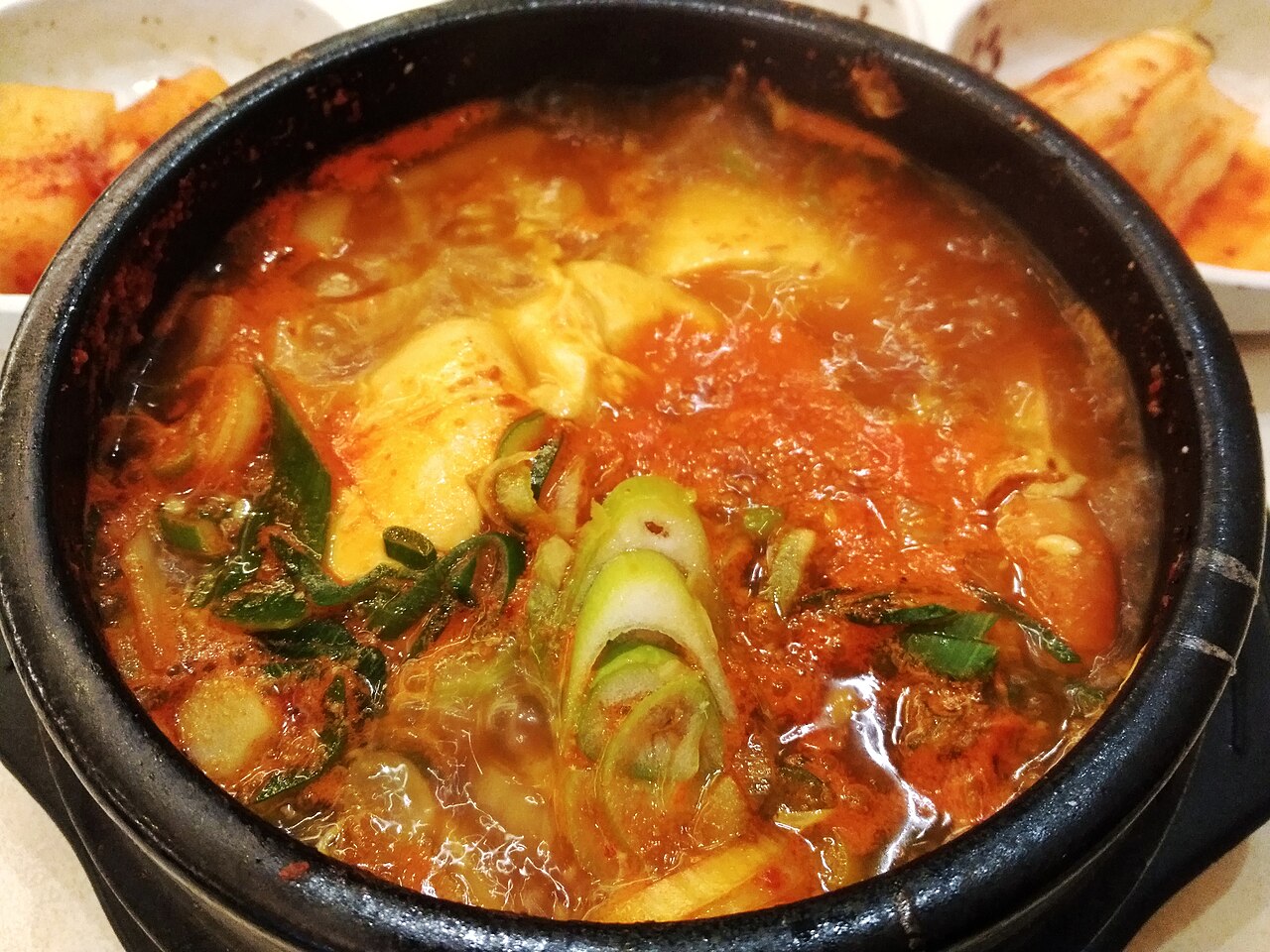
Scoop the tofu into the pot in large spoonfuls. It breaks up as it cooks anyway, so if you start with small pieces, you end up with crumbs.
Then leave it alone. Let it boil for about 5 minutes without stirring. The two ways I’ve broken the tofu are adding it too early and stirring after it went in.
Finish with an egg
Crack the egg into the pot at the very end, whole, without beating it, and let it cook for another 1 to 2 minutes.
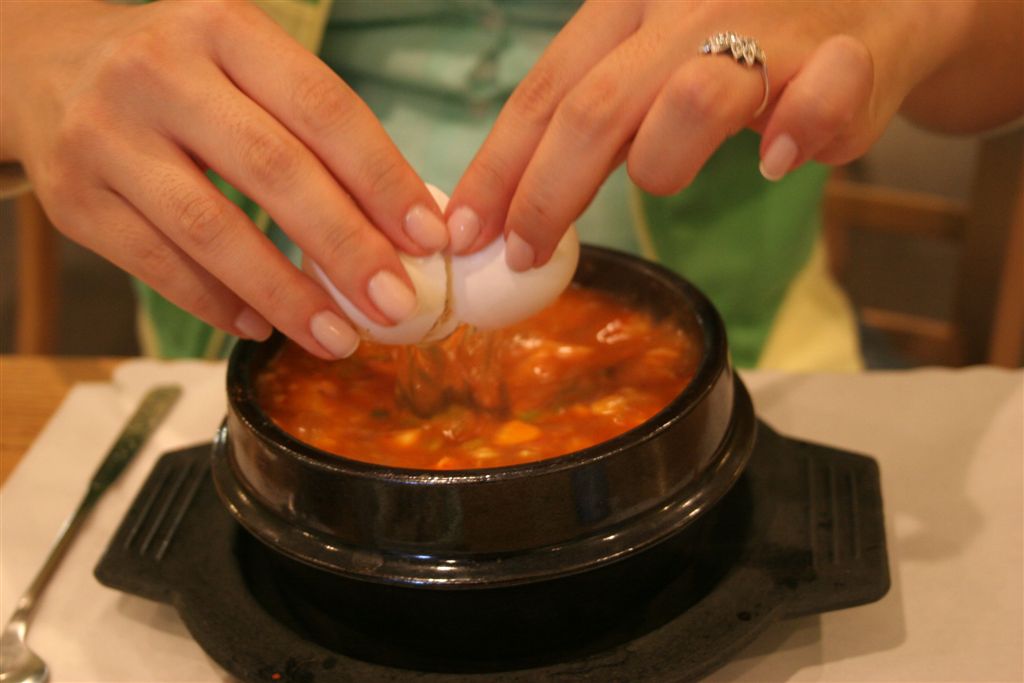
Photo: “by :/” (angelltsang on Flickr), CC BY 2.0, via Wikimedia Commons
Taste it and add salt only at the end, if it needs any. I add a little black pepper without measuring. Scatter the chopped daepa you set aside over the top.
A ttukbaegi (Korean earthenware pot) is nice to have if you own one. It holds the heat for a long time, so the stew stays hot at the table.
How I eat it
I like to put rice right into the stew and eat it that way. It’s very hot, so let it cool a little and eat slowly.
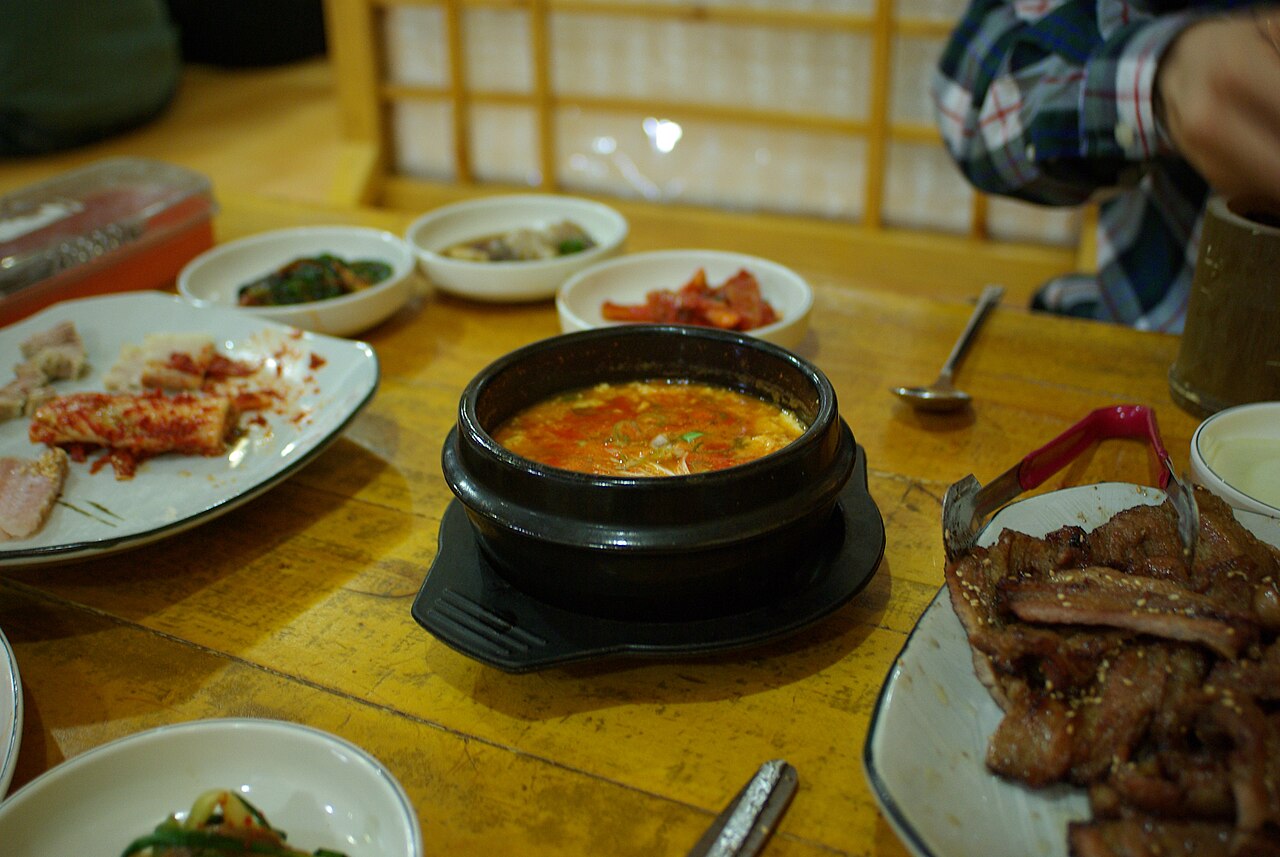
Photo: egg (Hong, Yun Seon), CC BY 2.0, via Wikimedia Commons
If there’s any left
Sundubu jjigae isn’t something I make in big batches, so there’s almost never any left over. If there is, I add rice and boil it again. It’s delicious that way.
Try not to add water, even if it looks a little dry. Water makes it bland.
Other ways people make it
Many homes put in clams or plenty of other seafood. I’ve also found that seafood and pork together taste great in the same pot.
If you like this family of spicy stews, my mother also makes My Mother’s Kimchi Jjigae (Korean Kimchi Stew) with Well-Ripened Kimchi and Pork Belly, built around well-ripened kimchi and pork belly instead of soft tofu.
If you’re making it for the first time
- Pick tofu that’s not too soft.
- If you’re not using seafood, make a real broth. With seafood, the seafood becomes the broth.
- Don’t skip the zucchini and onion.
- Add the tofu in big spoonfuls, near the end, and don’t stir.
For another comforting, savory stew in the same spirit, see My Mother’s Doenjang Jjigae (Korean Soybean Paste Stew) with Rice Water and River Snails, which leans on fermented soybean paste rather than gochugaru for its depth.
What went wrong, and how to avoid it
| Problem | What caused it for us | What to do |
|---|---|---|
| Bitter taste | Gochugaru or garlic burned in the oil | Fry them only about 30 seconds, and keep the heat in check |
| Heavy, dull taste | Too much gochugaru | Keep it to 1 to 1 1/2 tablespoons for 2 servings |
| Tofu turned to crumbs | Added too early, or stirred after adding | Add it in big spoonfuls for the last 5 minutes, and leave it alone |
| Sand between the teeth | Clams not purged long enough | Salt water (about 30 g per liter), in the fridge for 2 to 4 hours |