My Mother's Japchae: Soak the Noodles, Boil Them Clear, Then Simmer Them in the Sauce
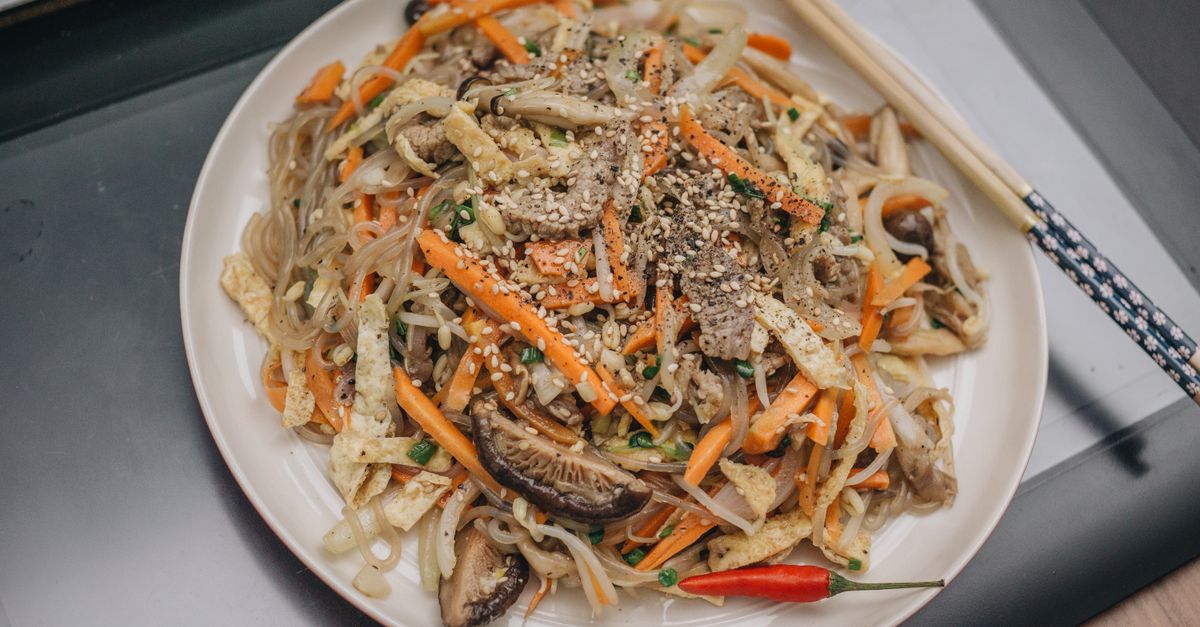
I learned japchae from my mother. When I was a kid, we ate it on holidays and on family birthdays.
These days I make it for the holidays, or now and then when guests are coming or it’s a special day.
Ingredients (4 servings)
Noodles and sauce
- Dangmyeon (Korean sweet potato glass noodles): 250 g (about 9 oz)
- Soy sauce (jin-ganjang, regular Korean soy sauce): 4 tablespoons (60 ml)
- Sugar: 2 tablespoons (about 25 g)
- Water, or the water you soaked the shiitake in: 100 ml (a little under 1/2 cup)
- Minced garlic: 1 teaspoon
- Toasted sesame oil: 1 tablespoon
- Black pepper: a little
- Toasted sesame seeds: 1 tablespoon
Beef
- Beef: 150 g (about 5 oz)
- Soy sauce: 1 tablespoon
- Sugar: 1 teaspoon
- Minced garlic: 1 teaspoon
- Mirim (cooking rice wine): 1 tablespoon
- Toasted sesame oil: 1 teaspoon
- Black pepper: 2 pinches
- Chopped green onion (daepa): 1 tablespoon, optional
Shiitake
- Shiitake mushrooms: 3, fresh or dried
- Soy sauce: 1 teaspoon
- Sugar: 1/2 teaspoon
- Minced garlic: 1/2 teaspoon
- Toasted sesame oil: 1 teaspoon
- Black pepper: a little
Vegetables
- Spinach: 150 g (about 5 oz), plus a little salt and 1 teaspoon toasted sesame oil
- Onion: 1, about 180 g
- Carrot: 1/2, about 80 g
- Bell pepper: 1/2, optional
- Salt: 2 to 3 pinches
- Cooking oil
On top
- Egg strips (jidan)
- Toasted sesame seeds, and silgochu (thin threads of dried red chili) if you have them
Soak the noodles first
I don’t use any special noodles. Ordinary dangmyeon is fine.
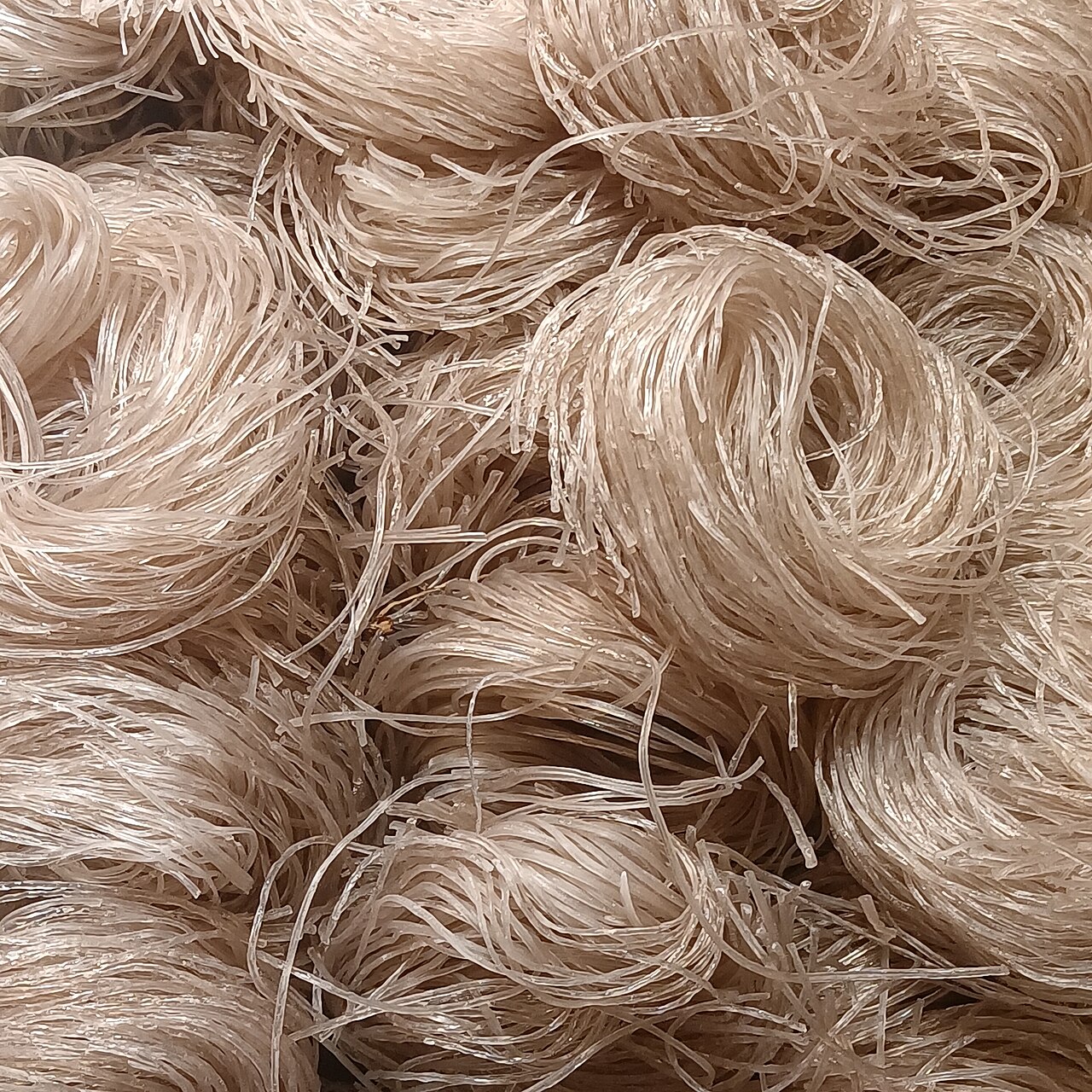
Soak the noodles in cold water for about 30 minutes. Thick noodles may need about 40 minutes. Drain them well.
Boil until they turn clear
Boil the soaked noodles for about 10 minutes. When the noodles turn clear, they’re done, so don’t go strictly by the clock. Watch the noodles instead.
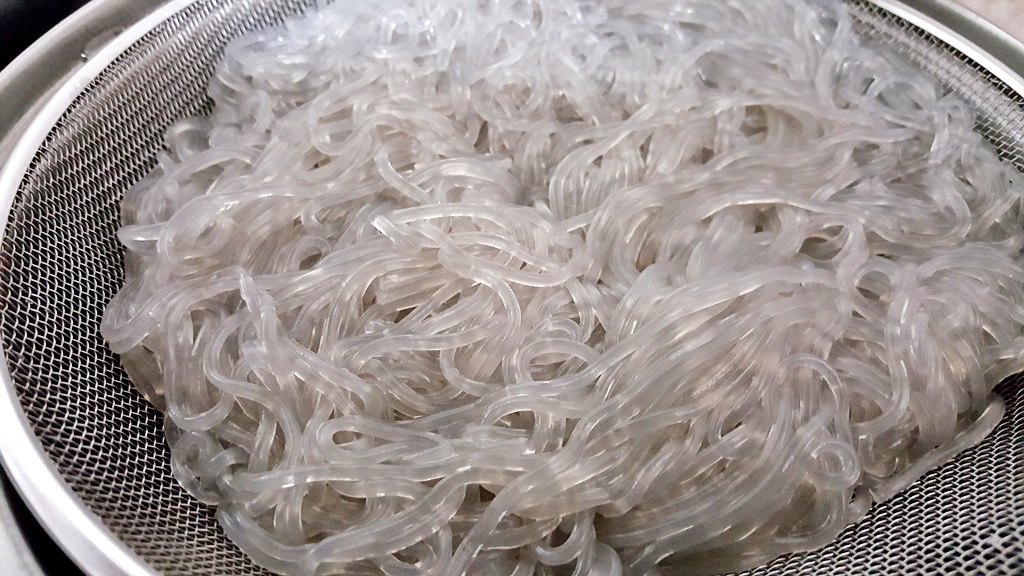
Photo: 토리랑, CC BY 4.0, via Wikimedia Commons
Rinse them lightly in cold water and let them drain in a strainer. Then cut them with scissors into pieces about a hand span long.
Spinach
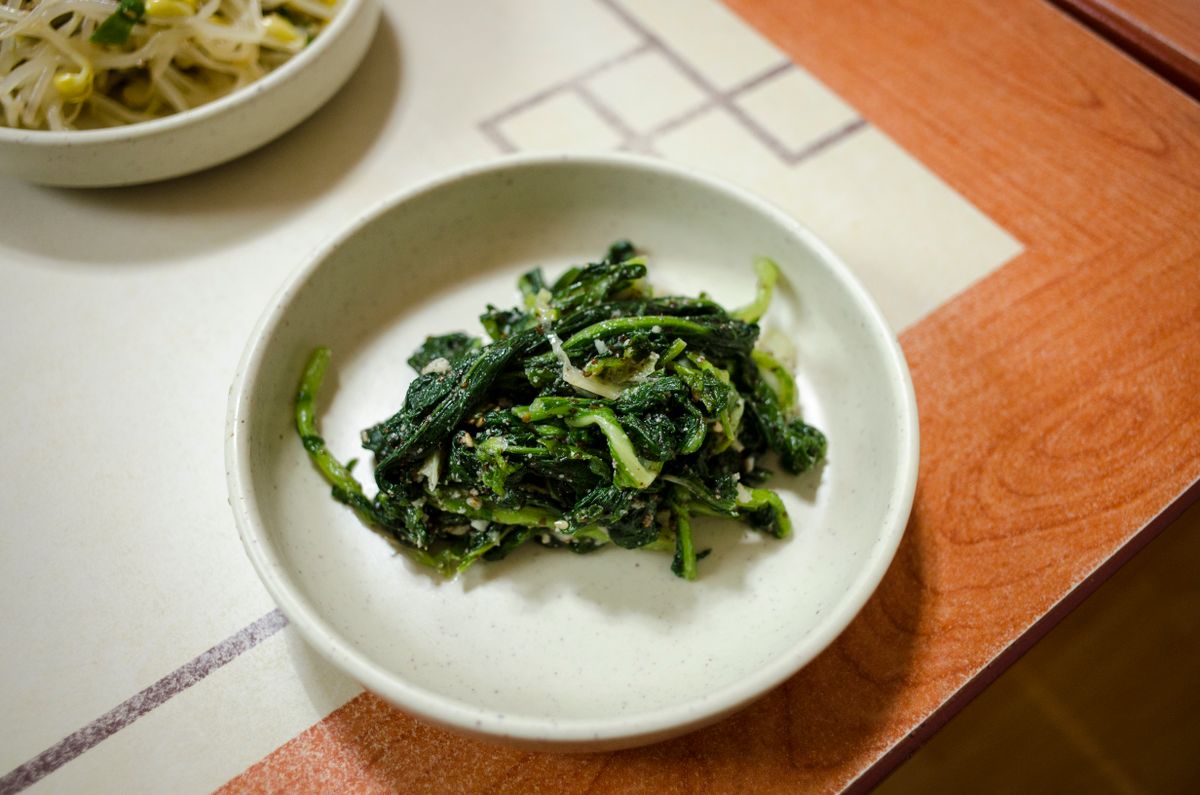
Blanch the spinach in boiling water with a little salt for 30 to 40 seconds. Rinse it in cold water and squeeze out the water firmly. Toss it with a little salt and 1 teaspoon of sesame oil.
Shiitake
Shiitake are my first choice. If you don’t have them, wood ear mushrooms or oyster mushrooms work.
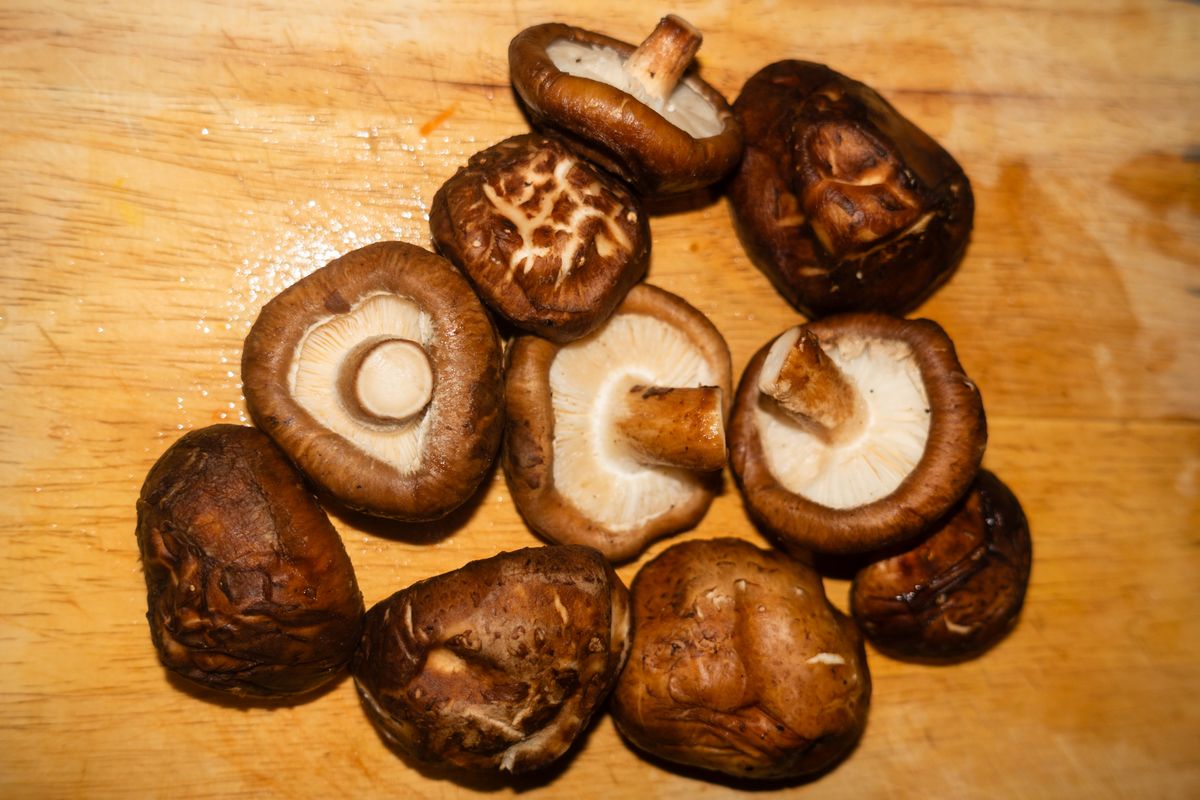
I use fresh or dried shiitake.
- Fresh: brush off any dirt or give them a quick rinse, then dry them.
- Dried: soak them in cold water in the fridge for 4 to 6 hours. Thick ones can soak overnight. When they’re soft all the way through, press them gently with your hand to squeeze out the water. Keep the soaking water for the noodle sauce.
Cut off the tough stems and slice the caps into thin strips, 2 to 3 mm thick. Mix in the soy sauce, sugar, garlic, sesame oil, and pepper, and let them sit for about 5 minutes.
Heat 1 teaspoon of cooking oil in a pan over medium heat and add the mushrooms. Cook fresh shiitake for 2 to 3 minutes and soaked dried ones for 3 to 4 minutes, until they’re soft and most of their liquid has cooked off.
You can season and cook the mushrooms together with the beef, and that tastes good too. I cook them separately, because it’s easier to control the moisture and the mushrooms keep their texture.
Beef
For japchae I use beef.
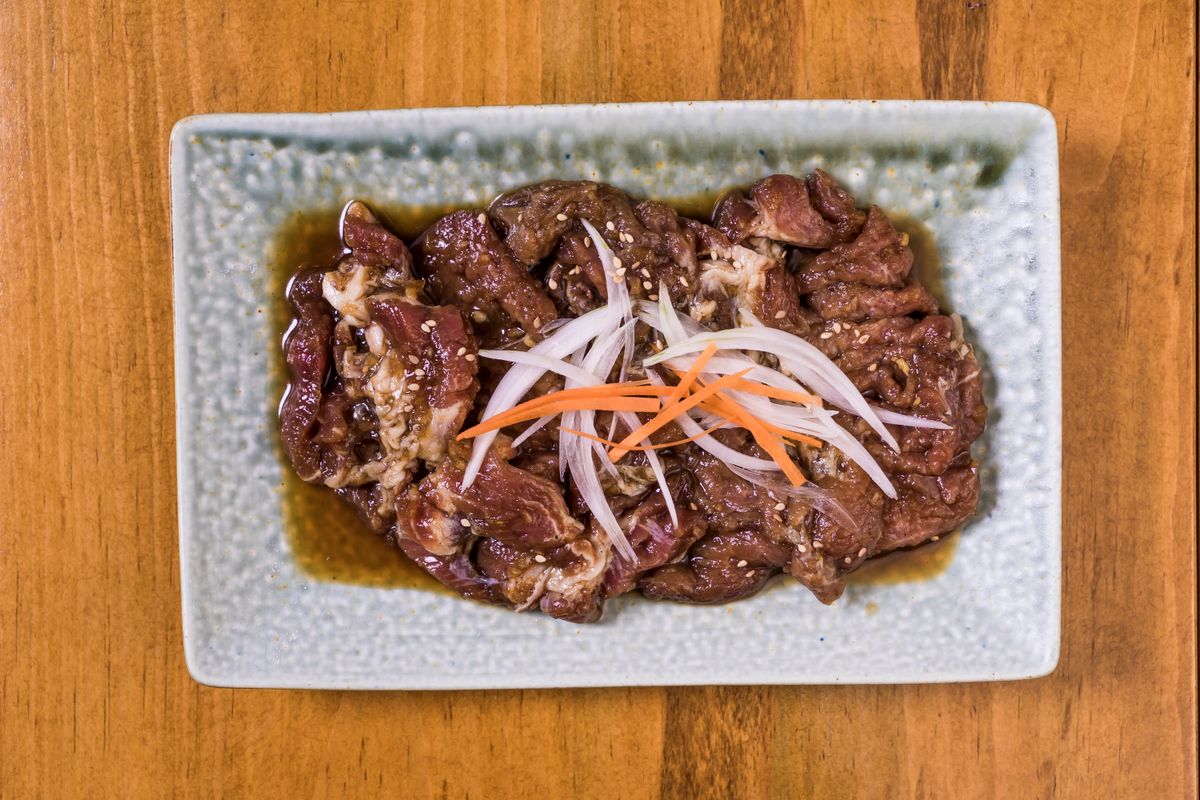
Cut the beef into thin strips, about 0.3 cm (1/8 inch) thick and 4 to 5 cm (1 1/2 to 2 inches) long. Cutting across the grain keeps it from getting tough.
Mix in the soy sauce, sugar, garlic, mirim, sesame oil, pepper, and green onion, and toss until every piece is coated.
Spread the beef out in a hot pan and stir-fry for about 2 to 4 minutes, until it’s cooked through. The time depends on how thick the pieces are and how hot your pan is.
Carrot, then onion, then bell pepper
Cut the vegetables into thin strips and cook them in order, in the same pan.
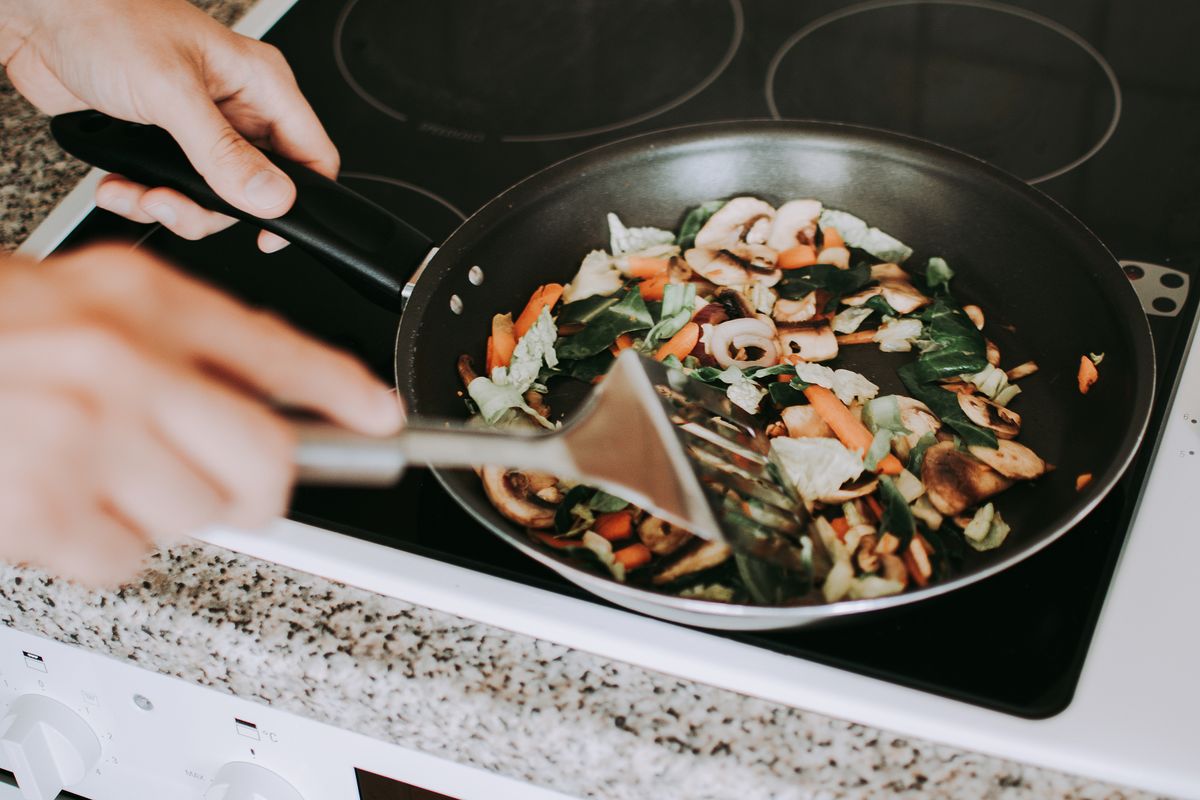
- Carrot first, over medium heat, for 1 1/2 minutes.
- Add the onion and cook them together for 2 minutes.
- Add the bell pepper and cook for about 1 more minute.
- Season lightly with 2 to 3 pinches of salt and turn off the heat.
Simmer the noodles in the sauce
In a pan, bring the soy sauce, sugar, water (or shiitake soaking water), and garlic to a boil.
Add the noodles and simmer over medium heat for about 5 to 8 minutes, turning them now and then so they cook evenly. Then stir in the sesame oil.
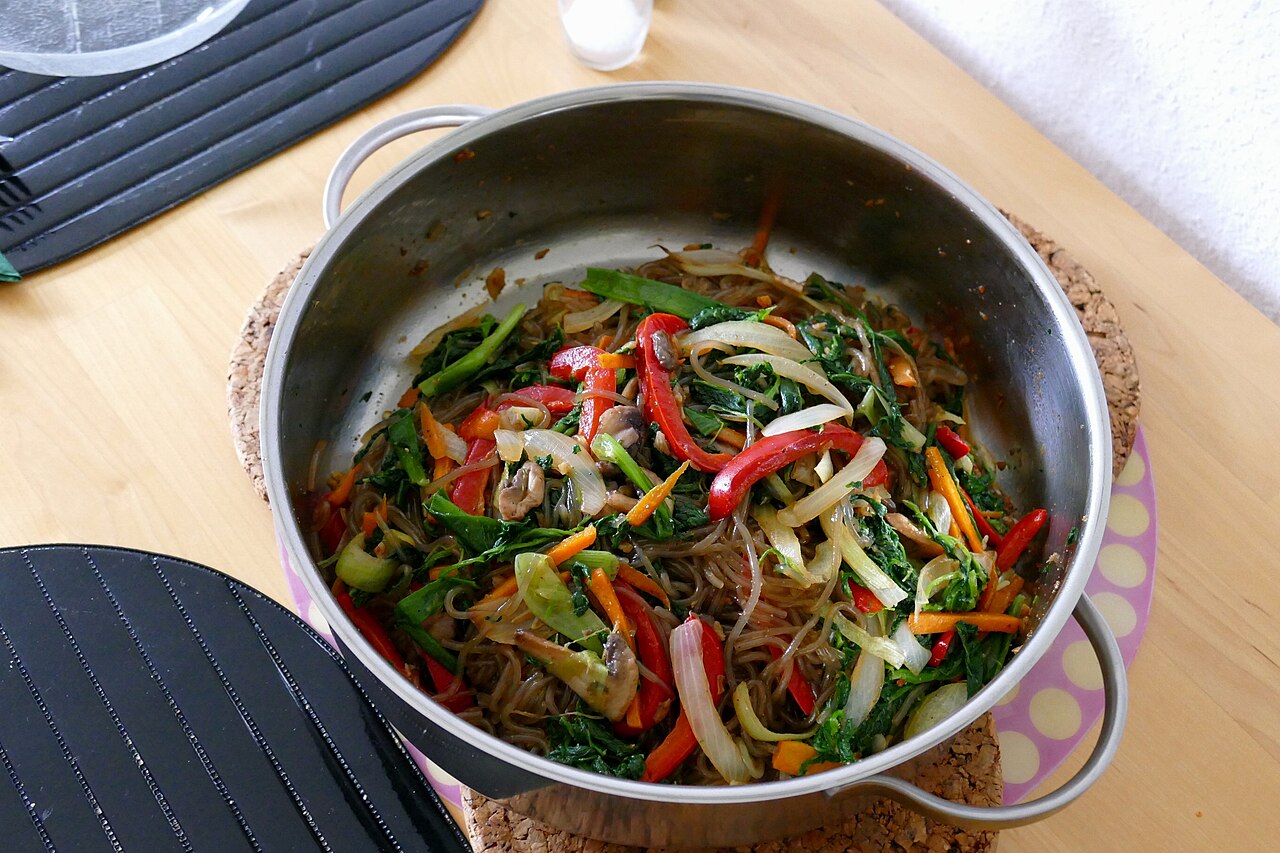
Put it all together
- Put the noodles in a large bowl and add the beef, shiitake, carrot, onion, and bell pepper you cooked earlier.
- Add the seasoned spinach last, squeezing out any water again first, and mix gently.
- Taste, add a little more seasoning if it needs it, and finish with pepper and sesame seeds.
On top
I top it with egg strips and sesame seeds, and silgochu if I have some.
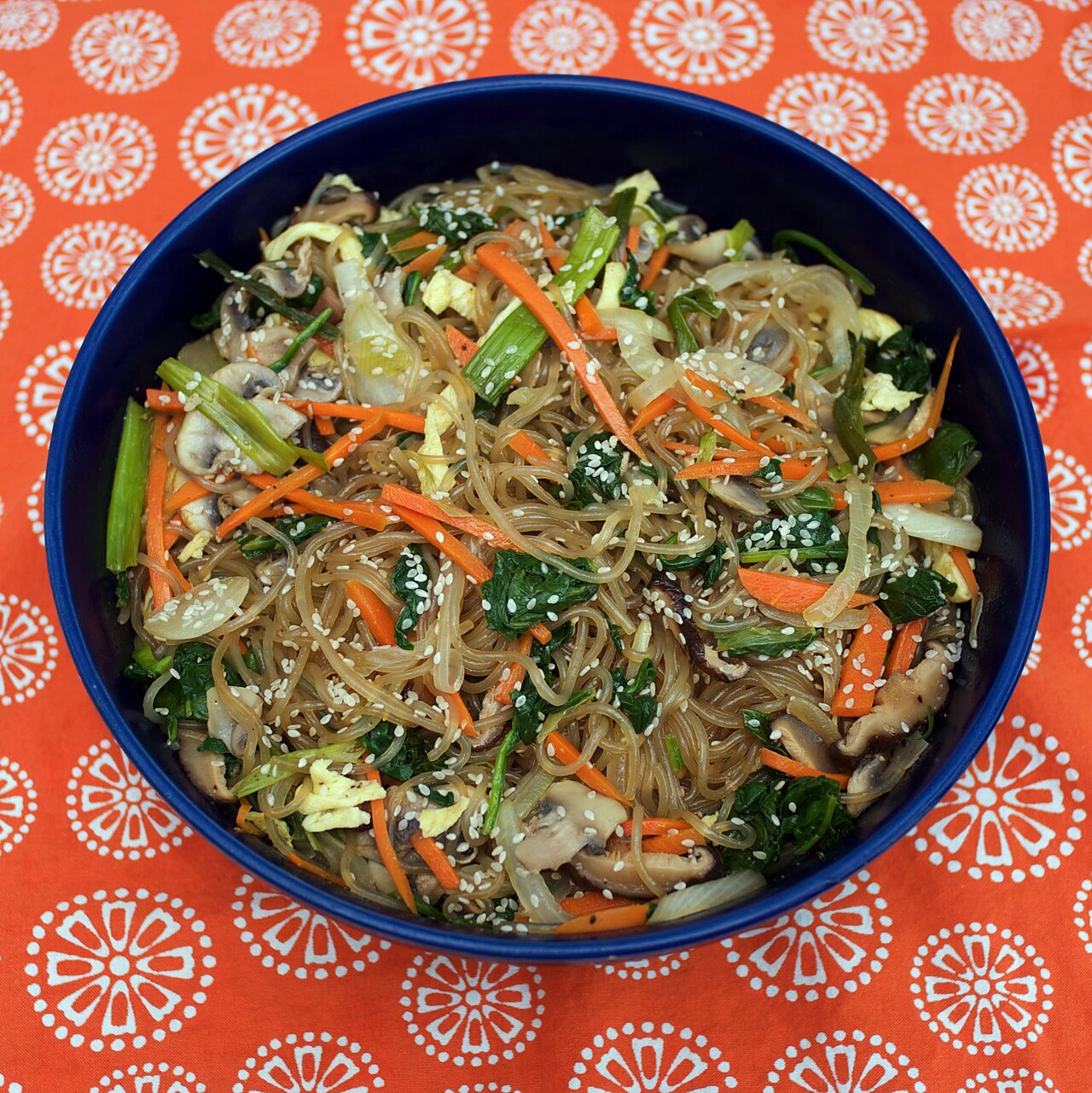
Photo: gamene, CC BY 2.0, via Wikimedia Commons
What I eat with it
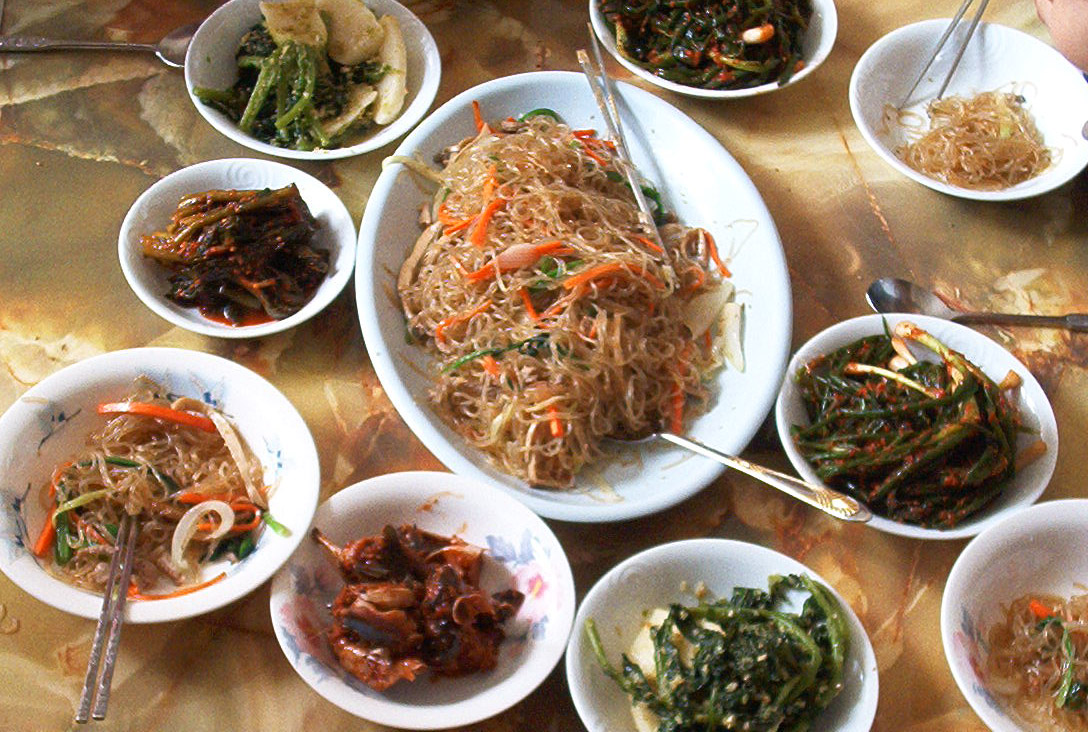
On holidays, japchae sits on the table with galbi-jjim (braised short ribs), jeon (savory pancakes), and namul (seasoned vegetables). On an ordinary day, I eat it with rice, kimchi, and soup.
If you’ve got leftover rice and a few spoonfuls of sour kimchi, you might also want to try My Mother’s Kimchi Fried Rice (Kimchi Bokkeumbap), and Why the Kimchi Has to Be Sour.
If there’s any left
Once it has cooled, I keep it in the fridge. Eat leftovers within 3 to 4 days, and heat them until they’re steaming hot all the way through. Warmed up and served over rice as japchae-bap, it’s delicious.
Other ways to make it
- One-pan japchae: put everything in one pan and make it fast. This only works for a small batch.
- Japchae with the noodles simmered in the sauce: the way I make it above.
- Vegetable japchae with no meat.
- Bean sprout japchae: use blanched bean sprouts instead of spinach, or use both.
If you’re making it for the first time
- Finding the noodles: search for “Korean glass noodles”, “sweet potato starch noodles”, or “dangmyeon”.
- No spinach? Use bok choy.
- No shiitake? Use white button mushrooms.
- Instead of beef, chicken, pork, or tofu.
What went wrong, and why
| Problem | Cause |
|---|---|
| Noodles swollen and mushy | Boiled or stir-fried too long |
| Noodles stuck in clumps | The starch sticks together as they cool |
| Too much liquid in the bowl | Water from the vegetables and the spinach |
| Soft, limp vegetables | Stir-fried too long, or reheated |
| Tough beef | Stir-fried too long, or cut too thick |