Tteokbokki an Older Friend Taught Me: Anchovy Broth, Wheat Rice Cakes
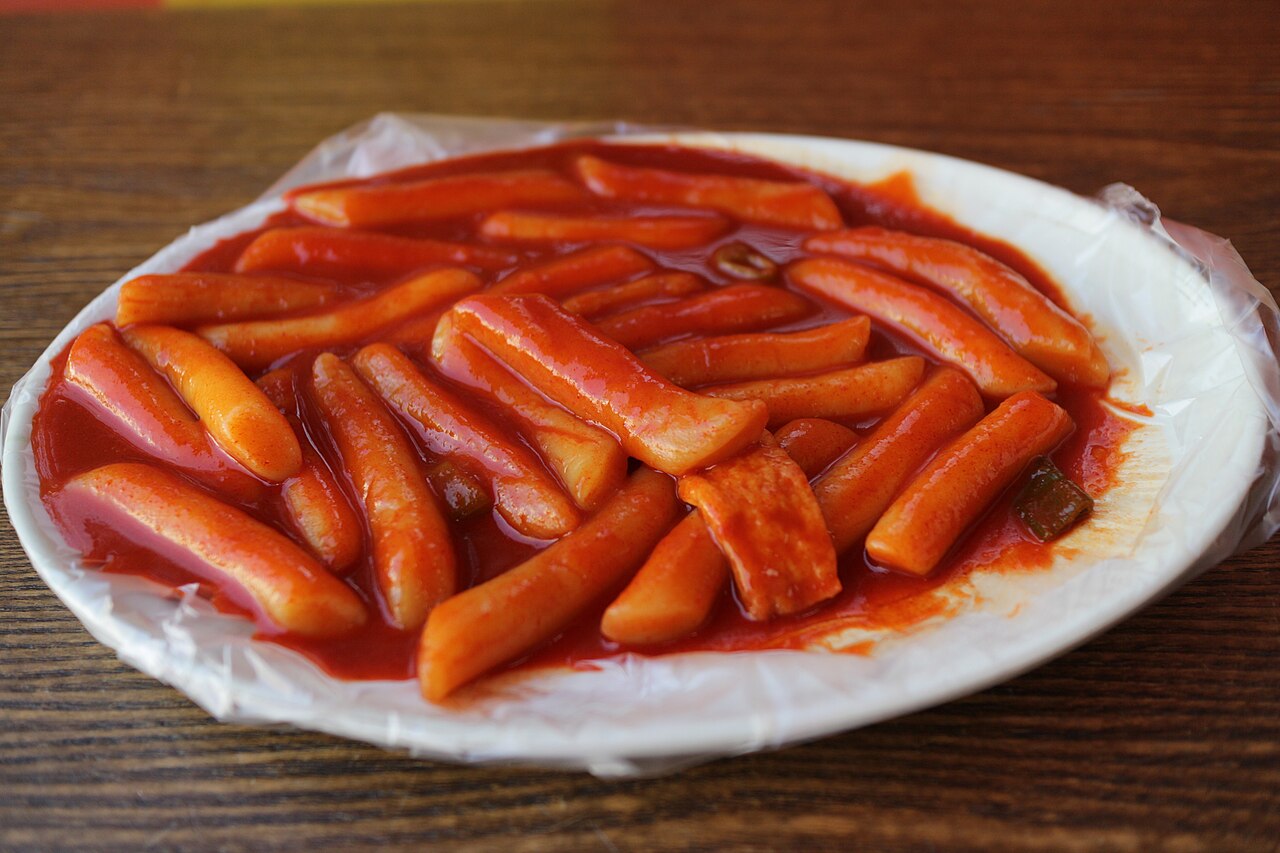
I learned to make tteokbokki from an older friend. I make it now and then, when I want something spicy.
Tteokbokki is a food I remember from the snack shops in front of my school. All through my school years, and into my twenties and thirties, I went out to tteokbokki restaurants to eat it. Usually it wasn’t the ready-made kind but jeukseok tteokbokki, which comes to your table raw in a shallow pan and cooks on a burner while you wait.
Ingredients (2 to 3 servings)
Anchovy and kelp broth
- Water: 600 ml (about 2 1/2 cups)
- Large dried anchovies for broth: 8 to 10
- Dried kelp (dasima): 1 piece, about 5 × 5 cm (2 × 2 inches)
Sauce
- Gochujang (Korean red chili paste): 2 tablespoons
- Gochugaru (Korean chili flakes): 1 tablespoon
- Sugar: 1 tablespoon
- Soy sauce (jin-ganjang, regular Korean soy sauce): 1 tablespoon
- Minced garlic: 1/2 tablespoon
- Mulyeot or oligodang (Korean cooking syrup): 1 tablespoon
The rest
- Tteokbokki rice cakes: 400 g (about 14 oz)
- Thin, flat square fish cakes (eomuk): 2 to 3 sheets, about 100 to 150 g (3 1/2 to 5 oz)
- Cabbage: 2 to 3 leaves, about 80 to 100 g (3 to 3 1/2 oz)
- Onion: 1/2
- Green onion (daepa): 1/2 to 1 stalk
- Eggs: 2 to 3, optional
- Toasted sesame seeds: about 1 teaspoon
Make an anchovy and kelp broth
You can make tteokbokki with plain water, but I recommend a broth of dried anchovies and kelp. It adds savory depth, and the sauce tastes fuller and richer.
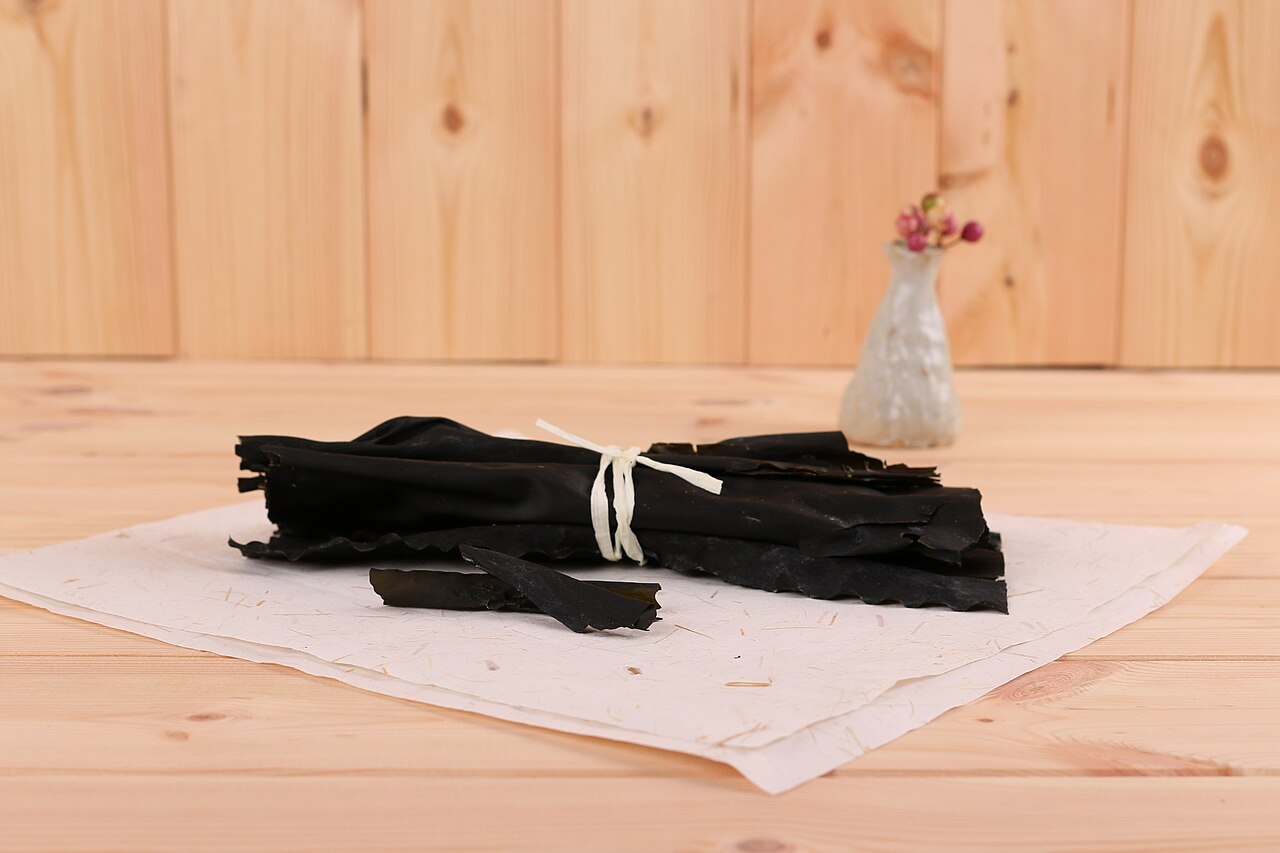
- Remove the heads and guts from the anchovies. Toast them in a dry pan for 1 to 2 minutes to cut the fishy smell.
- Put the water, anchovies, and kelp in a pot and bring it to a boil. Once it boils, turn the heat down to medium-low.
- Take the kelp out about 5 minutes after the water starts boiling. Let the anchovies steep another 10 to 15 minutes, then take them out. If you boil it too long, the broth can turn bitter or astringent.
Use about 400 to 500 ml (1 2/3 to 2 cups) of this broth for the tteokbokki. Keep the rest to add while it cooks if the sauce gets too thick.
When I’m short on time, plain water is fine. But the difference broth makes is easy to taste, especially in gungmul tteokbokki, the soupier style.
Mix the sauce ahead
I mix the sauce first and then add it to the broth. That way it blends evenly, and the flavor comes out the same every time.
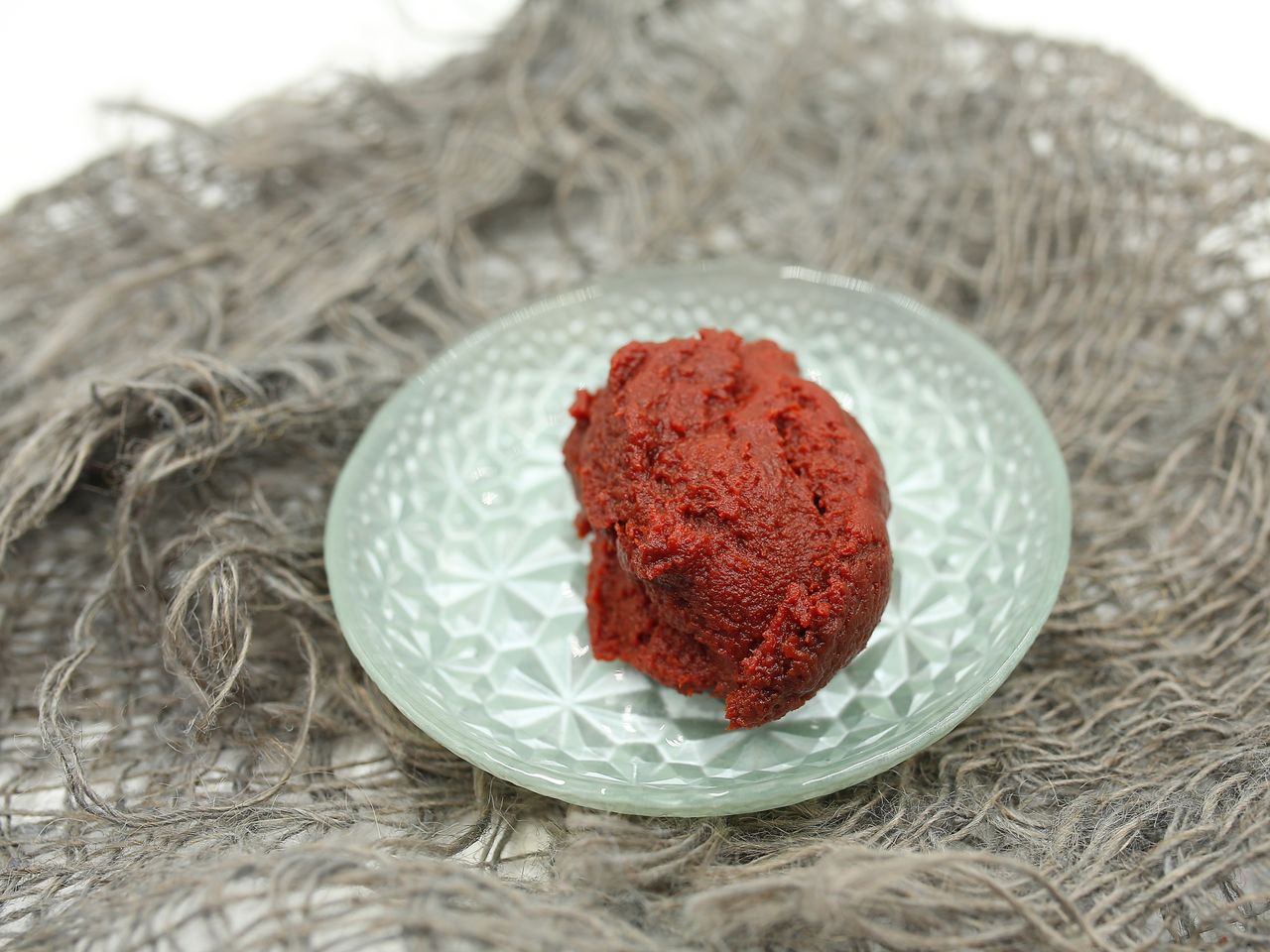
In a small bowl, combine the gochujang, gochugaru, sugar, soy sauce, and garlic with 2 to 3 tablespoons of the broth, and stir well. If you can, let it sit for 5 to 10 minutes so the chili flakes soften.
Don’t rely on gochujang alone. Too much of it makes the sauce pasty and too salty, so I use chili flakes alongside it. The heat comes from the chili flakes, and the sweetness from the sugar and syrup. What matters is the balance between the gochujang and the chili flakes, and between sweet and salty. Don’t make the sauce strong from the start. Taste as it cooks and adjust a little at a time.
You can add the syrup at the beginning, but I add it at the end, where it’s easier to judge the sweetness and the shine.
The rice cakes
I recommend wheat rice cakes (mil-tteok). They soak up the sauce well and stay fairly chewy even after a long simmer, which suits the snack-shop style. Rice cakes made from rice (ssal-tteok) have their own strengths: a nutty rice flavor and a springy bite.
I use ordinary tteokbokki rice cakes, 1 to 1.5 cm (about 1/2 inch) thick and 4 to 5 cm (1 1/2 to 2 inches) long.
- Fresh, soft rice cakes: use them as they are.
- Rice cakes that have hardened in the fridge: soak them in cold water for 20 to 30 minutes.
- Frozen rice cakes: soak them in cold water for 30 minutes to 1 hour to thaw, adjusting the time to how they look.
Drain them before they go into the pot. Don’t soak them too long, or they can turn mushy.
Fish cakes
For tteokbokki I mostly use thin, flat square fish cakes. They take on the sauce well, and as they simmer, their savory flavor goes into the sauce.
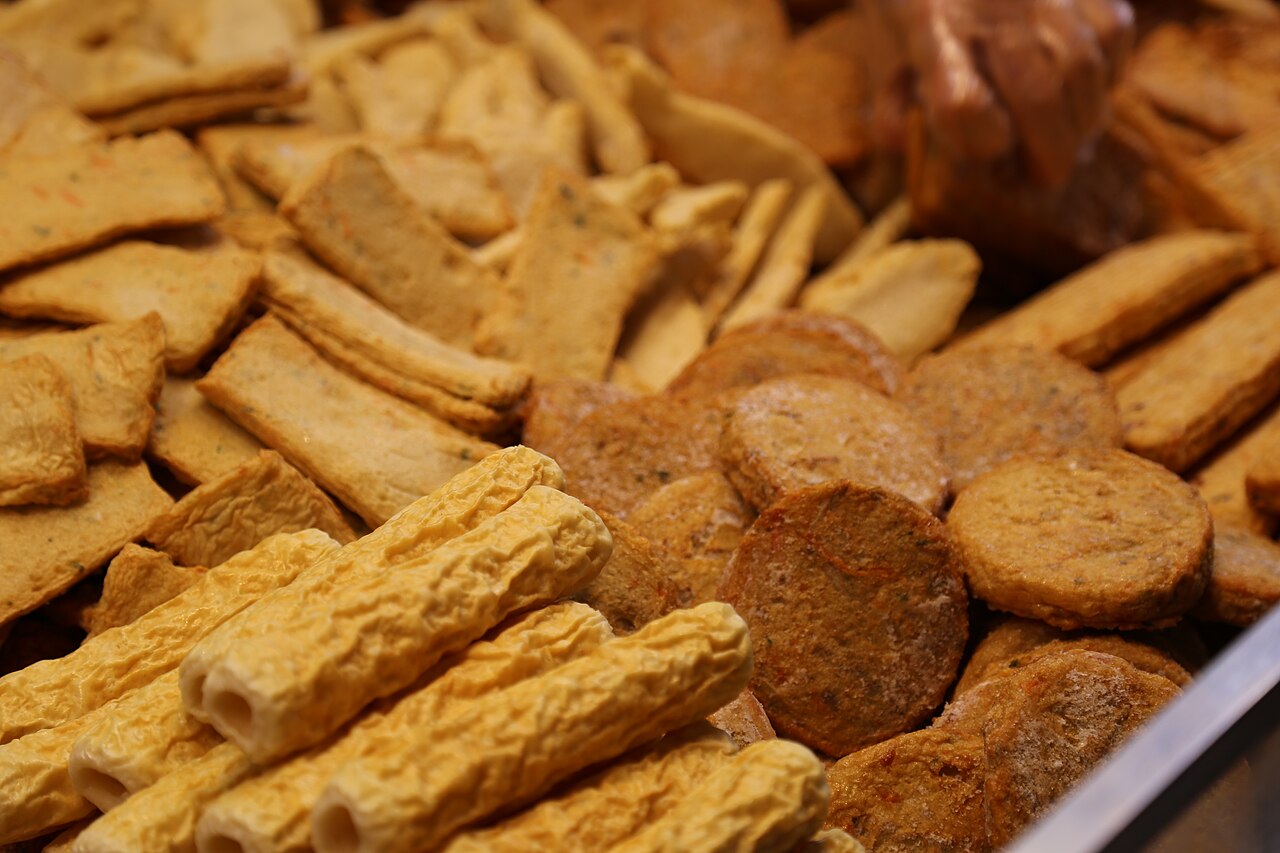
Photo: Ryan Bodenstein, CC BY 2.0, via Wikimedia Commons
Cut them into bite-size rectangles, about 2 to 3 cm by 5 to 6 cm (1 by 2 inches), or into triangles. Long pieces give it the look of the tteokbokki sold at snack shops.
If the oil on the fish cakes bothers you, pour a little boiling water over them to rinse it off. Keep it quick, though. If they sit in hot water too long, they lose their flavor.
Personally, I think thin square fish cakes go better with gochujang tteokbokki than thick ones. They soak up the sauce, and they pair nicely with the chew of the rice cakes.
Cabbage, onion, and green onion
Cabbage and onion are good in it too.
- Cabbage: cut 2 to 3 leaves into bite-size pieces and add them with the rice cakes. They bring a natural sweetness.
- Onion: slice half an onion 0.5 to 1 cm (1/4 to 1/2 inch) thick and add it with the rice cakes. It adds sweetness and depth to the sauce.
Don’t overdo the vegetables. They give off water, and too many can make the sauce bland.
Wash the green onion and cut it on the diagonal into 3 to 4 cm (about 1 1/2 inch) pieces. It goes in near the end (below), so it stays a little crisp.
Simmer it down
- Bring the broth to a boil and stir in the sauce you mixed.
- Add the rice cakes, along with the cabbage and onion.
- Add the fish cakes right after the rice cakes, or 2 to 3 minutes later.
- Boil over medium-high heat for 2 to 3 minutes, then turn it down to medium and let it reduce for another 5 to 7 minutes. Stir now and then so the rice cakes don’t stick to the bottom.
- 3 to 5 minutes before it’s done, add the green onion.
- Stir in the syrup at the end.
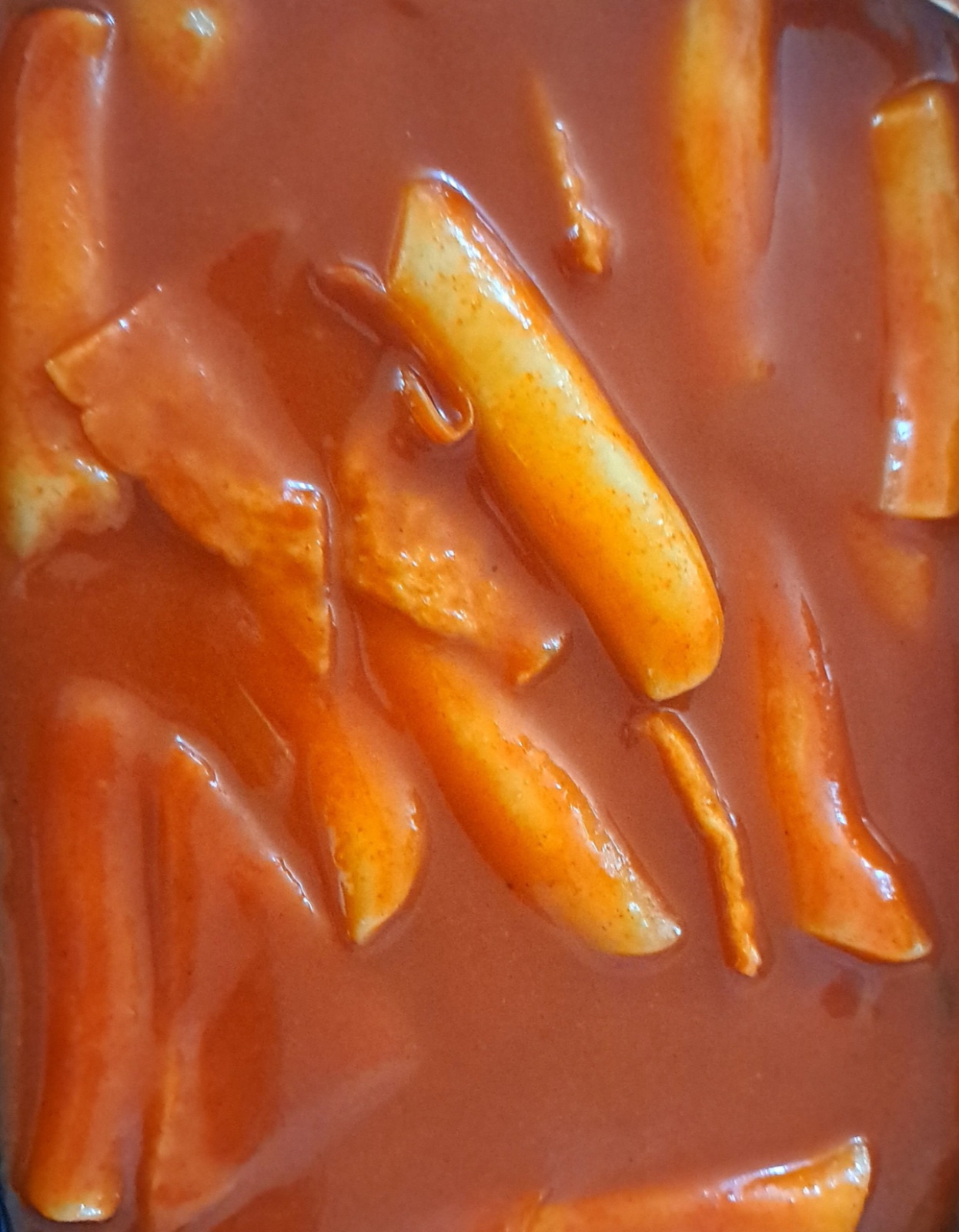
It’s about right when a spoonful of sauce runs off the spoon slowly and a little thick. When you drag a spatula across the bottom of the pan, a path should open for a moment and then fill back in.
The rice cakes keep soaking up the sauce after you turn off the heat, so it will thicken more. Turn it off when it’s a little thinner than you want.
For gungmul tteokbokki, leave plenty of sauce in the pan. For regular tteokbokki, cook it down until the sauce clings to the rice cakes.
How I know it’s done
It’s done when the rice cakes are soft all the way through, the sauce has soaked evenly into the rice cakes and fish cakes, and the sauce has thickened just enough.
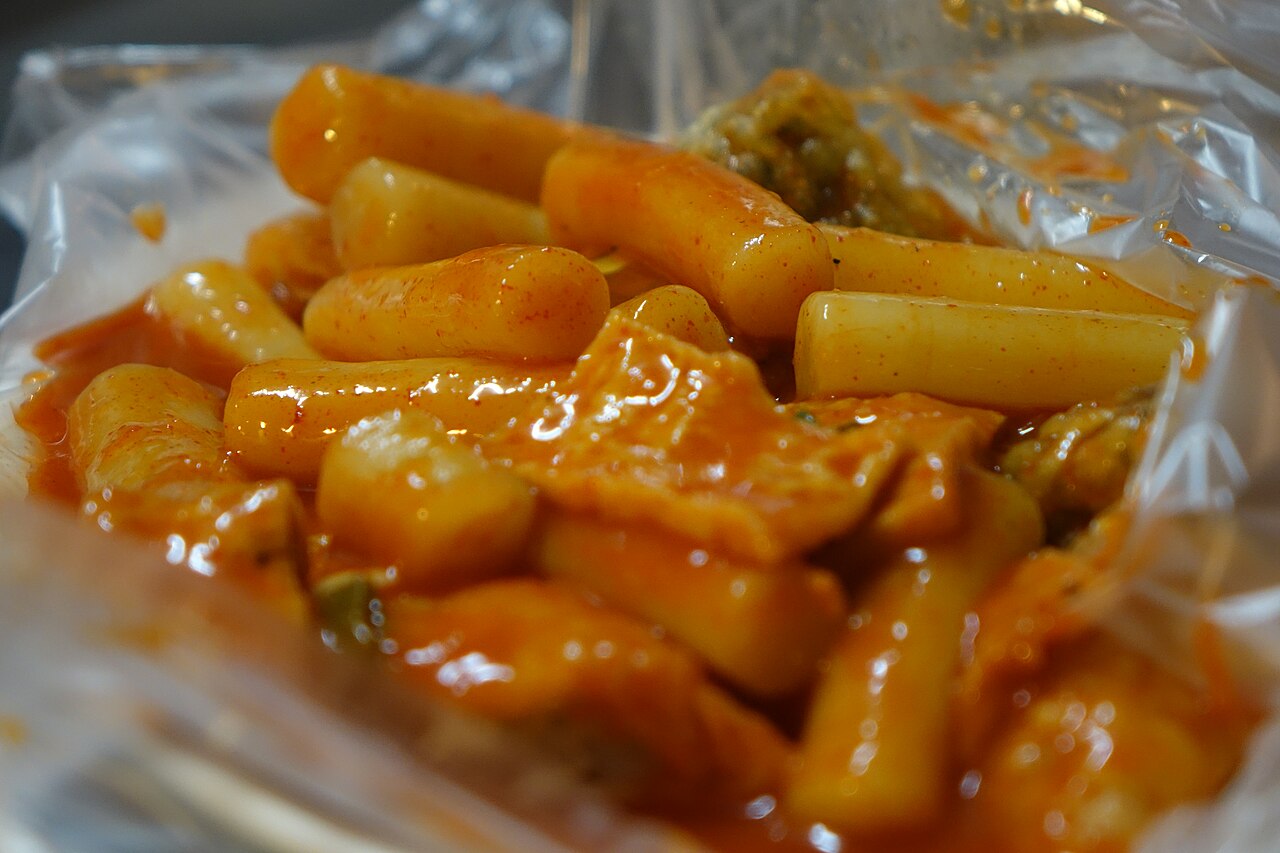
Taste a rice cake. If there’s no hard core in the middle and it’s chewy but soft, it’s cooked. The sauce should be neither runny nor stiff. It should cling to the rice cakes on its own.
To finish, I sprinkle on about 1 teaspoon of toasted sesame seeds. You can add 1/2 teaspoon of sesame oil if you like it, but for snack-shop-style tteokbokki I usually leave it out. A strong sesame oil smell can cover up the gochujang sauce.
Boiled eggs
Boiled eggs go well with the spicy sauce. For 2 to 3 servings I use 2 to 3 eggs.
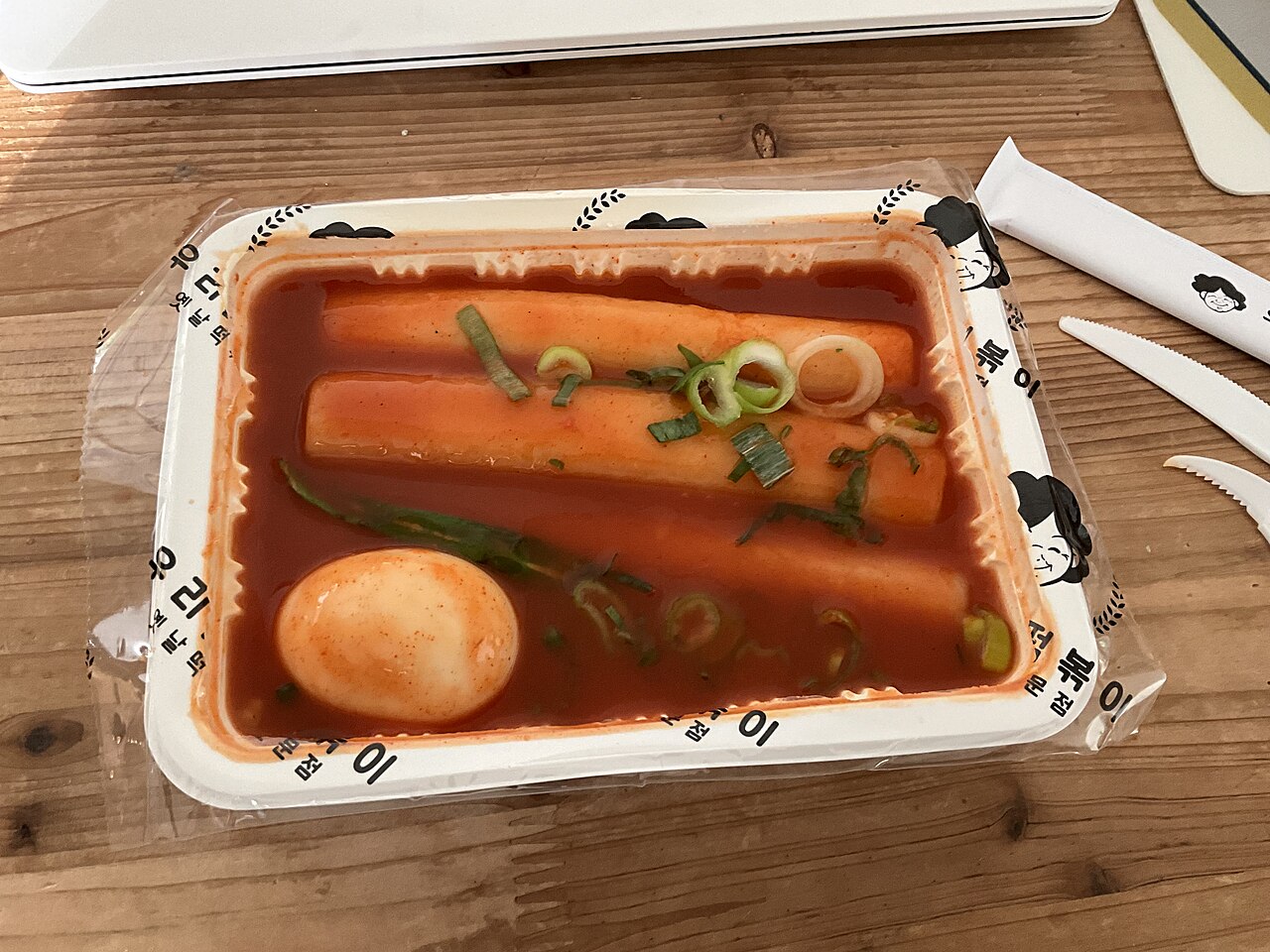
Once the water comes to a boil, cook the eggs for 10 to 12 minutes, until they’re hard-boiled. Cool them in cold water and peel them. Add them 3 to 5 minutes before the tteokbokki is done, so the sauce soaks in.
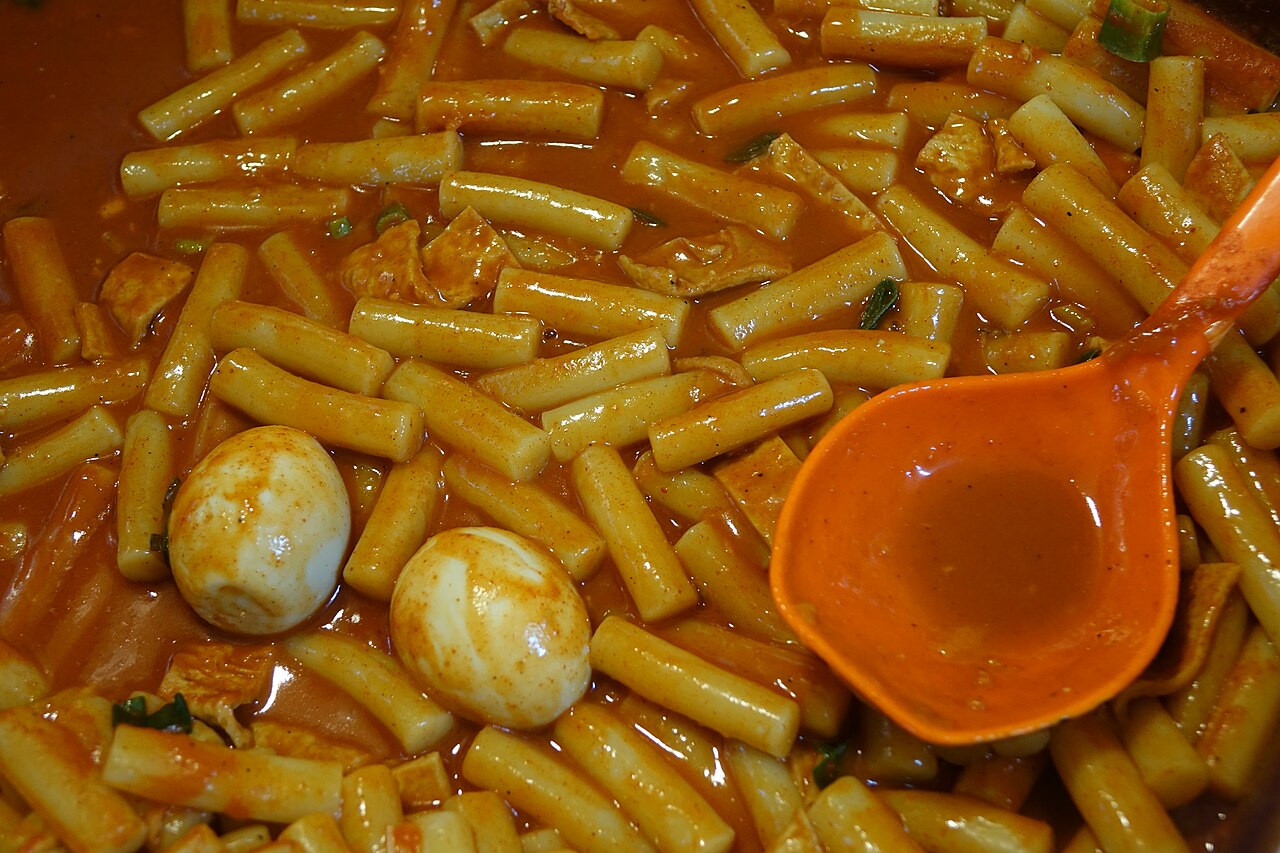
Halve the eggs when you serve them and the yolks soak up the sauce. Mash a yolk into the sauce and the heat softens, and it tastes richer.
What I eat with it
Mostly I eat tteokbokki with gimbap, sundae (Korean blood sausage), and twigim (fried snacks). The sweet and spicy sauce goes well with all of them.
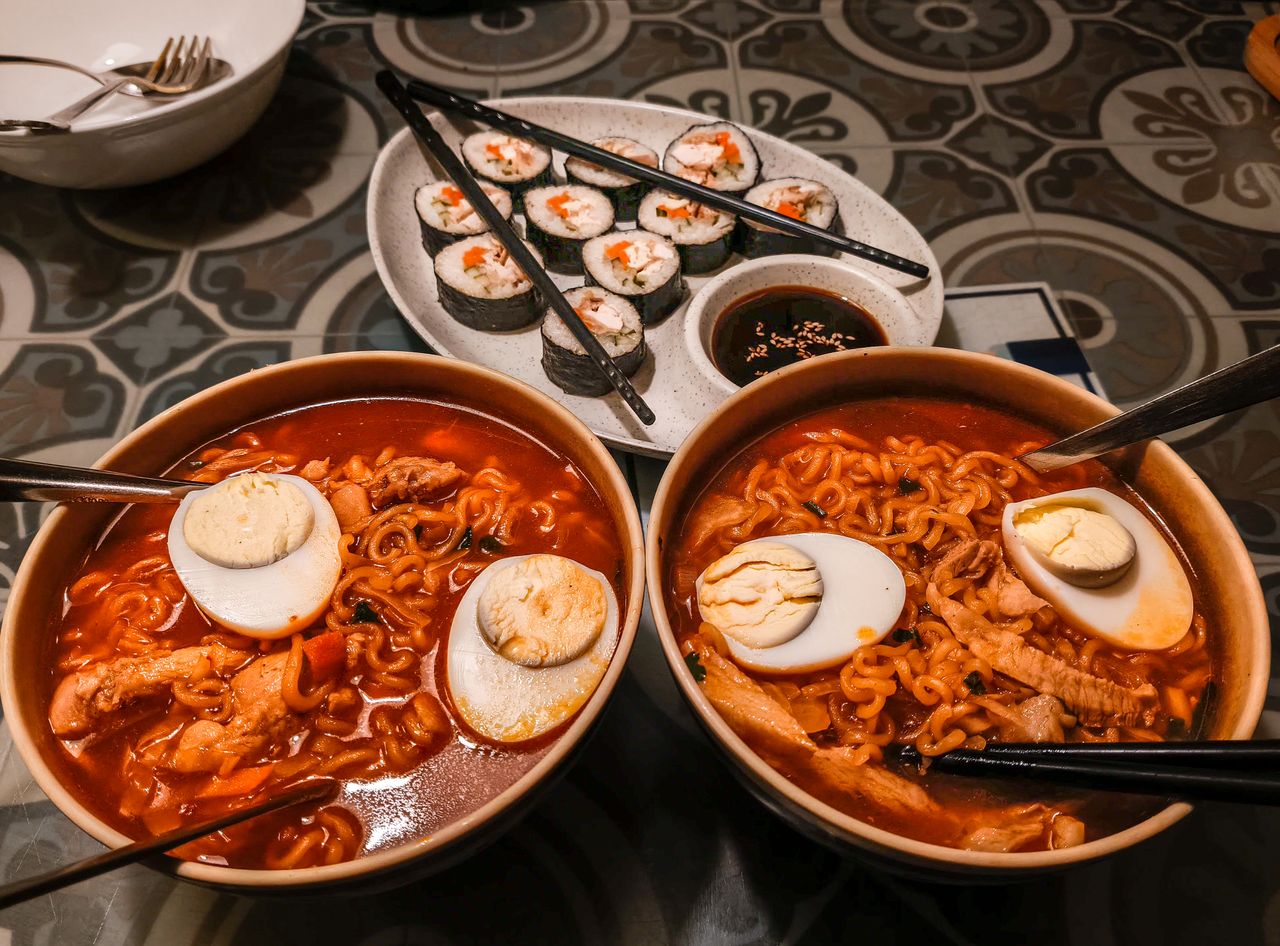
- Gimbap: plain vegetable gimbap or mini gimbap is good dipped in the tteokbokki sauce. If you want to roll your own, here’s how my mother taught me to make gimbap.
- Sundae: dip it in the sauce. The mild sausage and the spicy sauce go together well.
- Twigim: gimmari (fried seaweed rolls with glass noodles inside), fried squid, vegetable fritters, and fried dumplings. Gimmari and fried dumplings are especially good dipped in the sauce.
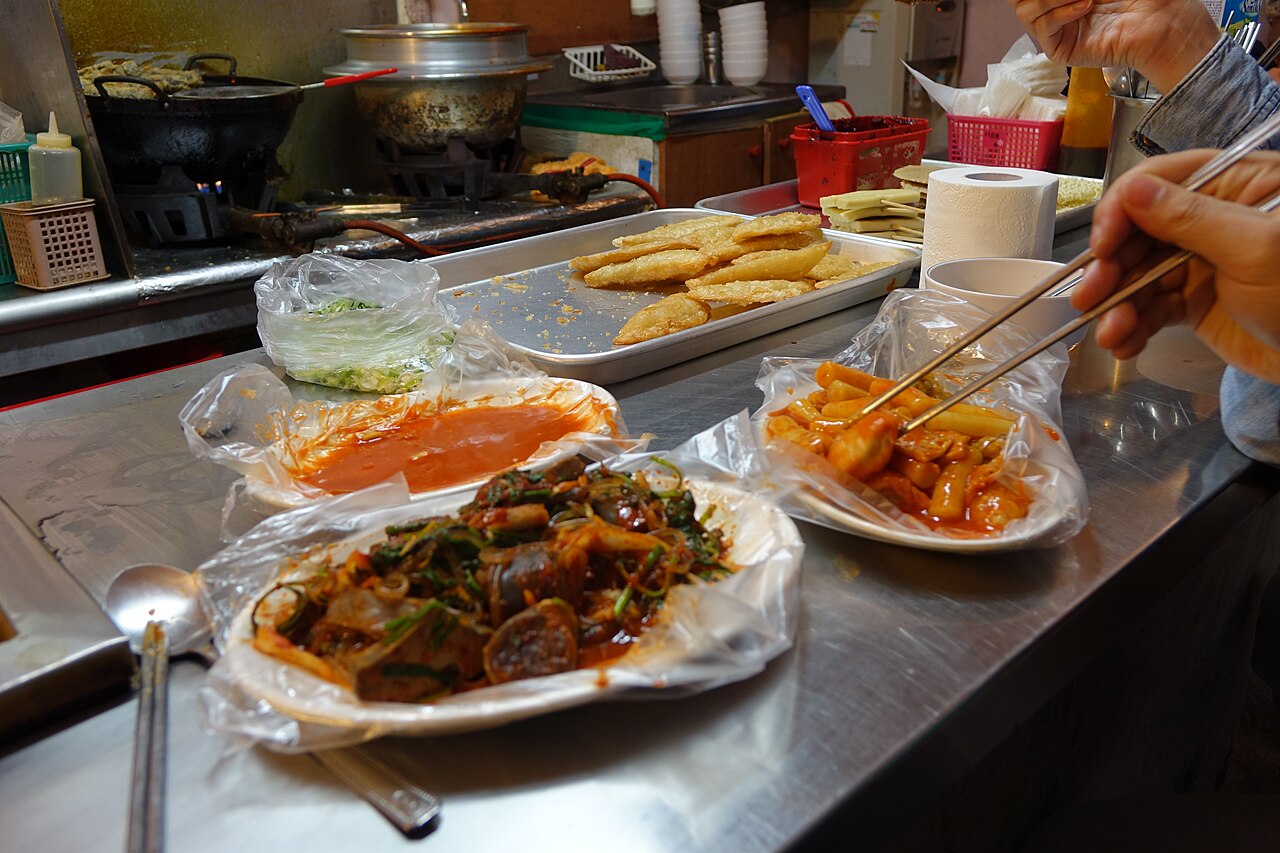
Personally, I think gimmari and sundae go best with tteokbokki. Eat the fried snacks crisp at first, then soak them in the sauce later, and you get two different tastes.
Cheese tteokbokki and rabokki
You can also add cheese or ramen noodles.
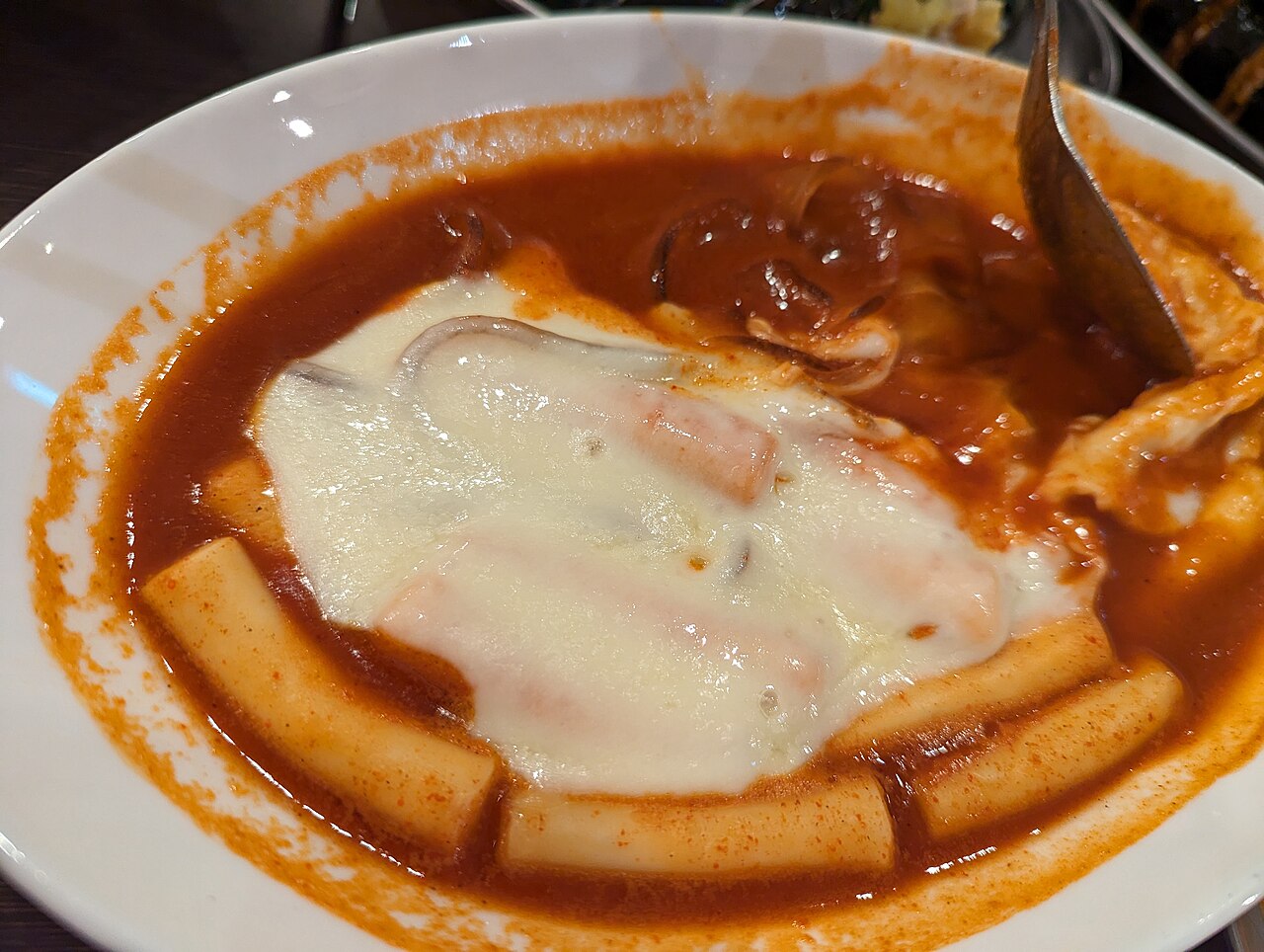
- Cheese tteokbokki: just before it’s done, put 80 to 100 g (about 3 to 3 1/2 oz) of mozzarella on top, cover, and melt it over low heat for 1 to 2 minutes. The cheese softens the heat, and it stretches nicely.
- Rabokki: add 1 packet of ramen noodles partway through and cook another 3 to 4 minutes. The noodles soak up a lot of liquid, so add 150 to 200 ml (2/3 to 3/4 cup) more broth.
Cheese tteokbokki is rich and mild. Rabokki is fun because you get noodles and rice cakes together. When I want it spicy, I make rabokki. When I want less heat, I make cheese tteokbokki.
If there’s any left
Let it cool, put it in an airtight container, and keep it in the fridge. Eat it within 1 to 2 days. Don’t leave it out long; get it into the fridge within 2 hours of cooking.
To reheat, put it in a pot with 3 to 5 tablespoons of water or anchovy broth and heat it over medium-low for 3 to 5 minutes. In the fridge the rice cakes harden and the sauce thickens, so add water a little at a time and heat it until the rice cakes are hot all the way through.
In the microwave, put it in a microwave-safe container with a little water, cover it, and heat it. Stir it once halfway through so it heats evenly.
You can freeze it if you need to keep it longer, but the rice cakes may lose some of their texture after thawing. Rice-based rice cakes in particular harden easily in the fridge, so eat them as soon as you can.
If you’re making it for the first time
Don’t make it very spicy the first time. Adjust the sauce to your own taste.
- Finding rice cakes: look in a Korean grocery or an Asian market for “tteokbokki rice cakes.” Frozen ones are fine.
- Less heat: use less gochujang and chili flakes, and add a little more sugar or syrup. Cheese also makes the heat feel softer.
- No rice cakes? You can use thick rice noodles or udon. The texture won’t be the same as tteokbokki, though.
- The sauce: use Korean gochujang. Ordinary chili sauce tastes different and can’t really replace it.
- While it cooks: don’t make the sauce strong at the start; taste and adjust as it simmers. Stir often so the rice cakes don’t stick to the bottom.
What matters most is the chewy rice cakes and the balance of the sweet and spicy sauce. Start with basic tteokbokki, and once you’re used to it, add cheese or ramen noodles and make it your own.
What went wrong, and why
| Problem | Cause | What I do |
|---|---|---|
| Hard rice cakes | Fridge or frozen rice cakes not soaked long enough, or not cooked long enough | Soak hardened rice cakes in cold water for 20 to 30 minutes, and check that they’re cooked through |
| Burnt sauce | Heat too high, or not enough liquid | Once the sauce boils, turn it down to medium and stir often |
| Sauce too thin | Too much water, or not cooked down enough | Leave the lid off and simmer a little longer over medium heat |
| Too salty or too sweet | Too much sauce added at the start | Start with less and adjust as you taste |
| Mushy rice cakes | Cooked too long | Once they’re soft, don’t keep cooking |
The most important things are heat and the amount of liquid. Start on medium-high, turn it down to medium to reduce, and keep checking the rice cakes and the thickness of the sauce.