How Do You Cook Squid So It Stays Tender?

Squid turns rubbery in one of two ways: either it is pulled off the heat too early and left undercooked, or it sits on high heat for several minutes and seizes up. The solution is not a compromise in the middle — it is a deliberate choice to go very short or very long. Everything else is detail.
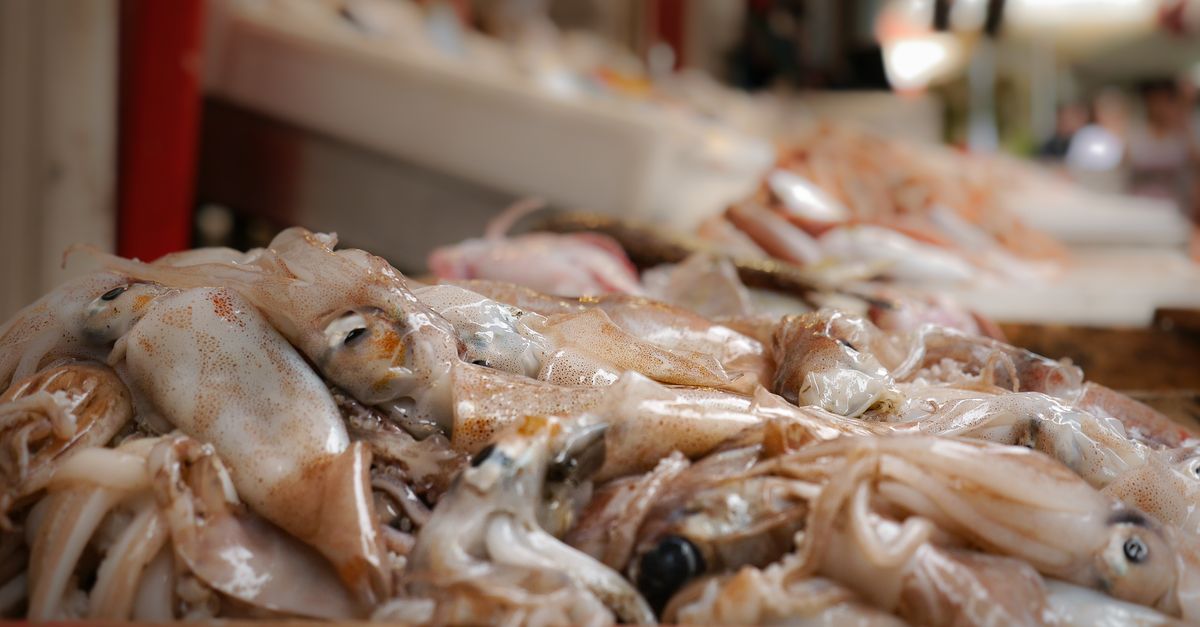
The Two-Window Rule: Fast or Slow, Never In Between
Squid is mostly muscle. Muscle contracts when heat hits it, squeezing out moisture and tightening the texture. At around two minutes of high-heat cooking, the protein is cooked through but still supple. Leave it past that point and the fibers keep contracting — the squid gets tougher with every extra minute. That tension only releases after about 30 minutes of sustained moist or low-intensity heat, when the connective tissue breaks down and the flesh relaxes again.
So your two windows are:
- Fast: Under two minutes in a very hot pan, grill, or wok. Ideal for calamari rings, small tubes, and tentacles.
- Slow: Thirty minutes to over an hour in a braise, stew, or sous vide bath. Ideal for large tubes and thicker preparations.
Anything from three to twenty-five minutes puts you in no-man’s land — cooked but not tender.
Why Your Squid Keeps Going Rubbery (Common Mistakes)
Overcrowding the pan is the single most common culprit. When you pile rings into a skillet, the temperature drops, the squid steams instead of searing, and you end up cooking it longer to drive off moisture. Cook in small batches and leave space between pieces.
Starting with wet squid causes the same problem. Pat every piece completely dry with kitchen paper before it goes near heat. Surface moisture converts to steam and drops the pan temperature by a significant margin — the sear you need simply cannot happen.
Using a pan that is not hot enough. Cast iron or heavy stainless over high heat for at least two minutes before anything goes in. A drop of water should bead and roll immediately. On a home electric or induction hob this matters even more, because recovery time after adding cold seafood is slower.
Buying very large squid tubes without adjusting the method. Larger squid have thicker, denser flesh. Flash-cooking a tube that is the width of your fist will leave the center barely warm while the outside overcooks. Score it (see below) or commit to a braise.
Fast-Cooking Methods: Getting the Sear Right
This is the approach most home cooks want: quick, high heat, dinner in under ten minutes.
The same high-heat, hands-off logic applies to other quick-cooking proteins, as explained in Pan-Seared Salmon: How to Cook It Perfectly Every Time.
Preparing the squid for fast cooking
Clean the squid if your fishmonger has not done it already. Pull the head and tentacles away from the tube, remove the clear quill, and peel off the purple skin (it is edible, but the texture improves without it). Rinse briefly and — this is critical — dry thoroughly.
For tubes, score the inner surface in a crosshatch pattern with a sharp knife before cutting into rectangles. When the scored side hits a hot pan, the pieces curl into small cylinders and cook more evenly. Slicing into rings is simpler but gives you less contact with the hot surface.
Wok and cast-iron pan
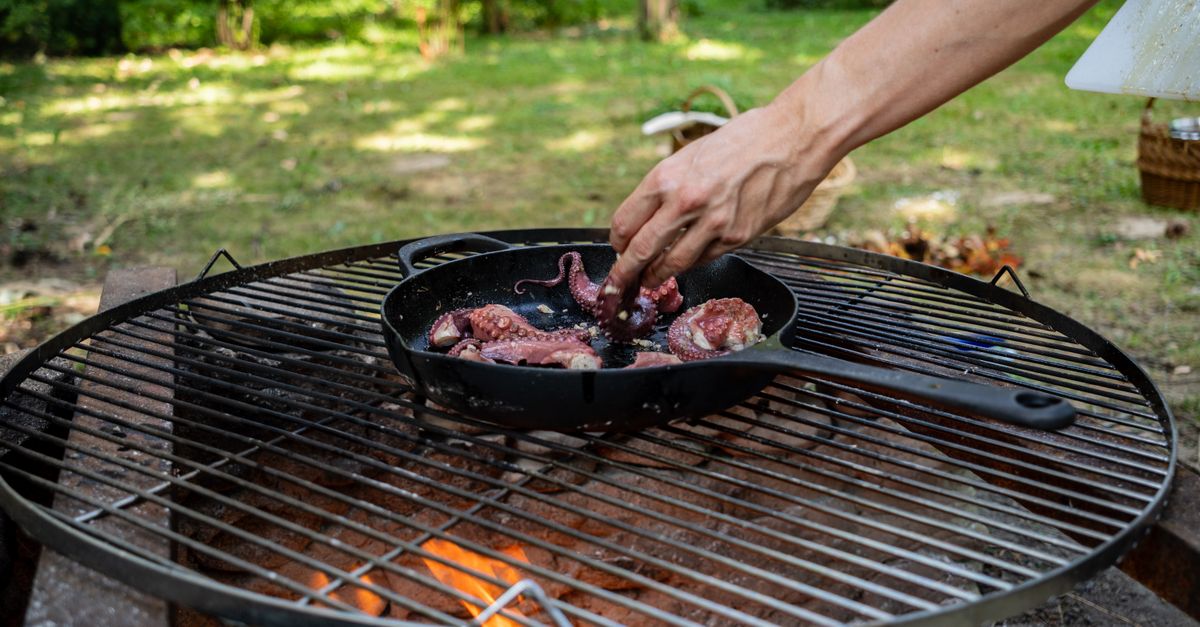
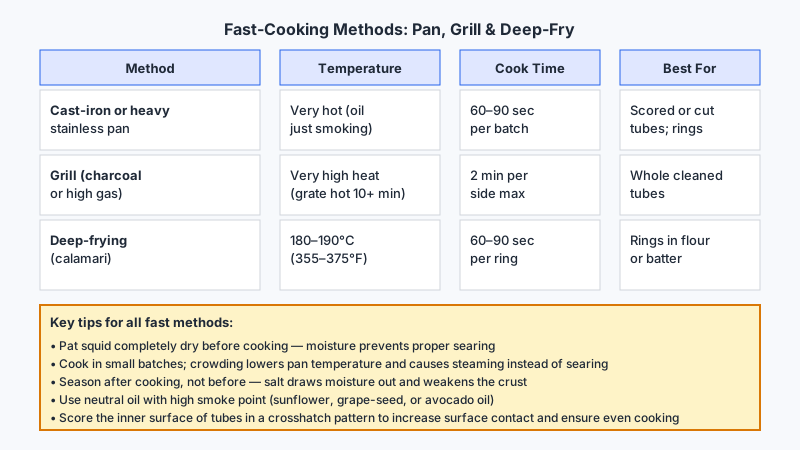
Get the pan ripping hot. Add a neutral oil with a high smoke point — refined sunflower, grape-seed, or avocado oil all work — and wait until the first wisp of smoke appears. Add squid in a single layer. Do not touch it for 45 seconds, then toss or flip. It should have color on the first side. The whole cook takes 60 to 90 seconds per batch. Remove immediately to a warm plate.
Season after cooking, not before — salt draws moisture out of the surface and works against the crust you are trying to build.
Grilling
Whole, cleaned tubes grilled over charcoal or a very high gas flame are as good as anything a cast-iron pan produces. Brush lightly with oil, lay them flat on a grill grate that has been heating for at least ten minutes. Two minutes per side at most. Grill marks should appear quickly; if they do not, the grill is not hot enough.
Deep-frying (calamari)
The classic calamari treatment puts rings in a seasoned flour or light batter and drops them into oil at around 180–190°C (355–375°F). At this temperature a ring is done in 60 to 90 seconds. Lift one out and break it open: the coating should be golden and crisp, the squid inside white and just firm. Do not batch-fry too many at once — same principle as the pan.
Slow-Cooking Methods: When Time Does the Work
Braised squid in tomato sauce, simmered slowly, is a staple across Mediterranean cuisines for good reason. The long cook does what a quick sear cannot: it gradually softens rather than shocks, and the braising liquid keeps everything moist.
Timing for a braise
Start by quickly browning the squid — just to add color — then add aromatics, liquid (wine, stock, crushed tomatoes, or a combination), and reduce to a very gentle simmer with a lid on. Check texture starting at 30 minutes. Most medium-sized squid are butter-tender between 40 and 60 minutes. Larger or older squid can take up to 90 minutes. You will feel the difference when you press a piece against the side of the pot with a spoon: it should offer almost no resistance.
Sous vide
Sous vide removes the timing gamble entirely. Seal cleaned squid with a little olive oil and aromatics in a vacuum or zip-lock bag and cook in a water bath at 60–65°C (140–149°F) for 45 minutes to an hour. The result is silky without being mushy, and because you control the temperature precisely, the two-minute danger zone is irrelevant. After the bath, a 30-second flash in a very hot pan adds color if you want it.
Does the Type of Squid Matter?
Yes, and the size matters more than the species. Small whole squid — the kind sold as baby squid — cook fast and forgive minor timing errors more easily than large tubes. They are the best starting point if you are new to cooking squid.
Frozen squid is often a good choice. Commercial freezing at sea happens quickly and can actually tenderize the flesh slightly, breaking down cell structure in a way that benefits texture. The priority with frozen squid is thorough defrosting in the fridge overnight, then the same thorough drying step before cooking.
Fresh squid that is genuinely very fresh — firm, white, smelling cleanly of the sea with no ammonia — will always be excellent. If the flesh is soft, pinkish, or has any off smell, no cooking technique will fix it.
Acid and Tenderizing: What Actually Helps
Marinating squid in lemon juice or vinegar for a long time is sometimes recommended as a tenderizing step. The evidence here is genuinely mixed. A brief marinade (15–20 minutes) in a mildly acidic mix adds flavor. A long acid soak can begin to denature surface proteins and make the texture mealy rather than tender. If you marinade, keep it short and keep the acid component moderate.
Tenderizing with a meat mallet before cooking is used in some regional traditions, particularly for larger tubes. Placing the tube between two sheets of baking paper and giving it a few firm passes with a rolling pin can disrupt the muscle fibers and speed up the cook — useful before flash-frying a thick piece that might otherwise have an uneven interior.
Pairing Doneness With the Dish
Not every preparation needs to be the same texture. Squid in a stew benefits from the long braise and a softer, yielding bite. Squid in a salad — blanched in boiling salted water for 60 seconds, then immediately shocked in ice water — should have a clean snap to it. Tempura or flash-fried rings should have the lightest possible resistance, just firmer than raw.
Decide what texture fits the dish before choosing your method. That decision is as important as the cooking time itself.
If you’re serving your squid over a starchy base, How to Cook Perfect Rice Every Time: Why It Turns Mushy Or Crunchy will help you avoid a mushy or crunchy side.
Frequently Asked Questions
How do you know when squid is cooked through but not overdone?
Cooked squid turns from translucent to fully opaque white. In a hot pan this happens in under 90 seconds for thin rings. Press a piece gently: it should feel like a cooked scallop — firm but with give, not bouncy or hard. For a braise, press with a spoon; it should yield easily without falling apart.
Can you save squid that has already gone rubbery?
If you have overcooked squid past the two-minute mark, the only fix is to keep cooking it low and slow. Add it to a sauce or braise with enough liquid to cover, drop the heat to a gentle simmer, and give it 20 to 30 more minutes. It will not return to the texture of briefly cooked squid, but the connective tissue will relax and the rubbery quality softens considerably.
Should you score squid before cooking?
Scoring the inner surface of a cleaned tube in a crosshatch pattern helps in two ways: it increases the surface area that contacts the hot pan, and it encourages even curling so each piece cooks uniformly. For rings or tentacles, scoring is not necessary. It is most useful when you are cutting tubes into flat pieces for stir-frying.
Does freezing squid make it tougher?
Not if it is handled well. Commercial blast-freezing can slightly improve tenderness by disrupting cell walls. Slow home freezing — putting fresh squid straight in a standard freezer — is less reliable and can introduce some cell damage that makes texture uneven. If you freeze it at home, wrap it tightly to minimize ice crystal formation and use it within a month or two for best results.
Is the purple skin on squid edible?
Yes, it is edible and not harmful. Most cooks remove it because without the skin the tube is more visually appealing after cooking, and the texture at the surface is cleaner. It peels off easily from a fresh squid by rubbing under cold running water. If it does not peel cleanly, the squid may be less fresh.