Loose Door Knob? Fix It in Under 30 Minutes

A wobbly door knob is one of those small annoyances that escalates fast — what starts as a slight wiggle can end in a knob that spins freely, a latch that refuses to retract, or a door that simply won’t open. The good news is that in nearly every case, the repair takes under half an hour and costs nothing if you already own a screwdriver.
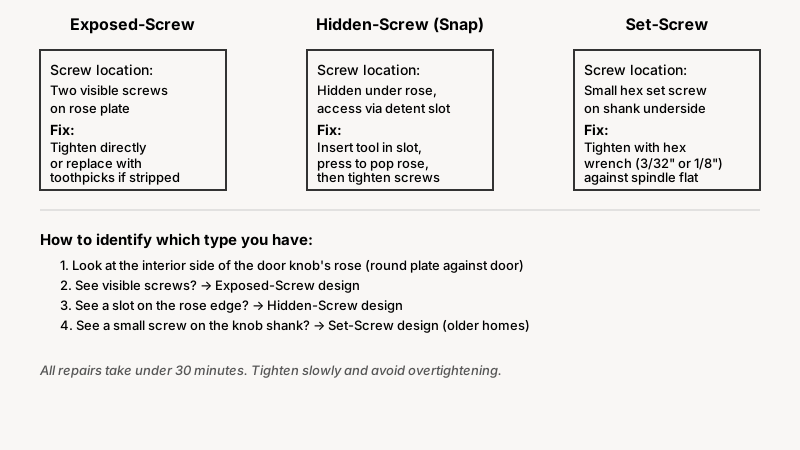
This guide covers the three most common door knob designs you’ll encounter: the standard exposed-screw knob, the hidden-screw (snap-collar) knob, and the older set-screw knob. Each one comes loose for slightly different reasons and responds to a different fix.
Why Door Knobs Come Loose
Before picking up a screwdriver, it helps to know what you’re actually fixing. Most residential door knobs are held together by one of the following:
- Mounting screws that pass through the door face and thread into the opposite rose plate
- A set screw (a small headless screw) that grips a flat section on the spindle
- A spring-loaded detent pin in the shank, which locks the knob onto the spindle until a tool releases it
Screws work loose over time from the constant rotation and lateral pressure of everyday use. Wood doors also expand and contract with humidity changes, which gradually backs screws out of their holes. In older doors, the screw holes themselves can become stripped — the wood fibers have compressed so much that there’s nothing left for the threads to grip.
Identifying your knob type first saves you from hunting for screws that don’t exist, or missing a set screw hiding under a decorative cap.
Loose hardware is a common theme around the house, and our guide How to Fix a Squeaky Door Hinge: Silencing Hinges With Household Oils tackles another noisy culprit.
Fixing an Exposed-Screw Door Knob
This is the most common design on interior doors made in the last few decades. You’ll see two screws on the rose (the round plate against the door face) of the interior knob.
What you need: Phillips or flat-head screwdriver (check which head the screws take before starting), and possibly a thin shim or toothpicks.
- Test the existing screws first. Hold the exterior knob still and try to tighten each screw on the interior side. Often, this single step solves the problem.
- If screws spin without tightening, the holes are stripped. Remove the knob assembly entirely by backing the screws out fully.
- Repair stripped holes. The easiest method: apply a small amount of wood glue to three or four wooden toothpicks, press them into the hole until it’s packed, snap off the excess flush, and let the glue cure for at least an hour. Then drive the original screw back in — it now has fresh wood to bite.
- Reinstall the knob. Thread the screws slowly until snug; don’t overtighten or you’ll compress the door face and create new problems.
If the knob itself feels sloppy on the spindle even after the screws are tight, the spindle square may be worn. That’s a sign the knob or the full set needs replacement rather than repair.
Fixing a Hidden-Screw (Snap-Collar) Door Knob
Many modern and decorative knobs hide their screws under the rose, which snaps or twists into place over the mounting hardware. The knob looks cleaner, but the fix takes one extra step.
What you need: A thin flathead screwdriver or a dedicated slot tool, plus a Phillips screwdriver.
- Locate the release slot. Look along the edge of the rose for a small rectangular or circular slot — sometimes called a detent slot.
- Insert a thin flathead screwdriver into that slot and press inward while gently pulling the rose away from the door. It will pop off, revealing the screws beneath.
- Tighten or replace those screws as described in the exposed-screw method above.
- Snap the rose back on. Align the tabs, press firmly until you feel or hear a click.
Some roses thread on instead of snapping — if pressing doesn’t release it, try twisting counterclockwise. A little friction is normal; forcing it sideways risks cracking the collar.
Fixing a Set-Screw Door Knob
Older knobs — particularly passage knobs from mid-century homes — often use a small set screw on the shank (the cylindrical part of the knob, between the knob itself and the rose). This screw presses against a flat on the spindle to keep the knob from rotating freely.
What you need: A small hex (Allen) wrench, usually 3/32“ or 1/8”, or occasionally a very small flat-head screwdriver.
- Find the set screw. It’s usually on the underside of the shank, easy to miss at a glance. Turn the knob until the set screw faces downward and is accessible.
- Tighten it with the correct wrench. Turn clockwise until firm. Don’t overtighten — set screws are small and the threads strip easily.
- Test the knob. It should feel solid on the spindle and rotate without slipping.
If the set screw keeps coming loose after a few days, apply a small drop of removable thread-locking compound (sold at hardware stores) before reinserting it. Permanent thread-locker is overkill here and makes future removal a headache.
When the Spindle or Latch Is the Real Problem
Sometimes a loose knob is a symptom of a deeper issue:
- Spindle worn or bent: If both knobs are solid but the latch doesn’t retract fully, the spindle may be deformed at its center. Replacements are inexpensive and sold by length (typically 2¼" for interior doors).
- Latch mechanism worn: The spring inside the latch bolt weakens over time. If the knob turns but the latch barely moves, the latch cartridge itself needs replacing — a five-minute swap once you have the right size.
- Door misalignment: If the door has dropped or the frame has shifted, the latch may bind against the strike plate. The knob will feel stiff or sticky rather than loose. In that case, adjust the strike plate or tighten the hinge screws before blaming the knob hardware.
A quick way to test: remove the knob assembly and operate the latch spindle by hand. If it moves freely, the latch is fine and the knob assembly is the culprit. If there’s resistance or the bolt barely extends, the latch mechanism needs attention.
Replacing the Knob Entirely
Sometimes tightening isn’t enough. Replace the full knob set when:
- The knob spins freely and won’t engage the spindle regardless of what you tighten
- The rosette or mounting holes are cracked
- The latch throw (the distance the bolt extends) doesn’t match your door’s backset
When buying a replacement, note your door’s backset — the distance from the door edge to the center of the knob hole, typically 2⅜“ or 2¾”. Also check whether you have a round-corner or square-corner latch faceplate so the replacement fits the existing mortise without chiseling.
If it’s not just the knob acting up, check out Fix a Sticky Kitchen Drawer or Cabinet Door: Wax, Sand, Realign, Done for another quick hardware fix elsewhere in the house.
Frequently Asked Questions
Why does my door knob keep coming loose even after I tighten the screws?
The most likely cause is stripped screw holes. The screw threads have nothing to grip, so they back out under use. Pack the holes with wooden toothpicks and wood glue, let cure fully, then redrive the screws. If the knob itself spins on the spindle, check for a set screw or a detent pin that may have worn out.
Can I fix a loose door knob without removing it completely?
Sometimes. If the visible screws are simply loose, tightening them in place is all it takes. For set-screw knobs, you can often access the set screw without removing anything. But if screws are stripped or the rose is hiding the mounting hardware, you’ll need to take at least the collar off.
What size Allen wrench fits a door knob set screw?
The most common sizes are 3/32“ and 1/8” (or their metric equivalents, ~2.4 mm and ~3.2 mm). If you’re not sure, a small Allen wrench set is inexpensive and covers every size you’ll encounter in standard residential hardware.
My knob turns but the door won’t open — what’s wrong?
The latch isn’t retracting, which is usually a worn spindle, a broken latch spring, or a latch that’s binding against a misaligned strike plate. Remove the knob, inspect the spindle for deformation, and operate the latch cartridge directly to isolate the fault.
How do I know if I need a plumber or just a new knob?
You don’t need a plumber — door knobs are purely a carpentry or locksmith matter. If you’re comfortable with a screwdriver, this is a DIY repair in almost every case. Call a locksmith only if the door lock cylinder (the keyed portion) is damaged or if the door frame itself has structural issues.