Door Mats for Muddy Entryways: What Actually Works
Disclosure: This post may contain affiliate links. We may earn a commission at no extra cost to you. See our Affiliate Disclosure.
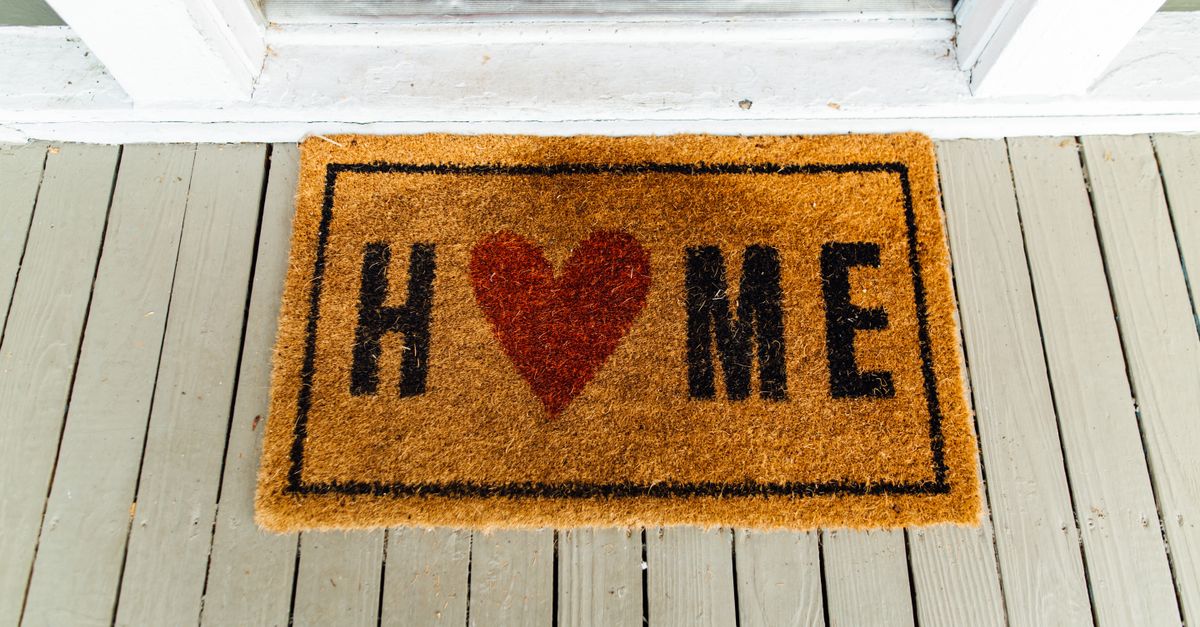
Mud is a problem that defeats plenty of door mats. You’ve probably stood in front of a mat and watched a family member walk straight over it, tracking half the garden indoors anyway. The issue is rarely effort — it’s the mat itself. The wrong material, the wrong pile height, the wrong backing: any one of those lets mud win.
This guide cuts through the marketing language to explain which mat types genuinely trap and hide mud, what separates a durable pick from a landfill candidate, and how to pair mats for an entryway that actually stays clean.

What Makes a Mat Effective Against Mud
Mud-stopping depends on two things working together: mechanical scraping and moisture absorption. Scraping removes chunky debris from boot soles; absorption deals with wet soil, rain water, and the fine silt that scraping misses. Most mats do one of these well and the other poorly.
- Scraping requires stiff, upright fibers or rigid nubs that force the sole of a shoe across an abrasive surface. Flat, dense weaves skip this entirely.
- Absorption requires sufficient pile depth and fibers with genuine wicking capacity — natural or synthetic. Shallow pile (under about 3/4 inch) fills up fast and stops working.
A third factor rarely mentioned in buying guides: drainage or drying capacity. A mat that holds moisture and never dries out becomes a mud reservoir and, eventually, a mold incubator. That’s especially relevant in covered but not fully sheltered entryways.
The Role of Backing
A mat without a non-slip, waterproof backing is a hazard on a wet porch or polished floor. Look for rubber (natural or thermoplastic) or a heavy vinyl backing that won’t curl at the corners after a few months outdoors. Cheap latex backings crack and delaminate — usually within a season in climates with real temperature swings.
The Best Mat Types for Muddy Entryways
Coir (Coconut Fiber)
Coir mats are the most effective scrapers available. Coconut husks are processed into stiff, rough fibers that dislodge chunks of mud and grit from even deeply lugged hiking or work boots. Standard coir pile runs 3/4 to 1 inch, which is enough depth to trap debris instead of just displacing it sideways.
The trade-off: coir absorbs very little water. Wet mud goes onto the mat and stays visibly wet. That’s fine if you also have an absorbent mat inside, but a solo coir mat in a very rainy climate won’t keep indoor floors dry. Coir also breaks down in constantly wet conditions — if your entryway is fully exposed to rain, expect a 1–2 year lifespan rather than 4–5 years for a sheltered mat.
Best for: Covered porches, barns, high-traffic back doors, households with dogs.
Rubber-Backed Microfiber
Microfiber mats trade scraping power for serious moisture absorption. A quality microfiber mat can absorb several times its own weight in water, and the pile traps fine silt particles effectively. The rubber backing keeps the mat flat and prevents moisture from wicking through to your floor.
The weakness is grit and mud chunks — stiff clods will sit on top rather than be scraped off. The solution, almost universally, is to pair a microfiber mat inside with a coir or rubber-scraper mat outside. That two-mat system is what high-traffic entryways in muddy climates genuinely need.
Best for: Interior entry zones, combining with an outdoor scraper mat.
Heavy-Duty Rubber Scraper Mats
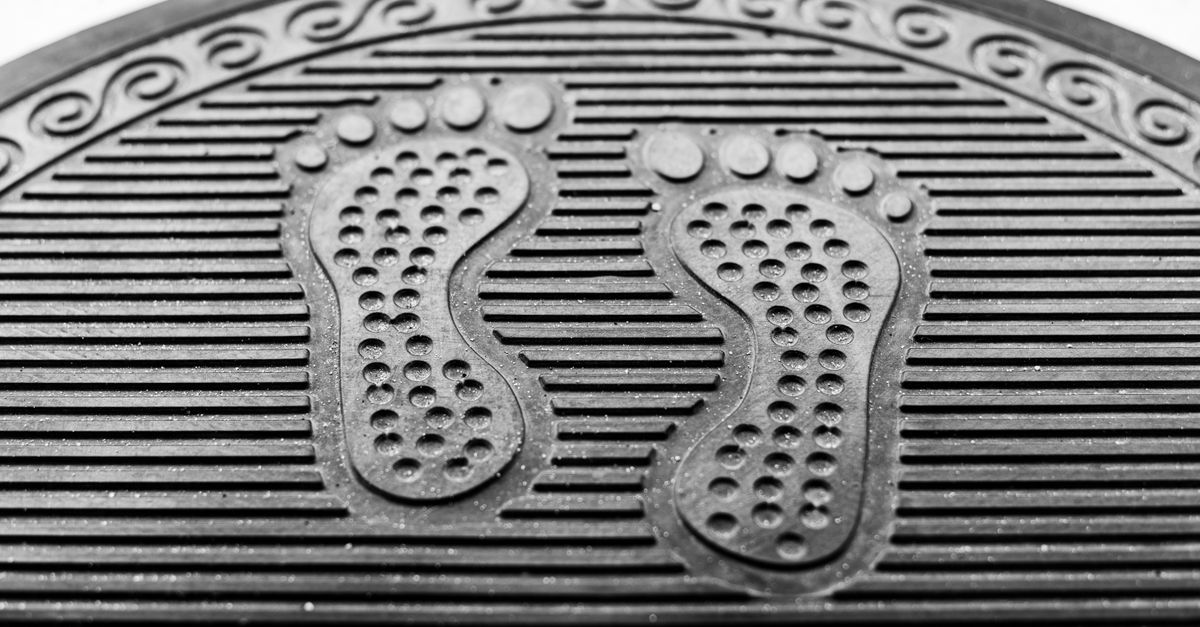
Thick molded rubber mats — often with raised nubs, channels, or a ribbed surface — are nearly indestructible and drain well. They don’t absorb mud, but channeled designs redirect water and loose soil downward, away from shoe soles. They’re common in commercial entryways for a reason: they’re easy to hose off, they don’t rot, and they last a decade with minimal care.
The downside is aesthetics and comfort underfoot. A commercial rubber mat is not going to look inviting by a front door. They’re more at home at side or back entrances, garages, or workshop doors.
Best for: Side doors, garages, barns, rental properties where longevity beats looks.
Waterhog-Style Mats
Waterhog (a trade name that’s become a generic category descriptor) mats are polypropylene mats with a distinctive raised-border design that creates a reservoir around the mat’s perimeter, trapping water so it doesn’t flow off the edges onto your floor. The surface is often a waffle or bi-level construction — raised scraping nibs above a drainage channel.
They sit between rubber scrapers and microfiber in terms of mud performance: reasonably good at both scraping and holding moisture, and they dry faster than natural fiber or microfiber because the polypropylene pile doesn’t hold water as deeply. Cleaning is simple — a garden hose does the job.
They’re a strong all-around pick for households that want one mat to do most of the work. Sizes go large, which matters: a mat under 18×30 inches is too small for most entryways — boots will step over it rather than on it.
Best for: Front doors, households that want one mat rather than a system, any climate.
Artificial Turf / Astroturf Mats
Fake grass mats have genuine scraping ability from their upright plastic blades, dry quickly (water falls straight through), and resist UV degradation well. Mud and debris tend to collect at the base of the pile where rain eventually washes it through. They’re lightweight and cheap enough that replacing them every couple of years isn’t painful.
The concern: the plastic backing can trap debris underneath, and they’re not as aggressive a scraper as coir. In genuinely heavy mud conditions they fill up faster than their appearance suggests.
Best for: Budget-conscious buyers, partly sheltered entryways with moderate mud.
Sizing and Placement: The Most Common Mistake
Undersize is the single most common reason an entryway mat fails. If a mat is smaller than the door width it’s supposed to serve, one person can step over it; a dog will clear it in a bound. Practical minimums:
- Single door: 24×36 inches (or wider). 18×30 is a last resort.
- Double door or wide entryway: 36×60 inches minimum.
- Mudroom or back entry: A runner 24 inches wide by 48–72 inches long gives room for boots to come off before stepping onto finished flooring.
For entryways with steps, a mat sized to the landing — not just the doorstep — dramatically improves mud capture because it gives visitors room to wipe both feet deliberately rather than doing one quick shuffle.
Two-mat layering (outdoor scraper + indoor absorber) is not an upsell — it’s the only reliable way to stop mud in genuinely wet or muddy climates. Think of the outdoor mat as removing 80% of debris and the indoor mat as catching the remaining wet silt.
If your muddy entryway problem is really part of a bigger clutter issue near the door, How to Declutter Your Home Step by Step (That Actually Works) can help you tackle the surrounding chaos too.
Cleaning and Maintenance by Mat Type
Even the best mud mat stops working if you don’t manage the build-up.
- Coir: Shake vigorously or beat against a wall weekly in heavy use. Vacuum with a stiff-brush attachment. Don’t saturate with water — air dry completely if wet. Occasionally hose off and lay flat in the sun to dry.
- Microfiber: Machine wash every 2–4 weeks in heavy-mud households; cold water, no fabric softener (softener coats the fibers and kills absorption). Tumble dry low or air dry.
- Rubber scraper: Hose off or power wash. Occasionally scrub with a stiff brush and mild soap. Nothing fancy required.
- Waterhog-style: Hose off; the drainage channels shed debris quickly. Machine-washable versions exist but many are too large for home washers — check the spec before buying.
- Artificial turf: Hose through the pile to flush debris down and out. Let dry fully before replacing at the door.
Recommended Products Worth Considering
A few consistently well-regarded options across the mat types described above — all widely available through major retailers and home stores:
Waterhog Classic Mat (M+A Matting): The original Waterhog design, made in the US, with a border-trap construction that genuinely holds water. Available in a wide range of sizes and colors. Polypropylene pile, rubber backing.
Gorilla Grip Original Chenille Bath and Door Mat: Better known as a bath mat but the chenille pile absorbs mud silt effectively for interior entry use. Machine washable. Works best as the second mat in a two-mat system.
Kempf Natural Coconut Coir Mat: A straightforward, heavy coir mat with a thick rubber backing — no fancy branding, just dense fiber and solid construction. Widely available in sizes up to 36×60 inches.
Durable Corporation Brush Step Mat: A scraper-bristle mat with individually embedded nylon bristles that clean lugged boot soles well. More aggressive than coir on deep tread patterns, though it looks utilitarian.
Ottomanson All-Season Rubber Mat: A molded rubber outdoor mat with a raised pattern and drainage slots. Budget-friendly, hose-clean, and holds up to heavy weather.
Note: This site may earn a commission if you purchase through our links — this does not affect which products appear here or our assessments of them.
While you’re improving your entryway, a wobbly handle is another quick fix worth handling, and Loose Door Knob? Fix It in Under 30 Minutes walks you through it.
Frequently Asked Questions
How often should I replace a door mat for muddy use?
Coir mats in exposed, wet locations typically last 1–3 years; sheltered ones can go 4–6. Rubber and polypropylene mats last much longer — 5–10 years is realistic with basic maintenance. Microfiber mats start losing absorption efficiency once the pile compacts, usually after 2–3 years of heavy washing. Replace any mat as soon as it stops lying flat or the pile is visibly crushed.
Can one mat really stop muddy paw prints from dogs?
For very muddy conditions, one mat rarely handles it fully. A rough outdoor scraper mat removes most debris from paws; a microfiber or chenille mat just inside the door absorbs the residual wet mud. Some households also keep a small absorbent mat near the door specifically for a quick paw wipe after walks — that works better than hoping a passive mat alone catches everything.
Does mat color matter for hiding mud?
Practically speaking, yes. A medium-tone charcoal, brown, or tan mat hides dirt between cleaning cycles far better than a light beige or black (which shows light dust). That said, a mat that hides mud is not a mat that has been cleaned — don’t let a dark color become an excuse to skip maintenance.
Are indoor entry mats a mold risk?
They can be if they stay wet. Any mat that’s regularly soaked and doesn’t dry fully can develop mold or mildew on the backing or underside — which can affect indoor air quality in an enclosed entry. The fix is regular washing, full drying before replacement, and choosing mats with open-cell or channeled construction that allows airflow. Rubber mats are least at risk because they don’t hold moisture in a fiber matrix.
What’s the minimum mat thickness that actually works?
For scraping: a coir or rubber mat of at least 3/4 inch pile or nub height. Thinner mats tend to push debris forward rather than trapping it beneath the surface level of the fibers. For absorption: microfiber or chenille mats should be at least 1/2 inch pile to hold meaningful moisture before becoming saturated.
The right mat for a muddy entryway is almost never the cheapest or the prettiest — it’s the one sized correctly for the door, matched to your climate, and part of a two-step outdoor-scrape, indoor-absorb system. Get that architecture right and even a genuinely muddy household can maintain clean floors without constant mopping.
Recommended products
- Waterhog Classic Mat by M+A Matting — The gold standard in water-trapping door mats — border construction holds runoff on the mat, not your floor, and the polypropylene pile survives years of hosing down.
- Kempf Natural Coconut Coir Doormat — Dense coconut fiber pile aggressively scrapes mud from boot soles, with a thick rubber backing that keeps it flat and in place.
- Durable Corporation Brush Step Scraper Mat — Individually embedded bristles dig into lugged boot treads better than flat-surface scrapers — ideal for hiking or work boots.
- Gorilla Grip Chenille Door Mat — Machine-washable chenille pile absorbs wet mud silt effectively — best used as the indoor second mat in a two-mat entryway system.
- Ottomanson All-Season Rubber Outdoor Mat — Budget-friendly molded rubber mat with drainage slots that hoses clean in seconds — a practical pick for side doors and garages.