Polenta from Scratch: Smooth, Creamy Results Every Time
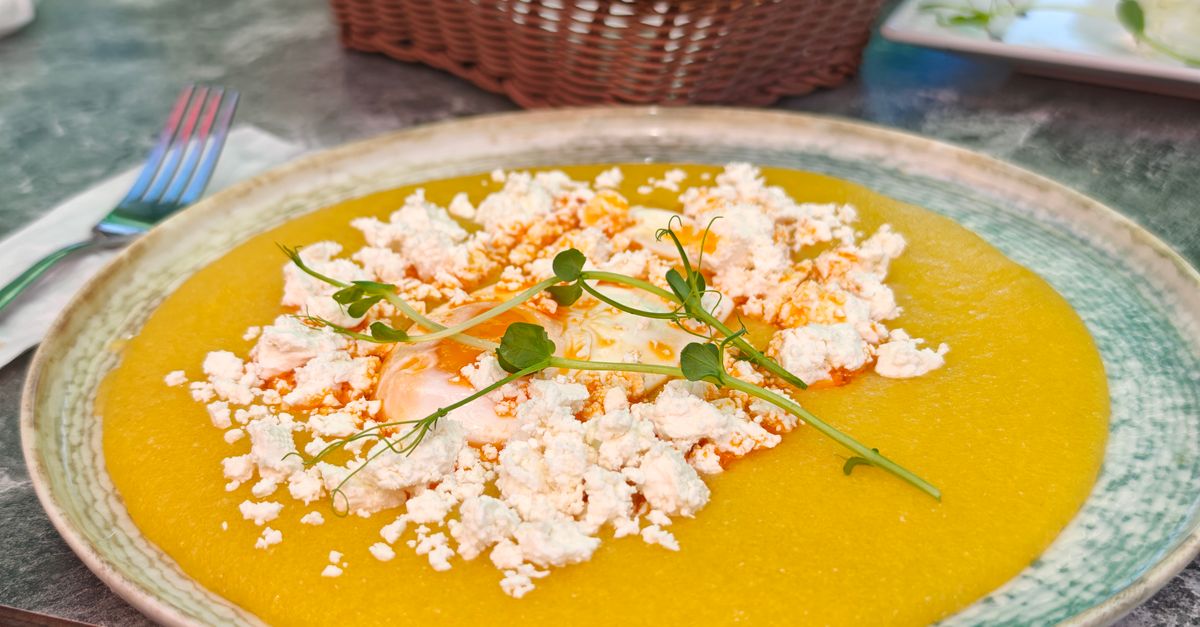
Polenta has a reputation for going lumpy, burning, or turning into a gluey brick — none of which has anything to do with the grain itself. The problems almost always trace back to water ratio, heat, and how quickly you add the cornmeal. Get those three things right and you end up with something genuinely silky: a base that soaks up braises, holds a fried egg beautifully, or sets firm enough to grill into golden slabs.
What Kind of Cornmeal Should You Use?
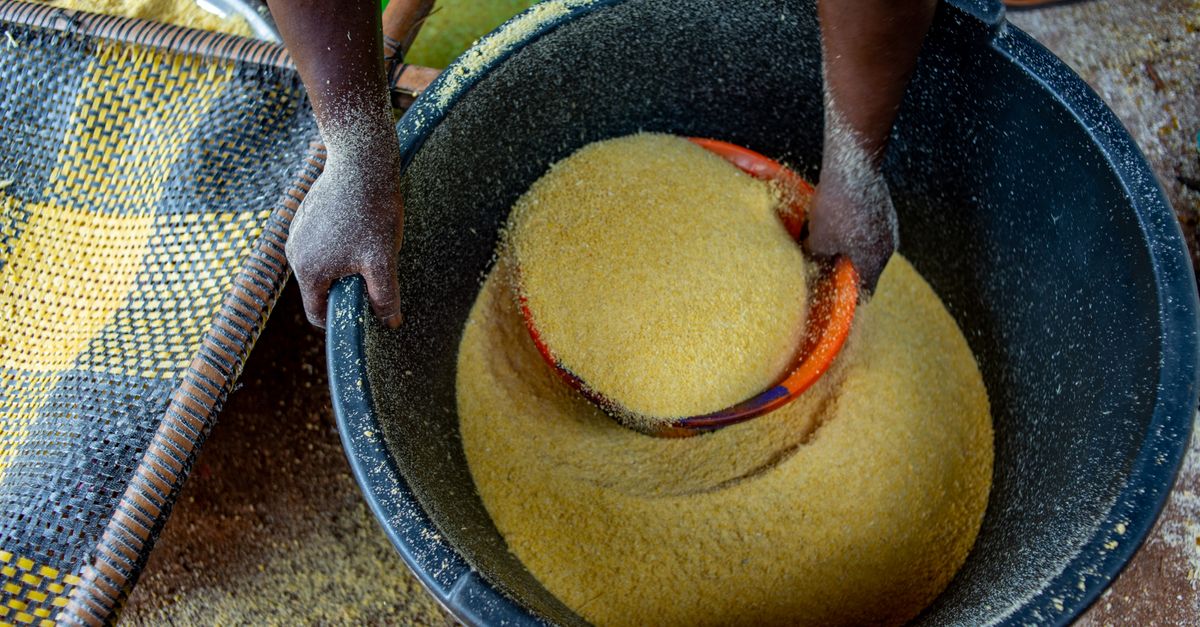
The short answer: coarse-ground, stone-ground cornmeal labeled “polenta” or “grits” gives the best texture and flavor. Fine cornmeal cooks faster but produces a thinner, pastier result. Instant polenta trades most of the corn flavor for convenience. If a recipe calls for coarse cornmeal and you only have medium, the dish still works — expect a slightly softer, less toothsome texture.
Stone-ground cornmeal retains more of the germ, which means more corn flavor and a slightly shorter shelf life. Store it in the fridge or freezer once opened. Standard degerminated cornmeal (most supermarket boxes) keeps longer but tastes blander.
For the best eating, look for coarse-ground, stone-ground yellow cornmeal. White cornmeal is equally valid — it produces a milder flavor that many Italian cooks prefer for delicate preparations.
The Basic Ratio and Technique
A reliable starting ratio is 1 part cornmeal to 4 parts liquid. Most cooks use water for an everyday result, or combine water with whole milk or unsalted stock for something richer. Using all milk can make polenta taste heavy and tends to scorch; a 50/50 water-and-milk split is a sweet spot if you want creaminess without the risk.
What you need for 4 servings:
- 1 cup coarse cornmeal
- 4 cups liquid (water, or 2 cups water + 2 cups whole milk)
- 1 teaspoon kosher salt
- 2 tablespoons butter or olive oil (added at the end)
- Parmesan, if you want it cheesy
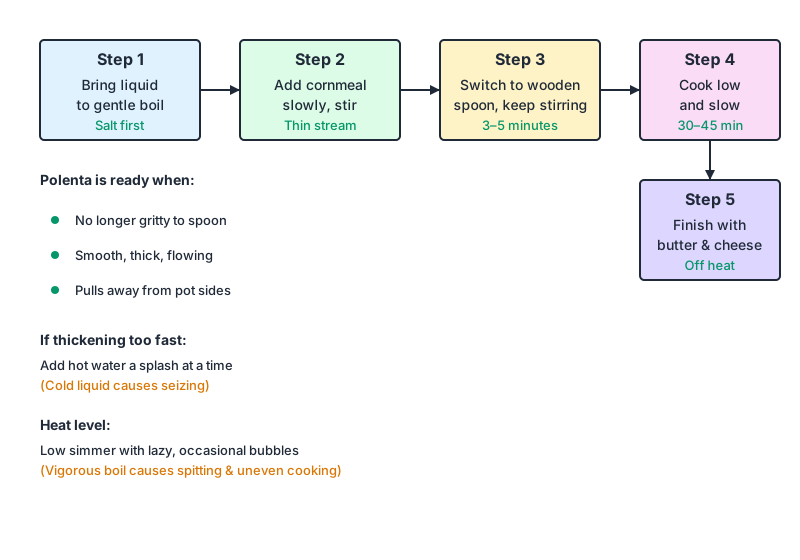
Step 1: Bring the liquid to a gentle boil
Salt the water before anything else — salting at the end tastes flat. Use a heavy-bottomed pot (a Dutch oven or thick saucepan); thin pots create hotspots and the polenta will stick and burn at the base before the top is done.
Step 2: Add the cornmeal slowly
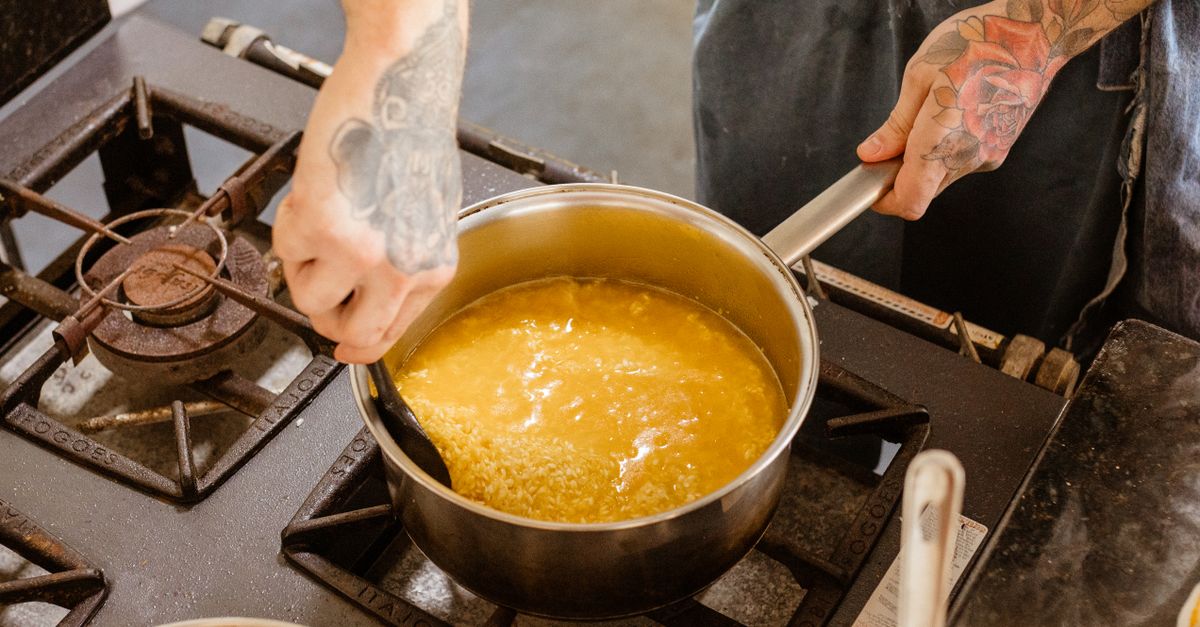
This is the step most recipes rush, and it’s why lumps happen. Reduce the heat to a low simmer first. Pour the cornmeal in a thin, steady stream with one hand while stirring constantly with the other. If you dump it all at once, the granules clump together before they can hydrate individually. A whisk works well here for the first minute or two.
Step 3: Switch to a wooden spoon and keep stirring
Once the cornmeal is incorporated, switch to a long-handled wooden spoon. The polenta will thicken quickly — within 3 to 5 minutes you’ll see it pulling away from the sides. Keep the heat low (you want lazy, occasional bubbles, not a vigorous boil) and stir frequently, scraping the bottom and edges. Vigorous heat causes spitting and uneven cooking.
Step 4: Cook low and slow
Coarse polenta needs time. Depending on your cornmeal’s grind, expect somewhere between 30 and 45 minutes of cooking over low heat, stirring every few minutes. It’s done when the grains no longer feel gritty against the spoon and the polenta has a smooth, thick, flowing consistency. Undercooked polenta tastes chalky and mealy.
If it thickens too fast and starts sticking before the texture is right, add hot water (not cold — cold liquid causes seizing) a splash at a time and stir it in.
Step 5: Finish with fat
Off the heat, stir in butter, a drizzle of good olive oil, or both. If you’re making cheesy polenta, add finely grated Parmesan now and stir vigorously — the residual heat melts the cheese without breaking it. Taste for salt.
Serving Soft Polenta vs. Setting It Firm
Soft polenta should be served immediately. It firms up fast once off the heat, and attempts to reheat it in the same pot often produce a lumpy paste. If you must hold it, press plastic wrap directly onto the surface (to stop a skin forming) and keep it over the lowest possible heat, adding a splash of water and stirring before serving.
For firm, sliceable polenta — the kind you can grill or pan-fry — pour the finished soft polenta into a lightly oiled baking dish or onto a sheet pan. Spread it to an even thickness (somewhere between half an inch and an inch works well for most applications). Let it cool at room temperature, then refrigerate uncovered until fully set, usually a couple of hours.
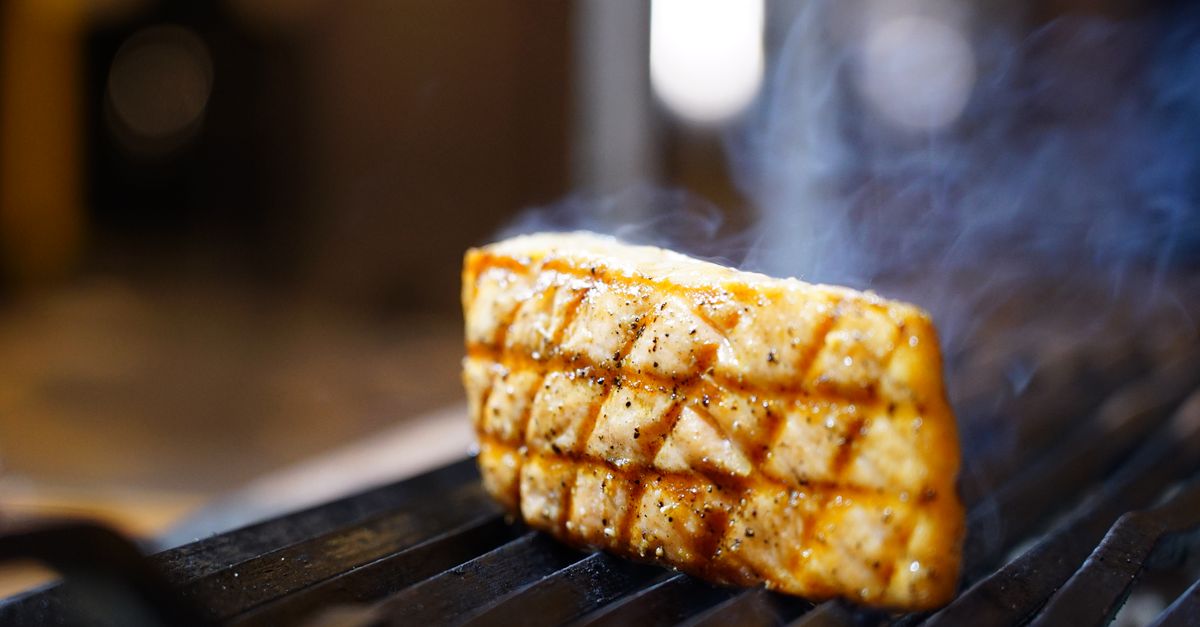
Once set, cut it into rectangles, triangles, or rounds. Pan-fry in a little olive oil over medium-high heat until a golden crust forms on each side — roughly 3 to 4 minutes per side. Grill marks and a slightly crispy exterior are the reward for the extra step.
| Form | Texture | Best used for | Key pitfall |
|---|---|---|---|
| Soft, freshly made | Creamy, flowing | Braises, ragù, roasted mushrooms | Must serve immediately |
| Chilled and sliced | Firm, holds shape | Grilling, pan-frying, baking | Needs enough time to fully set |
| Reheated with liquid | Looser, slightly grainy | Weeknight leftovers | Needs hot liquid, constant stirring |
Why Is My Polenta Lumpy or Gluey?
Lumps almost always mean the cornmeal went in too fast. Once clumps form, they don’t dissolve easily — you can press them against the side of the pot with the back of a spoon to break them down, but prevention is easier than the cure.
Gluey, heavy polenta usually comes from one of three places: too fine a grind, too high a ratio of cornmeal to liquid, or not enough cooking time. Undercooking leaves raw starch granules intact; overcooking at too high a heat cooks off too much moisture and produces a dense mass. The fix is more time on low heat with additional hot liquid stirred in.
Bitterness or an off flavor points to cornmeal that’s past its prime. Whole-grain and stone-ground varieties go rancid faster than refined cornmeal — a stale, slightly sour smell before cooking is a reliable sign to replace the bag.
The same starch-and-moisture principles are at play when grains turn out wrong, so if you’ve ever wondered why a pot of rice goes mushy or crunchy, How to Cook Perfect Rice Every Time: Why It Turns Mushy Or Crunchy breaks down the science.
Flavor Variations Worth Trying
Basic buttered polenta is excellent, but the technique stays the same across a lot of variations:
- Parmesan and black pepper: A generous amount of finely grated Parmesan plus coarsely cracked pepper turns simple polenta into something close to a side dish that can carry a meal on its own.
- Herb oil: Stir a spoonful of basil or parsley oil in at the finish instead of plain butter. It adds color and brightness.
- Goat cheese: Crumbled in at the end, it adds tang and a slightly looser texture.
- Stock instead of water: Vegetable or chicken stock as the base liquid adds savoriness without any visible additions. It also reduces the need for much additional salt, so taste carefully before seasoning.
- Roasted garlic: Squeeze a head of roasted garlic into the polenta just before finishing. Stir well.
Frequently Asked Questions
Can you make polenta ahead of time?
Yes, though the best approach depends on how you want to serve it. For firm polenta, make it a day ahead, refrigerate it set in a pan, and grill or fry to order. For soft polenta, it doesn’t hold well beyond an hour or so — make it as close to serving time as you can. Reheating with added hot liquid and vigorous stirring brings it mostly back, but the texture will be slightly less smooth than fresh.
Is polenta gluten-free?
Cornmeal is naturally gluten-free, but cross-contamination at the mill is a real concern for people with celiac disease. If that’s relevant, look for a bag specifically labeled gluten-free and processed in a dedicated facility.
What’s the difference between polenta and grits?
Both are made from ground corn cooked in liquid, and the technique is essentially the same. The main differences are in the variety of corn used and the grind. Traditional Southern grits use hominy (corn treated with an alkali) or a different corn variety, giving a slightly different flavor. Stone-ground grits and coarse polenta can often be used interchangeably in recipes.
How do you stop polenta from sticking to the pot?
A heavy-bottomed pot and low heat are the two biggest factors. Stirring frequently — especially scraping the base — prevents the layer at the bottom from scorching before it can be incorporated. If you’re consistently getting a stuck crust, try lowering the heat further or using a pot with a thicker base.
Can you cook polenta in a slow cooker?
Yes, and it’s a hands-off approach suited to coarse-ground cornmeal. The general approach is to combine the cornmeal and liquid in the slow cooker (cold start), set it to low, and cook for a few hours, stirring once or twice during cooking. The texture tends to be slightly coarser than stovetop polenta but the effort is minimal. Finishing with butter and cheese at the end is the same.