Rainy-Day Pajeon: Whole Scallions, Squid, and a Thin, Crisp Batter
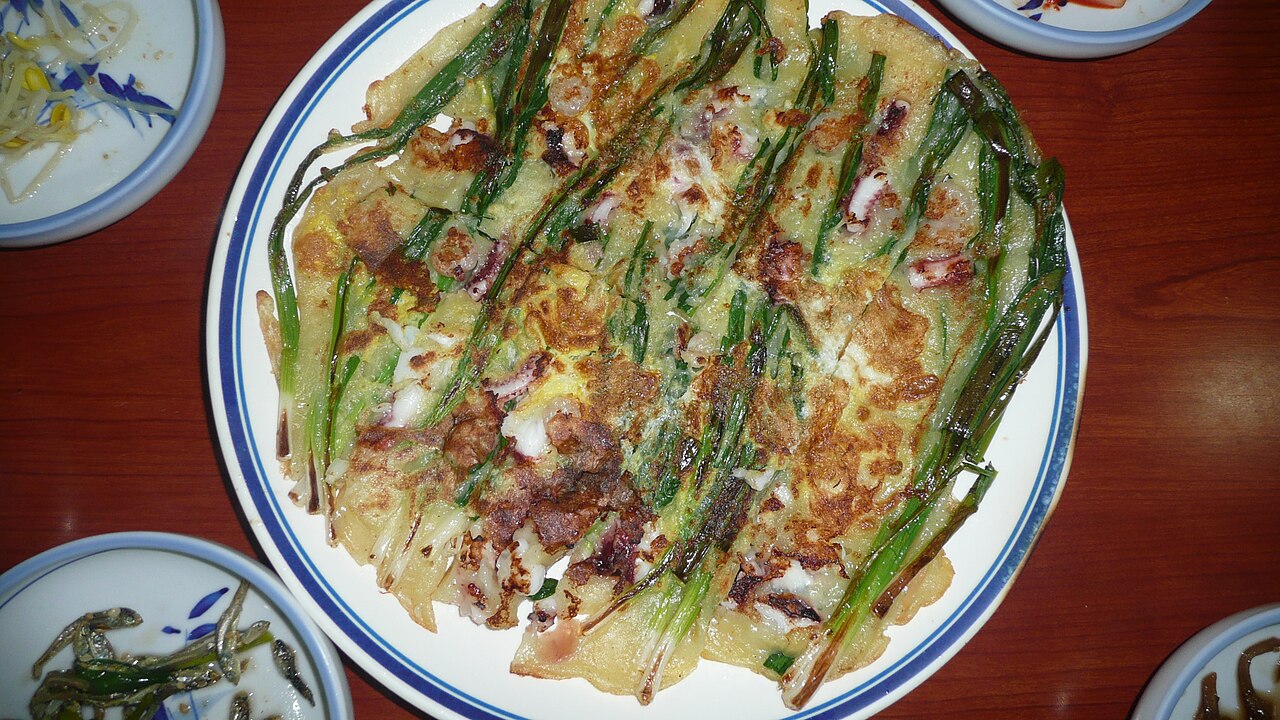
I learned to make pajeon from the owner of a restaurant I’ve been going to for years. I make it now and then, mostly on rainy days.
As a kid I hardly ever ate pajeon. It’s something I came to later.
Ingredients (2 pancakes, about 24 to 26 cm / 10 inches across)
Scallions and seafood
- Scallions (jjokpa, thin Korean green onions): a big handful, 180 to 200 g (about 7 oz)
- Squid, cleaned: 100 g (about 3 1/2 oz)
- Shrimp, peeled: 100 g (about 3 1/2 oz)
- Shelled clams: a little, optional
Batter
- Korean pancake mix (buchim-garu): 100 g
- Korean frying mix (twigim-garu): 40 g
- Cold water: 180 to 200 ml (about 3/4 cup)
- Egg: 1, beaten, optional
- Cooking oil: about 2 tablespoons per pancake, plus a little more
Dipping sauce
- Soy sauce (jin-ganjang, regular Korean soy sauce): 2 tablespoons
- Vinegar: 1 tablespoon
- Water: 1 tablespoon
- Gochugaru (Korean chili flakes): 1/2 teaspoon
- Thinly sliced hot green chili or green onion: a little
The scallions
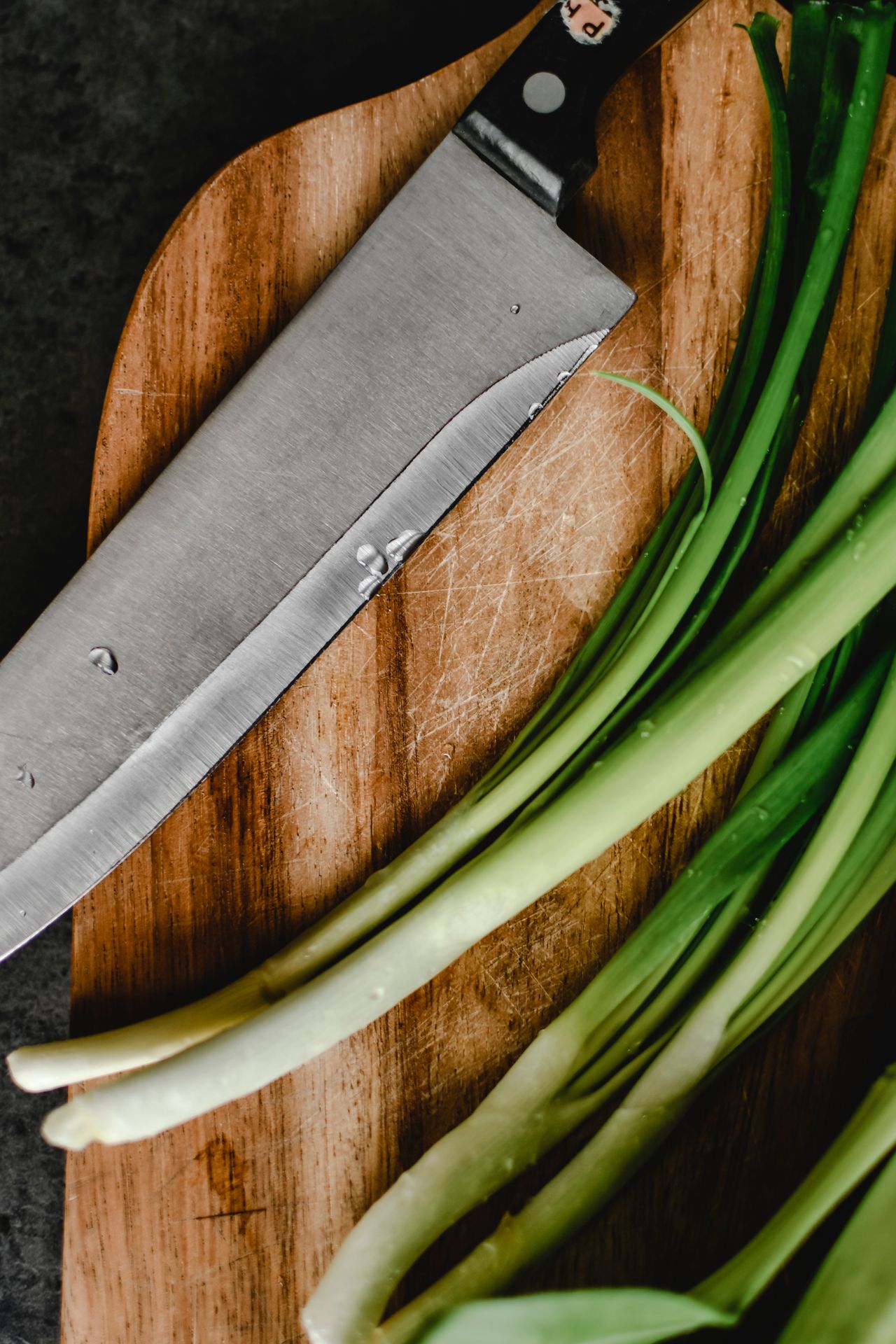
I mostly use jjokpa, the thin Korean scallions. They’re thinner and softer than the big green onions (daepa), so they suit pajeon better.
Wash them, cut off the roots, and shake off the water. I only cut the ones that are too long for the pan in half. Most of them go in whole and long. Lined up side by side, they look good and they give the pancake something to bite into.
For two pancakes I use a big handful, about 180 to 200 g.
If I can’t get jjokpa, I use daepa instead. I split it in half lengthwise and slice it thin.
The seafood
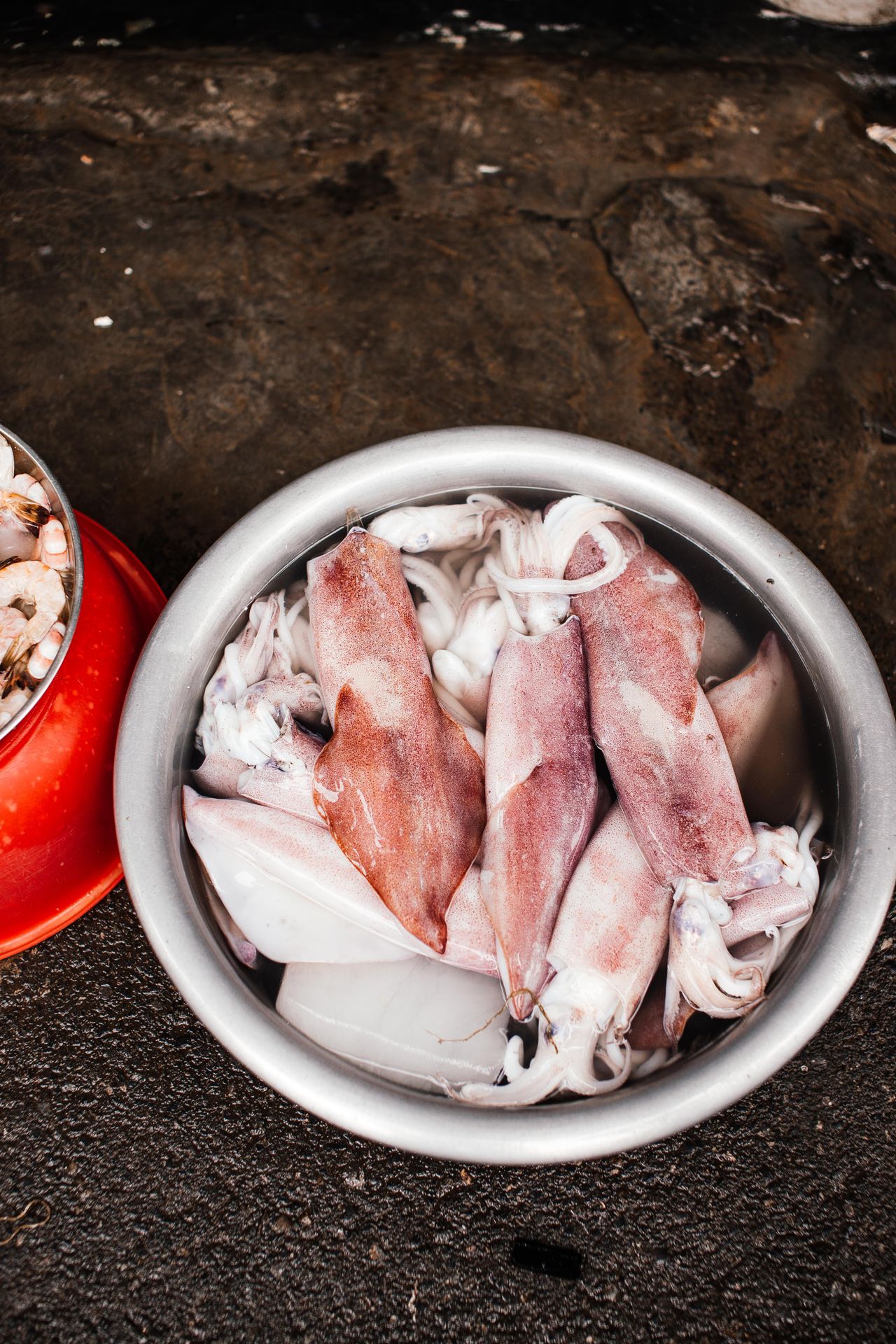
When I have seafood, I usually add squid and shrimp. For two pancakes, 100 g of cleaned squid and 100 g of shrimp is about right.
Slice the squid thin so it’s easy to eat. If the shrimp are big, cut them in half. A few shelled clams are good too.
Rinse the seafood, then pat it dry well with a paper towel. If it’s wet, the batter gets soggy and the oil spits.
When there’s no seafood, I make it with just scallions. The sweetness of the scallions comes through, and that’s delicious on its own.
The batter: thin, cold, and barely mixed
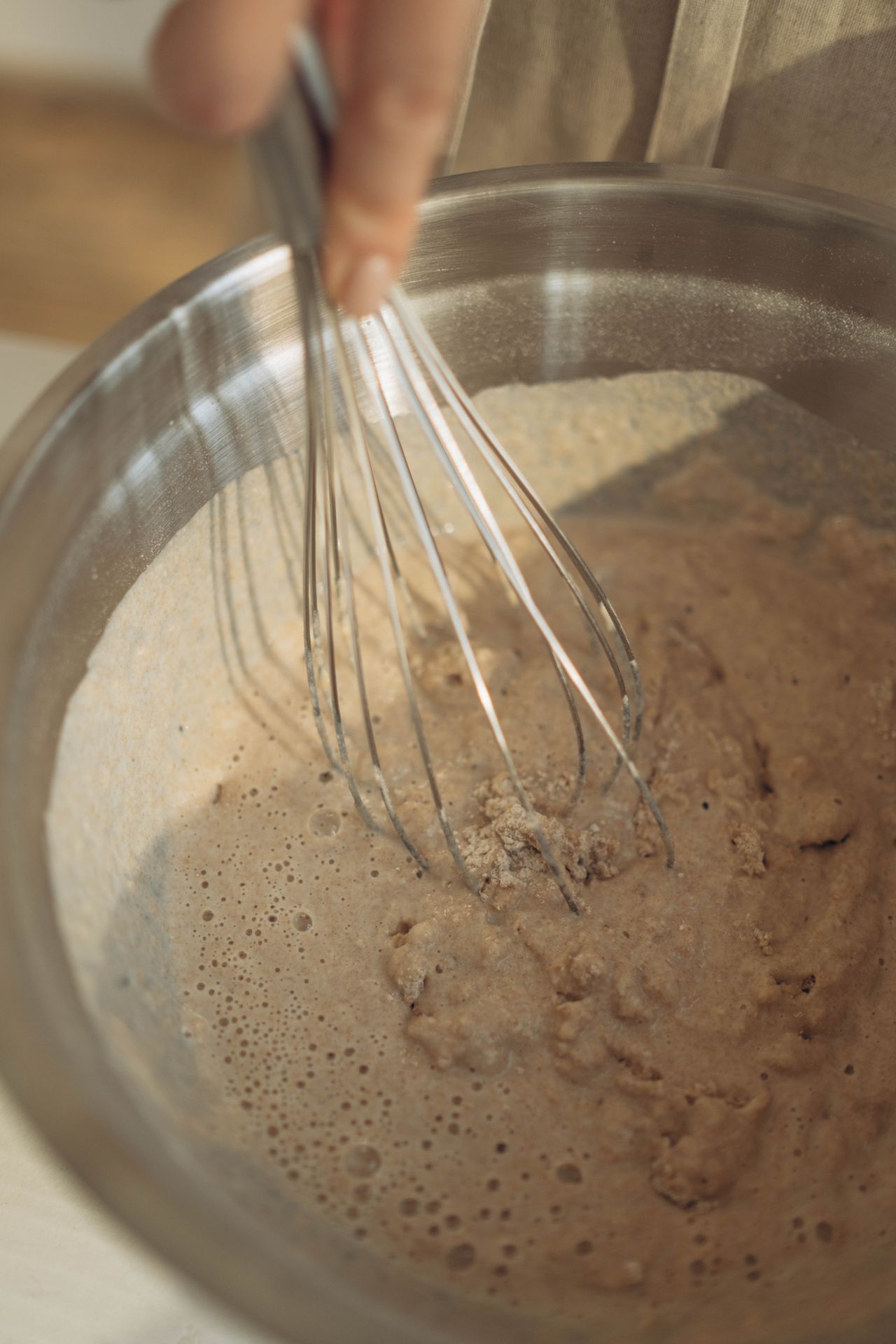
I mix Korean pancake mix with a little frying mix. For two pancakes that’s 100 g of pancake mix and 40 g of frying mix, with 180 to 200 ml of cold water.
Don’t pour in all the water at once. Add it a little at a time until it’s the right thickness. When you lift a spoonful and let it fall, it should run off in a stream, but not be as thin as water.
If you stir it for too long it can turn tough, so mix only until the flour is roughly blended.
I usually don’t put the egg in the batter. I beat one egg and drizzle a little over the top while the pancake cooks.
The pancake mix is already seasoned, so I hardly add any salt. If you’re using only plain flour, add two pinches of salt.
Into the pan
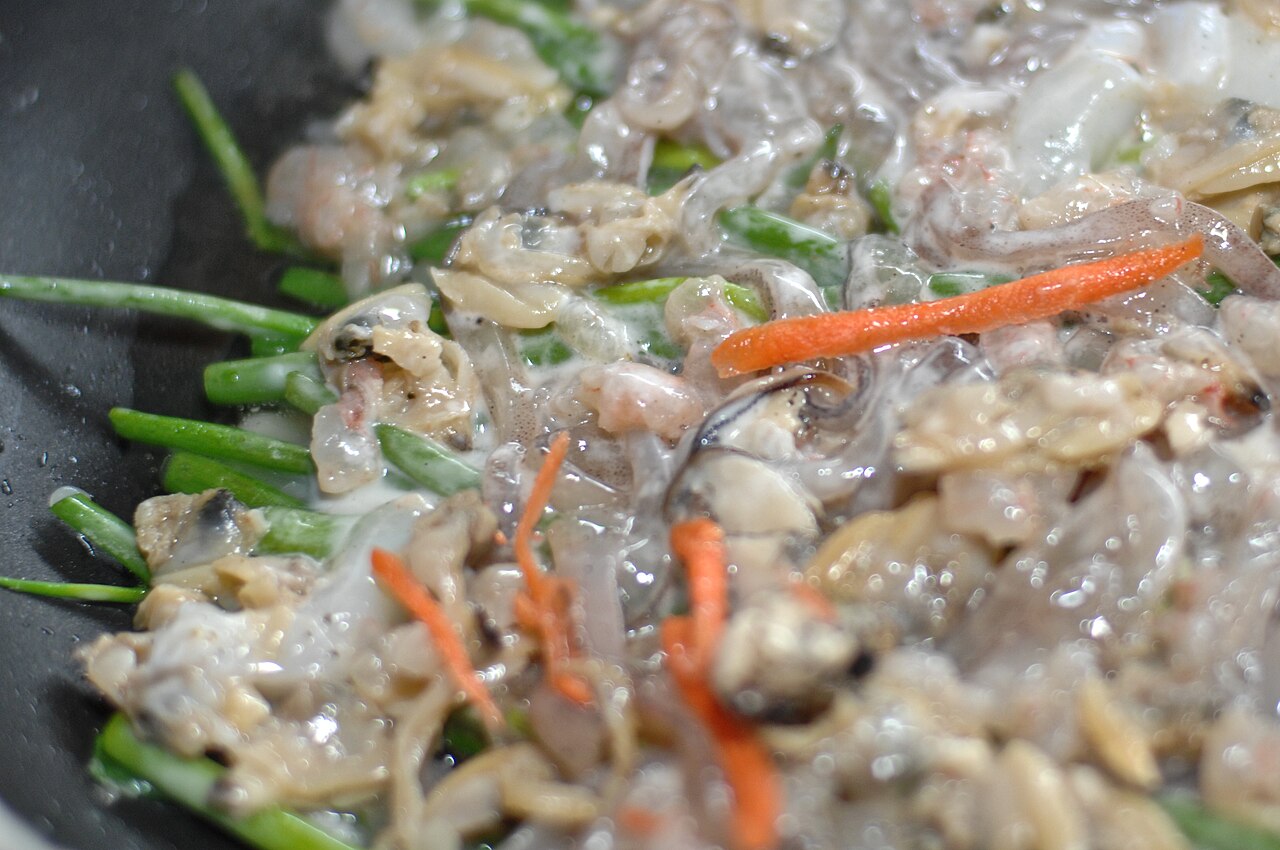
Photo: USAG- Humphreys, CC BY 2.0, via Wikimedia Commons
- Heat the pan over medium heat first, then add about 2 tablespoons of oil.
- Lay the scallions in the pan, all facing the same way.
- Spoon a thin layer of batter over them. It only needs to get in between the scallions. Don’t cover the whole pan with a thick layer.
- Spread the seafood evenly on top, and drizzle on one or two more spoonfuls of batter so it sticks.
- If you’re using egg, pour a thin layer of the beaten egg over the top.
- Cook over medium heat. Once the bottom has set, turn it down to medium-low so it cooks through.
If the pan looks dry, add about 1 tablespoon of oil around the edge.
Flip it, and keep it crisp
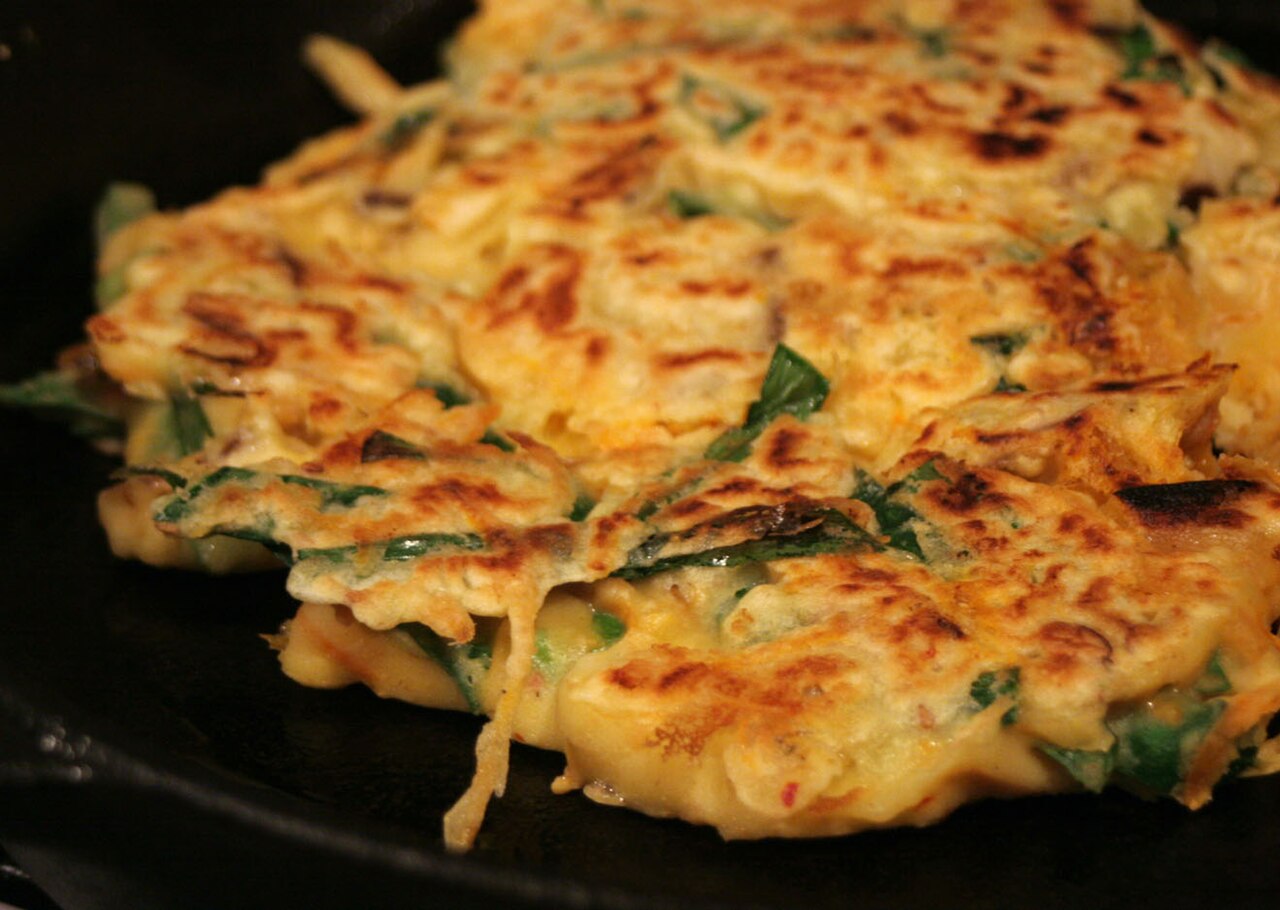
Photo: Maggie, CC BY 2.0, via Wikimedia Commons
Flip it when the edges are golden and the top has mostly set. That takes about 3 to 4 minutes, but it depends on your pan and how thick the pancake is, so go by the color.
Turn it in one go with a big spatula. If you’re not confident, put a plate over the pan, turn it out onto the plate, and slide it back into the pan.
Cook the other side for another 3 to 4 minutes, and check that the seafood is cooked all the way through.
For a crisp pancake:
- Keep the batter thin, and use cold water.
- Don’t crowd the pan.
- Don’t be stingy with the oil.
If you stack finished pancakes, they go soggy fast. Spread them out separately, and eat them right away. That’s when they’re best.
Cutting, and the dipping sauce
I put the pancake on a cutting board and cut it into squares with scissors or a knife. If you cut it while it’s piping hot, the seafood and scallions can pull out, so let it cool for a moment first.
For the dipping sauce, I mix 2 tablespoons of soy sauce, 1 tablespoon of vinegar, 1 tablespoon of water, and 1/2 teaspoon of gochugaru, then add a little sliced hot green chili or green onion. If you don’t like it tangy, use only half a tablespoon of vinegar.
Sometimes I also slice an onion thin and let it sit in soy sauce for a bit to serve on the side.
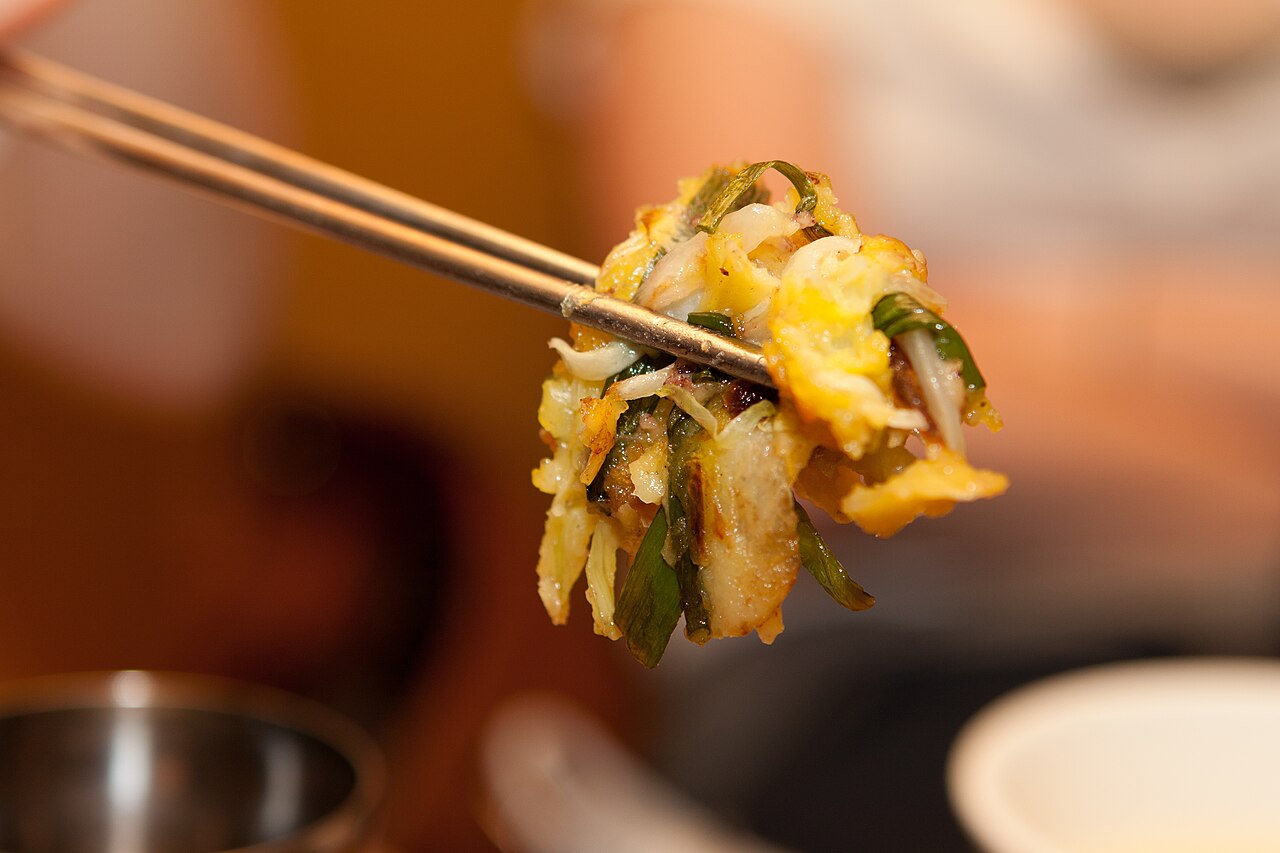
Photo: Jirka Matousek, CC BY 2.0, via Wikimedia Commons
What I eat with it
Pajeon is best freshly made, while it’s still warm. You don’t need much with it. The dipping sauce and some kimchi are enough.
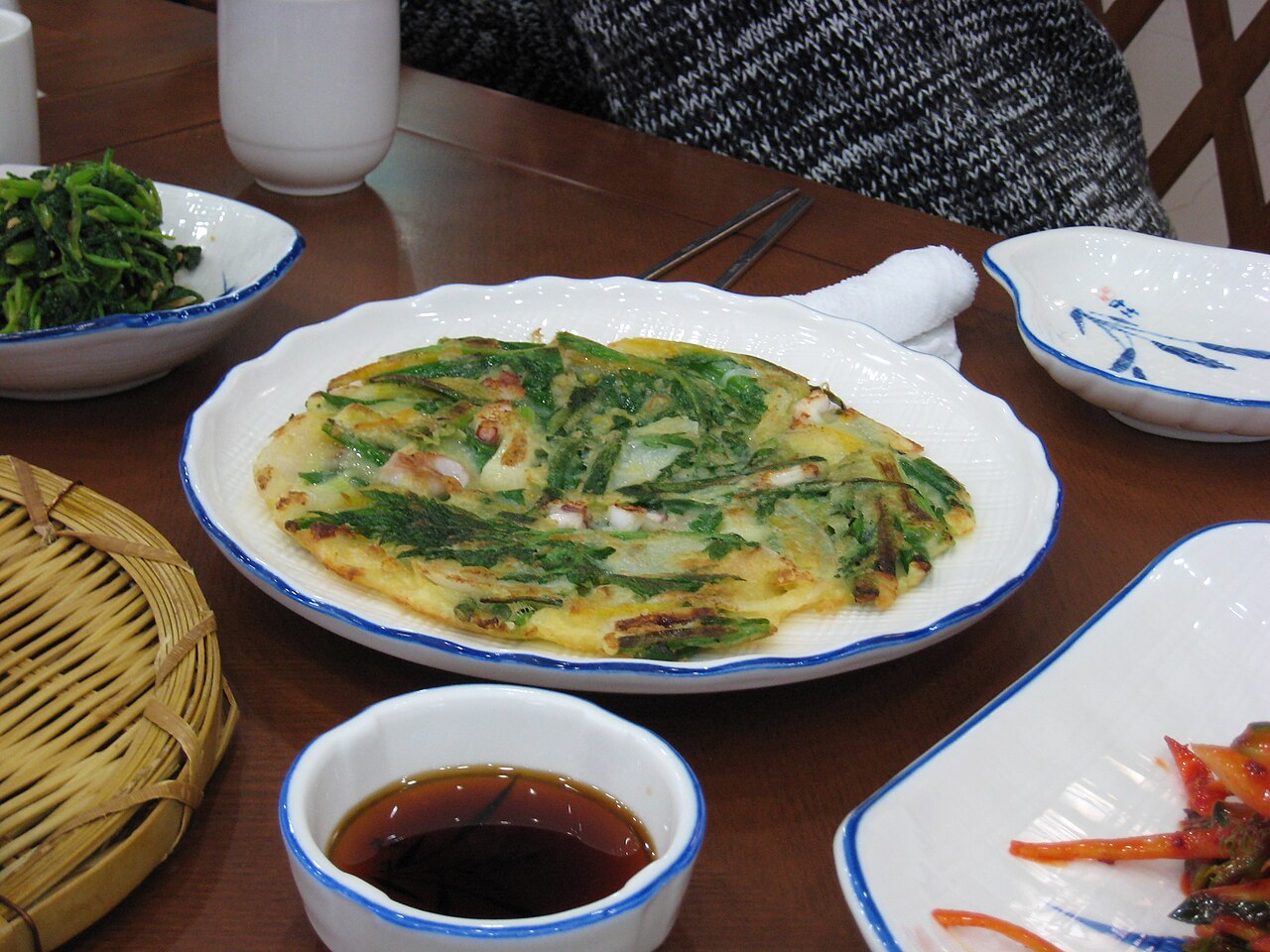
Photo: karendotcom127, CC BY 2.0, via Wikimedia Commons
People often say pajeon goes with makgeolli (Korean rice wine) on a rainy day, and it’s true. Makgeolli is mild and a little tangy, and it goes well with an oily pancake. If you don’t drink, barley tea or sparkling water is good too.
When guests come over, I cut the pajeon into small pieces, put them on a big plate, and serve them with kimchi or musaengchae (shredded radish salad).
Kimchijeon, and more seafood
I change it up depending on what I have.
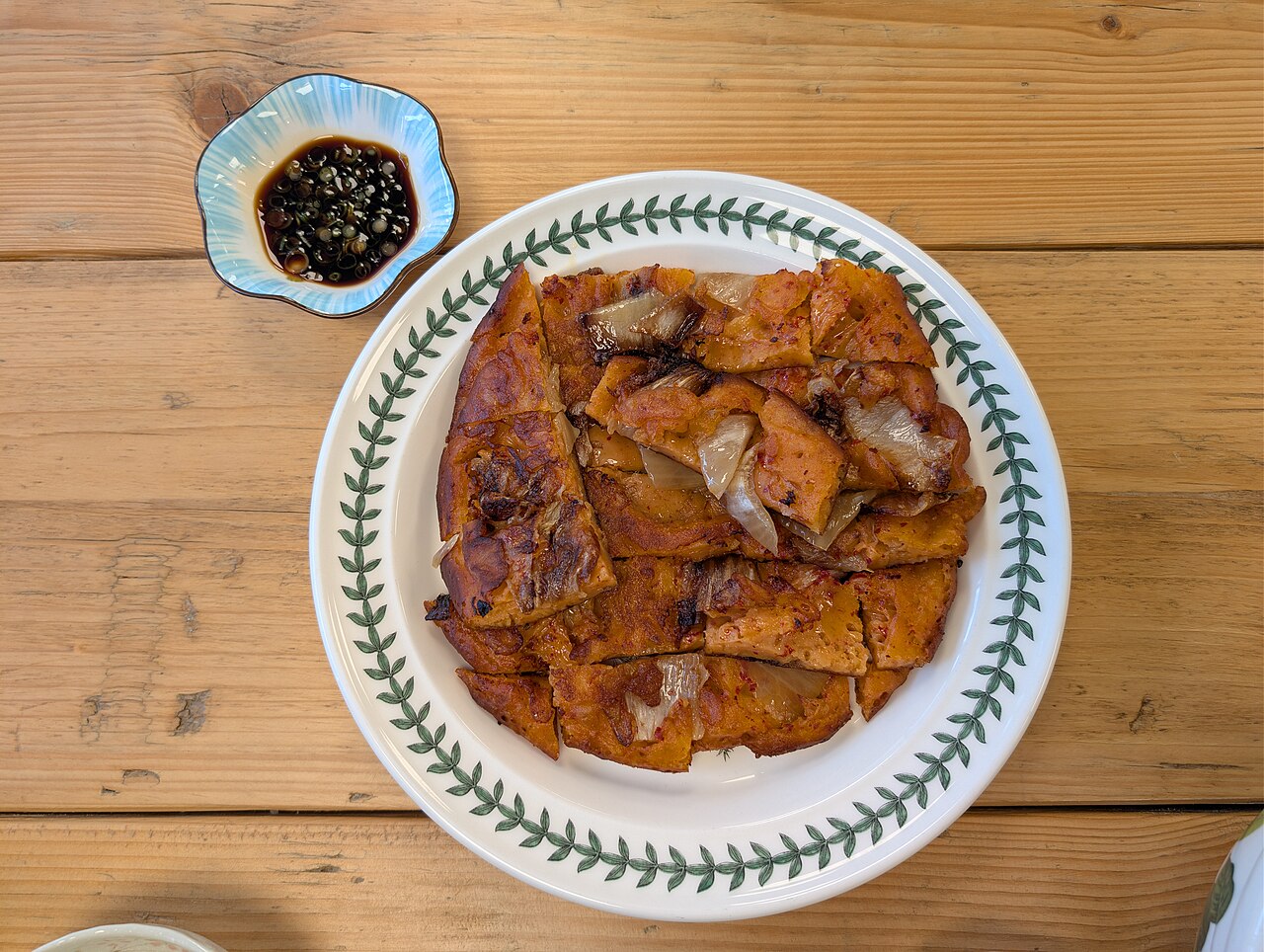
Chop well-ripened kimchi finely and mix it into the batter, and you have kimchijeon. The kimchi is already seasoned, so I don’t add salt. (Ripe, sour kimchi is also what goes into my mother’s kimchi jjigae.)
For seafood pajeon (haemul-pajeon), adding plenty of shrimp or squid makes the flavor richer. But if you pile on too much, it breaks apart easily when you flip it.
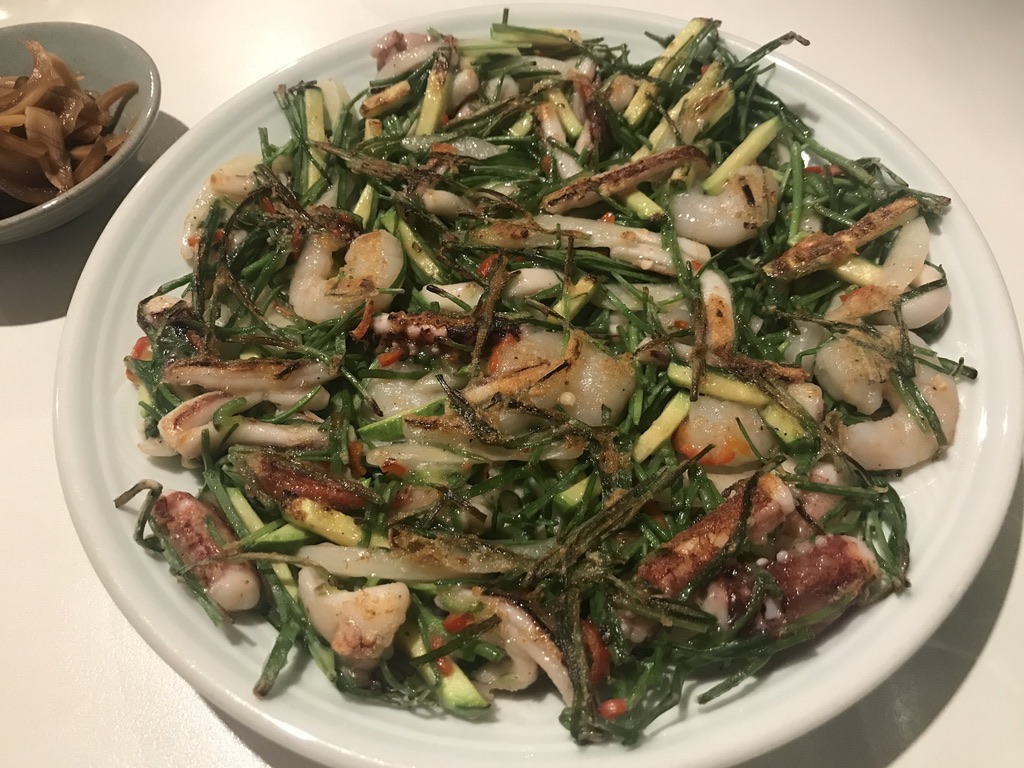
Photo: lazy fri13th, CC BY 2.0, via Wikimedia Commons
Every home does it a little differently. Some lay the scallions whole and pour egg over the top. Others chop the scallions small and mix everything into the batter. I like the long scallions better, but when I want small, thin pancakes, I chop them and mix them in.
If there’s any left
Let leftover pajeon cool completely, then wrap each one in plastic wrap or put them in an airtight container in the fridge. If there’s seafood in it, don’t leave it out for long. Get it into the fridge within 2 hours of cooking. Try to eat refrigerated pajeon within 1 to 2 days.
To keep it longer, freeze the pancakes separately. For the best taste, eat them within 2 to 3 weeks.
To reheat:
- Pan: use almost no oil and warm both sides over medium-low heat. It gets back some of its crispness.
- Air fryer: about 4 to 6 minutes at 170 to 180°C (340 to 355°F). Adjust the time for thickness and whether it was frozen.
- Microwave: easy, but it tends to go soggy.
Whichever way you choose, heat it until the seafood is hot all the way through.
What went wrong, and how to avoid it
| Problem | What to do |
|---|---|
| Thick and soggy | Use only enough batter to hold the scallions and seafood together. When I first made it, I poured in lots of batter to make it sturdy, and it just tasted of flour |
| Not crisp | Dry the seafood well. Wet seafood releases water while it cooks |
| Tears when you flip it | Don’t flip too early, and don’t pile on too much. Wait until the first side is fully cooked |
| Burnt outside, raw inside | The heat is too high. Start at medium and turn it down to medium-low |
| Soaks up oil and sticks | Heat the pan properly before the batter goes in |
If you’re making it for the first time
You don’t need every Korean ingredient to make pajeon.
- No jjokpa? Thin green onions or spring onions from your local store work. If you only have thick green onions (daepa), slice them thin.
- No Korean pancake mix? Mix 100 g of plain flour with 30 g of cornstarch or potato starch and two or three pinches of salt. Start with 160 to 180 ml of cold water and add it a little at a time until the batter is right.
- Make them small. Two or three small pancakes are easier to flip than one big one.
Most important of all: keep the batter thin, use plenty of scallions, and wait until one side is golden before you flip. If it comes out a little misshapen the first time but tastes good, that’s a success.