My Aunt's Bulgogi: Grated Pear, a Short Marinade, and a Hot Pan
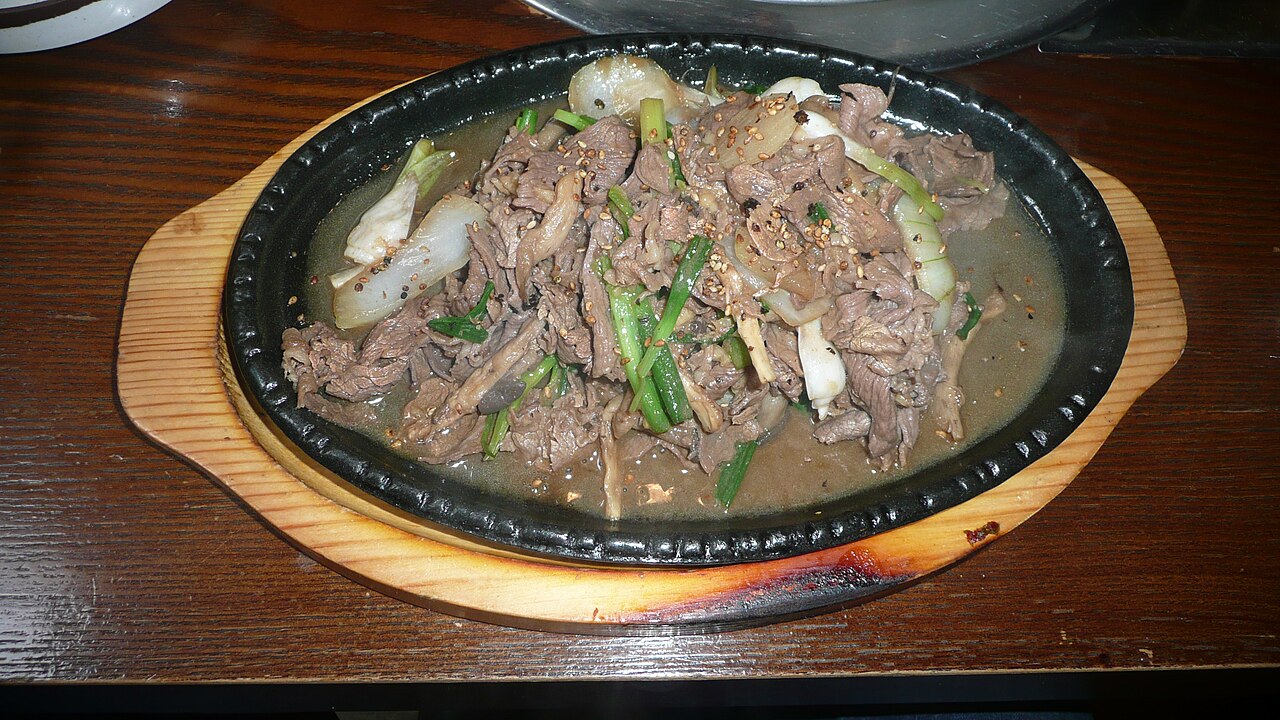
I learned to make bulgogi from my aunt.
When I was a child, bulgogi wasn’t an everyday dish. We mostly got to eat it on holidays or when there was a big family celebration.
Ingredients (2 to 3 servings)
Beef
- Thinly sliced beef for bulgogi: 500 g (about 1.1 lb), sliced 2 to 3 mm (about 1/8 inch) thick
Marinade
- Soy sauce (jin-ganjang, regular Korean soy sauce): 4 tablespoons
- Sugar: 1 1/2 tablespoons, or about 1 tablespoon of honey
- Grated Korean pear: 1/4 pear, about 70 to 100 g (2 1/2 to 3 1/2 oz)
- Minced garlic: 1 tablespoon
- Toasted sesame oil: 1 tablespoon
- Black pepper: a little
- Grated onion: 1/4 onion, optional
Vegetables
- Onion: 1/2, thinly sliced
- Carrot: a little, cut into thin strips
- Mushrooms: a handful
- Green onion (daepa): 1/2 stalk, cut on the diagonal
The beef
For 2 to 3 servings I use 500 g of beef sliced for bulgogi. I mostly recommend chuck (moksim) or shoulder (apdari-sal). If you want it more tender, rib-eye (deungsim) is good too.
The easiest way is to buy it from the butcher already sliced 2 to 3 mm thick.
I don’t soak the beef in water to draw out the blood. I just pat the surface lightly with a paper towel.
The marinade, with grated pear
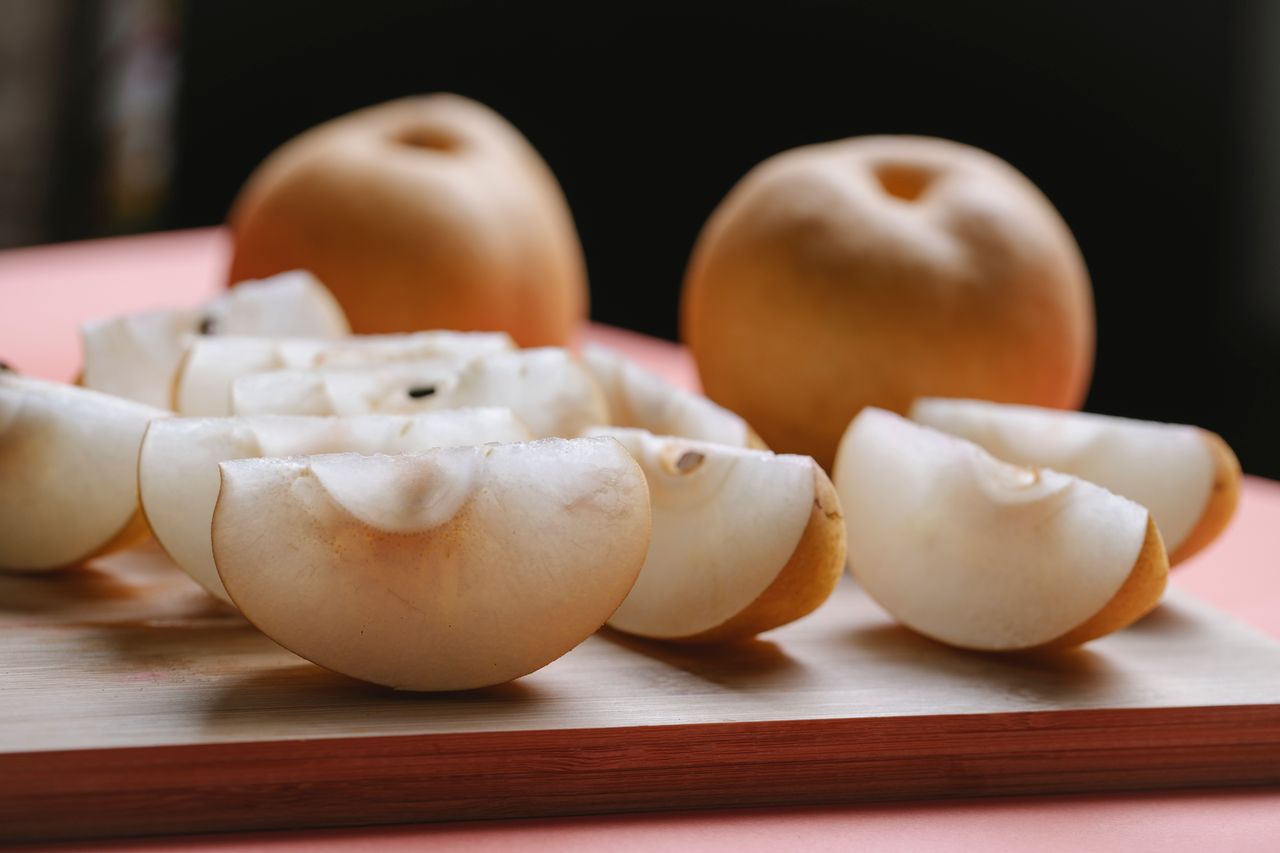
For 500 g of beef, I use 4 tablespoons of soy sauce, 1 1/2 tablespoons of sugar (or about 1 tablespoon of honey), 1/4 grated pear, 1 tablespoon of minced garlic, 1 tablespoon of sesame oil, and a little black pepper. A quarter of an onion, grated, is a good addition too.
Peel and core the pear, then grate it on a box grater or blend it.
No pear? Use a little more apple or onion instead. Kiwi tenderizes meat very strongly, so use only a little and don’t marinate it for long.
Let it marinate in the fridge
Toss the beef and marinade together until every piece is coated. Put it in an airtight container and let it sit in the fridge for 1 to 3 hours.
If you’re short on time, 20 to 30 minutes is enough, but a few hours lets the flavor soak in better. You can also marinate it overnight (about 8 to 12 hours). But if you’ve used a lot of pear, kiwi, or another tenderizing fruit, the meat can turn mushy, so be careful.
Always keep it in the fridge while it marinates.
Cook it in a hot pan
At home, a wide frying pan is the easiest.
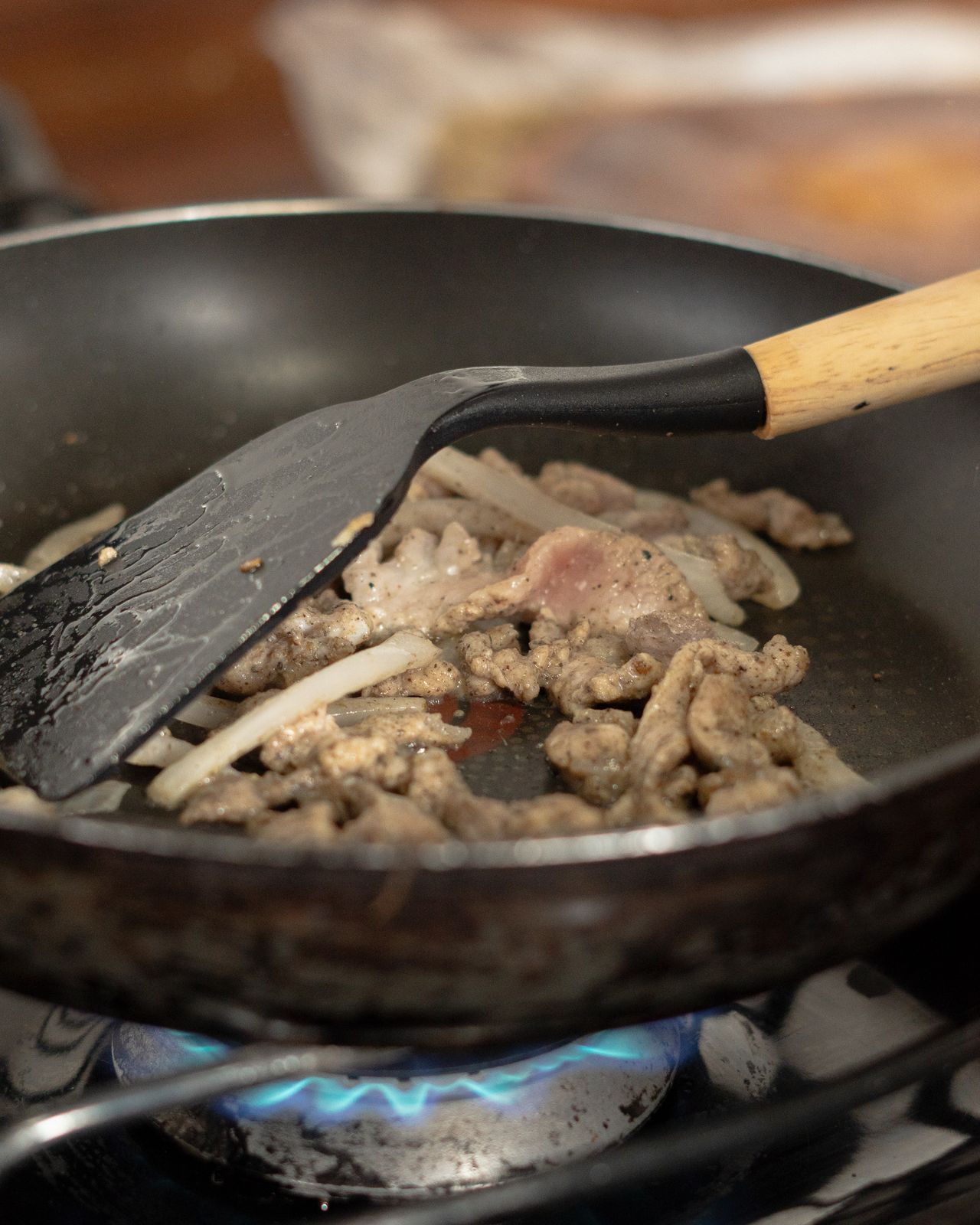
- Heat the pan over medium-high heat.
- Add the beef without piling it up too much.
- Add the sliced onion and a little carrot along with the beef.
- Stir-fry over medium-high heat for about 5 to 8 minutes, until it’s cooked through. The time depends on how much meat you have and how big your pan is.
- Add the mushrooms and green onion partway through or near the end.
Putting too much in at once makes it watery, so cook it in batches.
Saucy or dry
When I cook bulgogi in a pan, I don’t leave much liquid.
For bulgogi in an earthenware pot (ttukbaegi) or a hot-pot style bulgogi, I add 150 to 250 ml (2/3 to 1 cup) of broth so there’s some sauce in the pan.
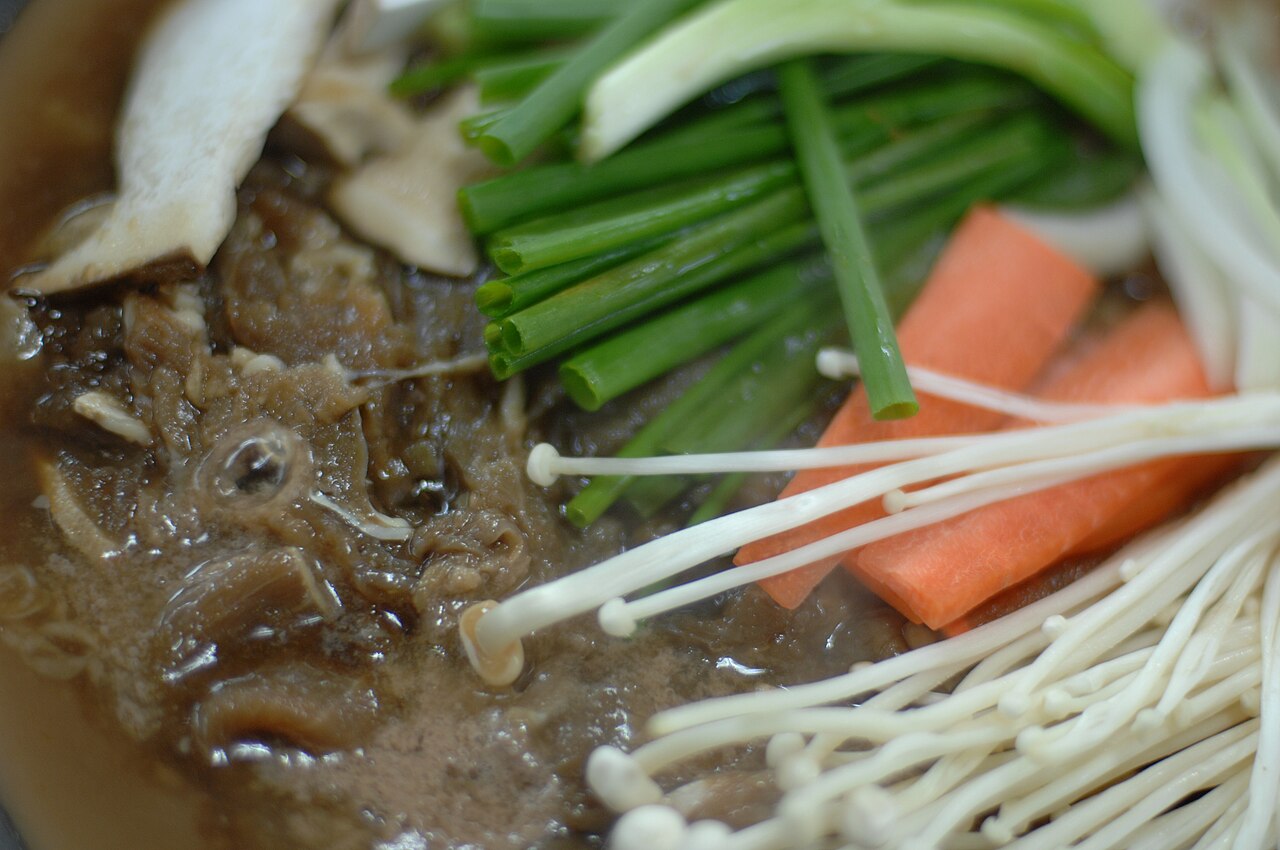
Photo: USAG- Humphreys, CC BY 2.0, via Wikimedia Commons
- Glass noodles (dangmyeon): soak them in water first and add them near the end of cooking. They soak up the liquid, so add a little more broth if you need to.
- Enoki mushrooms: they cook in no time, so add them 2 to 3 minutes before it’s done.
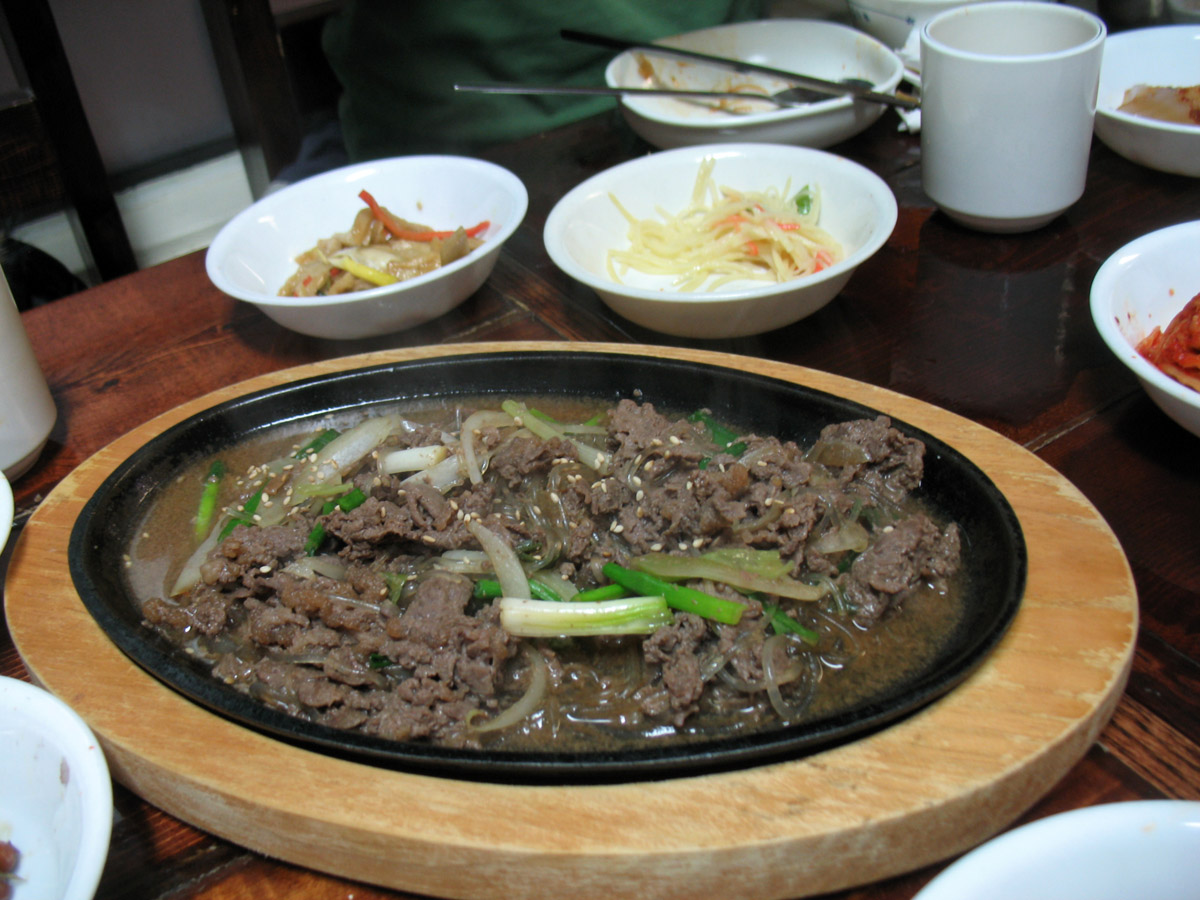
Photo: Jamie, CC BY 2.0, via Wikimedia Commons
What I eat with it
Warm white rice, bulgogi, napa cabbage kimchi, doenjang soup, and one or two namul (seasoned vegetable side dishes) make a full meal.
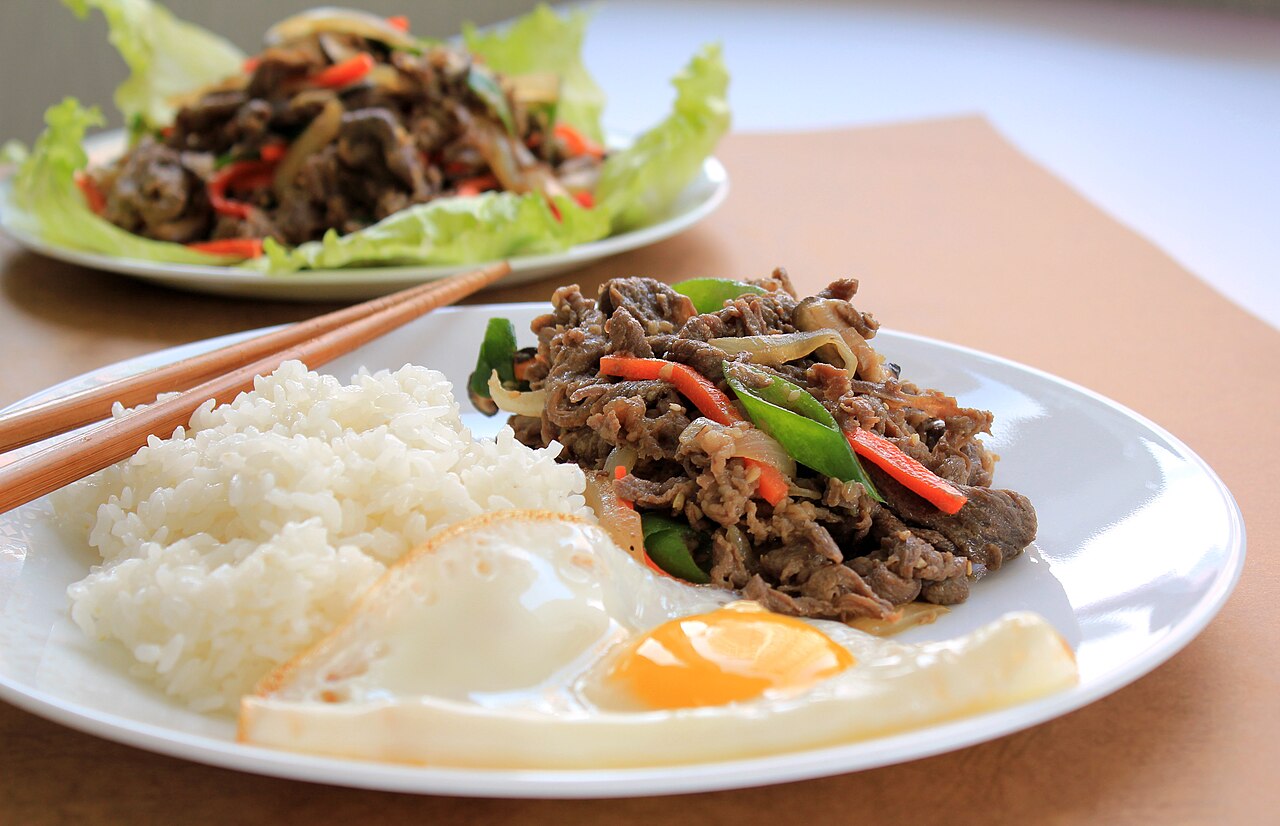
Photo: Chloe Lim, CC BY 2.0, via Wikimedia Commons
It’s also delicious wrapped in lettuce or perilla leaves with a little rice, the bulgogi, and a bit of garlic. The bulgogi is already seasoned, so use only a little ssamjang (Korean dipping paste), or leave it out.
If there’s any left
Let cooked bulgogi cool and put it in an airtight container in the fridge within 2 hours of cooking. Try to eat it within 2 to 3 days.
To reheat, put it in a pan with 1 to 2 tablespoons of water and heat it until it’s hot all the way through.
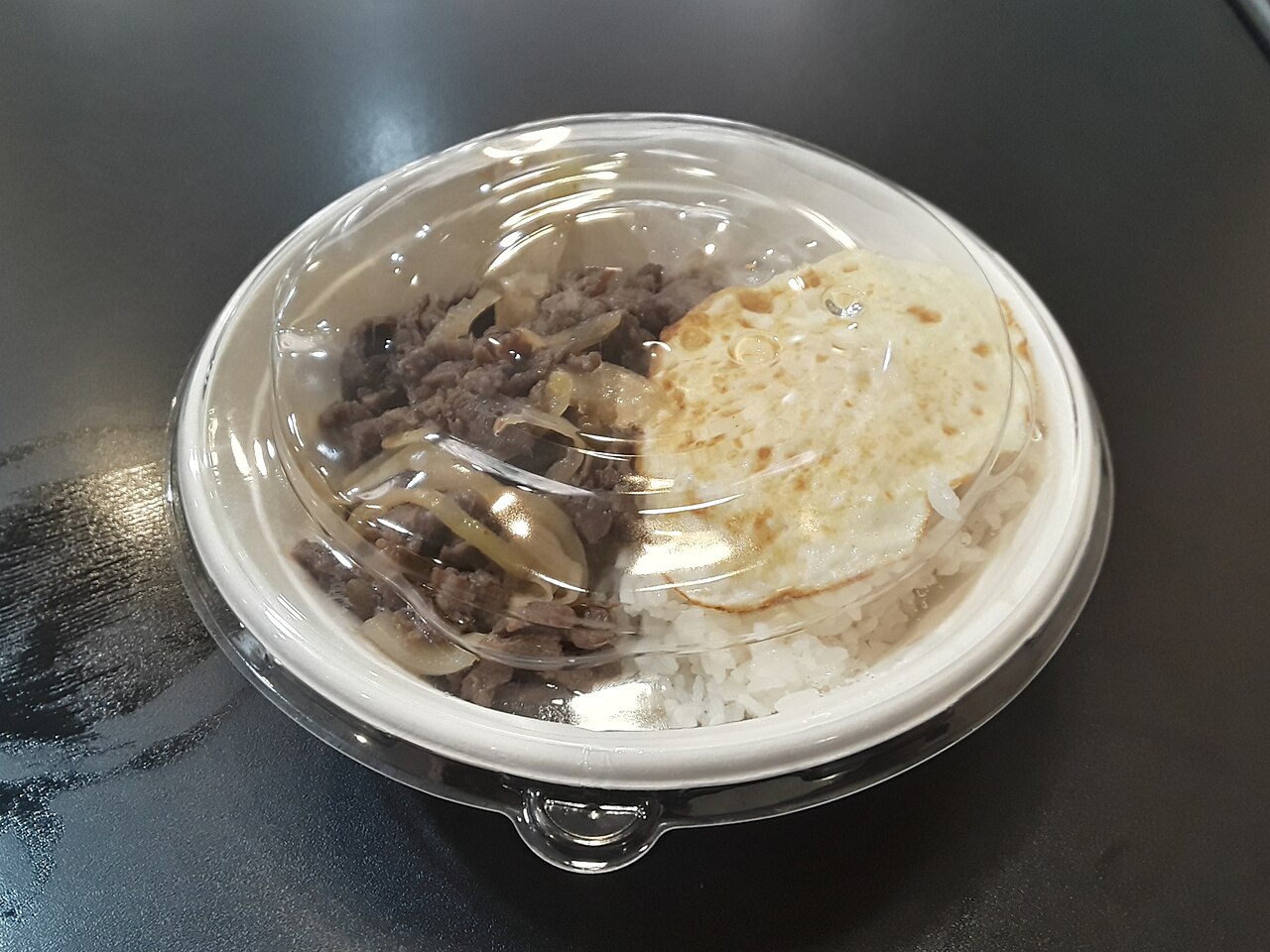
- Over rice: put it on top of a bowl of rice and you have bulgogi deopbap.
- In gimbap: cook the juices down and use it as a gimbap filling. If you want to roll your own, here’s how my mother taught me to make gimbap.
Marinated raw beef freezes well. Divide it into single portions and freeze them. For the best quality, use it within 1 to 2 months, and thaw it in the fridge.
Ttukbaegi bulgogi and spicy pork bulgogi
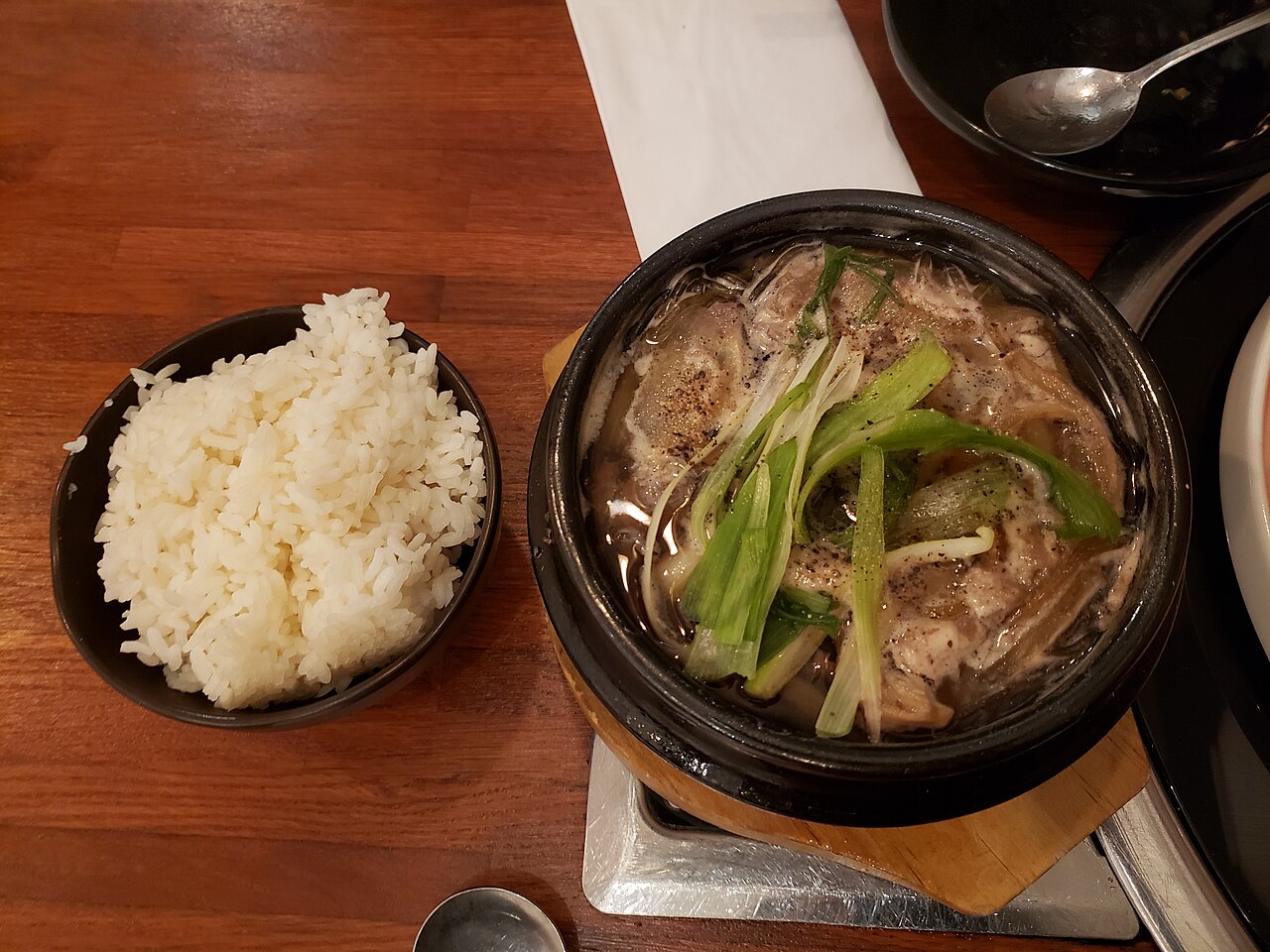
Ttukbaegi bulgogi starts with the same soy-marinated beef. Add broth, mushrooms, green onion, and glass noodles, and simmer it all in an earthenware pot. The broth is sweet and juicy, and it’s great with rice.
For gochujang pork bulgogi, the base seasoning for 500 g of pork shoulder (apdari-sal) is 2 tablespoons of gochujang, 1 tablespoon of gochugaru (Korean chili flakes), 2 tablespoons of soy sauce, 1 tablespoon of sugar, and 1 tablespoon of minced garlic. Toss the pork with it and stir-fry.
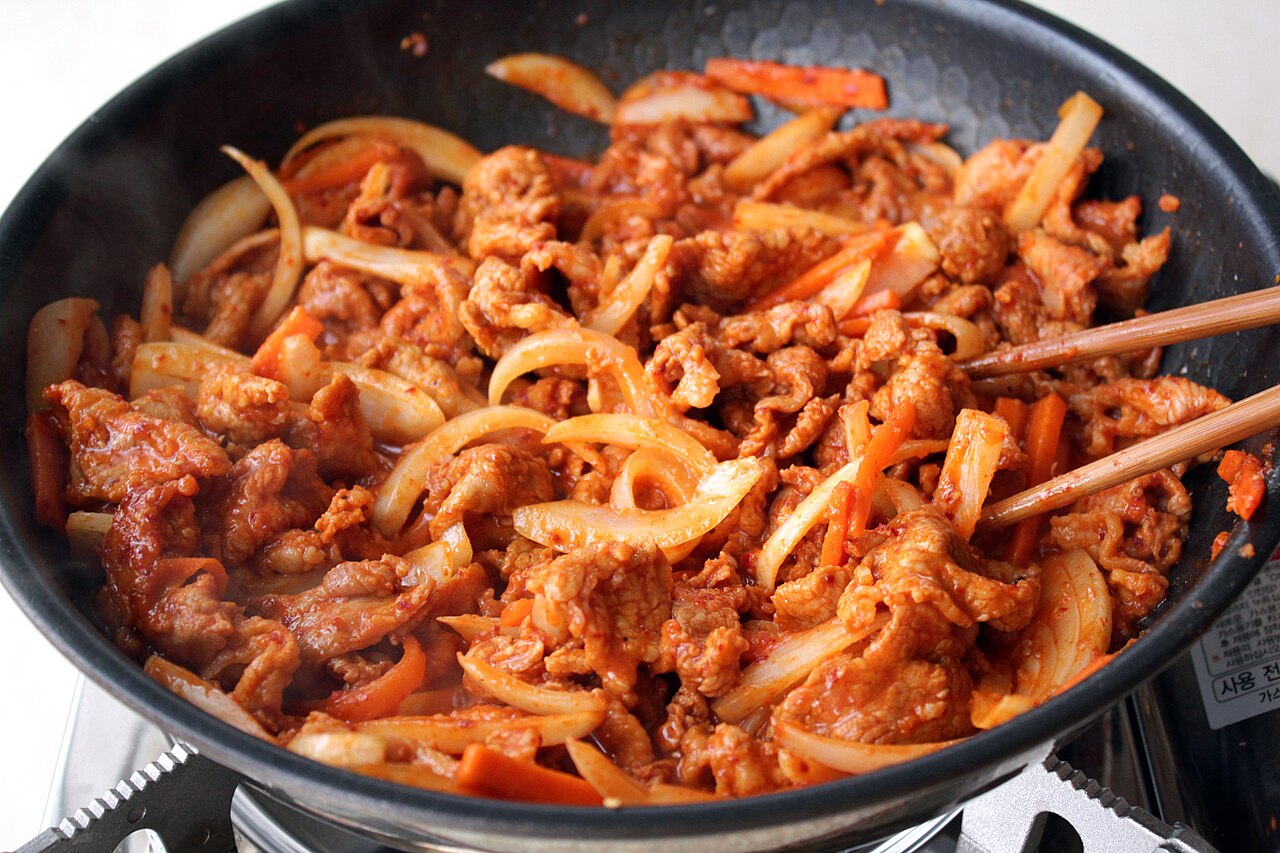
Photo: Chloe Lim, CC BY 2.0, via Wikimedia Commons
Beef bulgogi is tender, mild, and a little sweet. Pork bulgogi is spicy and bold.
If you’re making it for the first time
- Finding the beef: at a Korean grocery or a butcher, ask for “thinly sliced beef for bulgogi.” If you can’t find it, partly freeze a piece of beef and slice it very thin yourself.
- No Korean pear? Grate apple or onion instead.
- No sesame oil? You can leave it out, but you’ll lose its distinctive aroma.
- Soy sauce: saltiness varies from brand to brand, so start with less and adjust.
Start with thin beef and the basic soy marinade. Most important of all, cook it through before you eat it.
What went wrong, and how to avoid it
| Problem | What to do |
|---|---|
| Tough meat | Use thinly sliced beef, and don’t cook it too long |
| Too salty | Don’t add all the soy sauce at the start; taste and adjust |
| Burnt | Sugar in the marinade burns easily over high heat. Turn the meat often, and lower the heat as soon as it starts to scorch |
| Too much liquid in the pan | Preheat the pan well and cook the meat in several batches. Don’t add too many vegetables at once, either |